3D-Printing Robots in Construction: 5 Remarkable Types
3D-printing robots in construction are automated robotic systems that fabricate structural elements and entire buildings by depositing engineered materials layer by layer from digital design models. These construction 3D-printing robots integrate robotic motion control, advanced printable concrete mixtures, and digital construction workflows to deliver faster project timelines, reduced material waste, and increased design freedom.
As automation accelerates across the global construction industry, additive manufacturing construction robots are emerging as a critical technology for improving productivity in an industry long challenged by labour shortages, project delays, and cost overruns. From gantry-based systems capable of printing entire housing developments to mobile robotic crawlers that fabricate infrastructure components, these technologies are redefining the future of construction delivery.
Technical Snapshot
| System Layer | Function |
| Robotic platform | Gantry printers, robotic arms, mobile robots, cable-driven systems |
| Digital workflow | CAD modelling, BIM integration, parametric design |
| Material systems | Printable concrete, geopolymer mixtures, engineered mortars |
| Control software | G-code translation, robotic motion control, sensor feedback |
| Key applications | Housing, infrastructure components, and disaster relief construction |
Introduction: The Rise of 3D-Printing Robots in Construction
For decades, construction productivity has lagged behind most other industrial sectors. While manufacturing industries adopted automation and robotics during the late twentieth century, the construction sector continued to rely heavily on labour-intensive processes.
The emergence of 3D-printing robots in construction represents a structural shift in how buildings and infrastructure can be produced.
Unlike traditional construction methods, robotic additive manufacturing fabricates structural components directly from digital models. These machines deposit layers of engineered concrete or mortar mixtures in controlled sequences, gradually forming walls, columns, and architectural elements.
The technology sits at the intersection of three major industry trends:
- Construction automation.
- Digital design integration.
- Advanced material engineering.
Together, these developments are reshaping how infrastructure is designed and delivered.
Automation is also becoming increasingly important in response to persistent labour shortages affecting many construction markets. In advanced economies, the construction workforce continues to age while fewer younger workers enter the industry. In emerging markets, rapid urbanisation is creating demand for housing and infrastructure that conventional construction methods struggle to meet.
These pressures are accelerating investment in construction robotics technology. Many of the underlying ideas behind robotic construction have existed in industrial manufacturing for decades. However, advances in computing power, robotics, and material science have now made large-scale construction printing technically feasible.
The implications extend far beyond experimental laboratories. Real-world projects are already demonstrating the viability of additive construction methods. One notable example is the project we examined in our Construction Frontier’s analysis of the world’s first 3D-printed school, which illustrates how robotic printing can rapidly deliver essential public infrastructure.
This growing body of projects suggests that additive manufacturing could eventually become a core component of the global construction technology ecosystem.
What Are 3D-Printing Robots in Construction?
Understanding the technical foundations of robotic construction is essential for evaluating its long-term potential. At its core, robotic construction printing relies on integrating digital design data with automated fabrication systems that deposit structural materials with high precision.
Definition of 3D-Printing Robots Construction
3D-printing robots in construction are robotic systems that fabricate buildings or structural components by depositing materials layer by layer from digital design files. These systems translate computer models into robotic motion instructions, guiding the movement of extrusion nozzles that deposit printable concrete or mortar mixtures.
Unlike conventional construction processes that rely heavily on manual labour, robotic printing systems automate many steps, improving workflow and efficiency.
This digital workflow typically involves several stages:
- Architectural or engineering design using CAD software.
- Conversion of the model into machine-readable instructions.
- Robotic deposition of materials according to programmed paths.
- Continuous monitoring and adjustment during printing.
Integration with Building Information Modelling (BIM) platforms enables engineers to coordinate structural design with robotic fabrication. The result is a construction process in which digital design and physical fabrication are directly connected.
Key Technologies Behind Robotic Construction
Several engineering systems must operate simultaneously for construction 3D-printing robot technologies to function effectively.
1. Automated Extrusion Systems
The most visible component of robotic construction printers is the extrusion system, which deposits material.
Printable concrete mixtures must maintain precise rheological properties. The material must flow smoothly through pumping systems while retaining sufficient structural integrity to support subsequent layers.
Achieving this balance requires carefully engineered cementitious mixtures designed specifically for additive manufacturing.
2. Robotic Motion Control
Robotic motion systems guide the extrusion nozzle along predetermined paths. These motion platforms can take several forms, including gantry frames, articulated robotic arms, or mobile robotic platforms.
The printer must maintain millimetre-level positional accuracy to ensure structural stability and geometric precision.
3. Printable Construction Materials
Printable materials represent one of the most critical aspects of robotic construction.
Traditional concrete mixtures are unsuitable for extrusion-based construction printing. Instead, specialised mixtures are formulated to maintain pumpability, rapid setting characteristics, and structural strength.
Material development in 3D-printing remains one of the most active research areas within additive manufacturing and construction robotics.
Advantages of 3D-Printing Over Traditional Construction
Several structural advantages explain why the construction industry is increasingly exploring 3D-printing robots.
1. Faster Project Delivery
Robotic printers can operate continuously with minimal supervision, enabling faster production of structural elements. It can take approximately 18-36 hours to deliver a single project that would have taken several weeks using traditional methods.
2. Reduced Material Waste
Additive manufacturing deposits material only where required, reducing the waste associated with traditional formwork and cutting processes.
3. Lower Labour Dependency
Automation reduces reliance on large construction crews, addressing labour shortages that affect many global markets.
4. Greater Architectural Freedom
Additive manufacturing enables complex shapes and geometries that would be extremely difficult or expensive to construct using conventional building methods.
These advantages explain why additive manufacturing has become a central topic in discussions about the future of construction technology.
For a broader overview of this transformation, see Construction Frontier’s analysis 3D-Printing in Construction: 7 Innovative Ways It Is Transforming the Industry.
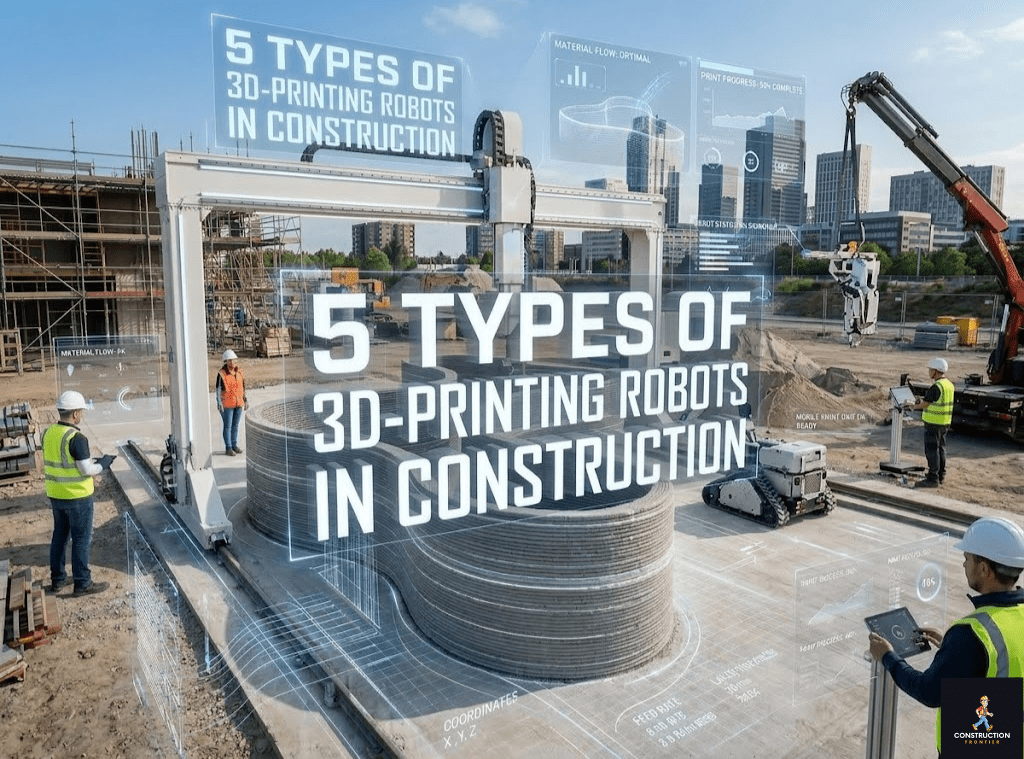
5 Types of 3D-Printing Robots in Construction
Although the concept of robotic construction printing is often discussed as a single technology, several distinct categories of systems exist. Each type of robotic platform offers different capabilities, advantages, and limitations depending on project requirements. Understanding the types of 3D-printing robots used in construction helps engineers and contractors determine which systems best suit specific applications.
1. Gantry Systems
Overview
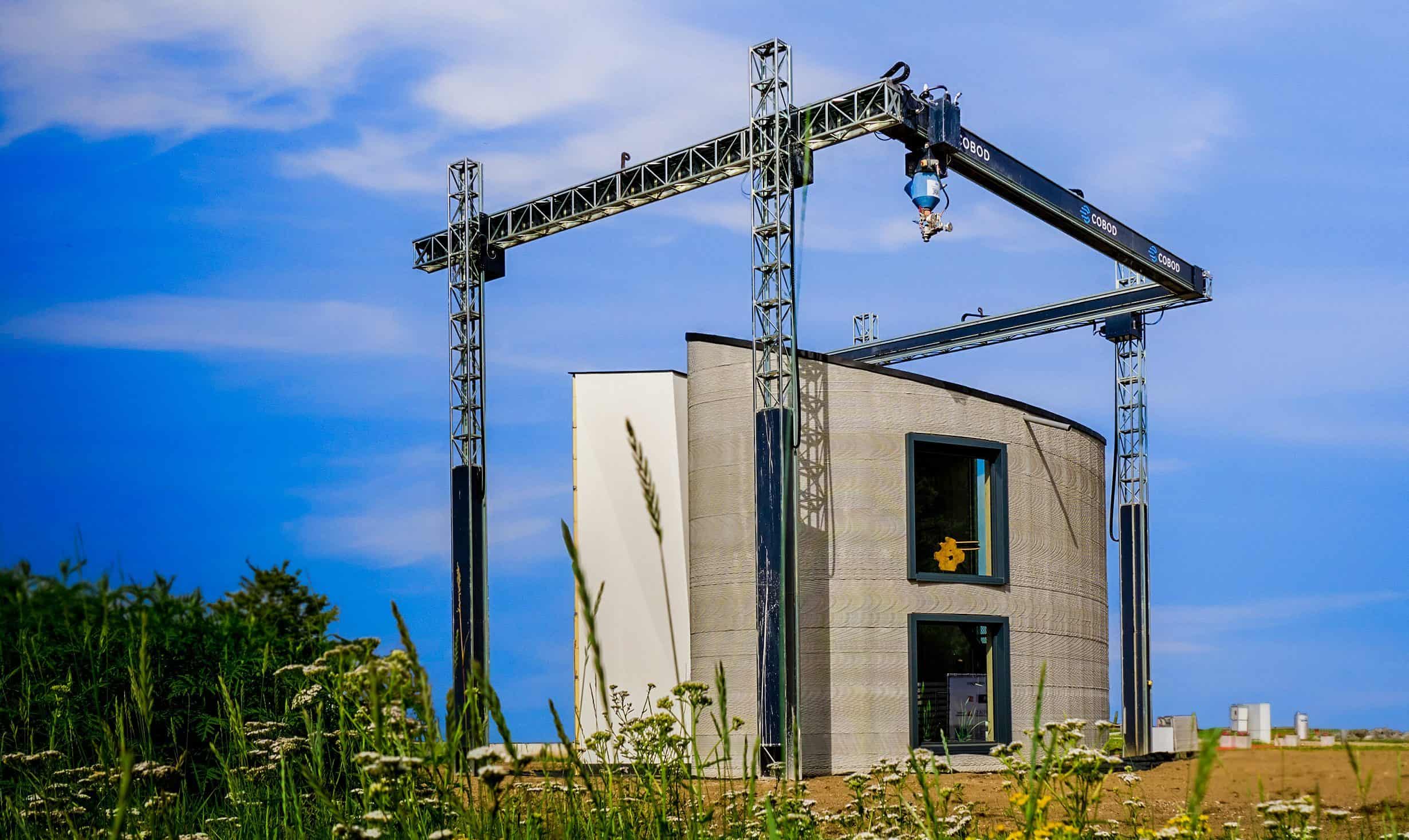
Gantry printers represent the most widely deployed gantry 3D-printing construction systems. These machines consist of large steel frameworks mounted on rails that allow the printhead to move along three linear axes (X, Y, Z). The gantry structure operates similarly to a large industrial CNC machine. The extrusion head moves across the framework while depositing layers of concrete according to digital instructions.
Many commercial systems rely on modular gantry designs that can be scaled depending on the size of the project. For example, the BOD2 printer developed by COBOD uses a modular steel truss structure, allowing contractors to configure it to project dimensions. The system can operate at up to 250 mm per second and can print structures with widths exceeding 14 metres, depending on configuration.
Examples and Notable Projects:
- World’s First 3D-Printed School (Malawi): Built in the Salima district by the joint venture 14Trees. The walls were printed in just 18 hours, significantly faster than the 70 years estimated to clear the classroom backlog using traditional methods.
- The First 3D-Printed House in Germany: A fully certified residential building in Beckum, demonstrating the technology’s readiness for standard housing markets.
- Europe’s Largest Apartment Building: A three-story complex in Wallenhausen, Germany, which proved the BOD2’s capability for multi-story construction.
- Grange Close (Ireland): A social housing project consisting of three terraced apartments completed in a record 132 days.
- Nidus3D Project (Canada): North America’s first multi-story 3D-printed building, notable for incorporating a 3D-printed horizontal beam.
- World’s First 3D-Printed Wind Turbine Tower Base: A 10-meter-tall base created for GE Renewable Energy to test taller, more efficient turbine designs
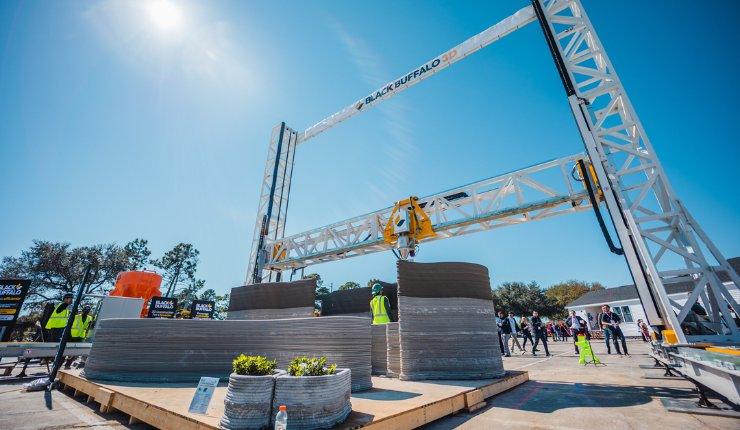
- Orlando Tiny Home: A live-printed demonstration of a small residential unit in Florida.
- Alquist 3D Partnership: Used for building affordable housing communities, including projects for Habitat for Humanity.
Best For
Gantry systems are particularly suitable for projects involving repetitive or large-scale structural printing.
Typical applications include:
- Entire houses.
- Commercial buildings.
- large housing developments.
- construction research facilities.
Advantages
- High structural precision.
- Stable printing environment.
- Suitable for very large construction volumes.
- Scalable modular configuration.
Disadvantages
- Large installation footprint.
- Limited mobility once installed.
- High transportation and assembly requirements.
Because of their structural stability and scalability, gantry printers currently represent the dominant commercial solution for the best 3D printing robots for construction.
2. Robotic Arm Printers (Articulated Robots)
Overview
Robotic arm printers represent a fundamentally different approach to robotic arm 3D printing construction. These systems rely on multi-axis (typically 6-axis) industrial robotic arms equipped with extrusion nozzles that can deposit construction materials.
Industrial robotic arms typically feature six axes of motion, enabling high flexibility during the printing process. Unlike gantry systems that move along fixed rails, articulated robotic arms can follow complex trajectories, enabling the fabrication of curved or irregular structures.
Examples
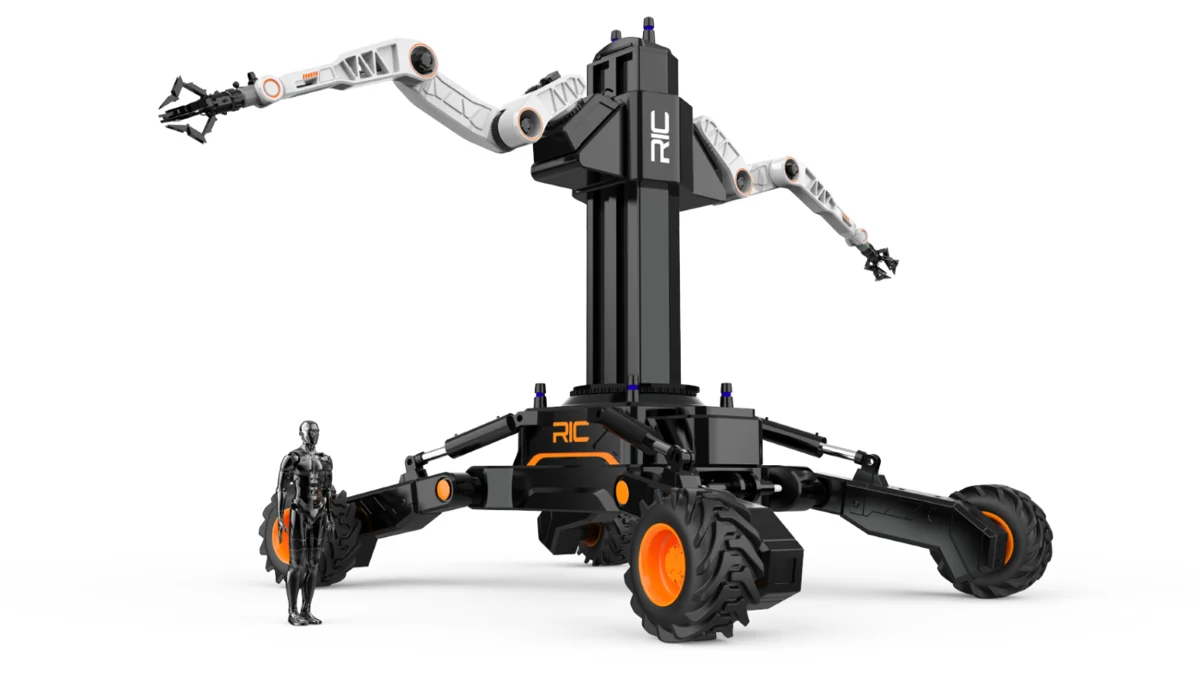
- The World’s Largest 3D-Printed Concrete Park (Shenzhen): A massive public landscape featuring over 2,000 individual printed pieces, including S-shaped retaining walls, benches, and flower beds.
- First Fire-Resistant ADU (California): A residential Accessory Dwelling Unit built in collaboration with the L.A. County Fire Department to showcase wildfire-resilient construction.
- Walmart Supercenter Expansion (USA): One of the largest 3D-printed commercial real estate projects in U.S. history, using the robotic arm to print thousands of square feet of structural wall.
- 3D-Printed Duplex (Colorado): A multi-unit residential project in partnership with Alquist 3D aimed at providing affordable, high-quality housing in rural areas.
- Muscatine Affordable Housing (Iowa): A community project involving the construction of 10 resilient homes, with the third home completed using the RIC system.
- Eco-Friendly Coastal Infrastructure: Used for printing specialised “Living Seawalls” and artificial reefs that mimic natural organic shapes to support marine biodiversity.
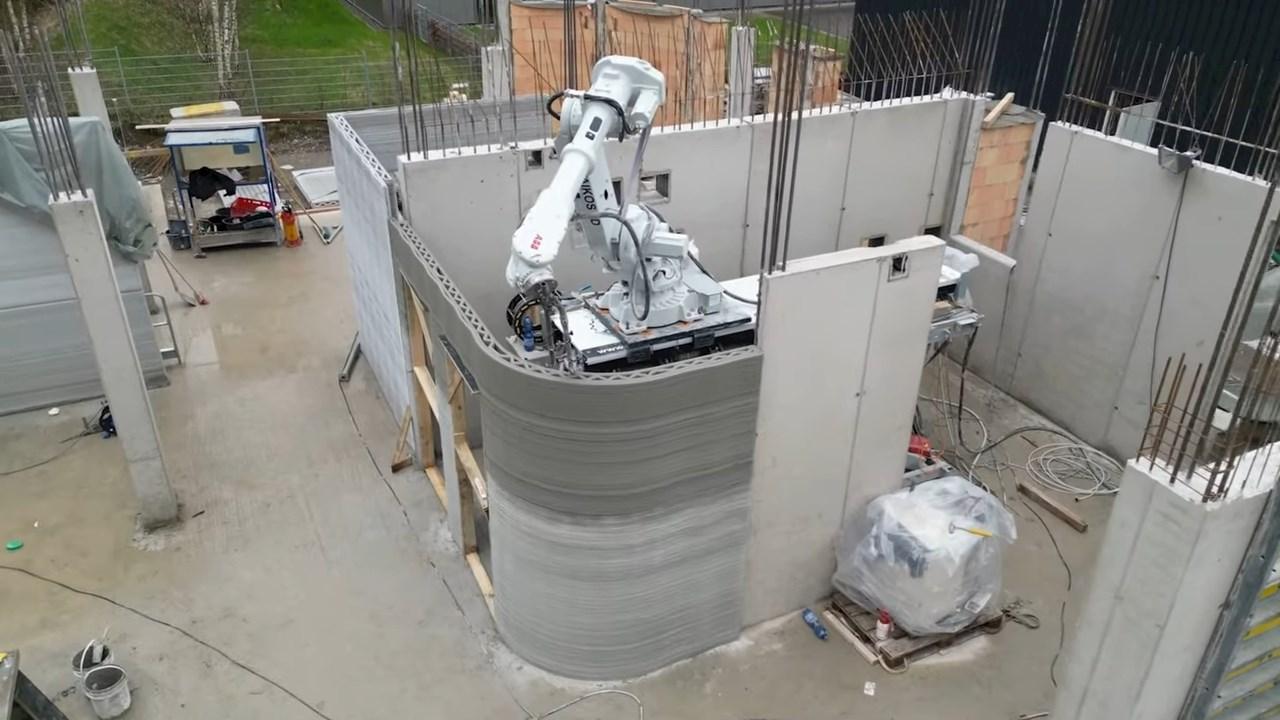
- DRK Headquarters (Germany): The first non-residential building in Germany printed using an ABB industrial robot.
- The New Delft Blue Archway: A stunning architectural tunnel in the Netherlands featuring 3D-printed ceramic cladding.
- MX3D Bridge (Amsterdam): The world’s first fully 3D-printed metal bridge, created using a multi-axis robotic arm with wire arc additive manufacturing (WAAM).
- Branch Technology Pavilion: A massive free-form pavilion utilising a KUKA robot to print carbon-fibre-reinforced lattices.
Best For
Robotic arm systems excel at projects that require geometric flexibility.
Typical applications include:
- Complex architectural elements.
- Curved façade panels.
- Custom structural components.
- Research prototypes.
Advantages
- Six-axis motion allows complex geometries.
- Greater flexibility for curved architectural forms.
- Smaller equipment footprint.
- Easier transport between project sites.
Disadvantages
- Limited printing reach.
- Slower production for large structures.
- Requires a stable base installation.
These systems demonstrate the versatility of construction 3D printing robot technologies.
3. Mobile and Crawler Robots
Overview
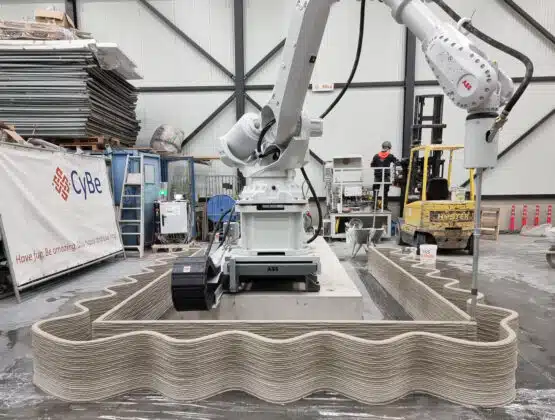
Mobile printing robots address one of the primary limitations of stationary construction printers. Rather than remaining fixed in one location, these robots move across the construction site while printing structural elements. Mobile construction printers are typically mounted on tracked crawler platforms that can navigate uneven terrain.
Example
-
- Paremoremo House (New Zealand): Currently the largest 3D-printed house in the Southern Hemisphere.
- La Sphère (France): The first 3D-printed building in Normandy, completed in just 21 hours of net printing time.
- Living Seawalls (Miami): 3D-printed coastal protection structures designed to mimic natural coral reefs.
- 3D Studio 2030 (Saudi Arabia): An 80-square-meter prototype house built to showcase efficient building techniques.
Best For
Mobile printers are well-suited for projects requiring distributed fabrication across large sites.
Examples include:
- Infrastructure construction.
- Large-scale site development.
- Remote construction locations.
Advantages
- High mobility across construction sites.
- Ability to fabricate structures larger than the robot itself.
- Reduced need for large fixed frames.
Disadvantages
- Lower printing precision compared with gantry systems.
- Navigation challenges on uneven terrain.
- Complex coordination between motion and printing.
4. Crane and Cable-Driven Robots
Overview
Crane-based construction printers suspend the extrusion system from cables or crane structures. This configuration allows the printer to move across extremely large construction areas without requiring massive gantry frames.
Example
WASP Crane Printer (Delta System)
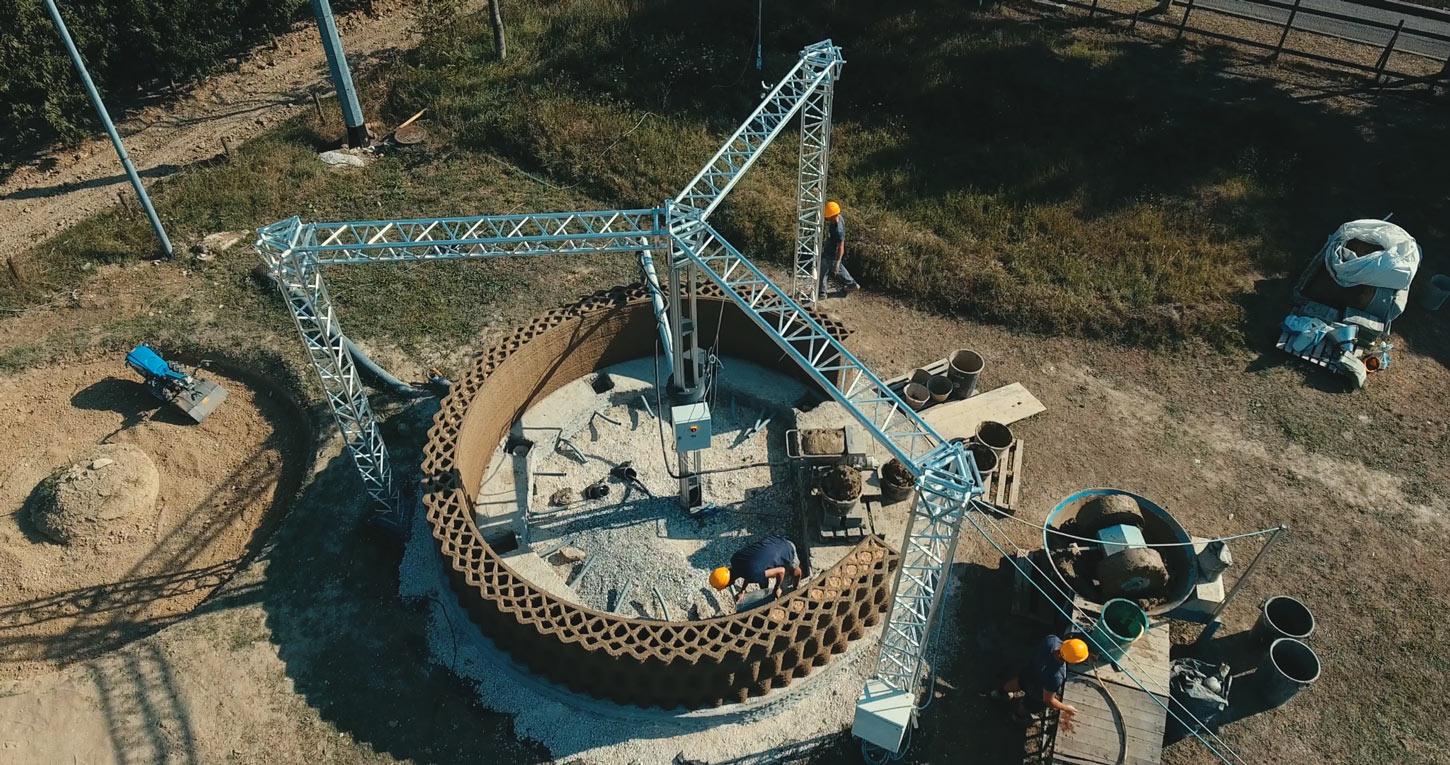
- TECLA (Italy): A groundbreaking circular housing model made entirely from locally sourced raw earth (clay).
- Itaca (Italy): The first self-sufficient 3D-printed farm, featuring a configuration of four robotic arms working simultaneously.
- Lib Earth House (Japan): A sustainable residential home printed using local soil, designed to be fully circular.
Best For
Cable-driven construction robots may be suitable for:
- Bridge construction.
- Large public infrastructure.
- Multi-storey building structures.
- Infrastructure megaprojects.
Advantages
- Extremely large operational range.
- Suitable for massive construction zones.
- Reduced structural support requirements.
Disadvantages
- Complex calibration and setup.
- Vulnerability to environmental factors such as wind.
- Higher engineering complexity.
5. Specialised Layout Robots
Overview
Not all construction robots fabricate structural elements. Some robotic systems focus on automating layout and surveying tasks. Layout robots project or print digital construction plans directly onto concrete slabs, guiding workers during building assembly.
Example
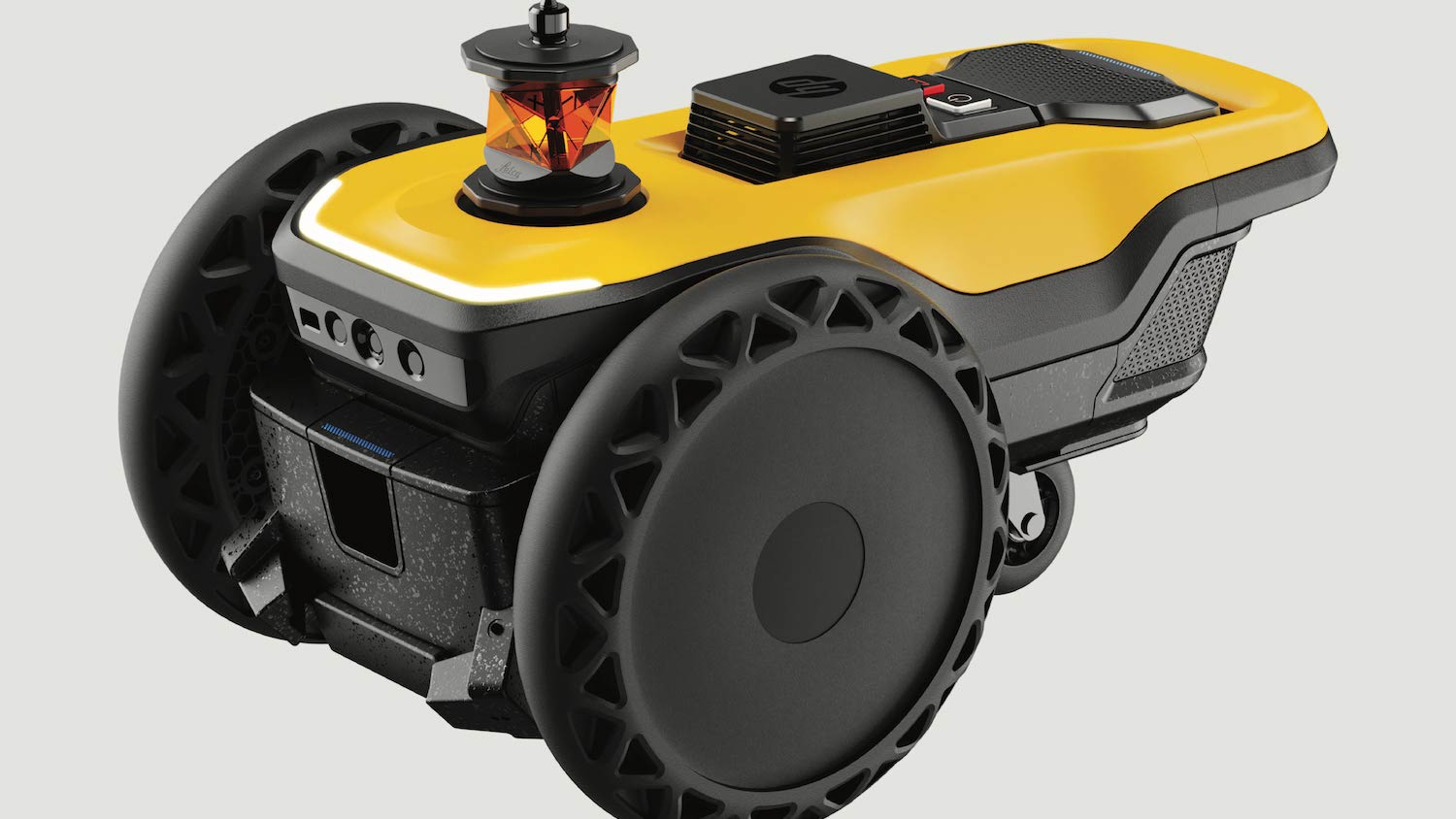
- Used extensively in commercial construction projects to automate the layout of wall positions, plumbing, and electrical outlets, replacing manual chalk-lining with millimetre precision.
Best For
Layout robots are commonly used in:
- Commercial building interiors.
- Hospitals and laboratories.
- Large building complexes.
Advantages
- Extremely high layout accuracy.
- Faster site marking compared with manual surveying using chalk-lining.
- Reduced construction errors.
Disadvantages
- Limited to layout functions.
- Does not replace structural construction and surveying techniques.
Emerging and Experimental Construction Robots
Beyond the five primary categories, several emerging robotic construction technologies are currently under development. These innovations in 3d printing robots in construction suggest that the future of construction robotics technology may extend far beyond current printing systems.
1. Swarm Robotics
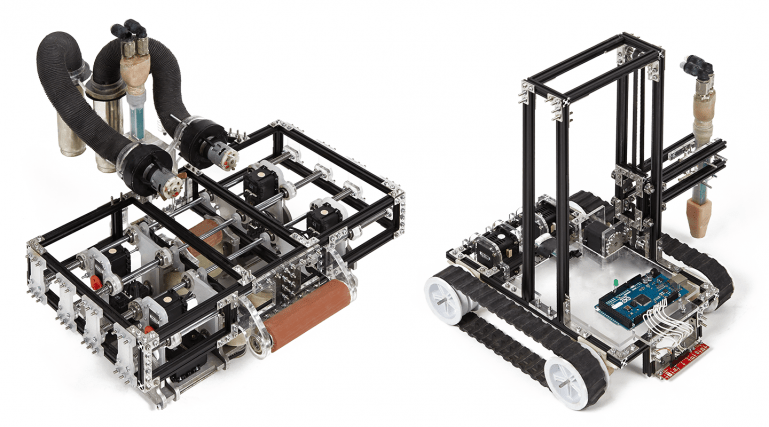
Swarm robotics involves deploying multiple small autonomous robots that collaborate to build structures. Rather than relying on a single large machine, the swarm distributes construction tasks among multiple robotic units.
Experimental systems such as the Minibuilders project demonstrate how coordinated robotic swarms could fabricate structures through collaborative fabrication. Research into swarm fabrication suggests that such systems could eventually enable highly scalable construction automation.
- How it works: Multiple mobile robots communicate to divide tasks, such as one robot laying a foundation while others follow to build walls.
- Key Benefits: Scalability and the ability to continue working even if one robot fails.
- Example: Minibuilders by the Institute for Advanced Architecture of Catalonia and hyperBot for tunnel 3D printing.
2. Aerial 3D Printing (Drone Construction)
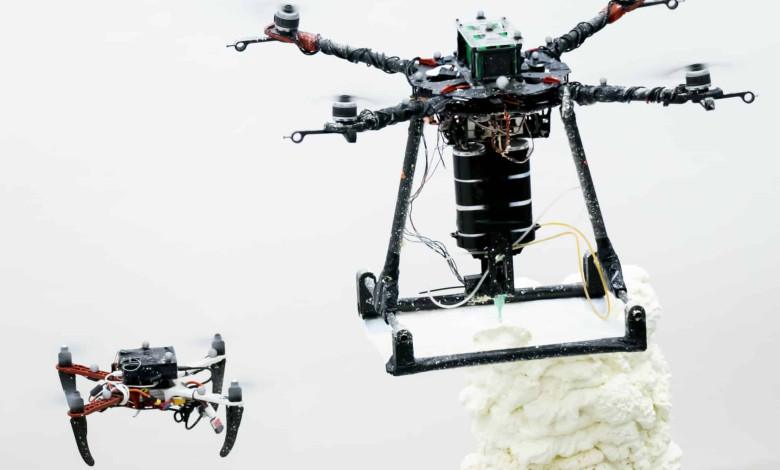
Aerial additive manufacturing systems use drones equipped with extrusion systems to deposit construction materials. These flying robots can potentially fabricate structures in locations where ground-based construction equipment would be difficult to deploy.
- How it works: A fleet of drones known as Aerial-AM uses a path-planning framework to deposit material in layers, adapting to the geometry in real time.
- Key Benefits: It is used to build in hard-to-reach or dangerous locations, such as tall towers or disaster zones, without the need for heavy scaffolding or ground-based frames.
Potential applications include:
- Disaster recovery construction.
- High-rise façade repairs.
- Remote infrastructure projects.
3. Climbing Construction Robots
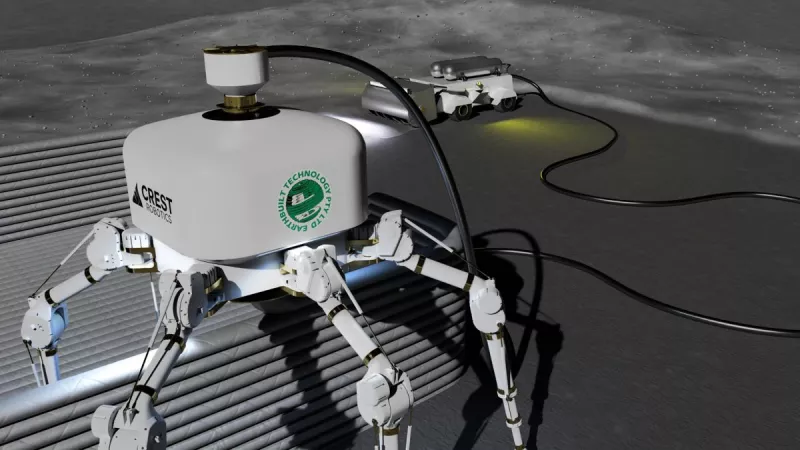
Climbing construction robots attach themselves to structures during the printing process and move upward as the building grows. This approach enables robots to fabricate structures larger than their own footprint.
- How it works: They often use a vertical axis and move around a central support system to create structures larger than the robot itself.
Example:
- Charlotte (Crest Robotics): The Charlotte construction robot is a 5.5-meter spider-like robot designed to “step over” walls up to two stories high to print homes autonomously on Earth or the Moon.
- Koala 3D: The Koala climbing robot is at the research stage of a continuous-climbing 3D printer that ascends a vertical track to build structures of unlimited height.
4. Hybrid and Multifunctional Robots
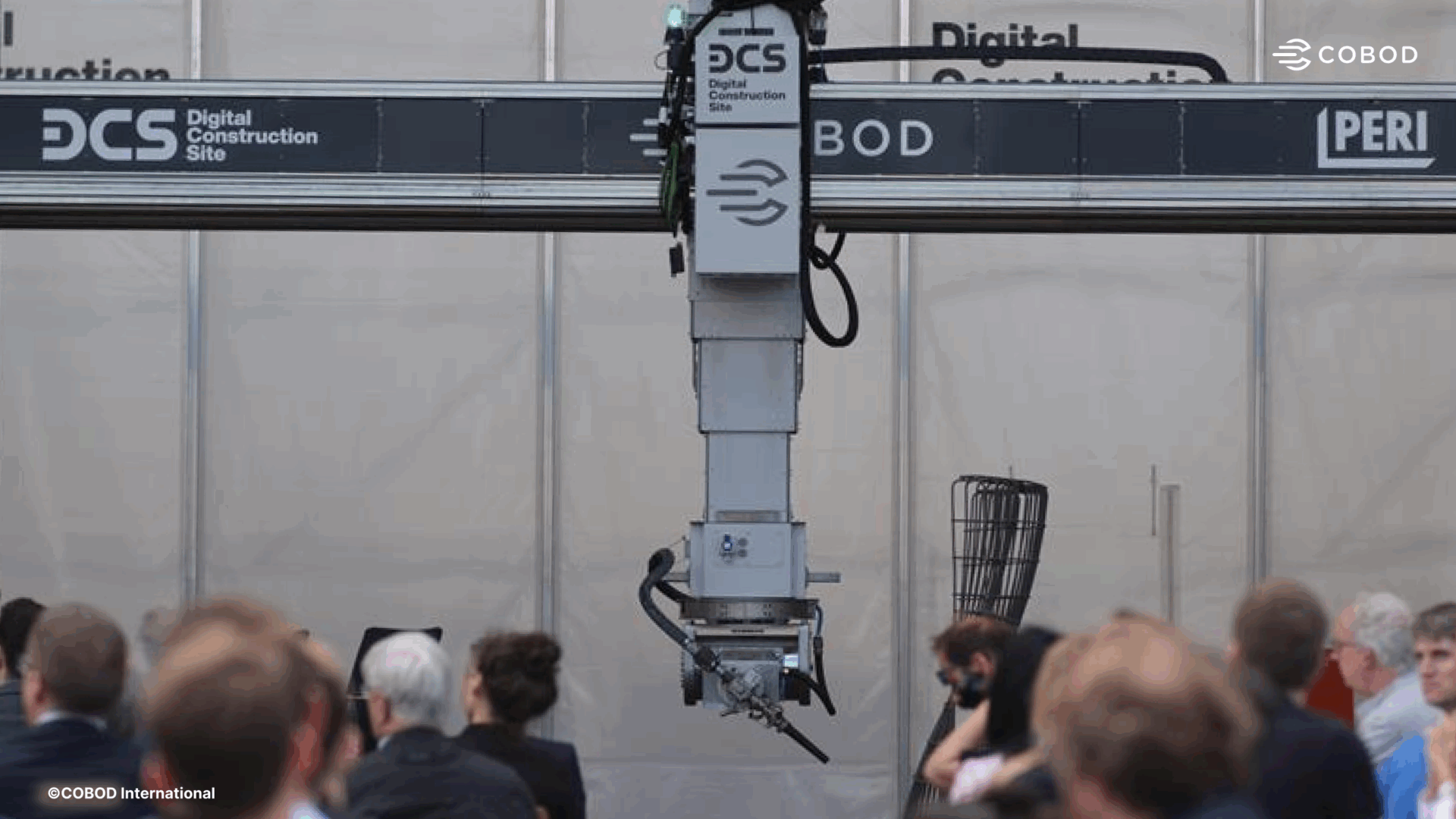
Hybrid robotic construction systems combine several tasks within a single machine. Recent developments include COBOD’s multifunctional robotic systems, capable of printing concrete and performing additional tasks such as shotcrete spraying and reinforcement placement.
For example, researchers and industry partners have demonstrated multifunctional construction robots based on gantry printing platforms that integrate robotic arms capable of performing additional construction operations.
- How it works: A gantry or robotic arm system is equipped with swappable tool heads. For example, it might print a concrete wall and then switch to a Shotcrete 3D Printing (SC3DP) head to spray material for a higher-quality finish.
- Example: COBOD’s multifunctional robot can automate tasks beyond just printing, such as smoothing surfaces or placing rebar.
5. Multi-Legged Construction Robots
Some experimental systems use multi-legged robotic platforms that can navigate rough terrain. Although still in research phases, these designs could improve mobility in complex construction environments.
- Status: Primarily in the prototype and testing phases, these aim to lower costs and setup time in environments where traditional mobile robots might get stuck.
Applications of 3D-Printing Robots in Construction
The practical deployment of 3D-printing robots in construction is expanding steadily as robotic fabrication technologies mature and printable construction materials improve. Early demonstration projects focused primarily on experimental prototypes. However, the industry is now witnessing the transition toward real-world infrastructure and building applications.
Robotic additive manufacturing enables structures to be produced directly from digital design models with minimal formwork and significantly reduced manual labour. As a result, contractors and infrastructure planners increasingly view construction 3D-printing robots as a viable solution for projects requiring rapid delivery, high design flexibility, or reduced reliance on a workforce.
Several key construction sectors are already exploring the operational advantages of this technology.
1. Residential Housing
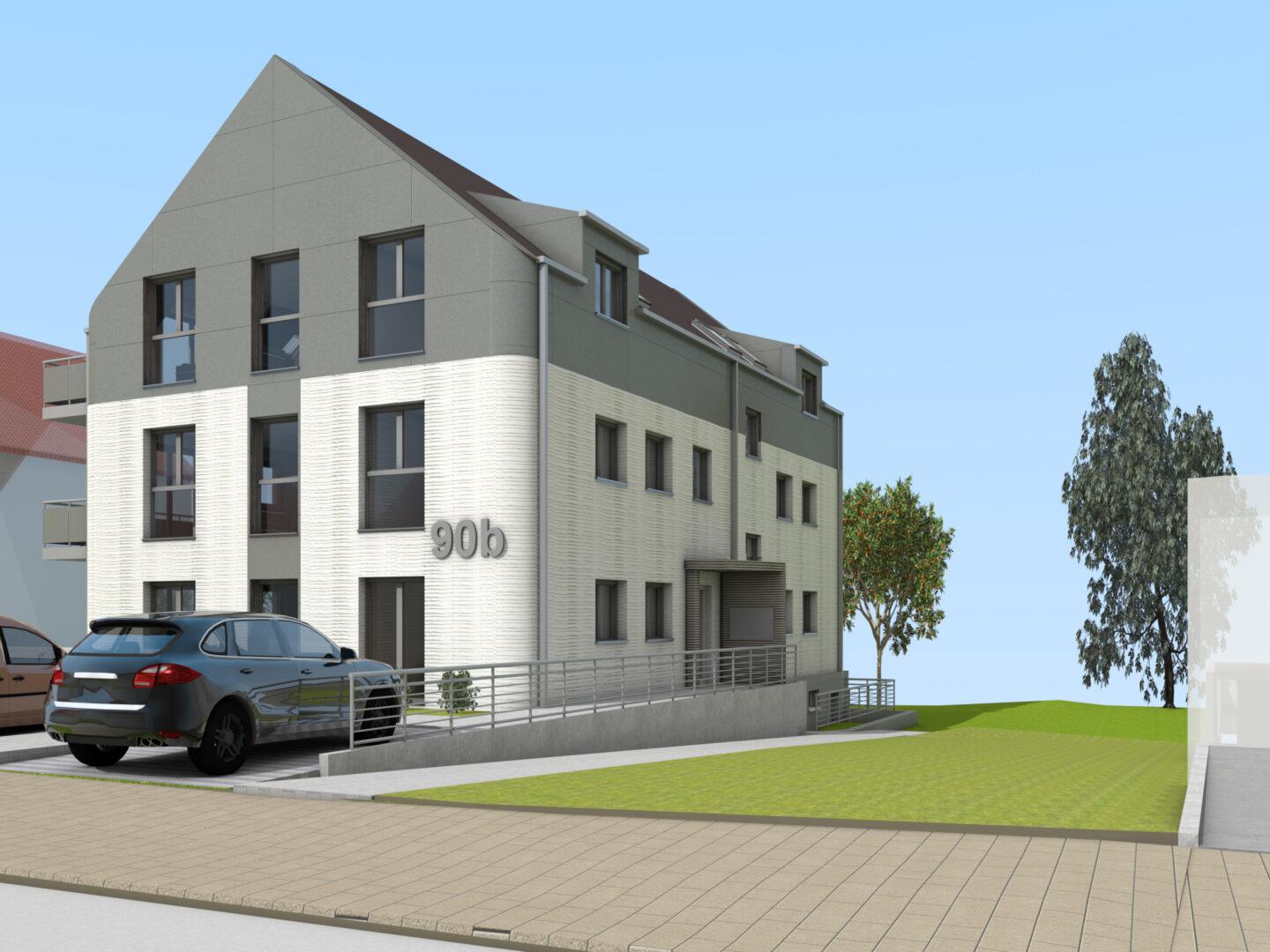
Housing construction represents one of the most prominent applications for additive manufacturing construction robots. The ability to print structural walls directly on site enables rapid production of residential buildings while reducing material waste and labour requirements.
Governments and developers are exploring robotic construction systems to address global housing shortages and accelerate the delivery of affordable housing developments.
Typical applications include:
- Single-family homes.
- Affordable housing developments.
- Rapidly deployable housing communities.
- Modular residential units.
Projects such as the first 3D-printed house in Germany and the largest 3D-printed apartment (7,150 SF) in Europe are excellent examples of how similar technology can also deliver residential community infrastructure quickly and efficiently.
2. Educational and Healthcare Infrastructure
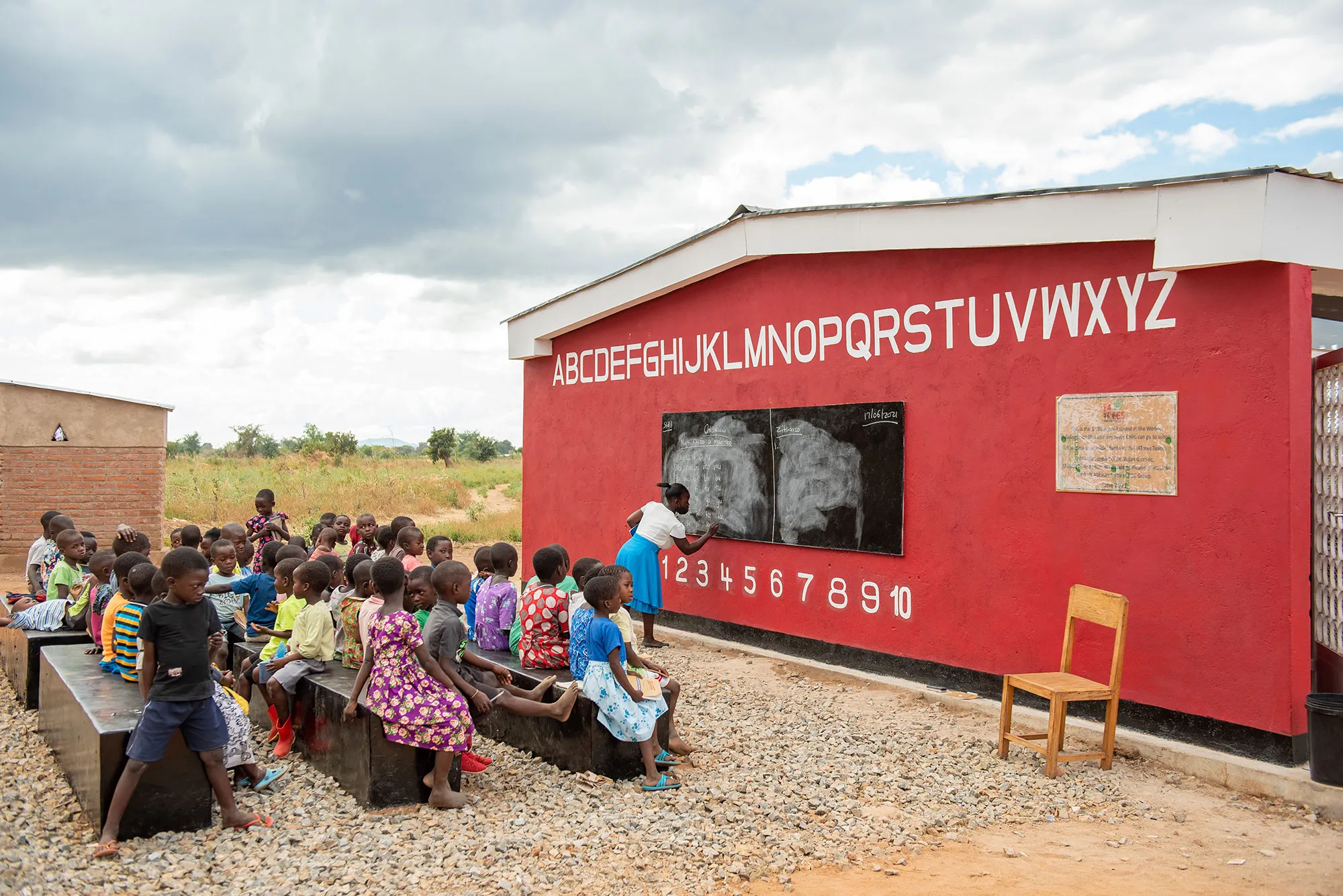
Educational and healthcare facilities are increasingly being considered for robotic construction deployment. These buildings, including the world’s first 3D-printed school, often require rapid construction timelines, particularly in regions facing infrastructure shortages, such as Africa.
3D-printed robots enable the fabrication of structural shells quickly while maintaining precise dimensional control, which is important for complex interior layouts in hospitals and schools.
Examples of potential applications include:
- Primary schools and classrooms.
- Rural health clinics.
- Emergency medical facilities.
- Research laboratories.
Robotic printing technologies can significantly shorten the construction schedule for these facilities, which can be critical in rapidly growing communities.
3. Infrastructure Components
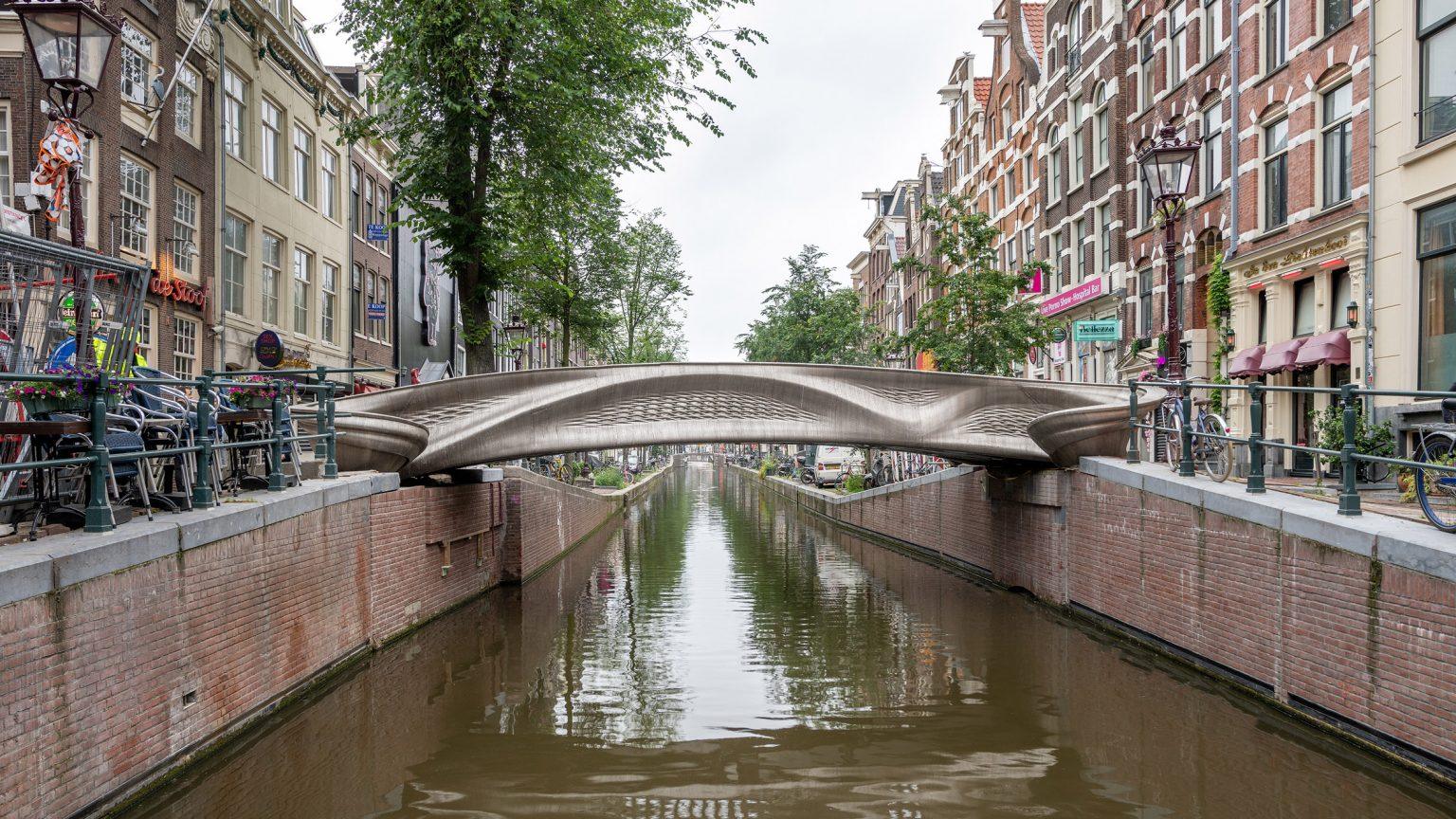
Infrastructure construction presents another promising application for construction 3D printing robot technologies. Robotic fabrication systems can produce large structural components with high geometric precision.
These components may be fabricated either on-site or in controlled prefabrication environments such as the MX3D bridge in the Netherlands.
Potential infrastructure applications include:
- Retaining walls.
- Bridge elements.
- Tunnel linings.
- Structural concrete modules.
- Drainage and utility structures.
The use of robotic fabrication in infrastructure could improve production consistency and reduce the complexity associated with conventional formwork systems.
4. Disaster Recovery Construction
Following natural disasters such as earthquakes, floods, or hurricanes, communities often require rapid reconstruction of essential infrastructure.
Robotic construction systems offer the potential to deploy automated fabrication units capable of producing housing and public buildings quickly.
Advantages in disaster recovery scenarios include:
- Rapid construction timelines
- Reduced dependence on large construction crews
- Lower material waste
- Ability to operate in resource-constrained environments
These capabilities could allow governments and humanitarian organisations to rebuild communities more efficiently following major disasters.
5. Affordable Housing Programmes
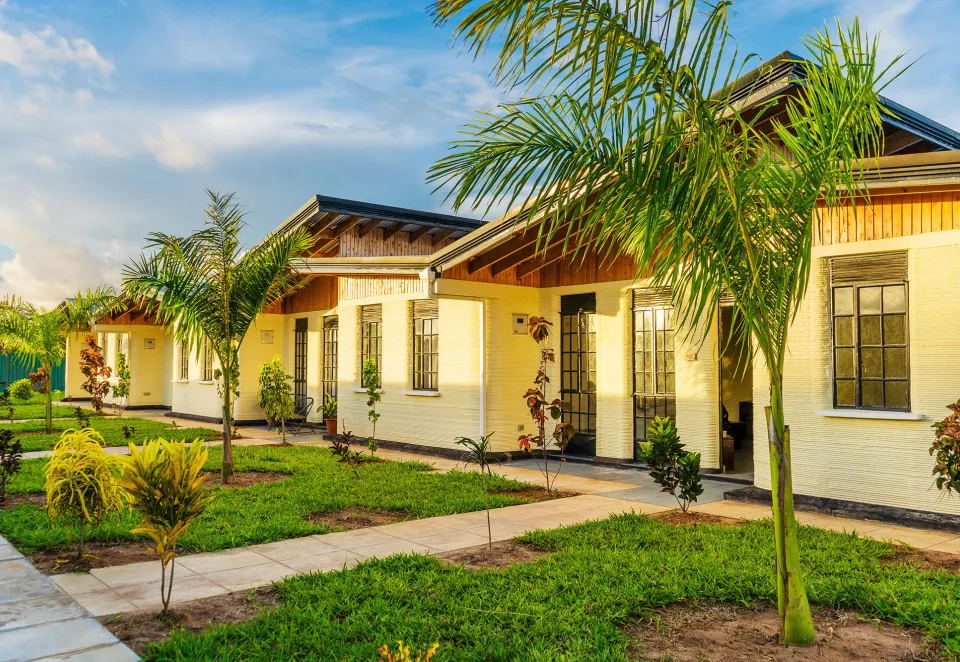
The global housing shortage remains one of the most significant challenges facing urban planners and governments. Several countries, such as the Mvule Gardens by 14Trees in Kilifi, Kenya, which is the largest 3D-printed affordable housing project in Africa, are investigating whether 3D-printing robots in construction could help reduce housing costs by lowering labour requirements and accelerating building delivery.
Potential advantages for affordable housing programmes include:
- Faster project completion.
- Lower construction labour costs.
- Reduced material consumption.
- Greater scalability for large developments.
As the technology matures, robotic additive manufacturing could become a key component of national housing strategies.
Africa and Emerging Markets: Why Robotic Construction Matters
Infrastructure demand across emerging economies is expanding at an unprecedented pace. Rapid urbanisation, population growth, and economic development are placing enormous pressure on construction industries to deliver housing and infrastructure faster than traditional methods allow.
Africa alone faces a substantial housing deficit, with millions of additional homes required to accommodate growing urban populations. At the same time, many countries across the continent must expand transportation networks, public utilities, healthcare facilities, and educational infrastructure. These challenges are forcing policymakers and infrastructure planners to explore innovative construction technologies that can accelerate project delivery.
3D printing robots in construction could play a significant role in addressing these challenges. Robotic additive manufacturing offers several structural advantages for emerging markets:
- Faster construction timelines for housing and public infrastructure.
- Reduced reliance on large construction workforces.
- Lower material waste and improved resource efficiency.
- Greater design flexibility for rapidly expanding urban environments.
Automation is already reshaping construction globally. Construction Frontier has explored this broader transformation in revolutionary automation and autonomy trends, which examines how robotics and automation are gradually entering mainstream construction operations. For emerging economies, these technologies could help bridge the gap between infrastructure demand and the industry’s ability to deliver projects.
Another important factor is cost control. Construction robotics and digital fabrication technologies are part of a broader movement toward improving construction productivity. As discussed in the new technology to cut costs for builders, automation tools are increasingly being deployed to address inefficiencies that have historically plagued the construction sector.
When integrated with digital design systems and modern project management methods, robotic construction technologies could allow emerging markets to deliver infrastructure more efficiently than traditional construction models.
Global Outlook for Robotic Construction Technology
The global construction industry is entering a period of technological transformation. Rising project complexity, labour shortages, and persistent productivity challenges are pushing contractors and infrastructure developers to explore automation at an unprecedented scale.
Within this context, construction robotics technology is gaining increasing attention from both governments and private investors. Several structural trends support the long-term growth of construction 3D printing robots.
Growing Investment in Construction Automation
Investment in construction automation has increased significantly over the past decade as technology companies, equipment manufacturers, and venture capital investors recognise the industry’s productivity challenges.
Key areas receiving investment include:
- Construction robotics systems.
- Additive manufacturing technologies.
- Automated building equipment.
- Digital construction platforms.
These investments are accelerating the development of commercial construction printing systems.
Key investors in 3D-printing construction robots:
- COBOD International has emerged as a global leader, providing modular robotic gantry systems like the BOD2 for large-scale projects.
- Apis Cor focus on compact, mobile robotic printers for rapid on-site deployment.
Industry Adoption Trends
Major contractors and engineering firms are increasingly experimenting with robotic fabrication technologies through pilot projects and research collaborations.
These initiatives aim to evaluate:
- Productivity gains from robotic fabrication.
- Cost efficiency compared with traditional construction methods.
- Integration with digital design platforms.
Many companies are also partnering with robotics developers and research institutions to advance the technology.
Key Engineering companies setting foot into 3D-printing construction:
- VINCI Construction has launched Concreative, a subsidiary focused on 3D-printing high-performance concrete to create complex structural elements without traditional formwork.
- Bouygues Construction has established a strategic partnership with the robotics firm Innodura to deploy intelligent robots on job sites, specifically targeting tasks like tunnel inspection and thermal insulation drilling to reduce labour-intensive manual work.
- Skanska has collaborated with Loughborough University and the architectural firm Foster + Partners to develop commercial 3D concrete-printing robots that translate complex digital models into on-site physical structures.
Advances in Construction Materials
Material science continues to play a crucial role in the evolution of construction 3D-printing robot technologies. Researchers are developing new printable concrete formulations designed specifically for additive manufacturing.
These materials aim to improve:
- Pumpability through extrusion systems.
- Structural strength after deposition.
- Durability under environmental loads.
Improved material performance will be essential for scaling robotic construction technologies to larger infrastructure projects.
Key 3D-printing materials players and innovators:
- Holcim has developed the TectorPrint range, a specialised 3D printing ink that maintains the perfect balance of fluidity for pumping and immediate setting upon deposition.
- CEMEX has introduced D.Fab, a chemical admixture solution that allows conventional concrete to be used in 3D printers.
- Heidelberg Materials (formerly HeidelbergCement) provides high-strength i.tech 3D-printing sand and binders, which were used to print Europe’s first 3D-printed apartment building.
- Saint-Gobain Weber also offers specialised mortars engineered for high-load-bearing vertical structures.
- Sika provides advanced accelerators and fibres that enhance the long-term durability and crack resistance of printed layers.
- WASP and IAAC (Institute for Advanced Architecture of Catalonia) are researching bio-based materials and raw earth mixtures to withstand diverse climates.
Long-Term Industry Impact
The long-term impact of 3D-printing robots in construction could be substantial. As robotics, digital design, and advanced materials converge, the construction industry may begin to resemble highly automated manufacturing environments.
If current technological trends continue, robotic additive manufacturing could contribute to:
- Significantly improved construction productivity.
- Faster infrastructure delivery.
- Reduced project costs.
- Increased architectural design freedom.
For contractors, developers, and infrastructure investors, understanding these emerging technologies will become increasingly important as the industry evolves.
Technical Snapshot: Construction 3D-Printing Robots
| Technology Component | Industry Role |
| Robotic motion systems | Control extrusion paths and structural geometry |
| Digital modelling integration | Convert CAD and BIM models into machine instructions |
| Printable material science | Enable stable and pumpable concrete mixtures |
| Automation control software | Synchronise robotic motion and material deposition |
| Sensor monitoring | Maintain structural accuracy and process stability |
Conclusion: The Strategic Future of 3D-Printing Robots in Construction
The development of 3D-printing robots in construction represents one of the most significant technological transitions currently underway in the global construction industry. By combining robotics, digital modelling, and advanced material science, additive manufacturing introduces a fundamentally different approach to building infrastructure.
For contractors, investors, and policymakers, the strategic implications extend far beyond experimental demonstration projects. As construction demand accelerates globally, the organisations capable of integrating robotic construction technologies into their project delivery models will likely gain a decisive advantage in productivity, cost control, and project speed.
Explore Advanced Construction Technologies and Make Smarter Construction Equipment Decisions
Construction Frontier delivers in-depth technical analysis of construction equipment, emerging machinery technologies, and performance benchmarks shaping modern infrastructure projects. Explore our expert insights to understand how next-generation machines are transforming productivity, efficiency, and project delivery across the global construction industry.