7 Innovative Engineering Intelligent Water Supply Systems for High-Performance Buildings
Africa’s new generation of high-performance buildings demands smarter, cleaner, and more efficient ways to move, store, and use water. Intelligent water supply systems are stepping in, merging engineering precision with digital intelligence to transform how commercial and residential buildings manage water.
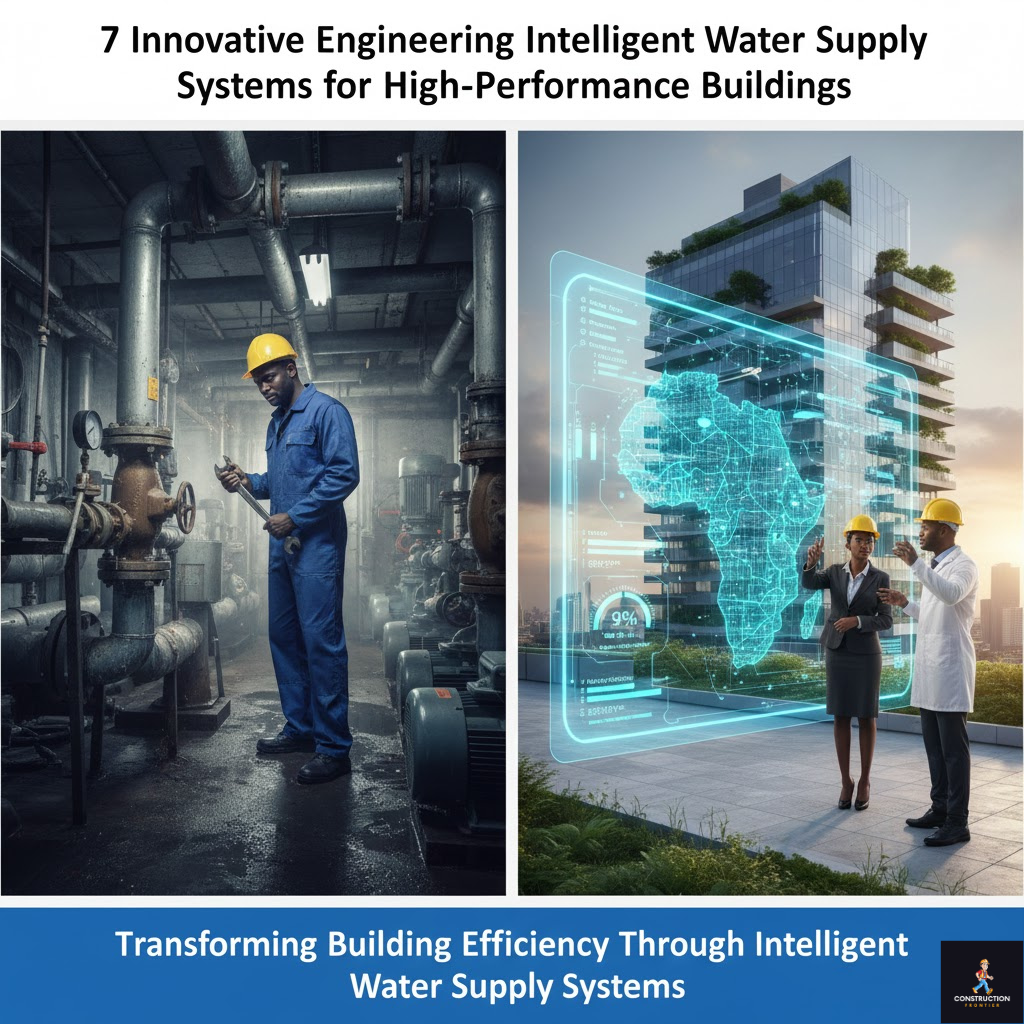
Transforming Building Efficiency Through Intelligent Water Supply Systems
Across Africa’s urban skylines, the demand for modern, future-proof infrastructure is rising fast. Developers, engineers, and facility managers are shifting towards intelligent water supply systems that combine automation, real-time monitoring, digital analytics, and energy-efficient distribution. These systems go far beyond conventional piping and storage. They act as the “digital nervous system” of a building’s water network.
As cities grow vertically and water scarcity becomes more frequent, the push for smart water supply systems, intelligent plumbing systems, and building water engineering solutions continues to intensify. High-rise buildings, mixed-use developments, data centres, and green-certified buildings all rely on advanced water system design to ensure reliability, sustainability, and performance.
Before exploring the seven key innovations, it is essential to understand why high-performance buildings are rapidly adopting this new engineering approach.
Why High-Performance Buildings Need Advanced Water System Intelligence
Traditional water systems were built for volume, not intelligence. Modern buildings require:
- Real-time consumption awareness.
- Predictive maintenance.
- Reduced leakages and water losses.
- Optimised pressures and pump operations.
- Safe, high-quality water distribution.
- Sustainable water reuse and recycling.
This is where innovative engineering intelligent water supply systems for buildings make the most significant impact. With data-driven decision-making and automated control, they improve efficiency, cut utility bills, and safeguard water supply reliability.
The following seven innovations highlight how smart engineering is shaping the future of modern water distribution in buildings across Africa and beyond.
1. Intelligent Pressure-Zone Water Distribution Systems
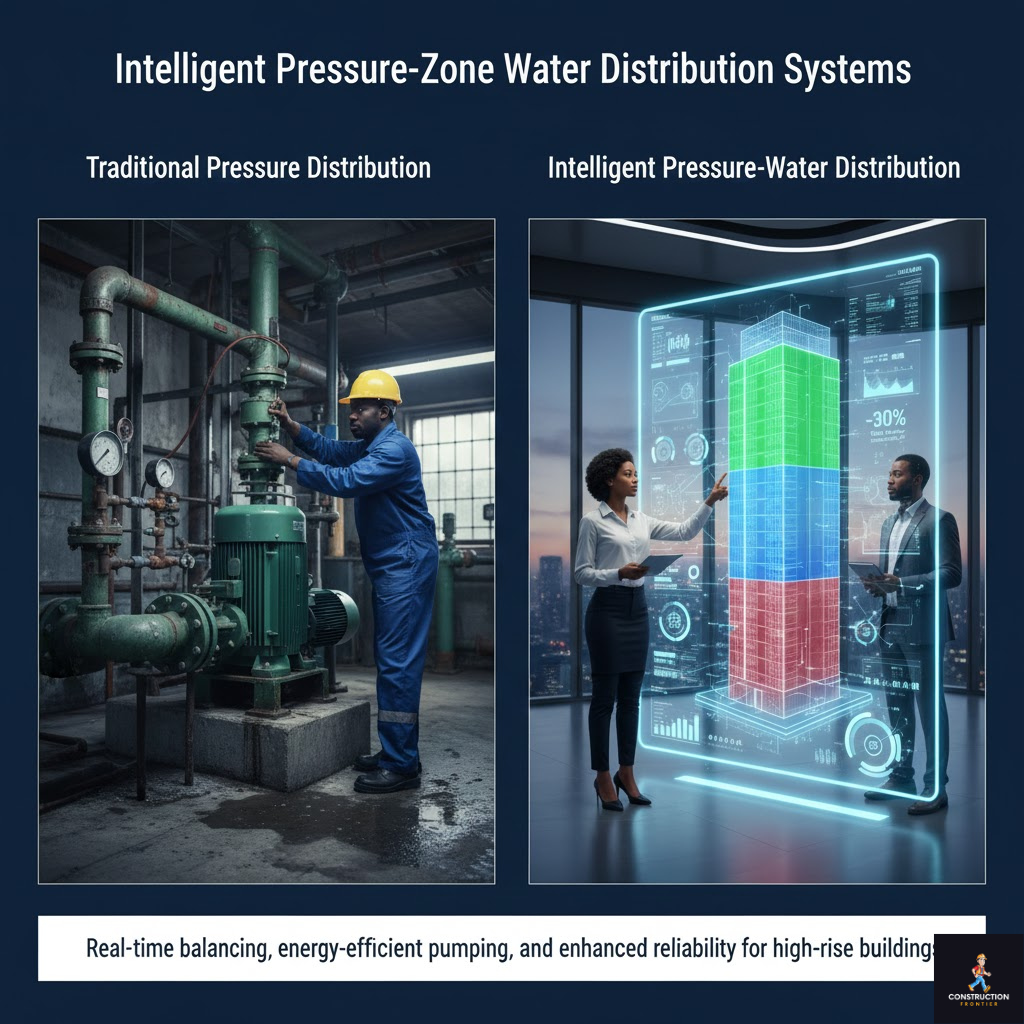
High-rise buildings face one of the toughest engineering challenges: maintaining stable pressure across multiple floors. Intelligent pressure-zone water distribution systems solve this through advanced zoning, adaptive pumping, and real-time monitoring.
These systems divide the building into pressure zones based on height and demand. Smart sensors continuously monitor flow, pressure, and pump performance. When pressure drops or spikes, the system automatically adjusts pump output and valve behaviour to stabilise distribution instantly. This prevents pipe failures, ensures even delivery across all levels, and eliminates the everyday problems of over-pressurisation in low floors and inadequate supply in upper floors.
Benefits include:
- Real-time balancing of pressure throughout the building.
- Energy-efficient pumping based on actual demand.
- Reduced wear on mechanical components.
- Precise control is ideal for tall commercial buildings.
This is one of the most widely used intelligent water supply systems in high-rise developments due to its reliability and efficiency.
2. Smart Water Storage, Treatment, and Quality Monitoring Systems
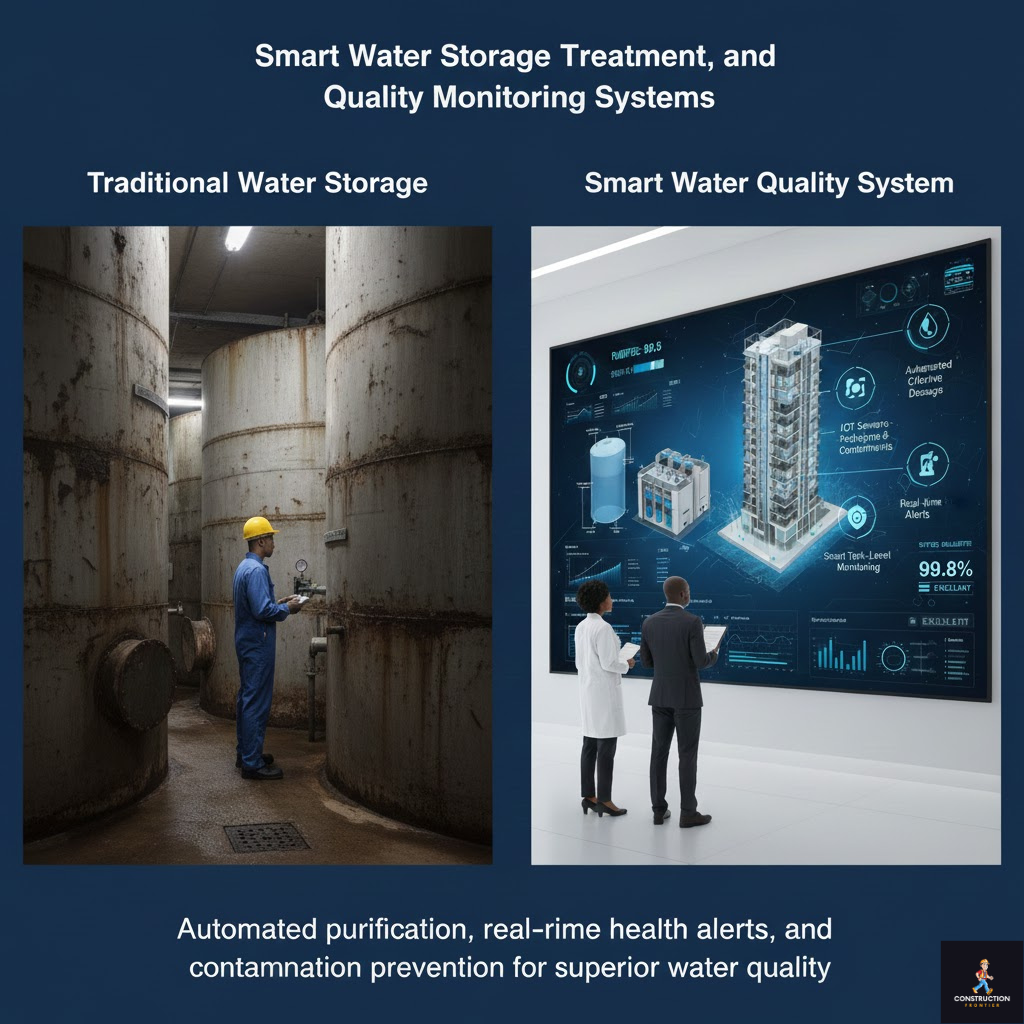
Modern developments require more than simple storage tanks. Today’s smart water supply systems incorporate advanced automation and quality monitoring tools that ensure safe, clean, and efficient water availability.
These systems integrate:
- Automated chlorine dosage and sterilisation.
- IoT-enabled sensors for pathogen and contamination detection.
- Smart tank-level monitoring and overflow prevention.
- Real-time alerts and predictive maintenance.
This technology is especially important in hotels, hospitals, and mixed-use complexes, where health and safety requirements are stringent. Smart water distribution engineering for commercial buildings increasingly relies on these smart treatment systems to ensure regulatory compliance, improve water quality, and prevent contamination.
Through analytics, buildings can also predict consumption patterns, optimise tank refill cycles, and reduce energy wasted during pumping. This level of precision would be impossible in conventional systems.
3. Adaptive Demand-Responsive Pumping Systems
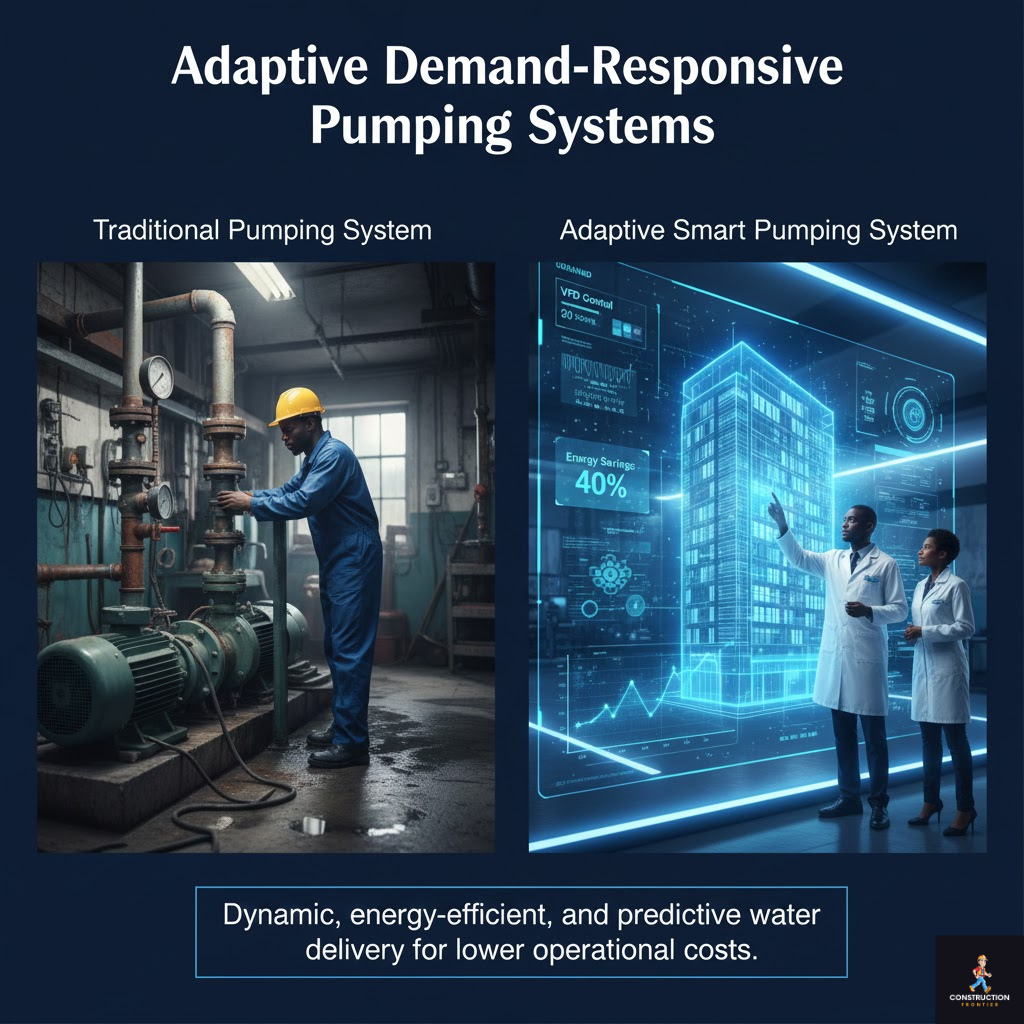
Intelligent water supply systems are no longer static: they actively respond to changing building conditions. Adaptive pumping systems use variable-frequency drive (VFD) technology alongside predictive algorithms to adjust pumping effort based on real-time demand.
When occupancy increases, such as during office morning hours, the system automatically boosts pumping capacity. During low-demand periods, it reduces output, saving energy and reducing mechanical stress. This approach forms the backbone of advanced water system design, where engineering works hand in hand with automation.
Key advantages include:
- Reduced energy consumption by up to 40%.
- Soft-start capability to extend pump lifespan.
- Dynamic response to fluctuating building occupancy.
- Lower operational costs.
For sustainable developments, this is one of the most effective smart water system designs for sustainable buildings.
4. Intelligent Leak Detection and Automated Isolation Systems
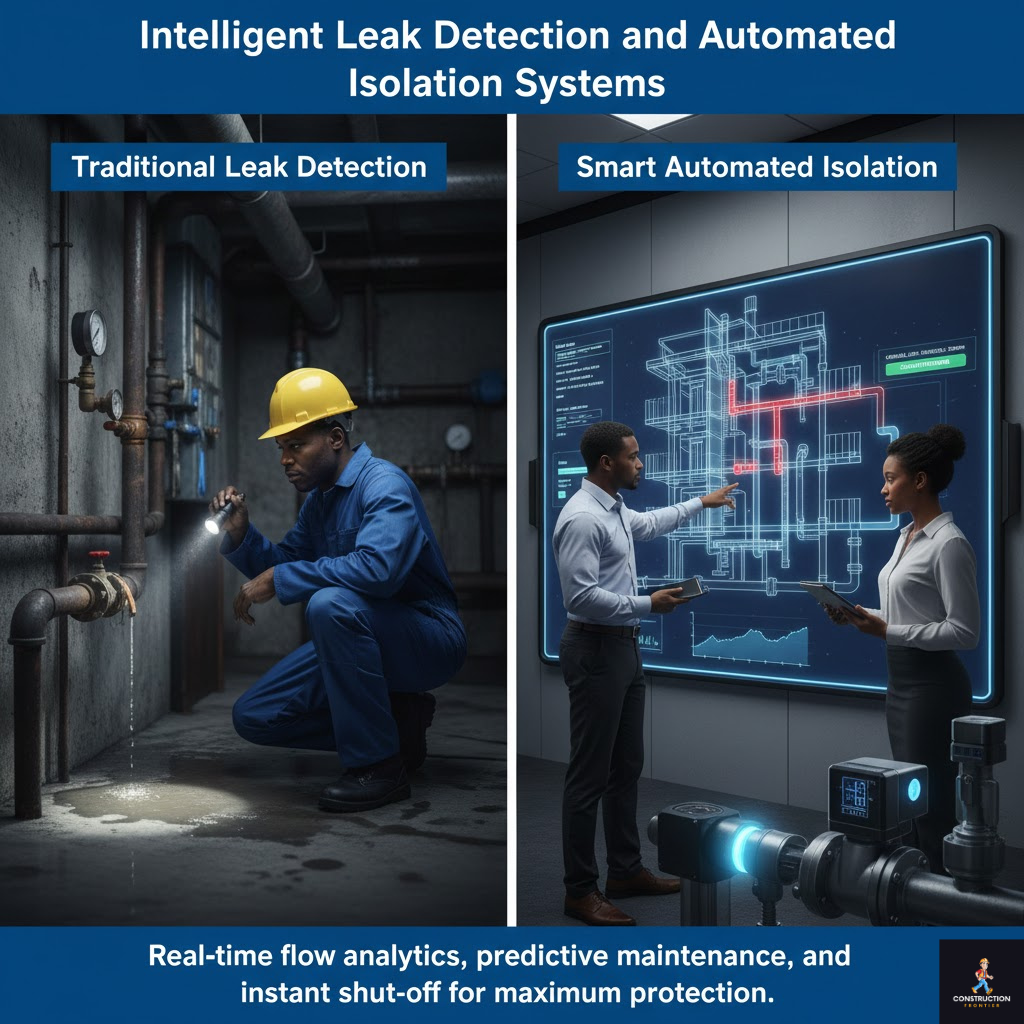
Water leaks are among the most expensive and disruptive building failures. Intelligent plumbing systems now use acoustic sensors, flow analytics, and machine learning to detect leaks instantly: even micro-leaks that traditional systems never notice.
These systems predict abnormal flow behaviour by analysing historical usage. If a leak is detected, automated isolation valves shut off the affected zone within seconds, preventing structural damage, mould growth, and water wastage.
This innovation supports compliance with green-building standards and reduces insurance risks. It is also essential for engineering solutions for efficient water supply in high-rise buildings, where long vertical pipe runs are vulnerable to pressure-related failures.
With water becoming a scarce resource across Africa and global cities, early leak detection is no longer optional; it is a core feature of all innovative engineering intelligent water supply systems for buildings.
5. Digital Twins and Simulation-Based Water System Control
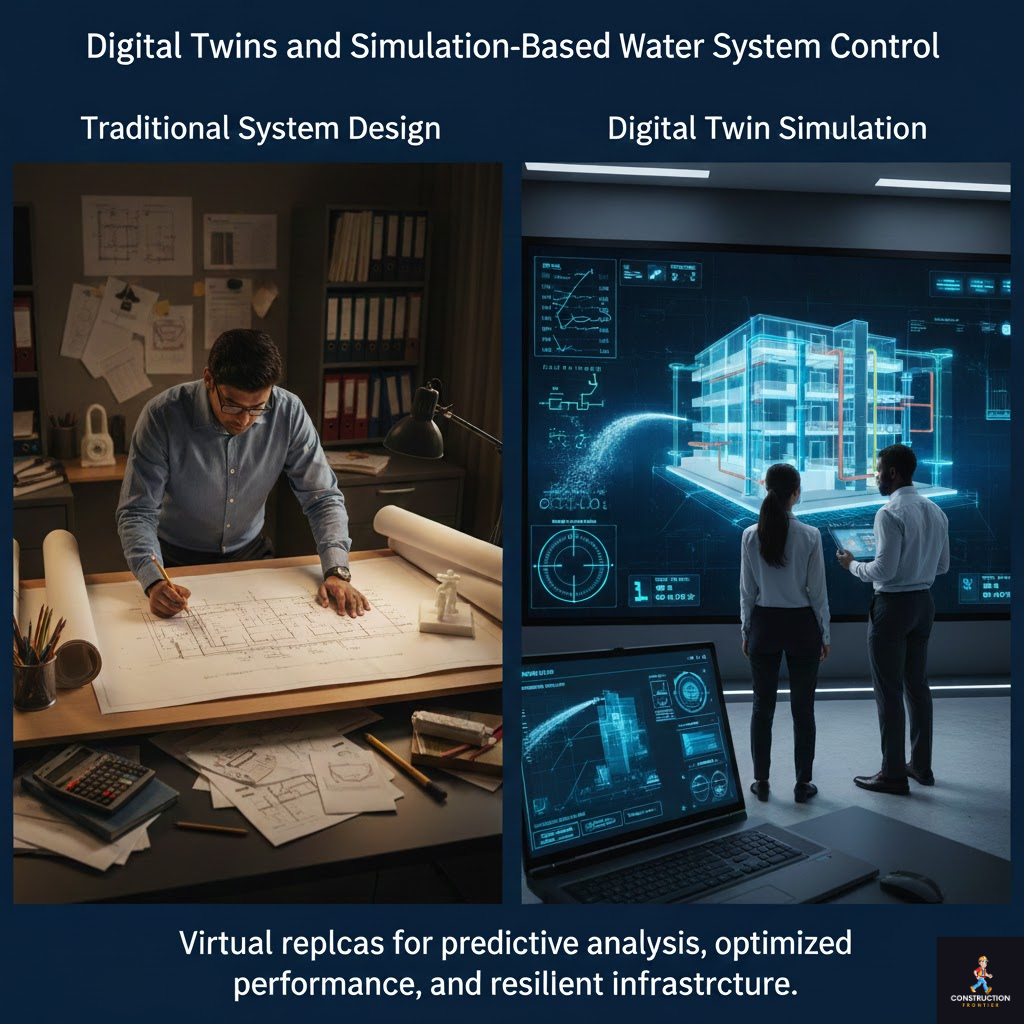
Digital twin simulations have rapidly moved into mainstream engineering, including water infrastructure inside buildings. By creating a virtual replica of the entire plumbing network, engineers can simulate pressure changes, water hammer risks, consumption peaks, emergency scenarios, and future expansion requirements.
This digital model is continuously updated with data from sensors, delivering real-time insights into system performance.
Applications include:
- Predicting pipe fatigue and material failure.
- Analysing water age to avoid stagnation.
- Scenario modelling for fire-suppression system activation.
- Optimising pump sequencing and energy use.
Digital twins in construction enable intelligent water distribution engineering for commercial buildings by providing a deep understanding of how the system behaves under multiple conditions. This simulation eliminates guesswork and allows proactive decision-making: significantly improving building performance and long-term resilience.
Further reading: 10 Ultimate Digital Twins Applications in Construction: Revolutionising Smart Building Performance
6. Greywater Recycling and Smart Water Reuse Systems
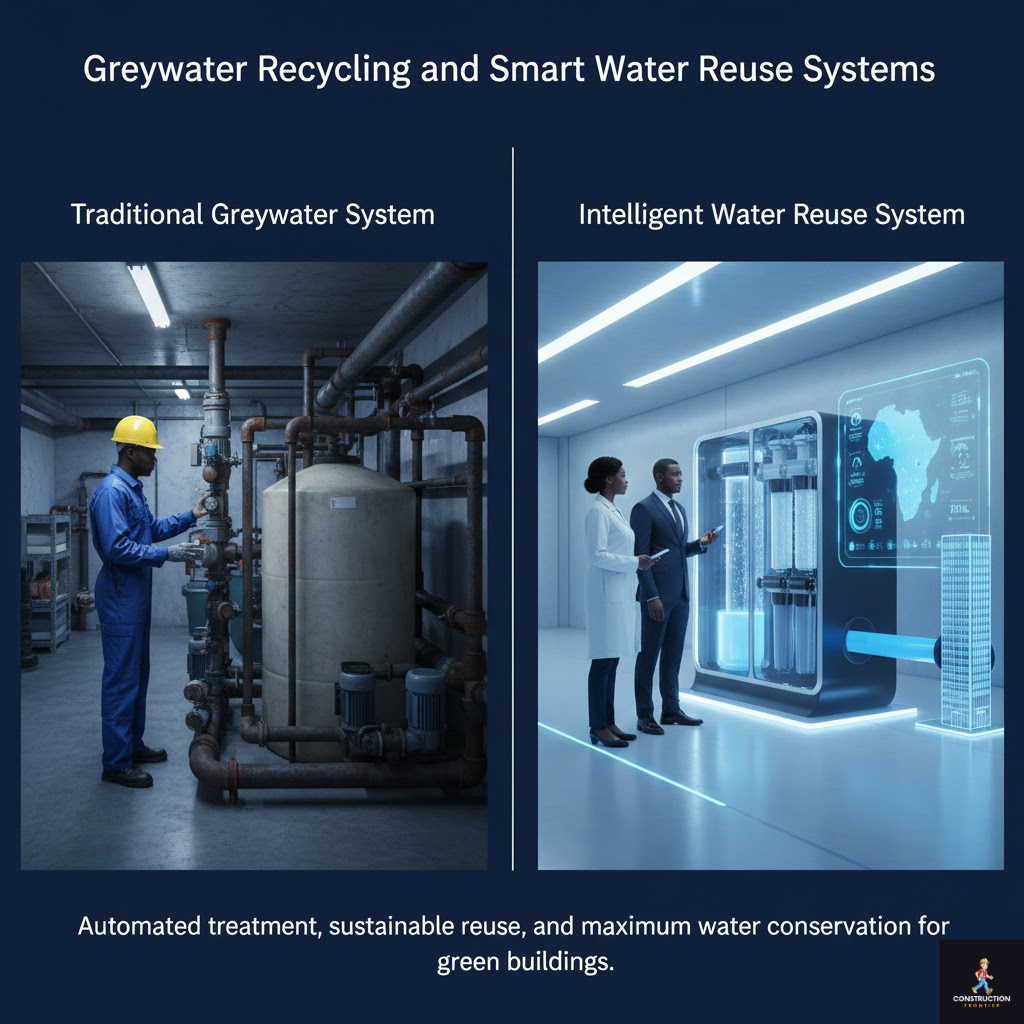
Sustainable construction demands intelligent strategies to reduce freshwater consumption. Greywater reuse systems collect lightly used water from showers, basins, and laundry, then treat and repurpose it for toilet flushing, irrigation, and cooling-tower replenishment.
New intelligent water supply systems elevate this concept through automation:
- Smart filters adjust operation based on water quality.
- UV disinfection ensures safe reuse.
- Sensors monitor turbidity, pH, and biological load.
- AI-powered controllers optimise storage tank levels.
These systems dramatically reduce the building’s reliance on municipal supply and lower utility bills. For developers pursuing green certifications such as LEED, EDGE, or Green Star, greywater systems offer highly measurable performance improvements.
They support the transition toward high-performance building water supply technologies by merging sustainability with engineering precision.
7. Smart Fire Suppression and Booster Pump Management Systems
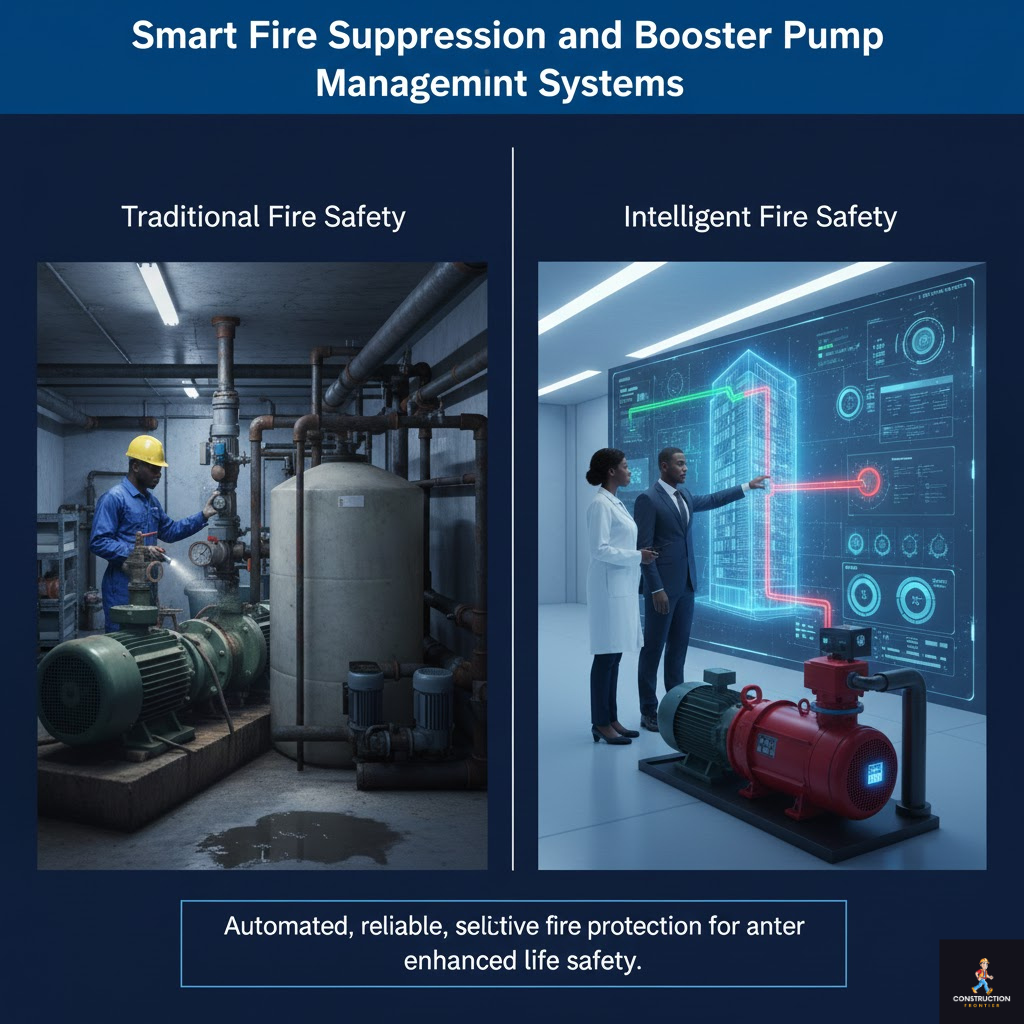
Fire safety systems are among the most critical water-engineered components of any high-rise building. Intelligent fire suppression systems now incorporate sensor-driven pump controls, automated valve sequencing, and real-time monitoring of fire-supply pressure.
Instead of relying solely on periodic manual inspections, smart systems provide:
- Live data on sprinkler head performance.
- Instant alerts for pressure anomalies.
- Automatic activation of backup pumps.
- Predictive diagnostics for fire valves and tanks.
For complex commercial and industrial developments, integrating smart fire systems into modern water distribution in buildings ensures compliance while enhancing operational reliability. The margin for error in life-safety systems is zero, making intelligent automation indispensable.
Benefits of Intelligent Water Supply Systems in High-Performance Buildings
Intelligent water supply systems are more than just modern plumbing; they are central to achieving operational efficiency, sustainability, and safety in high-performance buildings. By integrating smart sensors, automation, and advanced engineering, these systems ensure precise water distribution, reduce wastage, and improve reliability. The benefits extend from design and construction to daily building operations, enhancing both occupant comfort and infrastructure resilience.
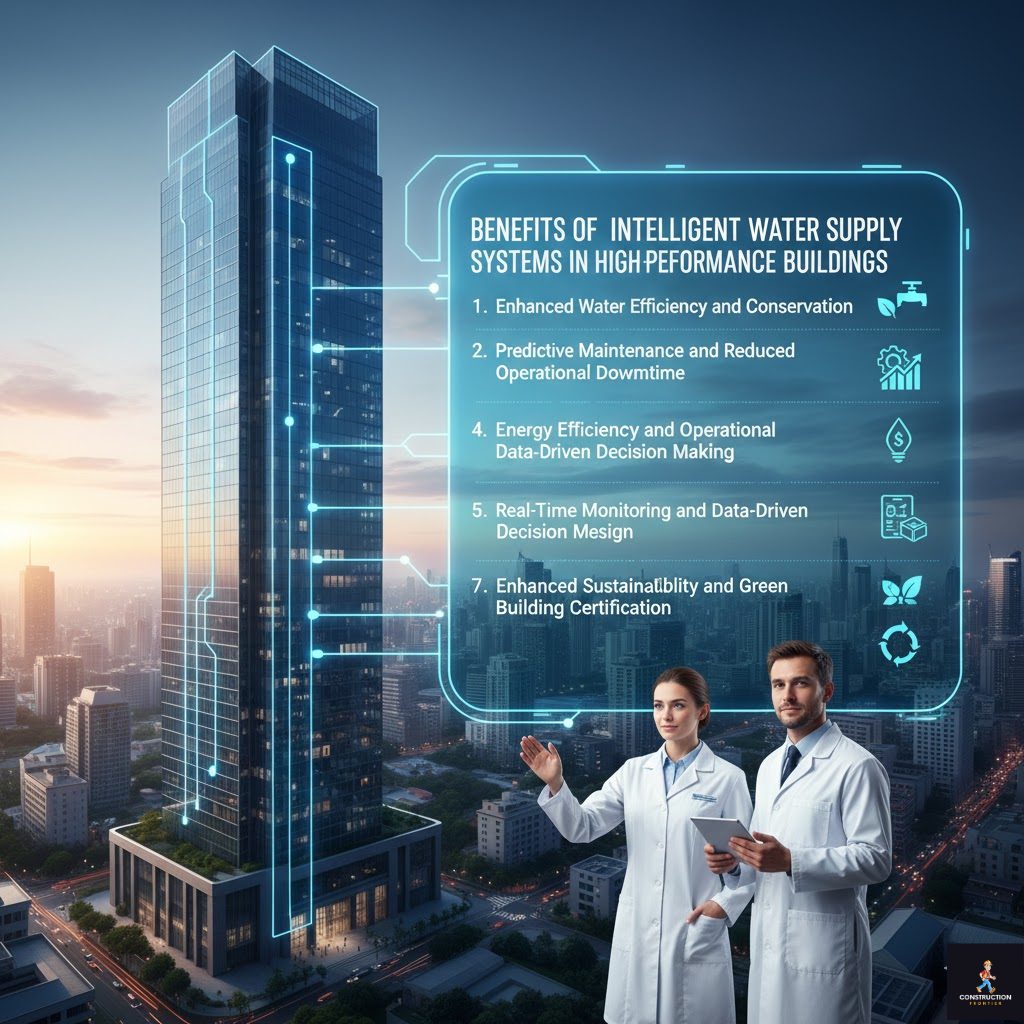
1. Enhanced Water Efficiency and Conservation
Intelligent water supply systems use real-time monitoring and automated control to optimise water usage. Flow sensors, pressure regulators, and leak detection devices ensure that water is delivered only when and where it is needed, reducing unnecessary consumption.
Key improvements include:
- Detecting leaks early to prevent water loss and structural damage.
- Optimising irrigation and plumbing schedules in commercial and residential buildings.
- Reducing energy consumption associated with water heating and pumping.
By implementing smart water supply systems, buildings can achieve measurable reductions in water use while maintaining operational efficiency.
2. Predictive Maintenance and Reduced Operational Downtime
High-performance buildings equipped with intelligent plumbing systems benefit from predictive maintenance capabilities. Advanced analytics detect irregularities in water flow, pressure, or temperature before they escalate into costly failures.
This proactive approach allows:
- Early detection of pipe corrosion or blockages.
- Automated alerts for maintenance teams.
- Reduced emergency repairs and minimal disruption to building occupants.
These systems transform traditional reactive maintenance into a structured, predictive strategy, saving both time and resources.
3. Improved Water Quality and Safety
Intelligent water distribution engineering ensures that water quality is continuously monitored and maintained at optimal standards. Sensors track contamination risks, chemical levels, and temperature variations, guaranteeing safe delivery throughout the building.
Benefits include:
- Immediate detection of potential waterborne hazards.
- Automated flushing of stagnant lines to maintain hygiene.
- Integration with health and safety compliance systems.
This provides occupants with reliable, safe water while enhancing building certification and regulatory compliance.
4. Energy Efficiency and Operational Cost Reduction
By optimising pump operations, controlling hot water cycles, and balancing pressure across the system, intelligent water supply systems reduce energy demand.
Operational advantages include:
- Minimising energy-intensive pumping during off-peak hours.
- Reducing heating requirements through smart temperature management.
- Cutting long-term utility and maintenance costs.
These efficiencies are particularly valuable in African high-performance buildings, where energy supply can be costly or inconsistent.
5. Real-Time Monitoring and Data-Driven Decision Making
Intelligent water supply systems integrate IoT sensors, SCADA platforms, and cloud-based analytics to provide continuous, real-time insights into water system performance. Facility managers can monitor flow rates, pressure, and consumption trends remotely, allowing for informed decisions.
Key advantages include:
- Immediate visibility of anomalies or system inefficiencies.
- Data-driven planning for upgrades, retrofits, and expansions.
- Enhanced reporting for stakeholders, investors, and regulators.
By enabling real-time monitoring, smart water supply systems turn operational uncertainty into actionable intelligence, improving both performance and accountability.
6. Scalability and Flexibility in Building Design
Modern water distribution in buildings often needs to accommodate future expansion or changing usage patterns. Intelligent water supply systems are modular and adaptable, making them suitable for diverse building types, from high-rise residential towers to commercial complexes.
Practical benefits include:
- Simplified integration with additional floors, wings, or facilities.
- Easy adaptation to evolving building occupancy or functions.
- Compatibility with other smart building technologies, such as HVAC and energy management systems.
This flexibility ensures that buildings remain high-performing and resilient over their entire lifecycle.
7. Enhanced Sustainability and Green Building Certification
Intelligent water distribution engineering for commercial buildings supports sustainability goals and green building certifications such as LEED or EDGE. By optimising water use, reducing energy consumption, and tracking environmental performance, these systems contribute directly to a building’s ecological footprint.
Key contributions include:
- Lowering overall water consumption and wastewater generation.
- Supporting energy-efficient heating and pumping operations.
- Providing accurate reporting for sustainability audits and incentives.
Smart water system design for sustainable buildings demonstrates that water efficiency is no longer an optional feature but a core component of high-performance infrastructure.
Further reading: What is Green Building Technology? Innovative Solutions for a Sustainable Built Environment
Challenges Facing Intelligent Water Supply Systems in High-Performance Buildings
Despite the clear advantages, implementing innovative engineering intelligent water supply systems presents several challenges. These barriers are often technical, financial, and operational, and addressing them is critical for successful deployment.
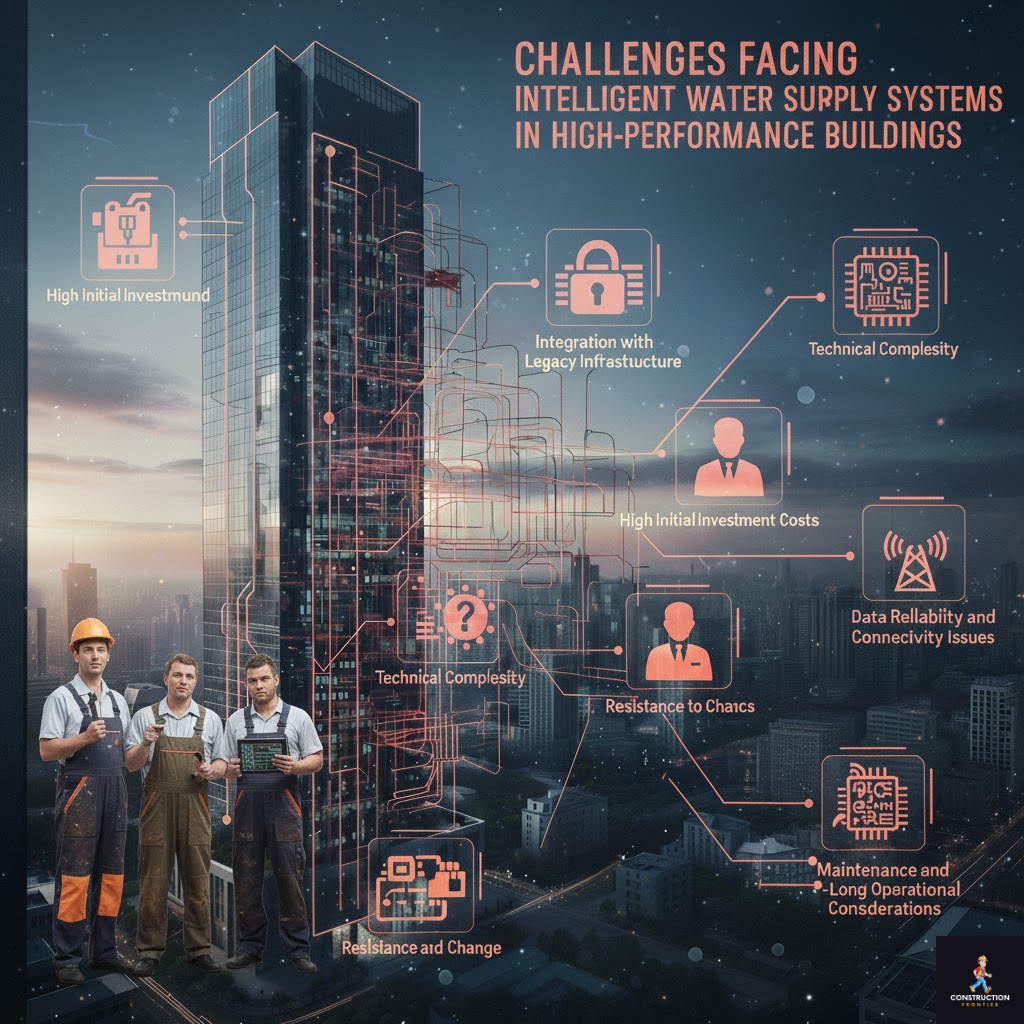
1. High Initial Investment Costs
The upfront cost of advanced water system design, including IoT-enabled sensors, automated pumps, and analytics platforms, can be significant. Mid-sized developers may find these investments challenging without long-term planning or financing.
Considerations include:
- Procurement of specialised components and smart water technology.
- Installation of integrated monitoring and control platforms.
- Ongoing software and hardware maintenance costs.
While these systems reduce operational expenses over time, initial capital requirements can delay adoption.
2. Technical Complexity and Expertise Requirements
Engineering solutions for efficient water supply in high-rise buildings require specialised knowledge. Designers and facility managers must understand plumbing hydraulics, sensor integration, and data analytics to implement systems effectively.
Key challenges include:
- Limited availability of professionals trained in intelligent plumbing systems.
- Need for continuous staff training on software updates and system troubleshooting.
- Integration complexity with existing building infrastructure.
Without skilled personnel, even the most advanced smart water supply systems cannot reach their full potential.
3. Integration with Legacy Infrastructure
Many African buildings rely on older water distribution networks that are not compatible with modern intelligent water supply systems. Retrofitting can be challenging due to space constraints, pipe material limitations, or outdated design layouts.
Impacts include:
- Increased renovation costs and potential downtime during installation.
- Difficulty in achieving complete system optimisation due to existing constraints.
- Potential disruption to building operations during integration.
Strategic planning and phased deployment are often required to mitigate these integration challenges.
4. Data Reliability and Connectivity Issues
Intelligent water supply systems depend on continuous data flow from sensors to central monitoring platforms. In regions with unstable power supply or limited internet connectivity, data gaps can affect system performance and predictive capabilities.
Issues include:
- Intermittent sensor communication leads to inaccurate monitoring.
- Dependence on cloud-based platforms requires secure, reliable networks.
- Risk of delayed alerts for leaks, pressure anomalies, or system failures.
Ensuring robust network infrastructure is critical to fully leveraging smart water supply systems.
5. Resistance to Change and Adoption Barriers
Facility managers, contractors, and building owners may resist transitioning from traditional water supply approaches to intelligent systems. This cultural and operational resistance can slow adoption.
Challenges include:
- Reluctance to trust automated monitoring over manual inspection.
- Perception of complexity or over-engineering for relatively small buildings.
- Preference for reactive maintenance due to familiarity with conventional workflows.
Addressing these challenges requires education, demonstration of Return of Investment (ROI), and strategic stakeholder engagement.
6. Maintenance and Long-Term Operational Considerations
While intelligent water supply systems reduce unplanned maintenance, they still require ongoing monitoring, calibration, and software updates. Poor upkeep can diminish system performance and shorten equipment lifespan.
Key considerations include:
- Scheduled sensor calibration and replacement.
- Software updates for predictive analytics platforms.
- Training maintenance teams to interpret and act on system data.
Proactive planning ensures that the long-term benefits of high-performance building water supply technologies are realised.
The Future of Intelligent Water Supply Systems in High-Performance Buildings
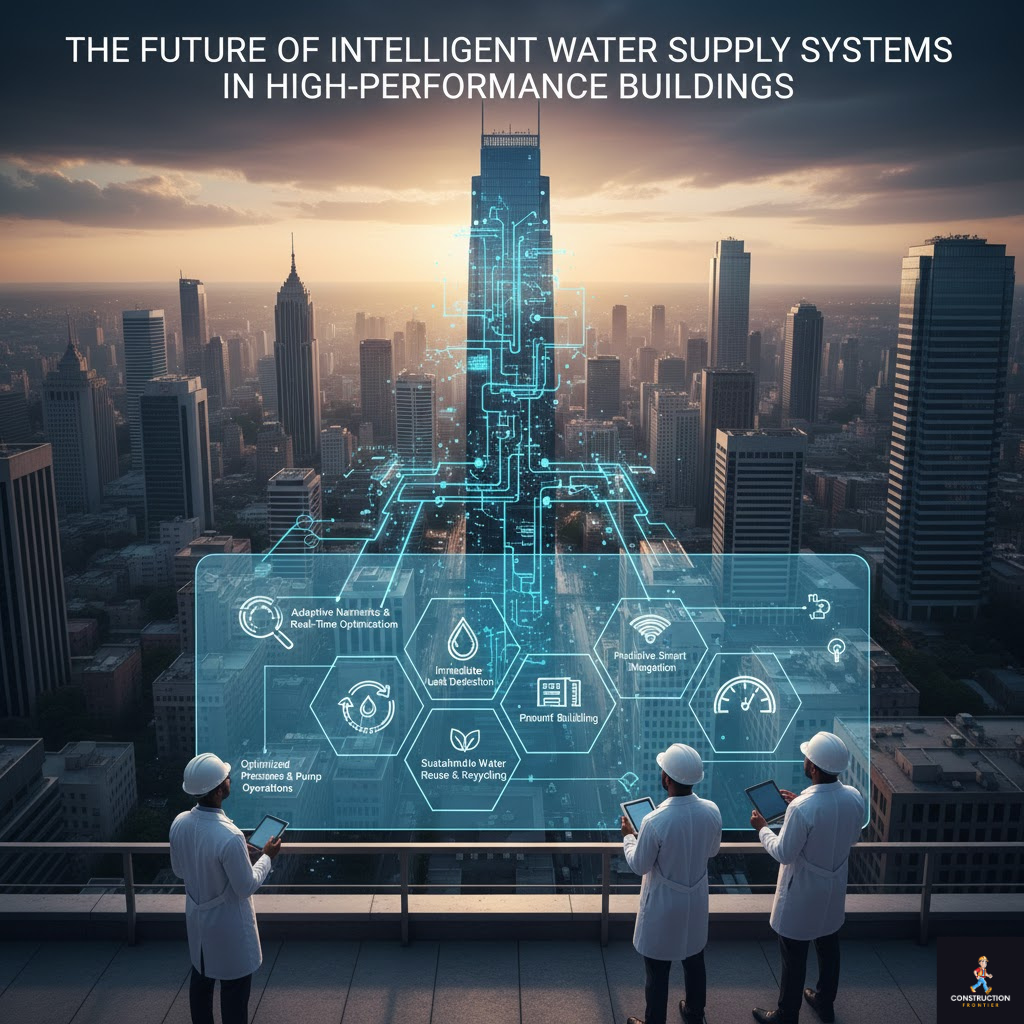
The future of intelligent water supply systems promises a transformative shift in how high-performance buildings manage, distribute, and conserve water. As urban developments become more complex and sustainability requirements tighten, smart water supply systems will evolve into fully adaptive networks that optimise water usage in real time. By combining advanced sensors, IoT connectivity, and predictive analytics, these systems will detect leaks immediately, anticipate maintenance needs, and automatically adjust water flow to match building occupancy and operational demands.
Emerging technologies will enable building water engineering solutions to integrate seamlessly with other smart building platforms, creating a connected ecosystem that enhances efficiency and resilience. Intelligent plumbing systems and advanced water system design will not only improve operational performance but also support environmental goals, reducing waste and carbon footprint across commercial, residential, and mixed-use developments. In essence, the next generation of water supply technologies will empower facility managers, engineers, and developers to deliver sustainable, high-performance buildings while contributing to smarter, more resilient urban water management strategies across Africa and beyond.
Conclusion. The Future of Building Water Engineering in Africa
Africa’s journey toward sustainable, high-performance buildings depends heavily on the adoption of smarter, cleaner, and more resilient water technologies. From AI-powered analytics to digital twins, leak detection, smart pumping, and sustainable recycling, intelligent water supply systems will play a foundational role in the continent’s built environment.
As cities transform, developers and building owners who embrace these innovations will reduce operational costs, boost energy efficiency, and establish long-lasting building performance.
Call to Action. Explore More Smart Engineering Insights
To stay ahead of Africa’s rapidly evolving construction sector, visit ConstructionFrontier.com for expert insights, engineering guides, and future-facing building innovations. Follow us on all platforms and be part of the community shaping tomorrow’s smart buildings.