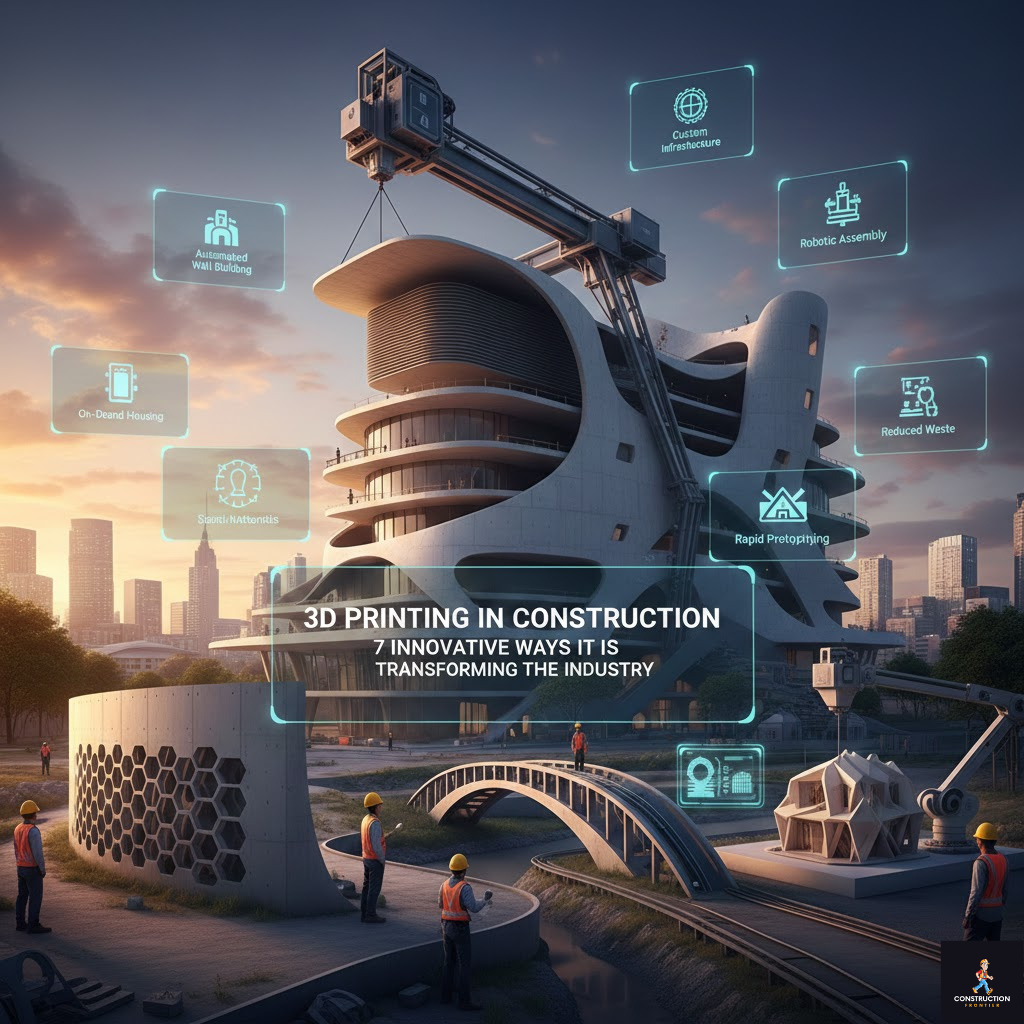
3D Printing in Construction: 7 Innovative Ways It Is Transforming the Industry
3D printing in construction is no longer an experimental technology; it has become a mainstream approach to the construction industry. It is actively reshaping how buildings and infrastructure are designed, built, and delivered. As construction costs rise and labour shortages intensify, additive manufacturing offers faster delivery, lower waste, and new architectural freedom.
Introduction: Why 3D Printing Is Disrupting the Construction Industry
3D printing in construction refers to the automated fabrication of buildings or structural components using layer-by-layer material deposition controlled by digital models. Unlike conventional construction, which depends heavily on labour, formwork, and sequential activities, 3D printing introduces precision, automation, and speed.
The construction sector is under pressure from rising material prices, shrinking skilled labour pools, slow project delivery, and high levels of waste. These challenges are particularly severe in fast-urbanising regions and developing economies. Construction innovation in modern projects is therefore shifting towards technologies that improve efficiency and predictability.
Against this backdrop, 3D printing is emerging as a practical solution rather than a futuristic concept. This article explains what construction 3D printing is, why it matters now, and the seven most impactful ways it is transforming the construction industry globally across housing, infrastructure, and commercial construction.
What Is 3D Printing in Construction?
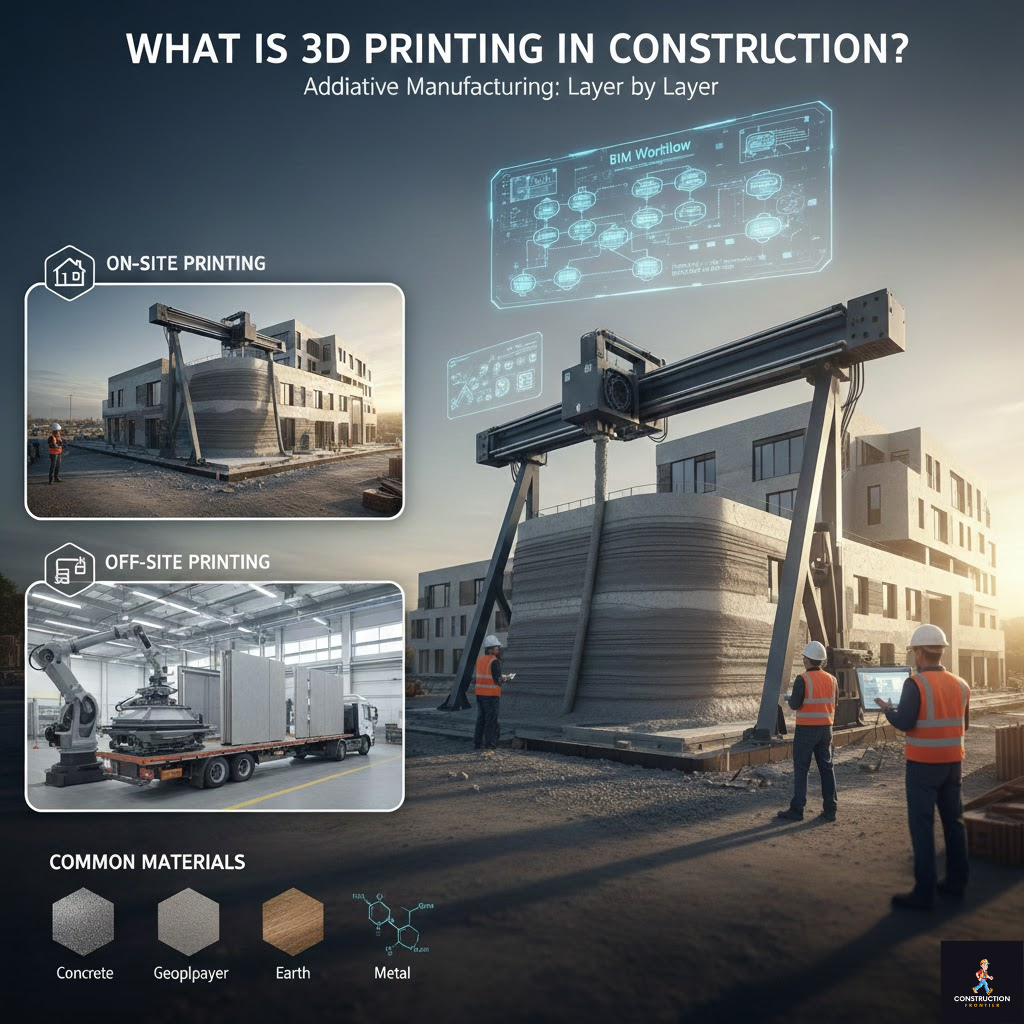
3D printing in construction is an additive manufacturing process that creates buildings or structural components by depositing construction materials layer by layer using digitally controlled equipment.
Construction 3D printing systems use large-scale robotic printers guided by digital design files, often generated through BIM workflows. Common materials include concrete, cementitious composites, geopolymers, and specially engineered mortar mixes designed for extrusion and rapid setting.
There are two main approaches to 3D printing in construction. On-site printing involves deploying the printer directly on the construction site, allowing walls and structural elements to be printed in their final position. Off-site printing involves fabricating components in controlled environments and assembling them on-site.
The history of 3D printing in construction spans more than two decades, evolving from small-scale research experiments to full-scale buildings. Advances in materials science, robotics, and digital design have brought the technology to the brink of commercial viability, with growing interest from governments, developers, and contractors.
The 7 Innovative Ways 3D Printing Is Transforming Construction
3D printing in construction is not a single improvement but a collection of interrelated innovations that affect time, cost, labour, sustainability, design, scalability, and quality. The following seven areas represent the most significant ways construction 3D printing is reshaping the industry today, supported by real-world applications and measurable outcomes.
1. Faster Project Delivery and Accelerated Build Times
Speed is one of the most disruptive advantages of 3D printing in construction, particularly when compared to traditional, labour-intensive building methods. Conventional construction relies on sequential activities, including formwork installation, reinforcement fixing, concrete pouring, curing, and dismantling. Each stage introduces delays, coordination risks, and variability in quality. Construction 3D printing consolidates many of these processes into a single automated workflow.
In a typical 3D printing construction project, structural walls are printed continuously from a digital model, eliminating the need for temporary formwork. This uninterrupted, layer-by-layer process enables projects to transition from foundation to structural shell in a fraction of the time required by conventional methods. Off-site prefabrication using 3D printing further accelerates delivery by allowing parallel activities such as site preparation and component fabrication.
From a project management perspective, faster delivery improves cash flow, reduces financing costs, and limits exposure to market volatility. For governments and developers facing housing shortages, accelerated timelines are not just an efficiency gain but a strategic advantage.
Case Study: Dubai Future Foundation – Office of the Future (UAE)
- Project: First fully functional 3D‑printed office building.
- Location: Dubai, UAE.
- Technology: Additive concrete printing with a large robotic arm printer.
- Timeline: Printed in 17 days; installed in 2 days.
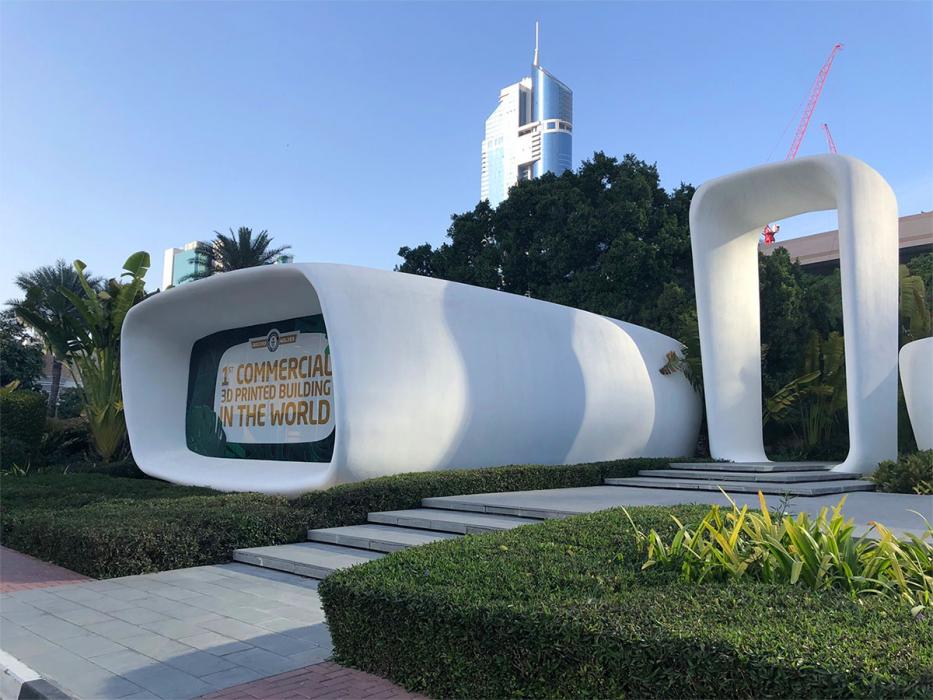
The office of the future UAE project demonstrated that commercial 3D printing in construction can be achieved at full scale, with structural performance suitable for office use. It also showed the potential to reduce labour and waste compared to traditional methods. Dubai has since announced plans to utilise 3D printing for 25% of its new buildings by 2025, underscoring the strategic importance of construction 3D printing.
2. Significant Cost Reduction in Construction Projects
Cost efficiency is one of the most commercially compelling advantages of 3D printing in the construction industry. Traditional construction costs are heavily influenced by labour availability, formwork complexity, material waste, and rework due to human error. Construction 3D printing directly addresses these cost drivers through automation and precision, thereby reducing costs.
Labour costs are reduced because fewer on-site workers are required to execute repetitive structural tasks. Formwork, which can account for a significant percentage of the cost of reinforced concrete, is almost eliminated. Material efficiency is improved because the printer deposits only the material required by the structural design, reducing overuse and waste.
For developers and public agencies, 3D printing in construction offers cost predictability. With digital models controlling quantities and processes, budgeting becomes more reliable, which is particularly valuable in affordable housing and public infrastructure programmes.
Case Study: WinSun Multi‑Room Apartment Building (China)
- Project: 6‑story apartment building made with 3D printing.
- Location: Suzhou Industrial Park, China.
- Achievement: One of the world’s tallest printed buildings.
- Performance: Reportedly reduced waste by 30–60% and construction time by 50–70% for the printed components.
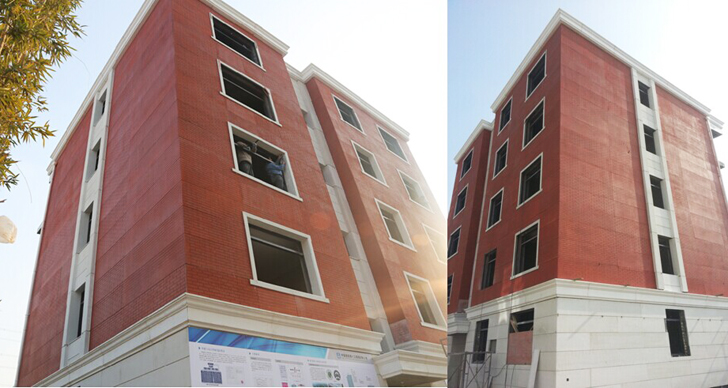
The WinSun Apartment project demonstrates that 3D printing in construction can scale beyond single homes into multi‑story residential buildings when integrated with traditional finishing methods.
3. Solving Labour Shortages Through Automation
Labour shortages are a structural challenge facing the global construction industry. Skilled trades are ageing, recruitment pipelines are weak, and project delays caused by workforce shortages are increasingly common. 3D printing in construction provides a partial but meaningful solution by automating labour-intensive construction stages.
Construction 3D printing reduces dependence on large on-site crews by shifting work from manual execution to digital planning and machine operation. Rather than eliminating jobs, this transformation creates new roles for printer operators, digital designers, maintenance technicians, and construction engineers skilled in additive manufacturing.
Automation also improves site safety. With fewer workers exposed to heavy lifting, working at height, and hazardous environments, accident rates can be reduced. This reinforces the importance of 3D printing in construction as both a productivity and safety-driven innovation.
Case Study: South Africa’s First 3D‑Printed Building (University of Johannesburg)
- Project: First 3D‑printed building in South Africa.
- Location: University of Johannesburg campus, South Africa.
- Technology: CyBe Robot Crawler 3D printer with cement‑based mix.
- Timeline: The structure was printed in under 8 hours.
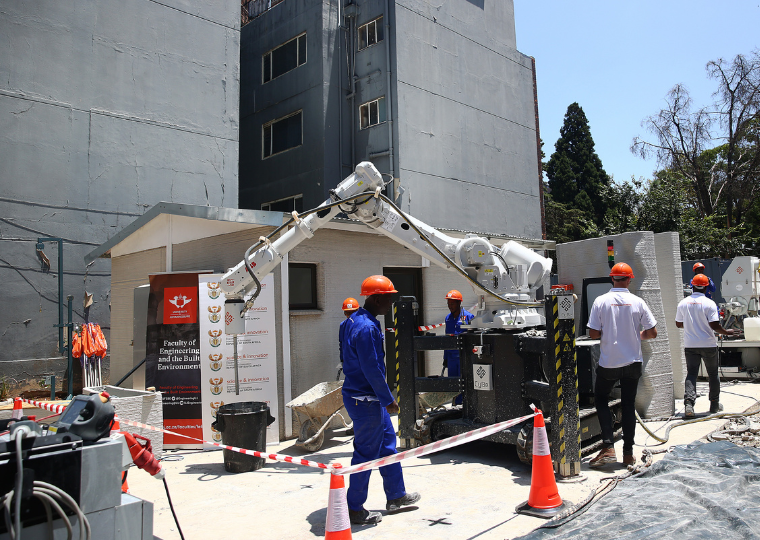
The 3D-printed building of the University of Johannesburg project is significant for Africa’s construction innovation landscape, as it demonstrates how 3D printer technology can be applied at a university-research level to produce a structural building component rapidly. It also serves as a knowledge transfer project for local engineers and students.
4. Sustainable and Low-Waste Building Practices
Sustainability is a core driver behind the adoption of 3D printing in construction. Traditional construction generates significant material waste through offcuts, rejected batches, and temporary works such as formwork. Construction 3D printing reduces waste by placing material only where it is structurally required.
Many 3D printing in construction projects also explore alternative materials such as geopolymers, recycled aggregates, and locally sourced inputs. These materials can significantly reduce embodied carbon compared to conventional Portland cement-based concrete. Precision manufacturing further lowers environmental impact by reducing overdesign.
As sustainability reporting and ESG requirements become more prominent, the alignment between construction innovation and environmental performance strengthens the business case for 3D printed buildings.
Case Study: TECLA 3D‑Printed Sustainable House (Italy)
- Project: First clay‑based 3D‑printed eco‑home prototype.
- Location: Massa Lombarda, near Ravenna, Italy.
- Material: Local clay, water, natural fibres; low‑carbon and sustainable.

This TECLA 3D-printed project showcases the potential for sustainable materials in construction printing, demonstrating how additive manufacturing can be integrated with low-impact regional resources.
5. Design Freedom and Architectural Innovation
Design constraints have long been a limitation of traditional construction. Rectilinear forms dominate because complex geometries increase formwork costs and construction risk. 3D printing in construction eliminates these constraints by enabling the direct printing of complex shapes from digital designs.
Architects can design curved walls, organic forms, and structurally optimised geometries without cost penalties. Engineers benefit from the ability to integrate parametric design and performance-driven optimisation. This convergence of design and engineering represents a significant leap in construction innovation.
The result eliminates the need for 3D printing, enabling the direct printing of complex shapes with architectural identity, expanding what is possible in modern construction.
Case Study: Eindhoven 3D‑Printed Houses (Netherlands)
- Project: 3D‑printed homes designed for habitation.
- Location: Bosrijk neighbourhood of Eindhoven, Netherlands.
- Partners: Eindhoven University of Technology, Van Wijnen, Vesteda, Saint‑Gobain Weber Beamix.
- Technology: COBOD BOD2 printer.
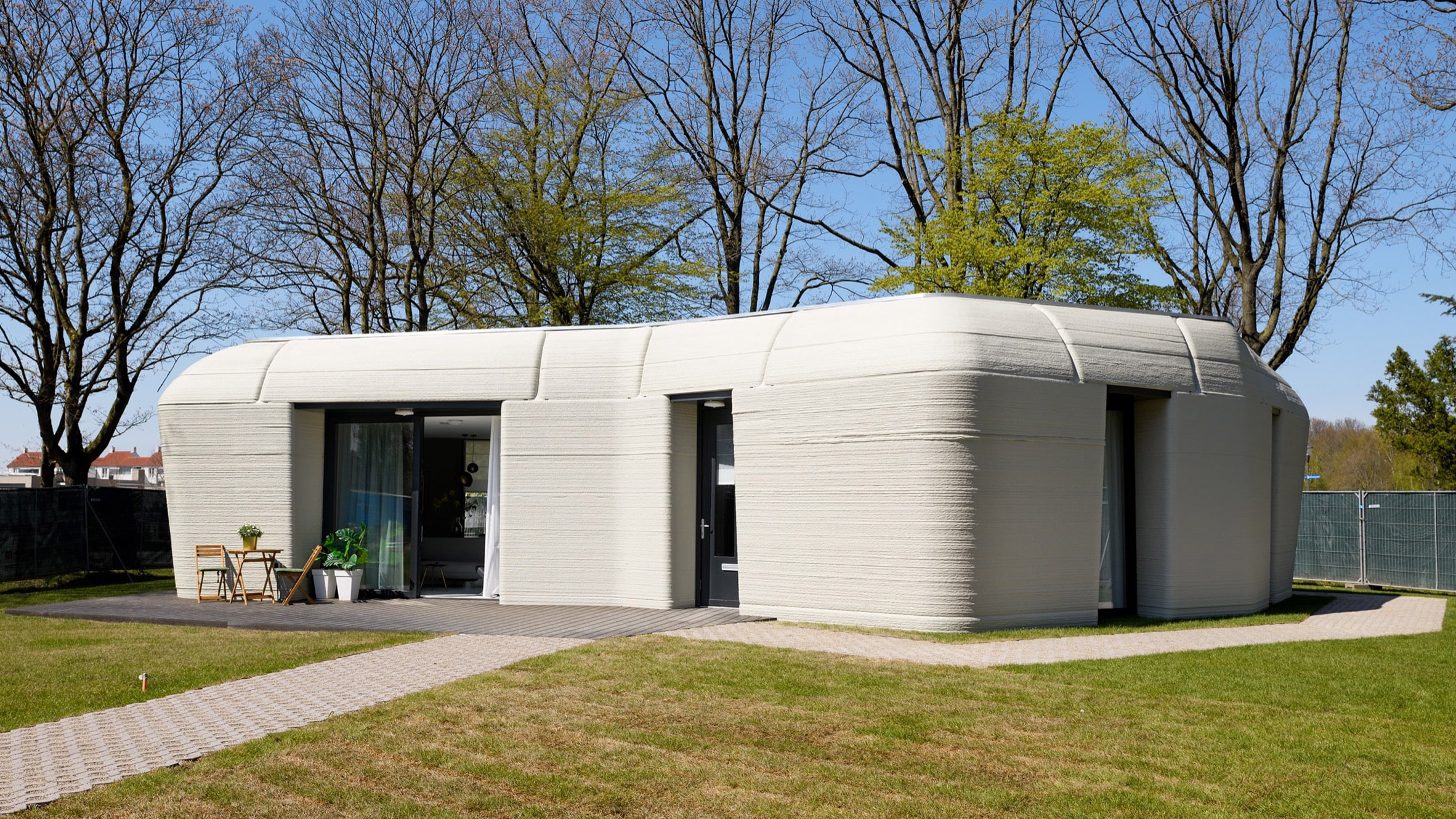
These Eindhoven 3D-printed housing units are a true masterpiece of 3D printing in a construction case study, demonstrating time savings exceeding 50 per cent compared to traditional masonry construction. The project demonstrated how 3D-printed buildings can meet quality standards while dramatically compressing build schedules, making construction innovation practical rather than theoretical.
6. Scalable Solutions for Affordable and Emergency Housing
Scalability is one of the most strategic strengths of 3D printing in the construction industry. Once a digital design is validated and tested, it can be replicated quickly and consistently across multiple sites. This makes 3D printing particularly suitable for construction in affordable housing, disaster relief, and rapid urban expansion.
Governments, NGOs, and private developers increasingly adopt 3D printing in construction projects to address housing deficits. The ability to standardise designs while allowing local adaptation improves both speed and community acceptance.
From a socio-economic perspective, scalable housing delivery using 3D printing can enhance living conditions, stimulate local economies, and reduce the prevalence of informal settlements.
Case Study: Mvule Gardens 3D-Printed Affordable Housing, Kenya
- Project: Africa’s first 3D-printed affordable housing development, featuring fully habitable residential homes produced using construction-scale 3D printing.
- Developer: 14Trees, a joint venture between Holcim and British International Investment (BII).
- Location: Mvule Gardens Housing Project, Kilifi County, Kenya.
- Technology: Large-scale concrete 3D printer producing structural wall systems through layer-by-layer additive manufacturing.
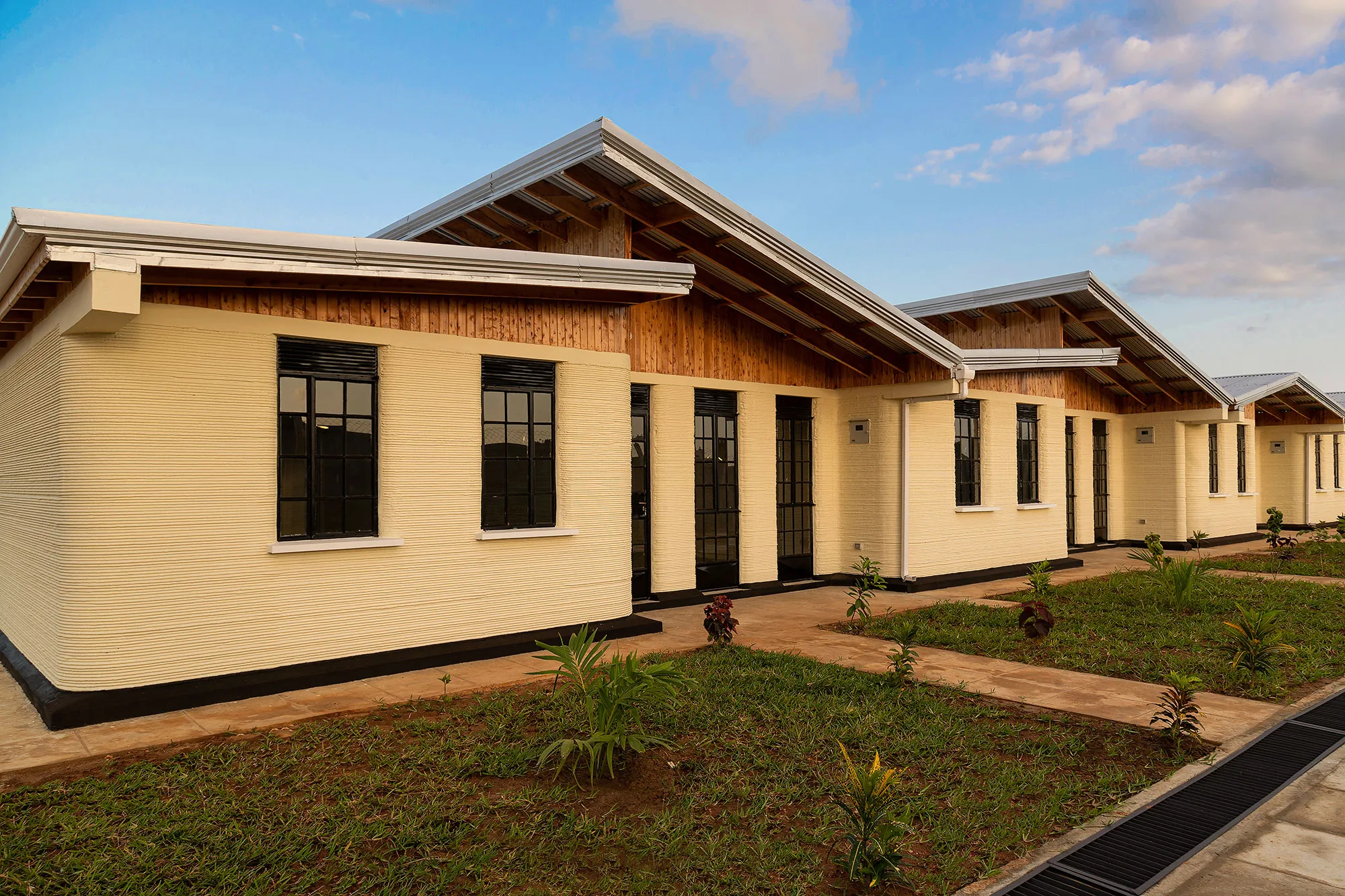
Mvule Gardens housing project demonstrates that 3D printing in construction can deliver scalable, low-cost, and rapid housing solutions in developing regions. It provides a credible blueprint for governments, NGOs, and private developers seeking affordable housing, emergency shelter, and mass urban housing delivery while reducing labour dependency and material waste.
7. Enhance Quality, Precision, and Structural Performance
Consistency, prevalence, and precision are defining characteristics of 3D printing in construction. Automated processes reduce variability caused by human error, ensuring uniform quality across printed components and buildings. Digital control enables real-time monitoring of material placement, geometry, and tolerances.
Integration with BIM and digital twins allows construction teams to track performance from design through execution. Structural testing of 3D printed elements shows that, when properly designed, they can meet or exceed conventional performance requirements.
While long-term durability remains a subject of ongoing study, early evidence suggests that high-quality 3D-printed buildings can achieve reliable structural performance.
Case Study: 3D‑Printed Pedestrian Bridge (Nijmegen, Netherlands)
- Project: 3D‑printed concrete pedestrian bridge.
- Location: Nijmegen, Netherlands
- Partners: Rijkswaterstaat, Eindhoven University of Technology, BAM Infra, Weber Beamix
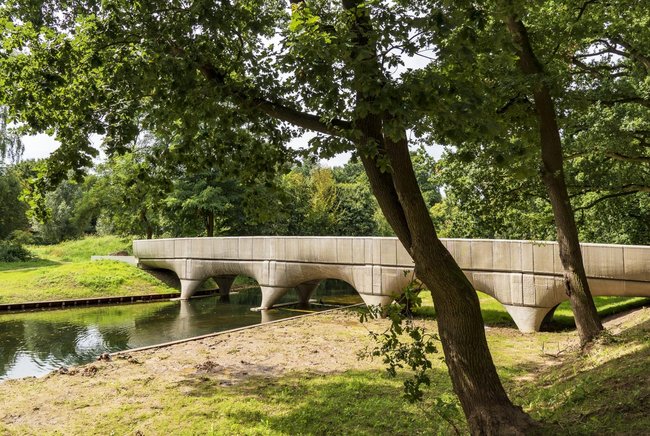
The Nijmegen 3D-printed Bridge infrastructure application demonstrates that 3D printing in construction remains a subject of ongoing study. Housing, bridges, and public works can be 3D-printed with high precision and durability.
Real-World Applications of 3D Printing in Construction
3D printing in construction has rapidly moved from experimental pilot projects to tangible, real-world applications across multiple sectors. Its versatility enables it to address a range of challenges, including rapid urbanisation, high labour costs, material scarcity, and environmental pressures. Construction 3D printing is now not only a tool for innovative architecture but also a practical solution for governments, NGOs, and developers looking for faster, more sustainable, and cost-effective building methods.
In Africa, technology is increasingly viewed as a solution to critical housing shortages, affordable public infrastructure, and relief from the labour burdens of urbanisation. With many African cities experiencing rapid population growth, the importance of construction 3D printing is expected to grow, offering scalable, low-cost, and environmentally conscious alternatives to traditional methods.
1. Residential Buildings
Construction 3D printing has found its most immediate applications in residential housing. Single-family homes, low-cost apartments, and multi-unit residential buildings benefit from automated, layer-by-layer construction. Unlike traditional masonry, which can take months per unit, 3D printing in construction can deliver structural shells in days.
Africa-specific insight: In Kenya, pilot 3D-printed homes are being constructed in Kilifi County to address the expansion of informal settlements. These projects utilise local concrete mixes specifically adapted for 3D printing, thereby significantly reducing reliance on imported materials. Similarly, in South Africa, experimental 3D-printed residential units are being used to explore modular urban housing, demonstrating up to 40% faster delivery times than conventional methods.
2. Commercial Structures
The commercial sector, offices, retail buildings, warehouses, and the expansion of informal settlements also utilise 3D technology in construction. Specifically, the fabrication of structural walls, partitions, and architectural features reduces project timelines and improves predictability, as well as the costs associated with 3D printing.
Case in point: In Dubai, commercial office facades have been 3D printed using fibre-reinforced concrete, reducing material use while creating complex designs impossible with traditional methods. The technology also allows for adaptive designs in commercial spaces, providing developers with the flexibility to modify layouts with minimal additional cost, a clear advantage in rapidly changing markets.
3. Infrastructure Elements
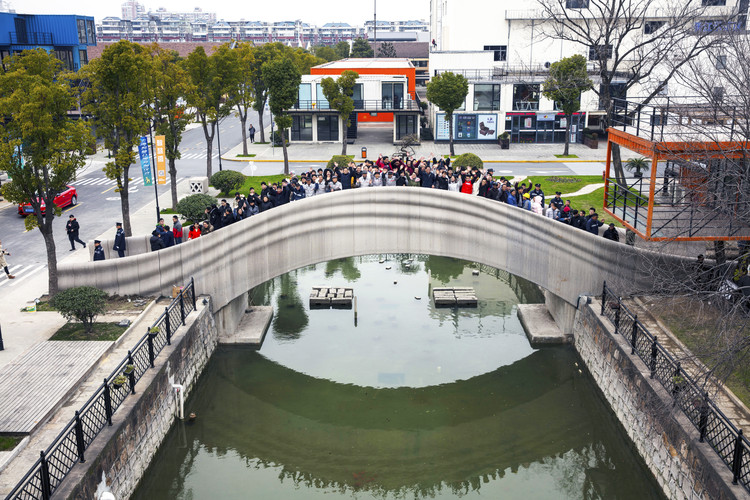
Beyond buildings, 3D printing in construction is being applied to public infrastructure. Bridges, pedestrian pathways, drainage systems, and street furniture can be fabricated in controlled environments and installed on-site. This approach reduces on-site construction hazards, speeds deployment, and ensures high structural precision.
Global Insight: The world’s longest 3D-printed concrete pedestrian bridge in Shanghai, China. The project tested 3D-printed pedestrian bridges using reinforced concrete, demonstrating their durability under heavy use. This project demonstrates the potential of 3D printing to facilitate rapid urban development with minimal environmental impact, thereby reducing material wastage and carbon emissions.
4. Remote and Emergency Locations
One of the most compelling applications of construction 3D printing is in remote or disaster-affected areas. Transportation of 3D-printed construction materials and skilled labour is often challenging in these locations. 3D printing enables the construction of structures using locally sourced or easily transportable materials, with minimal on-site human labour.
Real-life application: Following natural disasters, temporary 3D-printed clinics and housing units have been deployed in remote regions, reducing the time to create functional, safe structures from months to weeks. In Africa, NGOs are exploring this approach to provide emergency housing in flood- and drought-prone areas, demonstrating the scalability and social impact of the technology.
Challenges and Limitations of 3D Printing in Construction
Despite its advantages, construction 3D printing faces practical limitations. Understanding these challenges is essential for governments, developers, and investors seeking to implement this technology effectively.
1. High Initial Capital Costs
Large-scale 3D printers, specialised construction materials, and supporting digital infrastructure represent significant upfront investment. In emerging markets, high capital costs often limit adoption to pilot projects or government-backed initiatives. Developers must weigh the long-term benefits, lower labour costs, reduced material waste, and faster delivery against these initial expenditures.
2. Regulatory and Building Code Barriers
Most countries, including many in Africa, lack formal codes for 3D printed construction. Approval processes for permits and structural certification can be slow or inconsistent. Without standardised regulations, developers risk delays or project rejection. Early adopters often collaborate with local authorities to adapt existing building codes to accommodate additive construction methods.
3. Material Limitations
Construction 3D printing relies on specialised materials such as cementitious composites, geopolymers, and fibre-reinforced concrete. While effective for many structural applications, these materials have limitations regarding load-bearing capacity, durability, and local availability. Ongoing research focuses on adapting locally sourced materials, such as recycled aggregates and natural pozzolans, for 3D printing to reduce costs and carbon footprints.
4. Need for Standards and Certification
Uniform standards are crucial to ensure the structural safety, quality, and longevity of 3D-printed buildings. Organisations like ISO are developing guidelines, but adoption remains uneven. African and emerging markets face the additional challenge of establishing local certification protocols to validate the performance of printed structures.
Further Reading: Discover 10 Project Management Challenges Facing African Infrastructural Projects
5. Public Perception and Adoption Challenges
3D-printed buildings remain a novelty in many regions. Public and institutional trust is essential for widespread adoption. Stakeholders must demonstrate that additive manufacturing structures are safe, durable, and compliant with local standards. Community engagement, pilot demonstrations, and transparent reporting on project outcomes are crucial strategies for overcoming skepticism.
The Future of 3D Printing in Global Construction
The long-term outlook for 3D printing in construction is promising, particularly when integrated with emerging technologies and tailored to local needs. Africa and other emerging markets are poised to reap substantial benefits from these innovations.
1. Integration with AI and Robotics
AI enables optimised design, predictive material management, and automation of complex construction processes. When paired with robotics, construction 3D printing can execute tasks with unparalleled precision, reduce labour dependency, and accelerate timelines. AI-driven workflows also enhance quality control, allowing real-time adjustments to material deposition.
2. Enhanced BIM and Digital Twin Workflows
The integration of 3D printing in construction with BIM and digital twin platforms enables real-time monitoring, simulation, and predictive maintenance. Developers can simulate structural behaviour, optimise material usage, and detect potential defects before printing. This ensures greater efficiency, safety, and cost predictability.
3. Growth Expectations in Africa
Africa faces acute housing and infrastructure deficits. Governments are actively exploring the use of 3D printing in construction to address these gaps. Within the next decade, experts anticipate wider deployment for residential, commercial, and critical public infrastructure projects. Adoption will be accelerated through technology partnerships, local skills development, and adaptation to regional material availability.
4. Role in Smart Cities and Emerging Markets
As African cities pursue smart urban planning, construction 3D printing will support the development of modular, sustainable, and digitally integrated buildings. The technology facilitates the rapid deployment of infrastructure while maintaining environmental and structural standards. Emerging markets can leverage 3D printing to leapfrog traditional methods, creating cost-effective, scalable, and resilient urban environments.
Further Reading: Top 10 Powerful Smart Cities Leading the Future of Urban Innovation
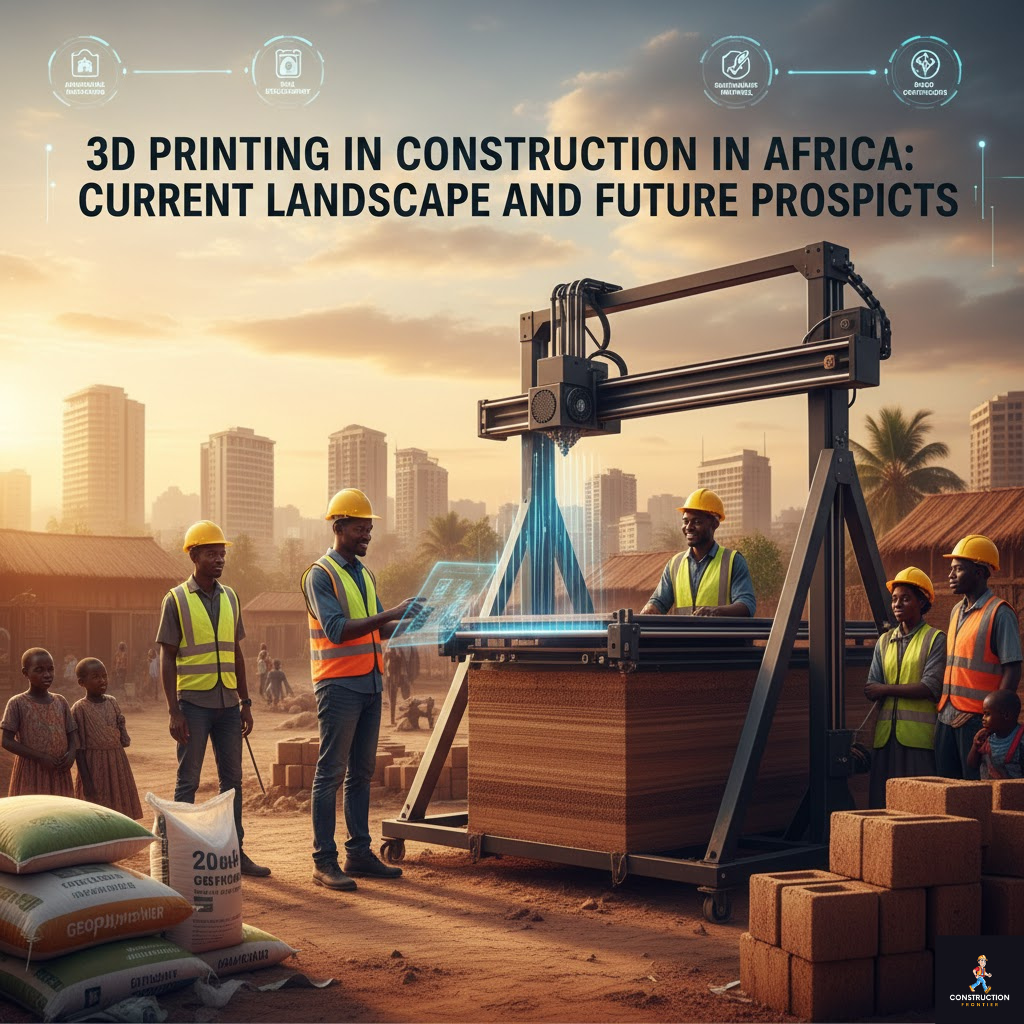
3D Printing in Construction in Africa: Current Landscape and Future Prospects
3D printing in construction is transitioning from concept to reality across Africa, driven by urgent housing needs, rising urban populations, and the search for cost‑efficient, sustainable building methods. Construction 3D printing is increasingly deployed to build homes, educational facilities, and community infrastructure, demonstrating how the technology can help bridge infrastructure gaps while fostering local skills and employment. Early projects provide compelling evidence that additive construction can be effectively adapted to diverse African contexts, yielding measurable benefits.
1. Pioneering Projects and Scale‑Up in Kenya and Malawi
One of the most advanced examples of construction 3D printing in Africa is the Mvule Gardens housing project in Kilifi, Kenya. Developed by 14Trees, a joint venture between Holcim and British International Investment (BII), Mvule Gardens is poised to become one of the continent’s most significant 3D printed affordable housing projects. The first ten homes were printed in a matter of weeks, with the walls constructed using Holcim’s proprietary TectorPrint material and a COBOD BOD2 3D printer. This achievement marks the first IFC EDGE Advanced sustainable design-certified 3D-printed housing project in the world.
In Malawi’s Salima district, 14Trees completed the world’s first 3D‑printed school, with the walls printed in just 18 hours. This project highlighted how construction 3D printing can be rapidly deployed to address critical infrastructure deficits such as classroom shortages.
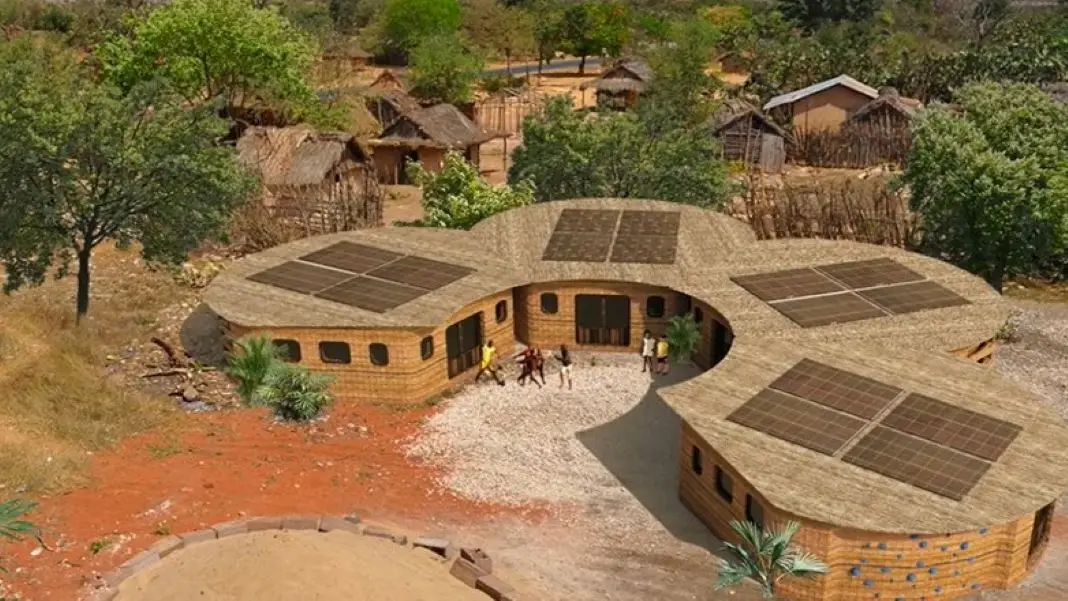
These initiatives provide concrete evidence that 3D printing in construction is not theoretical but operational in Africa, offering scalable solutions for affordable housing and community facilities.
2. Local Skills Development and Broader Adoption
Beyond the technology itself, African projects are cultivating new technical skills. Local workers are being trained as machine operators, material technicians, and 3D printing assistants, creating employment pathways linked directly to construction 3D printing projects. This workforce development strengthens indigenous capabilities, helping reduce dependency on imported expertise while promoting sustainable local industry growth.
3. Policy, Urbanisation, and Future Growth
With much of sub‑Saharan Africa experiencing rapid urban expansion, the importance of construction 3D printing lies in its ability to deliver predictable, cost‑efficient, and environmentally responsible housing at scale. Kenya’s multi‑phase Mvule Gardens project is expected to expand beyond the initial ten houses toward a broader housing complex, demonstrating how the technology can be scaled to meet real demand.
Emerging collaborations between governments, industry, and development finance institutions signal growing institutional interest. However, expanded adoption will depend on supportive policy frameworks, local material development, and investment in training programmes.
4. Sustainable Construction and Environmental Impact
Construction 3D printing in Africa also aligns with climate and sustainability goals. The use of low‑waste, additive material deposition reduces construction waste and can lower embodied carbon compared to conventional methods. The IFC EDGE Advanced certification awarded to projects like Mvule Gardens reflects strong performance in energy and resource efficiency.
5. Strategic Outlook for Africa
In the near future, Africa’s growing interest in construction 3D printing is expected to expand beyond pilot projects and into broader implementation, especially for affordable housing, public buildings, and community infrastructure. As materials, training, and regulatory environments evolve, the technology has the potential to play a meaningful role in meeting the housing and infrastructure needs of a rapidly expanding population.
Further Reading: Modular Construction in Africa: 7 Key Ways It Is Transforming Low-Cost Housing Projects
Conclusion: Is 3D Printing the Future of Construction?
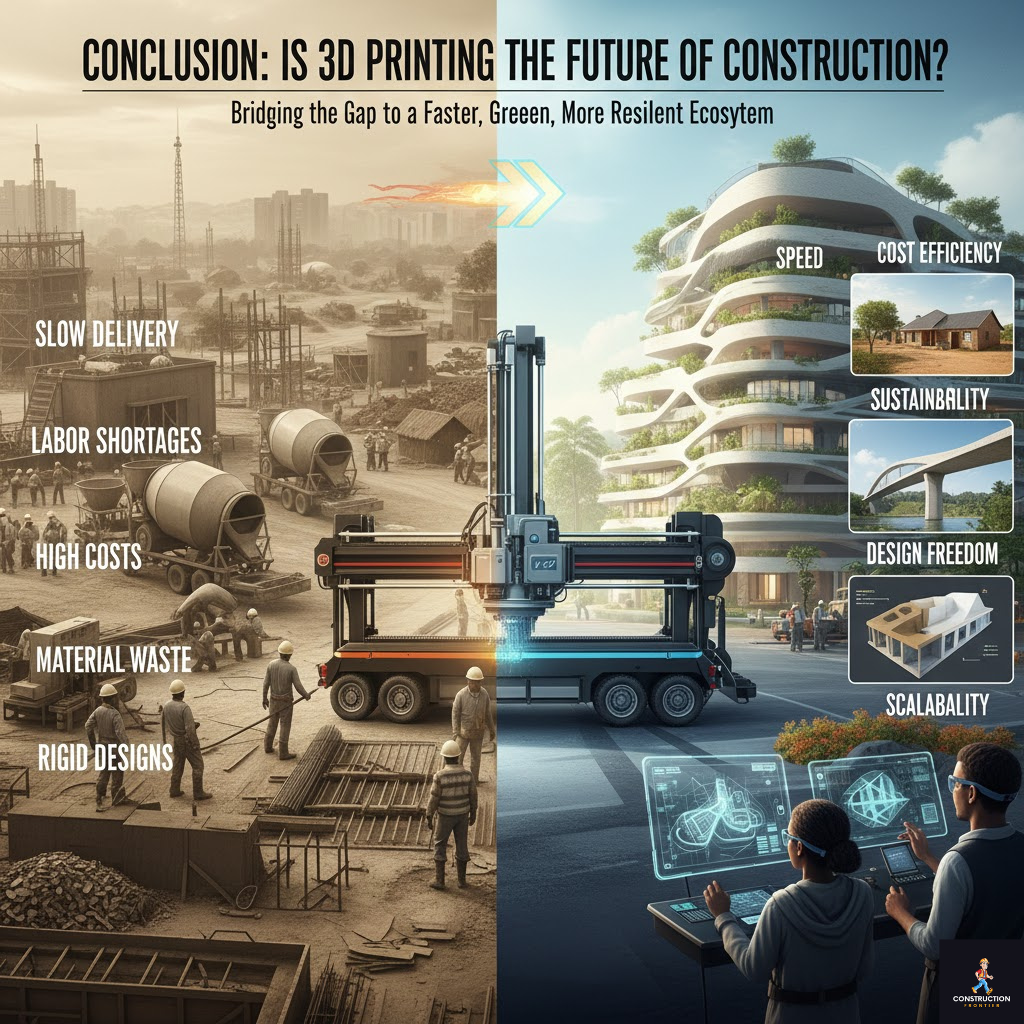
3D printing in construction is transforming the industry by addressing the key challenges of traditional building methods: slow delivery, high costs, labour shortages, waste, and design limitations. Its applications range from residential and commercial projects to critical infrastructure and emergency housing. The seven innovations discussed demonstrate their ability to improve speed, cost efficiency, sustainability, design freedom, scalability, and quality.
In Africa and emerging markets, construction 3D printing is not just a technological novelty; it represents a practical solution to urban growth, housing deficits, and sustainable development goals. While adoption faces barriers such as high initial investment, regulatory gaps, and material limitations, ongoing innovation, local adaptation, and digital integration hold promise for a significant long-term impact. Stakeholders who adopt construction 3D printing today are well-positioned to lead the transition to a faster, greener, and more resilient global construction ecosystem.
Call to Action: Stay Ahead of Construction Innovation
Follow ConstructionFrontier.com for in-depth analysis of construction technology. Discover related insights on BIM, modular construction, and sustainable building practices. Subscribe for a TED-led perspective on shaping the future of the built environment.