Hitachi Machinery LANDCROS Unveiled in Bold Brand Transformation
Hitachi Machinery LANDCROS represents a decisive shift in how one of the world’s most established equipment manufacturers positions itself globally. The new brand identity signals strategic renewal, sharper market focus, and long-term competitiveness in the evolving landscape of construction equipment.
Hitachi Machinery LANDCROS Signals a Strategic Brand Reset
The launch of the top Japanese construction equipment brand, Hitachi Machinery LANDCROS, marks one of the most significant branding moves in the global heavy equipment sector in recent years. Rather than a cosmetic redesign, the transformation reflects bigger structural, strategic, and cultural changes underway at Hitachi’s construction machinery business.
When Hitachi Machinery unveils LANDCROS as scheduled in April 2027, it does so against a backdrop of rising competition, accelerated digitalisation, and shifting contractor expectations across mature and emerging markets. Brand clarity has become a strategic asset, not a marketing exercise.
For Construction Frontier, this moment illustrates how global construction equipment brands are repositioning themselves to be relevant, resilient, and poised for long-term growth.
Understanding the LANDCROS Brand Identity
At the centre of the transformation is the LANDCROS brand identity, which replaces legacy naming conventions while preserving Hitachi’s engineering DNA.
According to official company communications, LANDCROS represents:
- Connection between land, people, and technology.
- Cross-regional operational consistency.
- A unified global customer experience.
- Future-orientated innovation beyond machinery alone.
This approach explains what LANDCROS is by Hitachi Machinery. It is not a product line but a strategic identity framework that will shape product development, services, digital platforms, and customer engagement.
The move aligns with broader trends in construction equipment rebranding, where OEMs seek stronger emotional resonance and clearer differentiation in saturated markets.
Why Hitachi Machinery Rebranded Now
The Hitachi Machinery rebrand did not occur in isolation. Several converging pressures influenced the timing:
1. Intensifying Global Competition
Chinese and Korean manufacturers continue to gain ground in price-sensitive markets, while established Western OEMs push premium technology narratives.
2. Technology-Driven Market Shifts
Electrification, automation, and digital fleet management now shape buying decisions as much as machine durability.
3. Post-Restructuring Clarity
Following corporate restructuring and portfolio realignment, brand consolidation became essential.
4. Global Consistency Needs
Fragmented regional branding limited economies of scale in marketing and aftersales strategy.
The impact of Hitachi Machinery rebranding should therefore be viewed as a strategic correction rather than a relaunch.
Further Reading: Develon-Hyundai Merger Forms a Strong Global Construction Leader
Hitachi Construction Machinery Branding in a Changing Market
The evolution of Hitachi construction machinery branding mirrors a broader industry rethink. OEMs increasingly compete on ecosystem value rather than standalone machines.
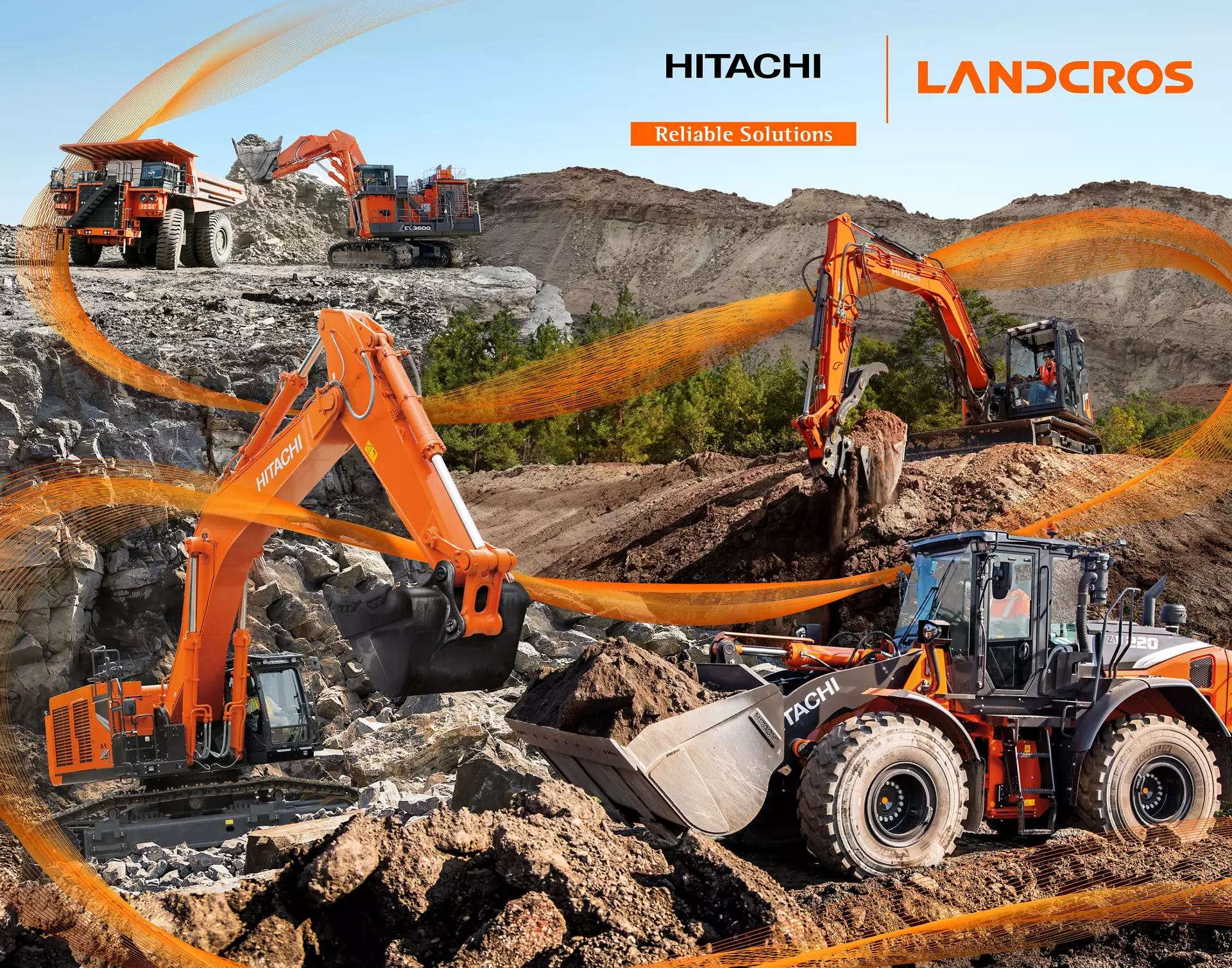
Under Hitachi Machinery LANDCROS branding now supports:
- Integrated solutions rather than individual equipment sales.
- Lifecycle partnerships with contractors and fleet owners.
- Data-driven productivity and sustainability outcomes.
This positions Hitachi more competitively in the global construction equipment market, where differentiation increasingly depends on service intelligence and operational reliability.
Strategic Implications for Global Construction Equipment Brands
The LANDCROS transition reinforces several patterns shaping global construction equipment brands:
- Brand Simplification: Fewer sub-brands, clearer master identities.
- Customer-Centric Messaging: Productivity, uptime, and lifecycle cost over horsepower.
- Global Alignment: One identity across regions, adapted locally.
These shifts matter because procurement decisions now involve multinational contractors operating across continents, not isolated local buyers.
Market Impact of the LANDCROS Construction Equipment Brand
The rollout of the LANDCROS construction equipment brand is expected to affect multiple market layers.
Short-Term Effects
- Updated visual identity across machines, facilities, and digital platforms.
- Dealer network alignment with new brand standards.
- Revised marketing and communication strategies.
Medium-Term Effects
- Product portfolio coherence under a single strategic narrative.
- Stronger brand recall in competitive tendering.
- Improved positioning in sustainability-linked projects.
Long-Term Effects
- Brand equity built around innovation and reliability.
- Deeper customer loyalty in fleet-driven markets.
This phased impact model reflects best practice in construction equipment rebranding rather than disruptive overnight change.
How LANDCROS Fits Hitachi Machinery’s Global Brand Strategy
The Hitachi Machinery global brand strategy underpinning LANDCROS emphasises both continuity and change. Engineering quality, reliability, and long machine life remain central values.
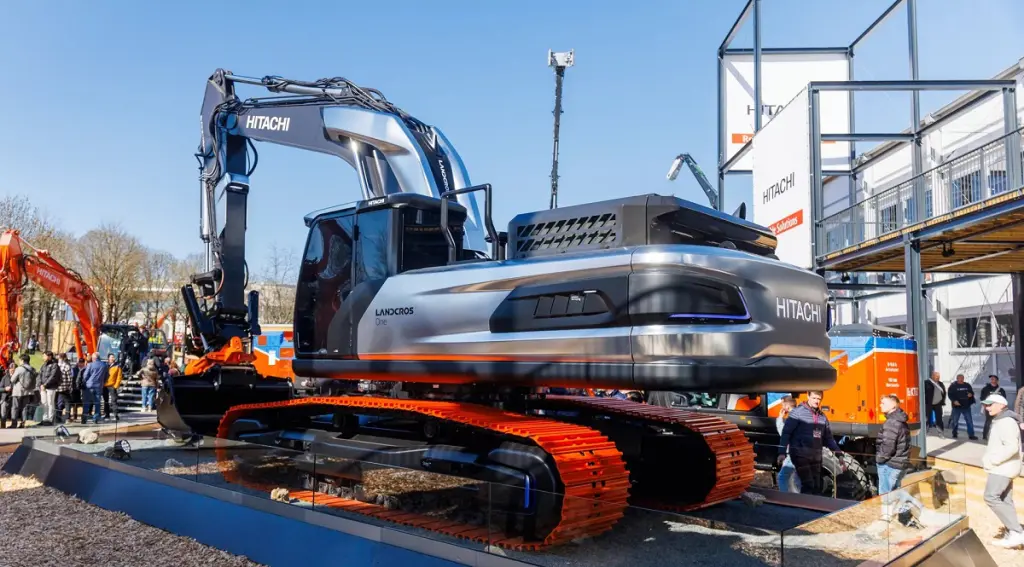
What changes is the articulation of those values through:
- Unified global storytelling.
- Consistent brand architecture.
- Stronger alignment between product, service, and digital offerings.
This strategic coherence strengthens Hitachi’s competitive standing against peers who still operate fragmented regional brand systems.
Industry Perspective: Rebranding as a Competitive Weapon
From an industry perspective, the impact of Hitachi Machinery’s rebranding extends beyond Hitachi. It raises the competitive bar for other Original Equipment Manufacturers (OEMs) navigating similar identity challenges.
Rebranding at this scale requires:
- Capital investment.
- Organisational alignment.
- Dealer and customer buy-in.
- Long-term execution discipline.
Few manufacturers attempt such transitions without a clear strategic justification.
Risks and Execution Challenges
Despite its strengths, the LANDCROS rollout carries execution risks that will shape its ultimate success:
- Ensuring consistent dealer adoption across markets.
- Avoiding customer confusion during transition phases.
- Translating brand promise into measurable performance outcomes.
History shows that brand transformations succeed only when operational delivery matches narrative ambition.
What LANDCROS Means for Contractors and Fleet Owners
For end users, Hitachi Machinery LANDCROS matters less as a logo change and more as a signal of intent.
Contractors can expect:
- Greater integration between equipment and digital services.
- Improved lifecycle support and parts availability.
- Clearer long-term partnership frameworks.
These outcomes align with evolving procurement priorities across infrastructure, mining, and industrial construction sectors.
Conclusion: LANDCROS as a Strategic Turning Point
Hitachi Machinery’s decision to unveil LANDCROS marks a defining moment in its global evolution. Hitachi Machinery LANDCROS is not a marketing refresh but a strategic repositioning designed to secure relevance in an increasingly complex construction equipment landscape.
As global construction equipment brands adapt to technological disruption and market consolidation, LANDCROS positions Hitachi to compete with clarity, confidence, and long-term intent.
Stay Ahead of Global Construction Equipment Trends
For deeper, thinker-led analysis on construction equipment branding, market shifts, and industrial strategy shaping Africa and global markets, explore more expert insights at ConstructionFrontier.com.