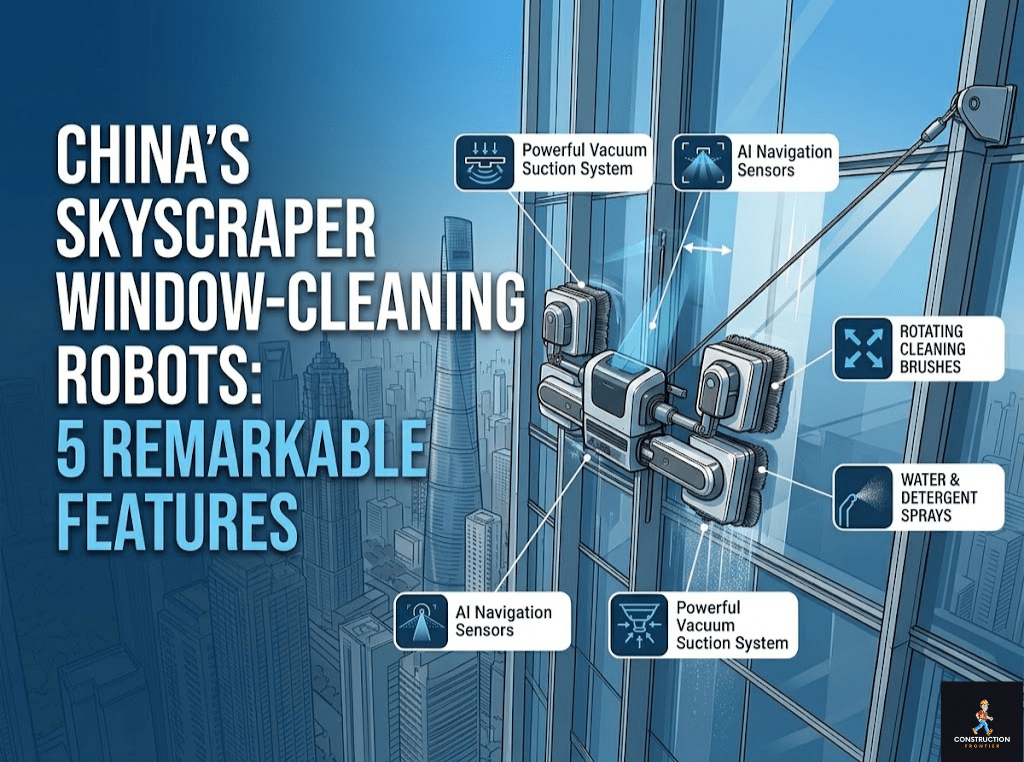
China’s Skyscraper Window-Cleaning Robots: 5 Outstanding Features
The modern window-cleaning robot has become a practical solution for maintaining glass façades on high-rise buildings and skyscrapers. Traditional rope-access cleaning exposes workers to significant safety risks and requires large maintenance crews, particularly on towers exceeding 200 metres. China’s rapid advancement in robotic window-cleaning technology is addressing this challenge by developing intelligent, automated window-cleaning robots that navigate vertical surfaces using suction systems, sensors, and artificial intelligence.
These building façade-cleaning robots are increasingly used in dense urban environments, where skyscraper maintenance must be performed more frequently and safely. As cities expand vertically across Asia, the Middle East, North America, and Africa, window-cleaning robots are emerging as a critical component of modern construction maintenance, offering safer operations, consistent cleaning performance, and lower long-term maintenance costs.
Technical Snapshot: Window-Cleaning Robot Systems
| Core System | Function |
| Vacuum suction or magnetic adhesion | Allows the robot to attach to glass surfaces on skyscrapers |
| AI navigation sensors | Detect edges, frames, and obstacles |
| Rotating cleaning pads or brushes | Remove dust, pollutants, and mineral deposits |
| Water and detergent spray systems | Improve cleaning efficiency |
| Safety tether systems | Prevent a fall in case of power loss |
The above integrated systems allow a window-cleaning robot to operate autonomously on complex building façades.
Introduction: Automation Is Transforming High-Rise Building Maintenance
The growth of high-rise construction has fundamentally changed the economics of building maintenance. Modern towers rely heavily on glass curtain walls to maximise daylight penetration and aesthetic appeal, yet these façades require regular cleaning to maintain building performance and appearance.
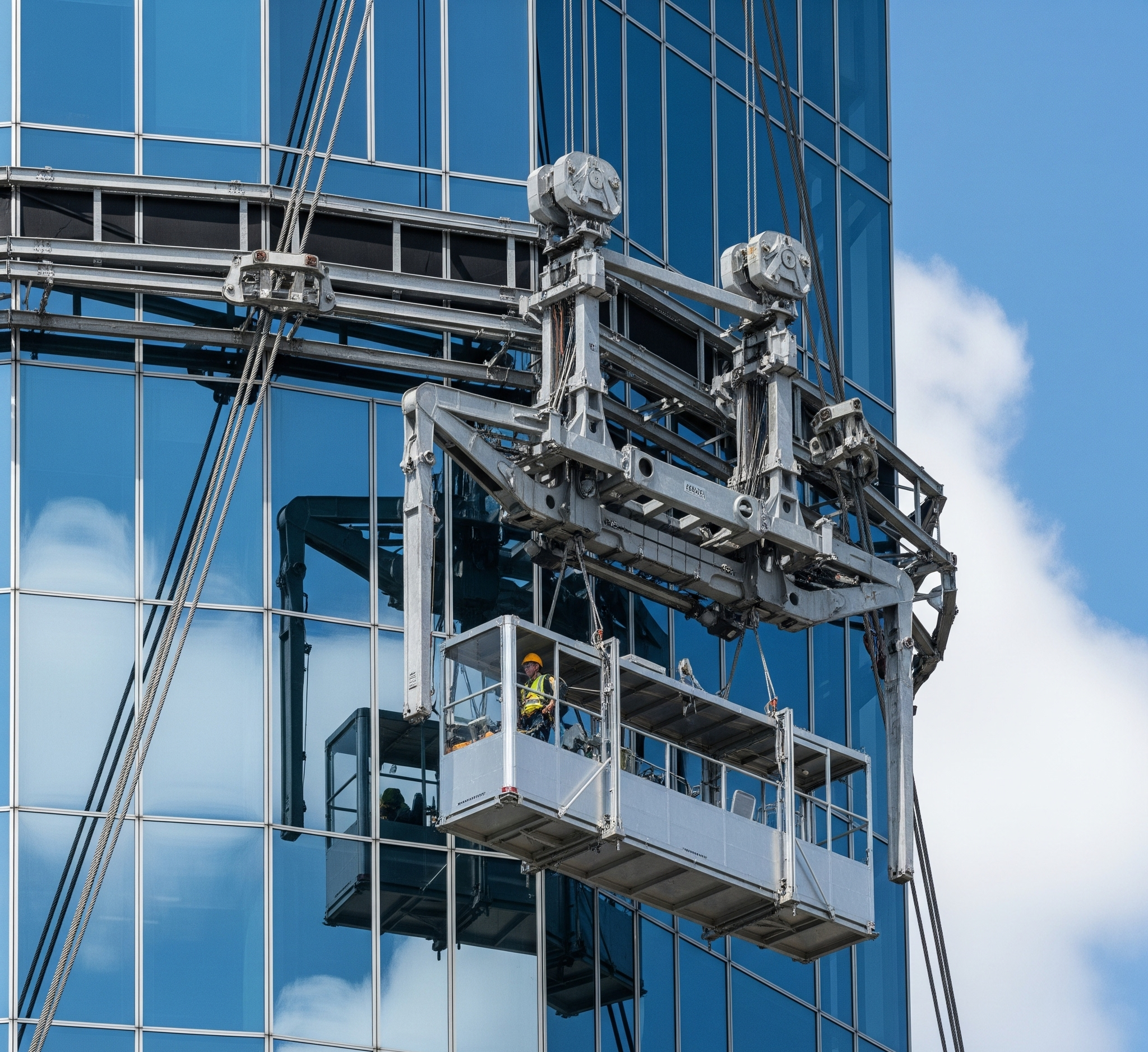
Traditional cleaning methods rely on rope-access technicians or suspended gondolas attached to rooftop Building Maintenance Units (BMUs). While effective, these methods require highly trained crews and involve considerable safety risks. The introduction of the window-cleaning robot represents a technological shift toward automation in façade maintenance.
Advances in robotic window-cleaning technology have enabled engineers to design machines that can attach to vertical glass surfaces and perform precise cleaning tasks. These high-rise window-cleaning robots combine suction motors, sensors, route-planning algorithms, and remote-control systems, enabling them to operate on skyscrapers without continuous human intervention.
China has emerged as a major innovator in this field, developing several advanced automated window-cleaning robots, such as the XHuman Robot Lingkong K3 and Pufeng Intelligent, capable of operating on large commercial buildings. Companies in China that manufacture specialised building façade-cleaning robots for export to international markets where urban skylines continue to grow.
The next sections examine how skyscraper window-cleaning robots work and highlight five remarkable engineering features behind China’s latest innovations.
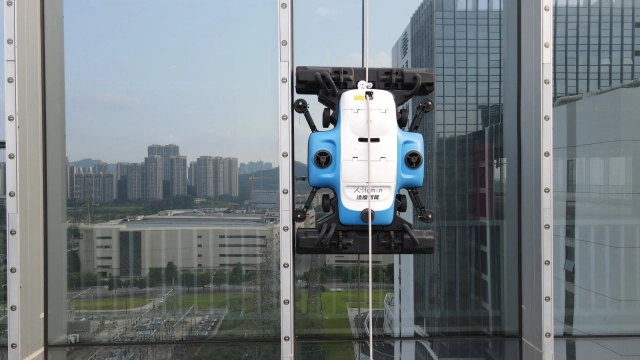
How Window-Cleaning Robots Work on Skyscrapers: Engineering Principles
Understanding how window-cleaning robots operate on skyscrapers requires examining the mechanical systems that enable them to operate safely on vertical surfaces.
Before exploring their advanced capabilities, it is important to understand the engineering principles behind high-rise building window cleaning robots.
1. Adhesion Technology
The most critical component of any window-cleaning robot is the adhesion system that keeps it attached to glass façades. Most automated window-cleaning robots use high-powered vacuum suction systems that create negative pressure between the robot and the glass surface. This suction power, ranging from 2800Pa to 600Pa or more, allows the robot to remain securely attached while moving across vertical panels.
Many systems include safety ropes or secondary anchoring systems to prevent falls if power is interrupted. The window-cleaning robots also have emergency UPS (Uninterruptible Power Supply) systems that maintain suction for 20–30 minutes in case of a power failure, along with climbing-grade safety ropes.
Some robots combine suction with traction wheels to improve stability during operation. These adhesion technologies form the foundation of robotic façade cleaning systems for buildings, enabling machines to work reliably on skyscrapers.
2. Navigation and Obstacle Detection
Modern high-rise window-cleaning robots use advanced sensor arrays to navigate complex building exteriors. These sensors detect window edges, curtain-wall joints, and structural obstacles. Using this data, the window-cleaning robot calculates an efficient cleaning path while preventing collisions or falls.
Window-cleaning robots often utilise Multi-Sensor Fusion (MSF) to navigate complex building envelopes. To ensure precise positioning on vertical planes, these systems integrate the following:
- LiDAR and ToF (Time-of-Flight) Sensors: These provide millimetre-accurate distance mapping. They are critical for identifying curtain-wall joints, recessed frames, and glass-to-metal transitions, allowing the robot to maintain a consistent offset from edges.
- Ultrasonic Edge Detection: Serves as a fail-safe; ultrasonic transducers detect air-gap boundaries, or “voids,” where suction could be lost. This triggers an immediate path correction or emergency halt.
- Inertial Measurement Units (IMUs): Combining 3-axis gyroscopes and accelerometers, IMUs compensate for pendulum effects and wind-induced lateral drift, ensuring the robot maintains a straight vertical or horizontal trajectory.
- SLAM (Simultaneous Localisation and Mapping) Algorithms: Industrial units often use visual SLAM to create a real-time digital twin of the building facade, optimising cleaning paths to avoid overlaps and reducing energy consumption by up to 15%.
These navigation sensors and components allow building façade cleaning robots to move safely across large glass surfaces.
3. Automated Cleaning Systems
Once attached to the façade, the window-cleaning robot begins its cleaning cycle. Most machines use rotating microfibre pads or brushes that scrub the glass surface while the robot moves across the façade. Water spray systems and detergent solutions improve cleaning performance by dissolving pollution residues.
Some of the automated cleaning systems used in window-cleaning robots include:
- Active Agitation Systems: High-speed dual-disk planetary brushes or oscillating microfiber modules rotate at 600-1,200 RPM. This mechanical action is calibrated to apply specific downward pressure (typically 30–50 Newtons) to remove calcified mineral deposits and urban soot without scratching tempered glass.
- Precision Fluid Atomisation: Instead of simple gravity-fed drips, advanced models use ultrasonic spray nozzles to atomise cleaning solutions into 15-micron droplets. This ensures uniform coverage and reduces water waste by 80% compared to manual squeegee methods.
- Onboard Filtration & Recovery: Some high-capacity systems feature closed-loop water recovery. A vacuum squeegee trailing the brushes sucks up dirty greywater, which is filtered through a multi-stage micron membrane and reused, allowing the robot to operate for up to 4 hours without a tethered water supply.
- Throughput Metrics: Industrial-grade systems like the Skyline Robotics Ozmo can achieve cleaning rates of 250–400 m²/hour, roughly 3 to 4 times faster than a two-person rope-access team.
Using these automated systems, some advanced window-cleaning robots (as shown in the video above, courtesy of Skyline Robotics) can clean more than 2,000 square metres of glass per day, significantly increasing productivity compared with manual cleaning crews.
Five Remarkable Features of China’s Window-Cleaning Robots
Chinese robotics companies have invested heavily in research and development, producing some of the most advanced automated construction maintenance robots currently available. Below are five engineering features that distinguish the latest generation of high-rise window-cleaning robots.
1. Intelligent Route Mapping
Intelligent route mapping is a core capability that distinguishes advanced window-cleaning robot systems from basic façade-cleaning devices. Modern robotic window-cleaning technology integrates simultaneous localisation and mapping (SLAM) algorithms with multi-sensor data to generate efficient cleaning trajectories across complex glass façades.
A typical high-rise window cleaning robot uses a combination of optical sensors, inertial measurement units (IMUs), ultrasonic proximity sensors, and edge-detection algorithms to construct a digital map of the façade surface. The robot continuously analyses spatial data to determine its exact position relative to window frames, façade joints, and structural boundaries.
Once the façade geometry is identified, the onboard processor generates an optimised cleaning path that minimises redundant movement while ensuring full surface coverage. This route-planning process is particularly important for towers with irregular curtain-wall geometries, recessed glazing panels, or segmented façade modules.
From an engineering standpoint, intelligent route mapping improves the benefits of automated window cleaning robots in three key ways:
- Operational efficiency: reduces unnecessary movement and power consumption.
- Coverage accuracy: ensures consistent cleaning across thousands of square metres of glazing.
- Energy optimisation: minimises battery usage by avoiding repeated cleaning paths.
For skyscrapers exceeding 300 metres, where façades may contain tens of thousands of glass panels, intelligent navigation is essential to maintain predictable cleaning cycles with building façade cleaning robots.
2. High-Power Vacuum Adhesion
Adhesion technology is the mechanical foundation that allows a window-cleaning robot to operate safely on vertical glass surfaces. Most high-rise window cleaning robots rely on vacuum suction systems that generate negative pressure between the robot chassis and the glass façade.
The suction system typically consists of a high-speed centrifugal fan enclosed within a sealed chamber. When activated, the fan extracts air from the chamber, creating a pressure differential that presses the robot against the glass surface. Advanced automated window-cleaning robots maintain suction forces of 2800–6000 Pa, sufficient to support the robot’s weight while allowing controlled movement across the façade.
From a mechanical design perspective, several engineering considerations govern adhesion performance:
- Vacuum chamber sealing efficiency to prevent pressure loss.
- Redundant suction motors to maintain attachment in case of primary motor failure.
- Load distribution across traction wheels or tracks to reduce shear stress on the suction surface.
Wind loading is another critical factor. High-rise towers experience significant wind pressure, particularly above 150 metres. Engineers therefore design robotic façade cleaning systems for buildings to maintain adhesion stability even under moderate wind conditions.
For safety redundancy, many construction maintenance robots include tethering systems anchored to rooftop structures or façade rails. These secondary safety systems ensure that the window-cleaning robot remains secured even during unexpected power interruptions.
3. Autonomous Operation
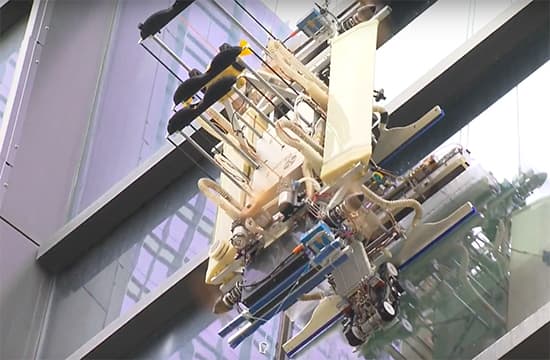
Autonomous operation is one of the most significant advancements in robotic window-cleaning technology. Modern automated window cleaning robots incorporate onboard processors capable of managing navigation, cleaning cycles, obstacle avoidance, and system diagnostics without continuous human control.
The typical operational workflow begins when technicians place the window-cleaning robot onto a designated starting point on the building façade. After activation, the robot performs the following automated sequence:
- Surface scanning and route mapping.
- Adhesion system verification.
- Cleaning path execution.
- Obstacle detection and rerouting if necessary.
- Completion verification and return to the starting point.
This autonomous operation is enabled by embedded microcontrollers and real-time control algorithms that continuously monitor system parameters, including suction pressure, motor torque, and navigation orientation.
For building operators, the autonomy of high-rise window cleaning robots provides several operational advantages:
- Reduced labour dependency: fewer technicians required for façade cleaning operations.
- Predictable maintenance cycles: robots can be scheduled for routine cleaning.
- Lower operational risk: technicians remain safely on rooftops or interior floors.
These capabilities explain why construction maintenance robots are increasingly integrated into smart building management systems that coordinate cleaning, inspection, and facility operations.
4. Pollution Removal Capability
Urban skyscrapers accumulate a wide range of surface contaminants, including particulate matter, industrial soot, mineral deposits, and biological residues. These pollutants reduce façade transparency, degrade building aesthetics, and may affect the thermal performance of glass panels.
To address these challenges, modern building façade cleaning robots incorporate specialised cleaning mechanisms designed to remove stubborn contaminants without damaging glass surfaces.
Most window-cleaning robot systems use a combination of the following cleaning technologies:
- Rotating microfibre pads that remove dust and loose particles.
- Soft rotary brushes designed for stubborn grime and pollution films.
- Ultra-pure water systems that dissolve mineral deposits without chemical residues.
- Detergent injection systems for industrial pollution environments.
Ultra-pure water cleaning has become particularly important for robotic façade-cleaning systems in buildings. Water purified through reverse osmosis (RO) removes upto 98% of dissolved minerals that typically cause streaking on glass surfaces.
By combining mechanical scrubbing with purified-water cleaning, automated window-cleaning robots can maintain consistent façade transparency while reducing the need for harsh chemical cleaning agents. This approach is especially valuable in dense urban environments where air pollution can rapidly degrade the appearance of large glass buildings.
5. Scalable Manufacturing and Global Deployment
China’s robotics manufacturing ecosystem has enabled the rapid scaling of window-cleaning robot production. Several Chinese manufacturers now produce automated window-cleaning robots at an industrial scale, supplying the global construction and facility management markets.
The country’s strong robotics supply chain provides several advantages in the production of robotic façade cleaning systems for buildings:
- Vertically integrated electronics manufacturing.
- High-volume electric motor production.
- Advanced battery manufacturing capabilities.
- Large robotics engineering workforce.
These factors allow Chinese manufacturers to develop sophisticated construction maintenance robots while maintaining competitive pricing compared with European or North American robotics companies.
As global skyscraper construction continues to increase, scalable production of high-rise window cleaning robots will be critical for meeting demand in rapidly urbanising regions such as Southeast Asia, the Middle East, and Africa. For construction technology investors, this manufacturing capacity positions China as a key supplier in the global market for automated building maintenance systems.
Suitability of Window-Cleaning Robots for High-Rise Buildings in Africa
African cities are undergoing rapid vertical development. As land prices increase in urban centres, developers are constructing taller buildings to maximise space efficiency. This trend creates growing demand for advanced building maintenance technologies, such as the window-cleaning robots.
Urban High-Rise Growth in Africa
Cities such as Nairobi, Lagos, Johannesburg, and Cairo are seeing an increase in skyscrapers and high-rise office towers. Glass curtain walls dominate many of these new buildings because they improve natural lighting and enhance modern aesthetics.
However, maintaining these façades requires regular cleaning to prevent dust accumulation and environmental staining. This is where high-rise building window cleaning robots become particularly valuable. High ambient particulate matter (PM10), Saharan dust plumes over West Africa, and coastal salt mist in cities like Cape Town and Lagos lead to rapid calcification and etching of glass surfaces.
- Preventative Asset Preservation: Automated robots allow for a 3x–5x increase in cleaning frequency, preventing the permanent bonding of mineral deposits that can degrade glass clarity and require costly professional restoration.
- Aesthetic ROI: For premium A-grade office space, facade “sparkle” directly correlates to high tenant retention and premium per-square-meter rental rates.
Upcoming skyscraper project in East Africa: NSSF 60-Storey Skyscraper: Monumental Twin Towers Project
Safety Improvements for Building Maintenance
Manual rope-access cleaning exposes workers to fall hazards, particularly on buildings exceeding 30 or 40 storeys. Deploying a window-cleaning robot reduces the need for workers to operate at extreme heights. The robot performs the cleaning task while technicians supervise from safe locations.
These safety improvements represent one of the most significant benefits of automated window-cleaning robots in emerging construction markets. For high-rise operators, transitioning from Rope Access Technicians (RATs) to robotic systems shifts the risk profile from “Life Safety” to “Equipment Management.”
- Elimination of Fall Fatalities: On structures exceeding 40 storeys, wind shear and unpredictable thermal updrafts significantly increase the danger for manual cleaners. Robots operate within a closed safety loop, utilising dual-redundant steel tethers and automated wind-speed shutoffs.
- Liability Reduction: By removing personnel from the “drop zone,” building owners significantly lower their Workmen’s Compensation premiums and professional indemnity insurance costs.
- Operational Continuity: While manual crews are often grounded by moderate winds, industrial robots like those from XHuman or Pufeng can safely operate at wind speeds of 15–20 m/s, reducing downtime.
Cost Efficiency for Building Operators
Building managers often face rising operational costs associated with maintenance services. Using automated window-cleaning robots can reduce labour requirements and improve cleaning frequency. Over time, this reduces maintenance costs while maintaining building aesthetics.
For Africa’s growing skyline, the window-cleaning robots could become standard components of smart building management systems. Decision-makers evaluating the Internal Rate of Return (IRR) for robotic systems see the strongest gains in long-term OpEx reduction:
- Labour Arbitrage: A single robotic operator can oversee a fleet of three robots, achieving a 75% reduction in man-hours per square meter.
- Reduced Consumables: Precision-metered water and detergent systems reduce chemical waste by up to 80%, aligning with EDGE or LEED green building certifications prevalent in new African developments.
- Infrastructure Synergy: Modern robots can often be integrated into existing Building Maintenance Units (BMUs) or cradles, minimising the need for expensive structural retrofitting. For new builds like the NSSF towers, integrating robotic rails during the design phase can lower lifetime maintenance costs by an estimated 30–40%.
Technical Benchmark: Robotic vs Manual Façade Cleaning
| Metric | Manual Cleaning | Window-Cleaning Robot |
| Work Safety | High risk | Minimal risk |
| Cleaning productivity | Moderate | High |
| Labour requirement | Large crews | Small monitoring team |
| Cleaning consistency | Variable | Highly consistent |
| Long-term operating cost | Higher | Lower |
This comparison highlights why high-rise window cleaning robots are gaining adoption in global construction maintenance.
Conclusion: Automation Is Reshaping Façade Maintenance
The window-cleaning robot represents a significant advancement in building maintenance technology. As skyscrapers continue to dominate urban skylines, traditional façade cleaning methods struggle to meet the safety, cost, and efficiency demands of modern building operations. Robotics offers a practical solution by automating high-risk maintenance tasks and delivering consistent cleaning performance across large glass surfaces.
China’s leadership in robotic window cleaning technology illustrates how automation is transforming the construction lifecycle. From intelligent route planning to high-power suction adhesion and autonomous operation, the modern window-cleaning robot integrates advanced robotics and sensor systems into everyday building maintenance. For emerging high-rise markets such as Africa, these construction maintenance robots could play a crucial role in improving building safety and operational efficiency. As African cities continue to expand vertically, the adoption of automated window-cleaning robots will likely increase, particularly in commercial towers and mixed-use developments.
Ultimately, the window-cleaning robot signals a broader shift toward intelligent building management. Robotics, artificial intelligence, and automation are gradually redefining how buildings are maintained, creating safer and more efficient urban environments.
Explore More Construction Technology Insights
Stay ahead of global construction innovation with Construction Frontier. Discover expert analysis on construction robotics, building materials, infrastructure megaprojects, and emerging technologies shaping the future of the built environment. Explore our Construction Innovations and Technology section for deeper insights into automation transforming the global construction industry.