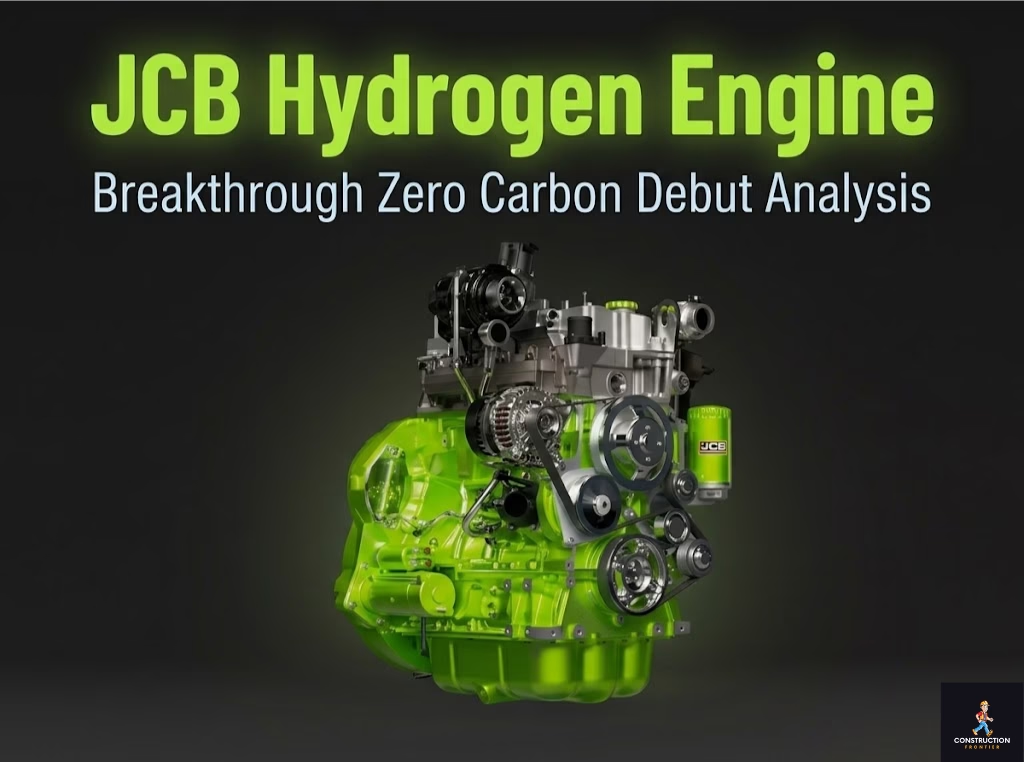
JCB Hydrogen Engine: Breakthrough Zero Carbon Debut Analysis
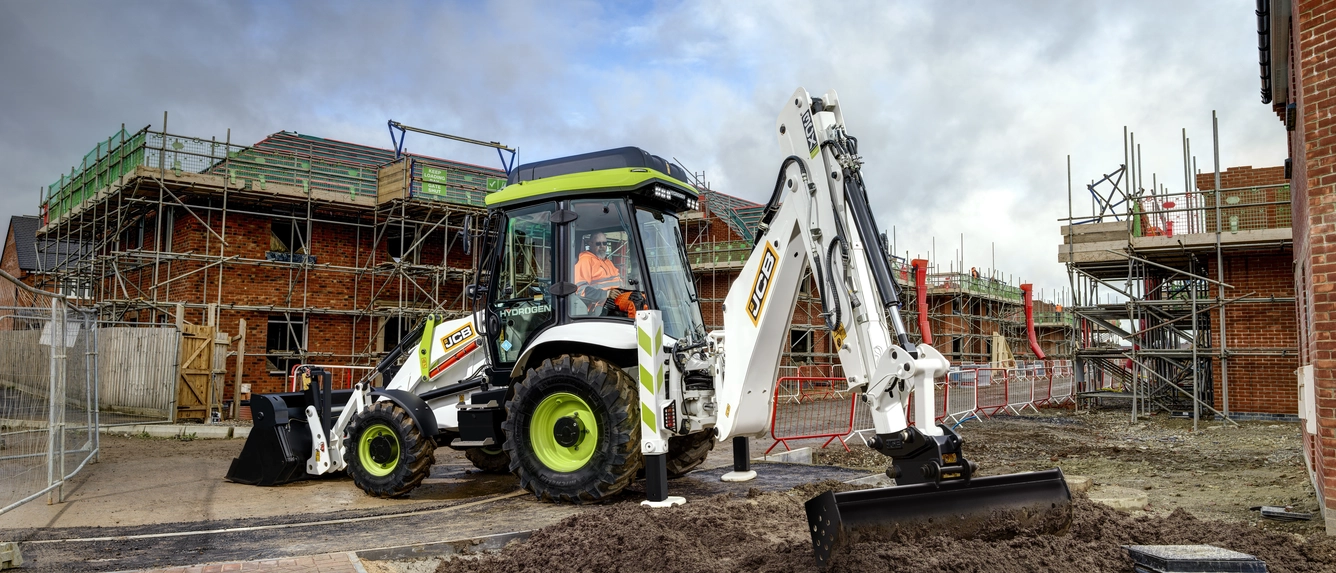
The JCB hydrogen engine has entered the global spotlight following its debut on March 14, 2023, at CONEXPO in Las Vegas, United States, marking a decisive shift in zero-emission construction technology. Engineered as a hydrogen internal combustion system, the platform delivers zero carbon emissions at the point of use while maintaining diesel-equivalent performance, rapid refuelling cycles, and compatibility with existing machine architectures. With over £100 million invested, more than 150 prototype engines built, and extensive field validation completed, JCB positions hydrogen as a scalable pathway for decarbonising heavy construction equipment without compromising productivity.
Introduction: JCB Hydrogen-Powered Engines
The debut of the JCB hydrogen engine arrives at a critical moment for the construction industry. As governments tighten emissions regulations and major contractors align with net-zero targets, the sector faces a structural challenge: how to decarbonise heavy equipment without undermining operational efficiency.
Diesel engines have dominated construction for decades because they deliver reliability, power density, and refuelling convenience. Replacing them is not simply a technological decision; it is a question of economics, logistics, and risk management.
JCB’s approach reframes the debate. Rather than relying solely on electrification, the company has developed hydrogen-powered construction equipment that builds on existing engine platforms while eliminating carbon emissions at the point of use. The result is a solution that speaks directly to engineers, contractors, and investors seeking practical pathways to sustainable construction.
JCB Hydrogen Engine Technology: Engineering Continuity With Zero Carbon Output
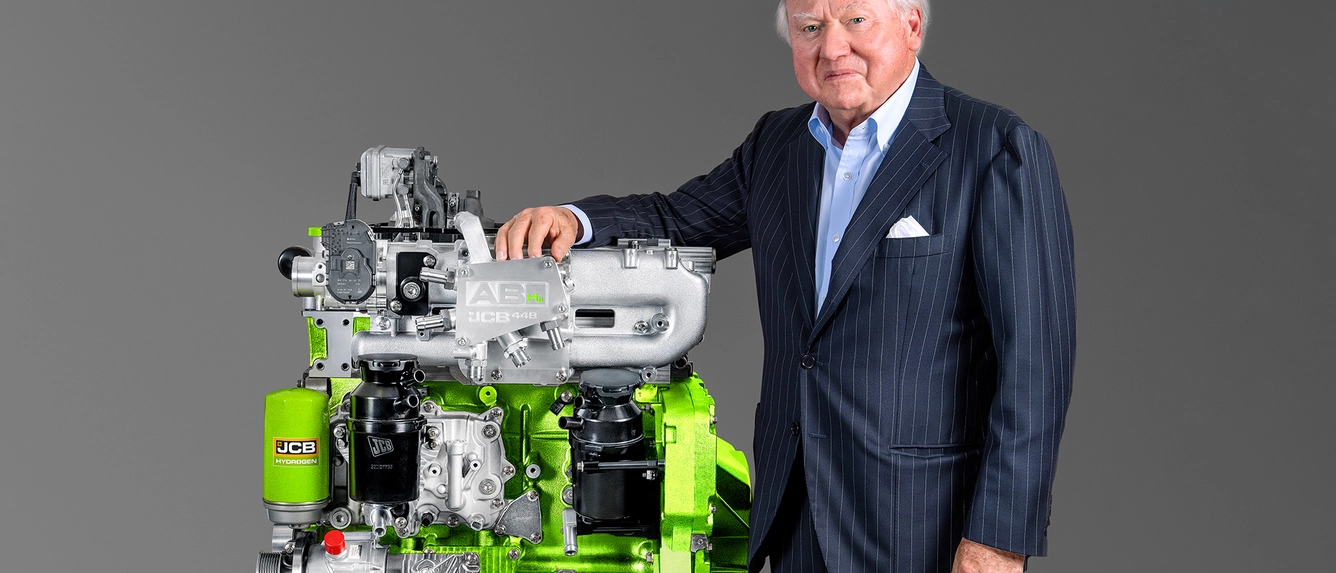
At the centre of the innovation lies JCB hydrogen technology, which takes a fundamentally different route from hydrogen fuel cell systems.
Instead of generating electricity through chemical reactions, the hydrogen internal combustion engine burns hydrogen directly within a modified engine chamber. This allows the system to retain many of the mechanical principles that underpin traditional diesel engines.
According to JCB, the development programme reflects a serious industrial commitment:
- Over £100 million invested in hydrogen engine development.
- More than 150 hydrogen engines produced for testing and validation.
- Extensive testing across multiple machine platforms, including backhoe loaders and telehandlers.
This scale of investment signals confidence not only in the technology itself but also in its commercial viability.
From an engineering perspective, the advantage lies in continuity. Core components such as crankshafts, pistons, and drivetrain systems remain familiar. Manufacturing processes require adaptation rather than reinvention. Maintenance regimes can evolve from existing diesel frameworks rather than being rebuilt from scratch.
This continuity reduces transition risk, a factor that carries significant weight for contractors operating large fleets under tight project timelines.
How Hydrogen Engines Work in Construction Equipment
To understand how hydrogen engines work in construction equipment, it is important to examine the combustion dynamics involved.
Hydrogen differs from diesel in several key ways:
- It has a lower ignition energy requirement.
- It burns faster and more uniformly.
- It produces no carbon emissions when combusted.
In the JCB hydrogen engine, hydrogen gas is injected into the combustion chamber, where it mixes with air and ignites under controlled conditions. The energy released drives the piston, generating mechanical power in the same way as a conventional engine.
However, achieving stable and efficient combustion requires significant engineering refinement. JCB has addressed this through:
- High-precision fuel injection systems designed for gaseous fuel.
- Modified combustion chamber geometries to control flame propagation.
- Advanced electronic control units that regulate timing and fuel delivery.
The primary emission is water vapour, with no CO₂ produced during operation. This positions the engine as a zero-carbon construction engine at the point of use, a critical advantage as non-road vehicle emissions standards tighten globally.
Further Reading: JCB Hydrogen Excavators Approved for UK Roads: A Historic Leap in Green Construction
Hydrogen-Powered Construction Equipment vs Battery Electrification
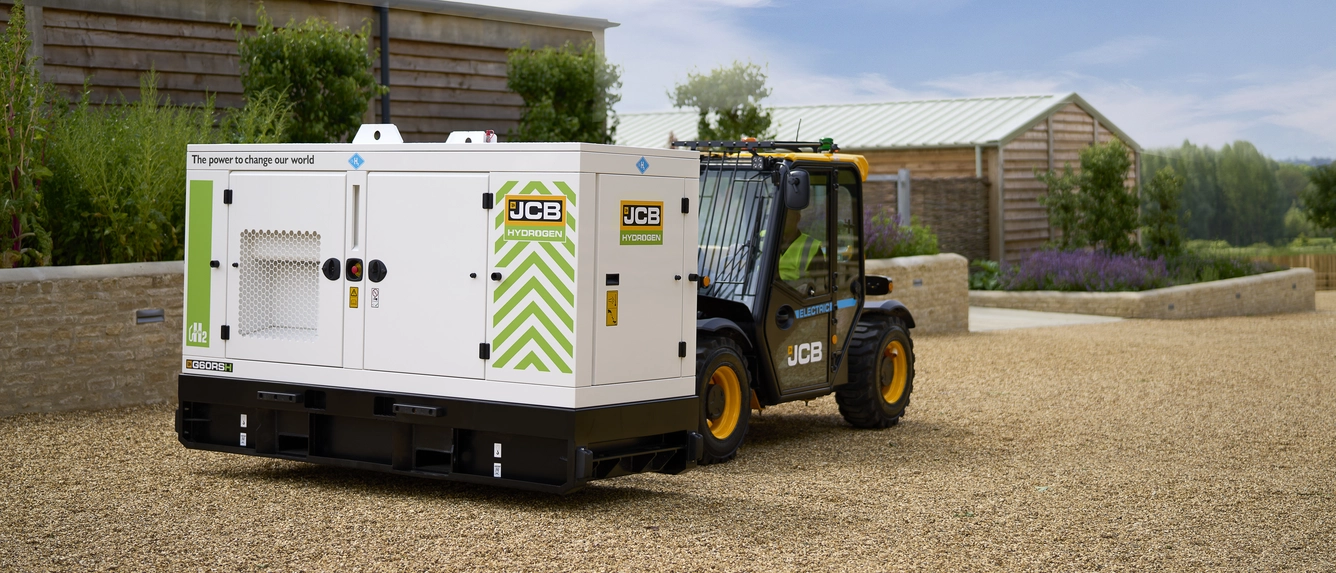
The emergence of hydrogen-powered construction equipment introduces a parallel pathway to electrification, particularly for heavy-duty applications where batteries face inherent limitations.
Battery-electric systems perform well in compact equipment and urban environments. However, their scalability in large machinery remains constrained by:
- Energy density limitations.
- Long charging times.
- Increased machine weight due to battery packs.
- Dependence on high-capacity electrical infrastructure.
Hydrogen addresses several of these constraints.
Refuelling times for hydrogen engines are comparable to diesel, typically taking minutes rather than hours. Energy density is significantly higher than current battery technology, enabling longer operating cycles without downtime.
For high-utilisation equipment such as excavators, loaders, and material handlers, these factors become decisive.
Rather than replacing electrification, hydrogen complements it. The future of hydrogen engines in heavy equipment is likely to focus on applications where power demand, duty cycles, and operational continuity make battery systems less practical.
Benefits of Hydrogen-Powered Construction Machinery
The benefits of hydrogen-powered construction machinery extend across environmental, operational, and economic dimensions.
1. Zero Carbon Emissions at Point of Use
Hydrogen combustion produces no carbon dioxide, aligning with global decarbonisation targets and regulatory requirements.
2. Operational Familiarity
The JCB hydrogen engine retains the mechanical behaviour of diesel engines, allowing operators to transition without retraining.
3. Rapid Refuelling
Hydrogen refuelling supports continuous operation on high-demand sites where downtime carries significant cost implications.
4. Reduced Infrastructure Disruption
Existing refuelling models can be adapted rather than replaced entirely, easing adoption.
5. Scalable Across Equipment Categories
The technology can be applied to a wide range of machinery, from compact equipment to large construction units.
These advantages position JCB’s alternative fuel engine technology as a practical solution rather than a theoretical one.
JCB Zero-Carbon Hydrogen Engine Debuts at US Expo
The JCB zero-carbon hydrogen engine’s debut at the US expo represented a strategic move into one of the world’s most demanding construction markets.
The United States offers a proving ground defined by:
- Large-scale infrastructure projects.
- High equipment utilisation rates.
- Increasing regulatory scrutiny on emissions.
By demonstrating hydrogen-powered machines in this environment, JCB signals readiness for real-world deployment. The debut also reflects a broader shift in industry expectations. New technologies must prove performance under operational conditions, not controlled demonstrations. The ability of the JCB hydrogen engine to operate within existing workflows strengthens its case as a viable commercial solution.
Sustainable Construction Machinery and Industry Transformation
The push toward sustainable construction machinery is accelerating as environmental, financial, and regulatory pressures converge. Construction remains one of the most carbon-intensive industries globally, with heavy equipment contributing significantly to emissions. Transitioning away from diesel is therefore a priority for governments and investors alike.
The JCB hydrogen engine offers a pathway that aligns sustainability with productivity. Rather than forcing trade-offs, it enables contractors to maintain performance while reducing emissions. This alignment is critical. Technologies that compromise efficiency rarely achieve widespread adoption in construction. Hydrogen’s ability to integrate into existing operational models gives it a strategic advantage.
Market Implications for Heavy Equipment Manufacturers
The introduction of hydrogen internal combustion technology reshapes competitive dynamics among OEMs.
Manufacturers now face multiple technology pathways:
- Battery-electric systems.
- Hydrogen fuel cells.
- Hydrogen internal combustion engines.
Each pathway carries distinct cost structures and infrastructure requirements.
JCB’s strategy focuses on leveraging existing manufacturing capabilities while transitioning to hydrogen fuel. This reduces development timelines and capital intensity compared to building entirely new systems.
For the industry, this signals a period of technological divergence. Rather than converging on a single solution, the market is likely to evolve into multiple segments based on application, geography, and regulatory frameworks.
Infrastructure and the Hydrogen Ecosystem
The long-term success of hydrogen depends on infrastructure development.
Key challenges include:
- Scaling hydrogen production.
- Developing storage and transport systems.
- Expanding refuelling networks.
- Achieving cost competitiveness.
According to the International Energy Agency, hydrogen demand is expected to grow significantly as industries pursue decarbonisation pathways. Total global demand reached nearly 100 million tonnes (Mt) in 2024, a 2% increase from 2023, primarily driven by traditional industrial feedstocks. However, infrastructure must expand in parallel to support adoption. Early deployment is likely to occur in regions with established hydrogen strategies, including parts of Europe and North America.
What This Means for Contractors and Investors
For contractors, the JCB hydrogen engine introduces a new dimension in fleet planning.
Decision-making will increasingly consider:
- Total cost of ownership.
- Fuel availability and logistics.
- Project-specific emissions requirements.
- Equipment performance under demanding conditions.
For investors, hydrogen represents both an opportunity and a risk. Capital allocation decisions will hinge on infrastructure development timelines and regulatory signals. Companies that position themselves early in hydrogen ecosystems may gain competitive advantages as adoption accelerates.
Further Reading: Hydrogen Infrastructure: The Backbone of the Global Green Energy Transition
The Future of Hydrogen Engines in Heavy Equipment
The future of hydrogen engines in heavy equipment will depend on alignment between technology, infrastructure, and policy. If hydrogen supply chains expand and costs decline, the technology could become a dominant solution for high-power equipment. The JCB hydrogen engine demonstrates that the technical foundation already exists. The next phase will be driven by market forces and strategic investment.
Technical Comparison: Hydrogen vs Electric vs Diesel (Construction Equipment)
| Parameter | Hydrogen (Internal Combustion/Fuel Cell) | Battery Electric | Diesel (Conventional ICE) |
| Energy Density (Fuel Level) | ~120 MJ/kg (very high by mass, low by volume) | ~0.9–2.5 MJ/kg (battery dependent, low) | ~43–45 MJ/kg |
| System Efficiency (Well-to-Wheel) | ~25–50% (losses in production, compression, conversion) | ~60–80% drivetrain efficiency | ~30–40% engine efficiency |
| Operational Emissions (Tailpipe) | Zero CO₂ (water vapour output) | Zero emissions | High CO₂, NOx, and particulate emissions |
| Lifecycle Emissions | 15–85% reduction depending on the hydrogen source | 63–84% lower vs diesel (grid dependent) | Baseline (highest emissions) |
| Refuelling/Charging Time | 5–15 minutes (comparable to diesel) | 1–8 hours, depending on the charger | 5–10 minutes |
| Energy Efficiency per Work Output | Medium (better than diesel, lower than electric) | Highest (≈3× diesel efficiency) | Lowest |
| Power Delivery Characteristics | Stable output, similar to diesel | Instant torque, high responsiveness | High torque, proven performance |
| Machine Weight Impact | Moderate (hydrogen tanks required) | High (heavy battery packs) | Low relative to alternatives |
| Range/Operating Duration | High (long duty cycles possible) | Limited for heavy-duty applications | Very high (industry benchmark) |
| Infrastructure Availability | Limited, developing a hydrogen network | Growing but limited in remote sites | Fully mature global infrastructure |
| Operational Cost (Current) | High but expected to decline | Lower energy cost, higher upfront cost | Moderate but volatile fuel prices |
| Maintenance Complexity | Moderate (similar to ICE systems) | Low (fewer moving parts) | High (mechanical wear, fluids) |
| Noise & Site Impact | Low noise, cleaner operations | Very low noise, no fumes | High noise and emissions |
| Best Use Case in Construction | Heavy-duty, long-cycle equipment | Urban, short-cycle, low-emission zones | Remote, high-power, legacy operations |
| Scalability Across Equipment Classes | High potential across fleets | Limited for large heavy equipment (currently) | Fully scalable (current standard) |
Engineering Interpretation (What The Table Above Actually Means)
1. Efficiency vs Practicality Trade-Off
Battery-electric systems dominate in energy efficiency, converting up to 80% of stored energy into usable work, compared to ~30–40% for diesel engines. However, construction is not purely an efficiency problem. It is a duty cycle and uptime problem. That is where hydrogen and diesel still hold strategic relevance.
2. Energy Density Defines Heavy Equipment Feasibility
Hydrogen’s 120 MJ/kg energy density far exceeds diesel on a mass basis.
But in practical engineering terms:
- Hydrogen requires compression or liquefaction, which tends to reduce its usable density.
- Batteries remain far heavier for equivalent energy.
This is why:
- Electric dominates compact equipment.
- Hydrogen is emerging for heavy-duty machinery.
- Diesel still dominates extreme duty cycles.
3. Emissions Advantage Depends on Energy Source
Electric and hydrogen are only as clean as their upstream energy:
- Electric: up to 84% emission reduction with renewable grids.
- Hydrogen: near-zero only if produced from green electrolysis.
This is a critical insight for engineers and investors: decarbonisation is a system-level problem, not just a machine-level upgrade.
4. Refuelling vs Charging Is a Strategic Constraint
Time is money on construction sites.
- Diesel and hydrogen: minutes to refuel.
- Electric: hours to recharge.
This single variable often determines feasibility in:
- Mining.
- Large infrastructure projects.
- Remote construction operations.
5. Infrastructure Will Decide the Winner, Not Technology Alone
From an engineering economics standpoint:
- Diesel wins today due to the existing infrastructure.
- Electric grows in urban and regulated zones.
- Hydrogen depends entirely on fuel ecosystem investment.
This aligns with global infrastructure trends where governments are funding hydrogen corridors and charging networks simultaneously.
Strategic Takeaway for Industry Leaders
The comparison shows that no single solution dominates across all metrics. Instead, the industry is moving toward a multi-energy ecosystem:
- Electric: urban, low-noise, emissions-regulated environments.
- Hydrogen: heavy-duty, long-cycle, high-utilisation machinery.
- Diesel: transitional baseline where infrastructure constraints persist.
For contractors, OEMs, and investors, the implication is clear: the future of construction equipment will not be defined by one technology but by portfolio optimisation across energy systems.
Conclusion: JCB Hydrogen Engines and the Future of Construction Power Systems
The debut of the JCB hydrogen engine marks a significant inflexion point in the evolution of construction equipment. By advancing a hydrogen internal combustion platform, JCB has prioritised scalability, operational continuity, and real-world performance. This positions hydrogen not as an experimental alternative but as a credible pathway for decarbonising heavy machinery without disrupting established workflows.
Looking ahead, the implications extend beyond engineering into capital strategy and market positioning. Equipment manufacturers, contractors, and investors must now evaluate hydrogen alongside electrification when planning long-term asset deployment. The companies that successfully integrate flexible, low-carbon technologies into their operations will define the competitive landscape of the next decade. In that context, JCB’s hydrogen platform establishes an early benchmark for how industrial innovation can align sustainability with economic performance.
Stay Ahead of Construction Machinery Innovation and Technology
For expert-led insights on construction technology, heavy equipment evolution, and global infrastructure trends, explore more in our Construction Machinery and Equipment page at ConstructionFrontier.com, where industry leaders access analysis shaping the future of construction.