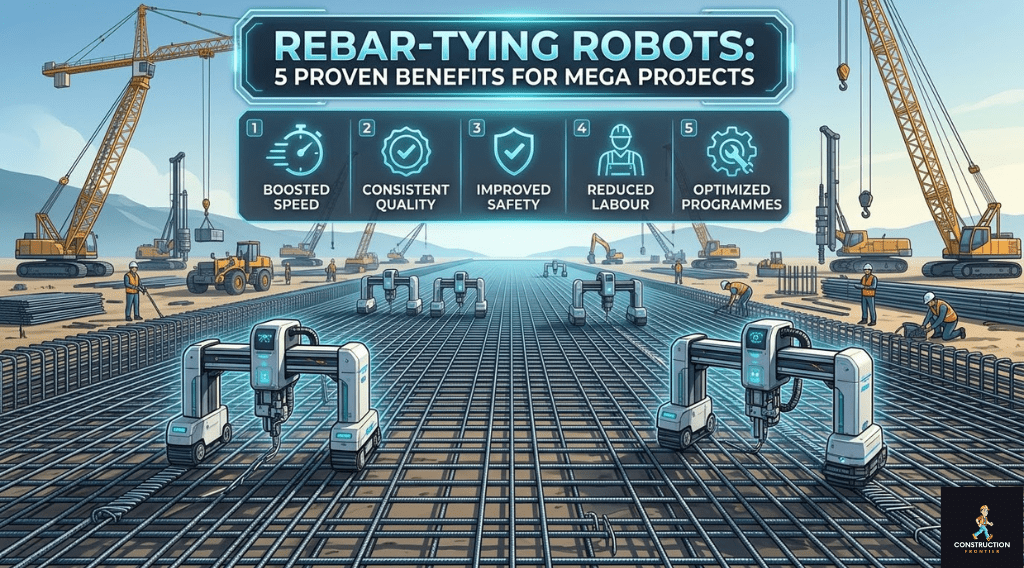
Rebar-Tying Robots: 5 Proven Benefits for Mega Projects
The rebar-tying robots are rapidly transforming reinforcement workflows on large infrastructure and commercial developments. As labour-intensive rebar tying continues to constrain productivity, contractors are deploying automated rebar-tying robot solutions to improve speed, consistency, and worker safety. These systems form part of a broader shift toward construction robotics rebar operations, where repetitive tasks are executed with precision using robotic rebar-tying systems. On mega projects, the integration of rebar-tying machine technologies supports scalable reinforcement automation, reducing programme delays and improving structural quality.
Technical Snapshot: Rebar-Tying Robots System
| Component | Function |
| Robotic arm or handheld unit | Positions tying mechanism |
| Wire feeding system | Supplies tie wire automatically |
| Battery-powered motor | Drives the operation |
| Control interface | Regulates tying speed and tension |
| Sensor system | Detects rebar intersections |
Introduction: Reinforcement Work Enters the Robotics Era
Reinforcement installation has traditionally relied on manual tying, a physically demanding and time-consuming process that directly affects construction timelines. On large-scale projects, where thousands of tonnes of steel reinforcement are required, inefficiencies in tying can significantly impact productivity and cost.
The rebar-tying robots introduce a new operational model. Automating repetitive tying tasks, it enables contractors to achieve consistent output while reducing labour strain. The rise of construction robotics rebar applications reflects a broader industry trend toward digitisation and automation.
Understanding how rebar-tying robots work in construction is critical for engineers and project managers seeking to optimise reinforcement workflows. These machines combine mechanical precision with programmable controls to deliver uniform ties across complex reinforcement layouts.
How Rebar-Tying Robots Work in Construction
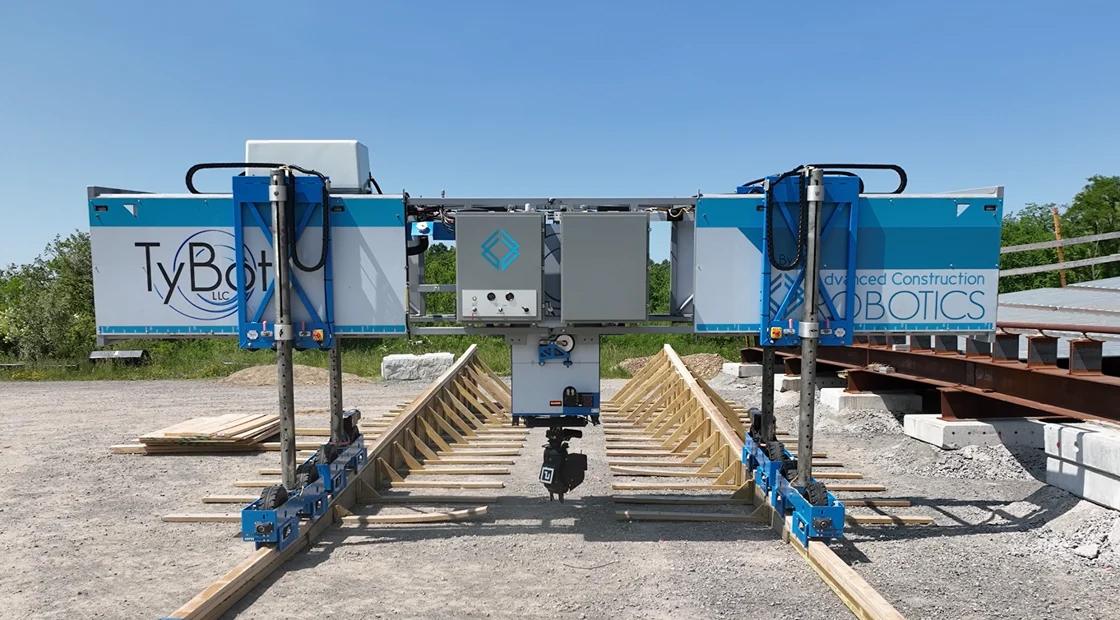
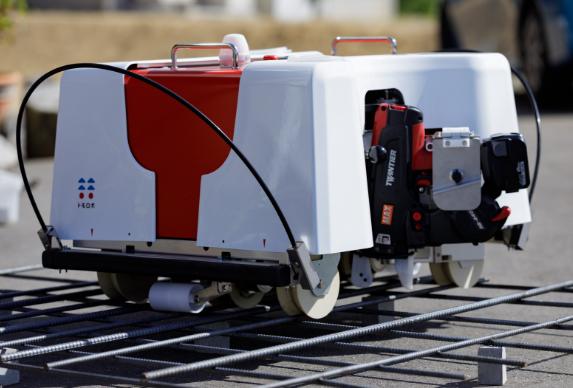
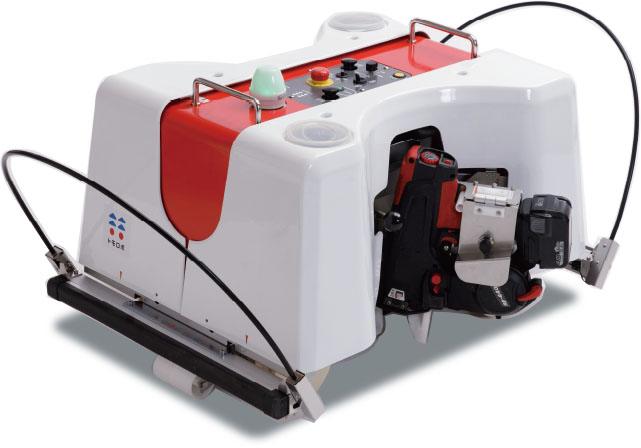
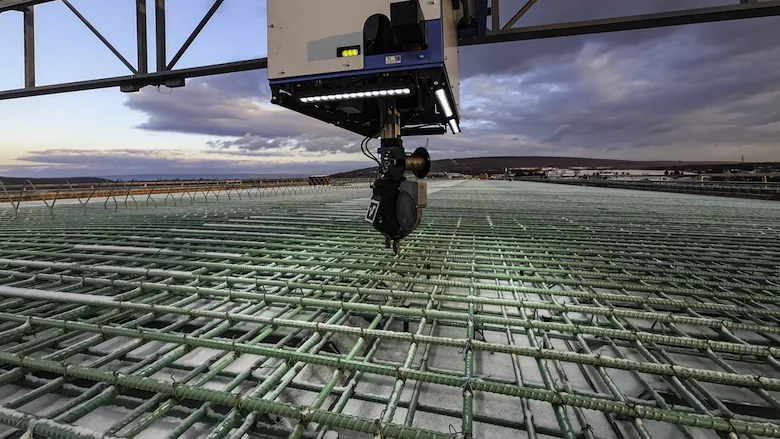
The adoption of rebar-tying robots, such as the large infrastructure-scale TyBot from Advanced Construction Robotics and the mini robot Tomorobo from KEN Robotech, is driven by their ability to perform high-frequency tying operations with minimal human intervention. These machines are designed to grip intersecting rebars, wrap tie wire, and secure it with controlled tension.
Mechanical Operation and Workflow
The rebar-tying robots operate through a sequence of automated steps:
- Detection of rebar intersection points.
- Positioning of the tying head.
- Feeding and wrapping of the tie wire.
- Twisting and cutting of the wire.
This process takes approximately 0.7 to 1.2 seconds per tie, significantly faster than manual tying.
Integration into Reinforcement Systems
Modern robotic rebar-tying systems are designed to integrate seamlessly into reinforcement workflows. Operators guide or position the machine, while the robot executes the tying operation. This approach enhances productivity while maintaining flexibility across different project types, including slabs, columns, and beams.
5 Proven Benefits of Rebar-Tying Robots for Mega Projects
The rebar-tying robots deliver quantifiable performance improvements across mega projects where reinforcement density, labour constraints, and schedule pressure intersect. Unlike incremental tools, automated rebar-tying robot systems introduce a step change in productivity, safety, and quality control, particularly in bridge decks, high-rise slabs, and large infrastructure projects.
1. Significant Productivity Gains
The most measurable advantage of rebar-tying robots lies in their throughput. Field deployment data show that advanced robotic rebar-tying systems can achieve 1,000–1,200 ties per hour, compared to 150–250 ties per hour per worker under manual conditions.
This translates into:
- 4x to 6x increase in productivity per unit of labour.
- Up to 9,600 ties per shift, depending on configuration.
- Documented a 25% schedule reduction on bridge and slab projects.
From an engineering production standpoint, this improvement directly impacts the critical path of reinforced concrete works. Reinforcement tying often governs slab casting schedules, particularly in high-density zones such as transfer slabs and bridge decks.
The benefits of rebar-tying robots in mega projects become most evident in:
- Bridge deck construction exceeding 7,000 m², where robots have completed over 17,800 ties in two shifts.
- Industrial slabs with repetitive rebar grids.
- High-rise core slabs with tight programme constraints.
In terms of construction robotics for reinforcement work, the rebar-tying robot effectively converts a labour-driven process into a production-controlled operation.
2. Enhanced Worker Safety
Rebar tying is one of the most physically demanding tasks in construction, requiring repetitive bending, twisting, and prolonged back bending or kneeling. The rebar-tying robot eliminates these repetitive manual motions, significantly reducing ergonomic risk.
From a safety engineering perspective, the integration of reinforcement automation construction reduces:
- Exposure to musculoskeletal disorders (MSDs).
- Worker fatigue, which is strongly correlated with on-site accidents.
- Time spent in hazardous zones, such as elevated slabs or congested reinforcement cages.
Field deployments show that robotic systems can remove hundreds of labour risk hours per project, particularly in large infrastructure works.
Additionally, construction robotics rebar applications enable:
- Remote or semi-remote operation, reducing worker proximity to hazards.
- Continuous operation without fatigue-related performance degradation.
The use of automated rebar-tying robot systems aligns with global safety frameworks increasingly enforced by project financiers and regulatory bodies.
3. Consistent Quality and Structural Integrity
Quality variability in manual tying remains a persistent issue in reinforced concrete construction. Inconsistent tie tension can cause reinforcement to be displaced during concrete placement, affecting structural performance.
The rebar-tying robots address this through controlled, repeatable tying mechanisms. Advanced systems achieve:
- 100% tying consistency rates in controlled studies.
- Detection accuracy is up to 99.4% for rebar intersections.
- Dimensional error margins within 2.8 mm, ensuring precise alignment.
From a structural engineering perspective, the consistency provided by robotic rebar-tying systems significantly enhances the stability of reinforcement cages during the critical vibration and pouring phases. This automated precision ensures more reliable load paths within reinforced concrete elements and facilitates stricter compliance with design specifications and inspection standards.
Such technical accuracy is especially vital in complex applications such as post-tensioned slabs, heavily reinforced bridge decks, and other high-load structural elements, where manual variability can lead to structural vulnerabilities. By adopting a robotic construction approach, projects can effectively reduce the risk of costly rework while simultaneously improving inspection pass rates through superior geometric quality control.
4. Labour Cost Optimisation
According to ResearchGate, the labour accounts for a significant share of reinforcement costs, particularly in markets with high wage rates or labour shortages. The rebar-tying robots fundamentally change the labour model by shifting from manual crews to operator-supervised automation.
Data from field applications indicates:
- Up to a 50% reduction in man-hours for tying operations.
- ROI timelines of 6 to 8 months, depending on project scale.
- The capability to replace the output of multiple workers simultaneously.
From a cost-modelling perspective, the primary advantages of automated rebar-tying machines lie in the substantial reduction of both direct and indirect expenses. By automating repetitive tasks, contractors can lower direct labour costs while simultaneously reducing indirect costs associated with on-site supervision and safety management. Furthermore, these machines offer improved cost predictability, as their consistent production rates eliminate the performance fluctuations often associated with manual labour.
For contractors managing large-scale mega projects, integrating rebar-tying robots serves as a strategic hedge against labour market volatility. This technology supports more accurate cost forecasting by providing stable, data-driven productivity metrics over long construction timelines. Ultimately, this automated approach minimises financial risk and ensures that complex projects remain within budget by stabilising one of the most unpredictable variables in structural construction.
5. Scalability for Mega Infrastructure Projects
The scalability of the rebar-tying robots is one of its most strategic advantages. Mega infrastructure projects require consistent output across large areas, often exceeding tens of thousands of square metres.
Robotic systems are designed for continuous operation, with capabilities such as:
- 10-hour uninterrupted runtime under site conditions.
- Operation in varied weather conditions without performance loss.
- Expandable working widths up to 35 metres (117 feet).
This technological framework allows rebar automation to scale effectively across massive infrastructure projects, ranging from highway and bridge megaprojects to airport runways and industrial slabs. It is equally transformative for high-rise developments, where the repetitive nature of floor plates allows the technology to maximise its efficiency over time.
From a systems engineering perspective, this scalability is further amplified by the ability to deploy multiple units in parallel. By coordinating these machines across a single site, contractors effectively create a robotic production line for reinforcement work, ensuring that even the largest-scale projects benefit from a continuous, highly predictable workflow.
Technical Advantages of Rebar-Tying Robots
Beyond headline benefits, the rebar-tying robot delivers deeper technical advantages that align with modern construction methodologies.
1. Speed and Efficiency
The rebar-tying robots operate at industrial production speeds, with some systems achieving up to 3,600 ties per hour in optimised conditions.
This performance supports:
- Just-in-time reinforcement workflows.
- Reduced idle time between trades.
- Improved utilisation of formwork cycles.
2. Precision and Reliability
The integration of sensors, machine vision, and automated control ensures that robotic rebar-tying systems maintain consistent performance across varying site conditions.
This reliability reduces:
- Human error in tying patterns.
- Variability in reinforcement placement.
- Inspection failures and rework.
3. Adaptability Across Projects
Modern rebar-tying machine construction systems are designed to handle multiple rebar types and configurations, including epoxy-coated, galvanised, and stainless steel reinforcement.
This adaptability enables the rebar-tying robot to be deployed across:
- Residential and commercial buildings.
- Heavy civil infrastructure.
- Industrial construction projects.
Rebar-Tying Robots: Industry Adoption and Global and Emerging Market Trends
The adoption of rebar-tying robots is accelerating as a response to chronic productivity stagnation in the construction sector. While the broader economy has seen significant gains, McKinsey & Company reports that global construction productivity grew only 0.4% annually from 2000 to 2024. This “productivity rut” has pushed automation from an experimental phase into a standard operational requirement for modern infrastructure.
Key Drivers for Global Adoption
The transition toward automated rebar-tying systems is fuelled by several critical market forces:
- Severe Labour Shortages: In North America alone, the construction industry faces a deficit of over 500,000 skilled workers. Similarly, European markets report trade vacancy rates exceeding 15%, forcing contractors to seek mechanised alternatives.
- Market Growth Projections: The rebar-tying robot market is currently valued at approximately $110 million (2025) and is projected to reach $250 million by 2033, maintaining a robust CAGR of 14-15%.
- Infrastructure Megaprojects: Large-scale initiatives, such as India’s $1.4 trillion National Infrastructure Pipeline (NIP) and China’s Belt and Road (BRI) projects, are creating massive demand for high-speed, 24/7 reinforcement capabilities.
- Workplace Safety & Ergonomics: With over 3.5 million work-related musculoskeletal disorders reported annually in global construction, automated tools are being adopted to mitigate long-term physical strain on ageing workforces.
Regional and Emerging Market Trends
The deployment of these systems varies by region, reflecting different economic and regulatory pressures:
- Asia-Pacific (45% Market Share): Led by China and Japan, this region accounts for the largest share of sales, driven by rapid urbanisation and government-backed smart city initiatives.
- North America (29-38% Market Share): This remains the largest market by value, driven by high labour costs and the U.S. Infrastructure Investment and Jobs Act, which prioritises efficiency in bridge and highway renovations.
- Europe (24% Market Share): Adoption is centred in Germany and France, where strict EU safety directives and ageing infrastructure renewal programmes drive the use of high-torque robotic tiers.
From a strategic perspective, the World Economic Forum notes that as “physical AI” matures, human roles are shifting from manual labourers to robot fleet coordinators, marking a permanent change in how global infrastructure is built.
Rebar-Tying Robots in African Construction Projects
The adoption of rebar-tying robots in African construction markets presents a strong opportunity to address long-standing productivity and labour challenges across infrastructure and building projects. As urbanisation accelerates across countries such as Kenya, Nigeria, and South Africa, demand for efficient reinforcement installation continues to grow, particularly in transport, housing, and energy infrastructure.
Addressing Labour Productivity Gaps
Reinforcement work in many African projects remains labour-intensive and is often constrained by limited access to skilled rebar technicians. The automated rebar-tying robot directly improves output by increasing tying speed and reducing reliance on manual labour.
From a project delivery standpoint, construction robotics rebar applications enable:
- Faster slab and beam reinforcement cycles.
- Reduced workforce fatigue in high-volume projects.
- Improved consistency across large reinforcement areas.
This is particularly relevant for mega projects such as highways, bridges, and high-rise developments, where reinforcement density is high.
Improving Safety on High-Risk Construction Sites
Safety remains a critical issue in African construction environments, especially on large infrastructure projects. The rebar-tying robots reduce the need for repetitive bending and manual tying, which are common causes of musculoskeletal injuries.
The integration of reinforcement automation construction improves:
- Worker ergonomics and reduced physical strain.
- Safer operations in congested reinforcement zones.
- Lower exposure to hazardous working conditions.
These improvements align with international safety standards increasingly adopted across African construction markets.
Enabling Faster Delivery of Infrastructure Projects
African governments are investing heavily in infrastructure development, including roads, railways, and urban housing. Delays in reinforcement work often impact overall project timelines.
The rebar-tying machine construction approach accelerates reinforcement installation, supporting faster project delivery. In large-scale developments, robotic rebar-tying systems can maintain consistent output across extended working hours, improving schedule reliability.
This supports the broader adoption of rebar automation technology in infrastructure, particularly in projects funded by international investors and development agencies.
Cost Efficiency in Resource-Constrained Projects
While initial investment in a rebar-tying robot may be higher than traditional tools, the long-term cost benefits are significant. Contractors can reduce labour costs, minimise rework, and improve productivity.
The automated rebar-tying machine advantages in African contexts include:
- Lower lifecycle cost of reinforcement installation.
- Reduced material wastage from improper tying.
- Improved cost predictability for large projects.
This is especially important in markets where project budgets are tightly controlled, and cost overruns must be minimised.
Supporting Modern Construction Practices in Africa
The introduction of the rebar-tying robots aligns with the gradual shift toward modern construction technologies across Africa. As digital construction methods gain traction, construction robotics for reinforcement work will play a critical role in improving efficiency and competitiveness.
The adoption of robotic rebar-tying systems complements other innovations such as prefabrication and 3D-printed construction technology, creating a more integrated and efficient construction ecosystem.
Technical Block: Rebar-Tying Robots Performance Metrics
| Parameter | Verified Range |
| Tying speed | 1,000–1,200 ties/hour |
| Manual comparison | 150–250 ties/hour |
| Productivity gain | 4x–6x increase |
| Schedule reduction | ~25% |
| Accuracy rate | Up to 99.4% |
| Man-hour reduction | Up to 50% |
Future of Rebar Automation Technology in Infrastructure
The future of the rebar-tying robots is closely tied to the evolution of integrated construction robotics ecosystems. As digital construction matures, the role of reinforcement automation construction will expand beyond isolated tasks into fully coordinated workflows.
Emerging Developments in Reinforcement Robotics
To meet the demands of modern megaprojects, new technologies are bridging the gap between manual labour and full site autonomy:
- Autonomous Rebar Placement & Tying: Next-generation systems are moving beyond simple tying. Future units will combine robotic arms and computer vision to both place and secure rebar in a single pass, drastically reducing manual intervention and ensuring sub-millimetre alignment accuracy.
- AI-Driven Design Optimisation: Machine learning algorithms are now being used to optimise tying patterns and reinforcement layouts based on real-time structural data. This improves material efficiency and ensures that high-stress zones receive precision reinforcement that exceeds standard manual capabilities.
- Collaborative Multi-Robot Fleets: Research indicates that coordinated robot systems can boost site productivity by over 20%. By utilising swarm intelligence, fleets of rebar-tying robots can communicate to avoid overlaps, distribute workloads across massive bridge decks, and work safely alongside human crews.
Digital Integration and BIM Synergy
The integration of rebar-tying robots with Building Information Modelling (BIM) and Digital Twins creates a high-transparency construction environment:
- Real-Time Progress Tracking: Integrated sensors provide live data feeds to project managers, allowing for “as-built” digital mapping of every tie and bar.
- Automated Quality Verification: Onboard cameras and AI diagnostic tools perform instantaneous inspections, flagging errors before the concrete pour to eliminate the risk of structural rework.
- Predictive Project Management: By feeding robot performance data into a digital twin, contractors can forecast completion dates with unprecedented accuracy, shielding projects from the delays caused by manual labour shortages.
As rebar automation technology continues to scale, these machines will transition from speciality tools to the backbone of automated structural systems, making them indispensable for the efficiency and safety of future global infrastructure.
Conclusion: Reinforcement Efficiency Redefined
The rebar-tying robots are not just tools but a strategic asset in modern construction. Its ability to improve speed, safety, and consistency makes it indispensable for mega projects. By integrating automated rebar-tying robot systems into construction workflows, contractors can achieve higher productivity while maintaining quality standards. The technology supports the transition toward construction robotics rebar operations, where automation drives efficiency.
Looking ahead, the role of rebar-tying robots will continue to expand as the industry embraces reinforcement-automation construction. Its impact on cost optimisation and project delivery will make it a standard component of future infrastructure development. The continued advancement of robotic rebar-tying systems signals a shift toward smarter, safer, and more efficient construction practices.
Make Smarter Equipment Decisions With Us
At Construction Frontier, we translate technologies like the rebar-tying robot into clear, data-driven insights for engineers, contractors, and infrastructure decision-makers. Explore more expert analysis and real-world applications on the Construction Machinery and Equipment page.