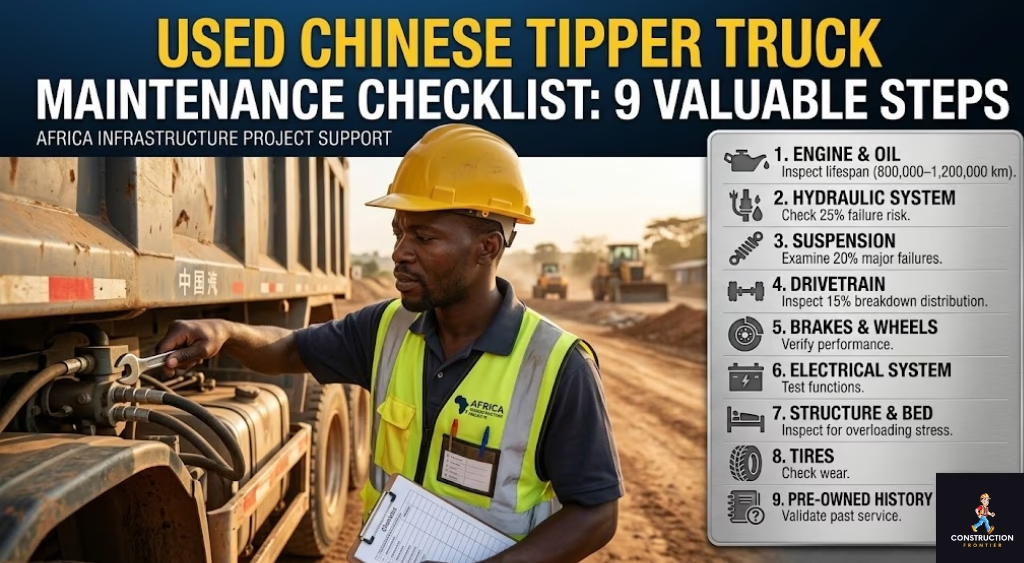
Used Chinese Tipper Truck Maintenance Checklist: 9 Valuable Steps
The used Chinese tipper truck maintenance checklist has become a critical operational framework for contractors and fleet managers across Africa, where cost pressures drive reliance on pre-owned equipment. While acquisition costs remain 30–60% lower than new trucks, lifecycle performance depends entirely on structured maintenance discipline. Field data indicates that fleets without a defined tipper truck maintenance checklist experience up to 35% higher failure rates, 20–40% increased operating costs, and significant downtime risks that directly affect project delivery timelines.
Technical Snapshot:
- Engine lifespan (well-maintained): 800,000–1,200,000 km.
- Fleet utilisation rate: 70–90%.
- Maintenance cost ratio: 10–15% of asset value annually.
- Downtime cost impact: $300–$1,000 per day per truck.
- Major failure distribution: engine (30%), hydraulics (25%), suspension (20%), drivetrain (15%).
For contractors and investors, this Chinese tipper truck maintenance checklist guide defines the difference between a depreciating liability and a high-performing logistics asset.
Introduction: Why Maintenance Matters for Used Chinese Tipper Trucks
Across Africa, demand for used Chinese tipper trucks continues to rise as infrastructure development accelerates. Road construction, mining logistics, and urban housing projects all depend on reliable haulage capacity. For many contractors, used trucks represent the fastest route to scaling operations without the capital burden of new equipment.
However, this cost advantage often masks underlying risks. Imported units frequently arrive with unknown service histories, hidden mechanical wear, and exposure to prior overloading. Without a structured Chinese tipper truck checklist, these risks compound rapidly, resulting in unexpected breakdowns and escalating maintenance costs.
A disciplined maintenance strategy transforms these assets. Instead of reacting to failures, contractors can anticipate wear patterns, schedule interventions, and maintain consistent performance levels. This approach aligns with modern asset management principles where uptime, reliability, and lifecycle cost optimisation drive profitability.
Understanding the African Operating Environment
Operating conditions across Africa impose unique stresses on heavy-duty trucks. Unlike controlled environments in developed markets, construction vehicles must perform under unpredictable and often extreme conditions. These realities define how Chinese tipper truck maintenance must be structured.
Harsh Conditions That Affect Truck Performance
- Rough, unpaved roads increase vibration loads by 30–50%.
- Dust ingress accelerates air filter clogging and engine wear.
- High temperatures elevate cooling system stress.
- Seasonal rains introduce mud-related traction and corrosion challenges.
- Overloading practices frequently exceed manufacturer limits.
Why Used Chinese Trucks Require Proactive Maintenance
- Imported trucks often already operate at 50–70% of their lifecycle.
- Maintenance standards vary significantly across previous owners.
- Spare parts supply chains may be inconsistent in remote regions.
These conditions make reactive repairs unsustainable. A proactive truck maintenance guide, the African approach, ensures reliability even under severe operating stress.
The Complete Used Chinese Tipper Truck Checklist (Overview)
The used Chinese tipper truck maintenance checklist integrates inspection, preventative maintenance, and operational monitoring into a single framework.
Core Maintenance Components:
- Engine performance optimisation.
- Hydraulic system reliability.
- Transmission and drivetrain integrity.
- Structural and chassis inspection.
- Suspension system durability.
- Brake system efficiency.
- Electrical system stability.
- Tyre performance management.
- Cooling system resilience.
This framework aligns with best practices in construction truck maintenance tips, ensuring that every critical system receives consistent attention. For a deeper understanding of procurement strategies before maintenance begins, explore this high-performance guide to buying used tipper trucks from China.
Further Reading: Used Tipper Trucks from China: 6 Essential and Profitable Buying Tips
Used Chinese Tipper Truck Checklist: 9 Critical Maintenance Steps for Maximum Performance
A structured Chinese tipper truck maintenance checklist is essential for maintaining reliability, safety, and cost efficiency across construction and logistics operations in Africa. Unlike reactive repair approaches, this checklist provides a systematic framework that targets the most failure-prone components of tipper trucks, ensuring consistent performance under high utilisation and harsh operating conditions. The following nine maintenance steps form a practical, engineering-led guide designed to help contractors, fleet managers, and investors minimise downtime, extend asset lifespan, and optimise the total cost of ownership of their fleets.
Check 1. Engine Inspection and Performance Check
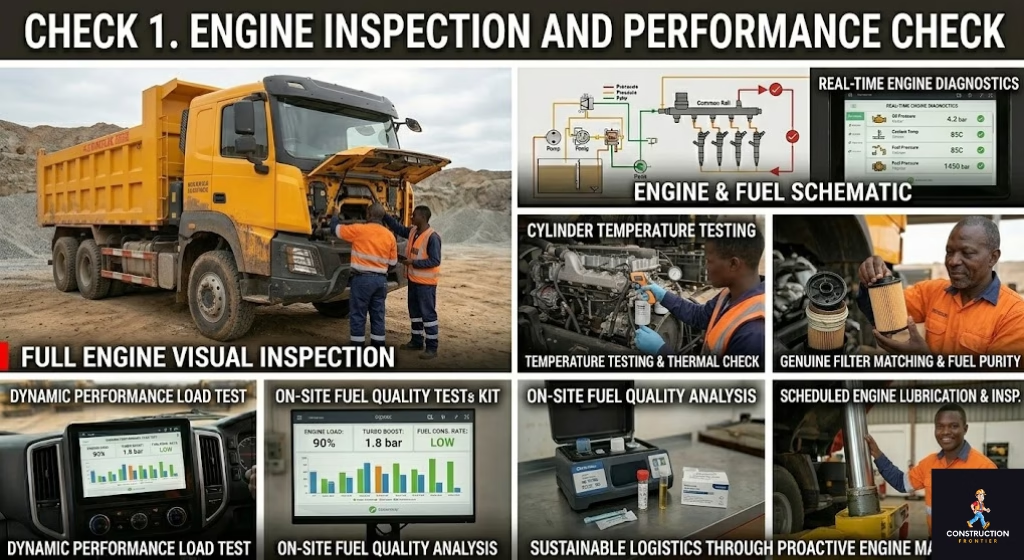
The engine sits at the core of any used Chinese tipper truck checklist, accounting for the highest share of capital value and operational risk. In heavy-duty diesel systems used in tipper trucks from China in Africa, failure mechanisms are directly linked to lubrication breakdown, fuel contamination, and thermal stress.
What to Inspect
- Oil leaks, viscosity degradation, and contamination levels.
- Exhaust smoke diagnostics:
- Blue → oil combustion
- Black → incomplete combustion (fuel inefficiency)
- White → coolant intrusion
- Idle stability and vibration signatures are indicators of injector imbalance.
- Load response and torque delivery under full payload.
Why It Matters
- Engine overhaul costs typically represent 25–40% of truck value.
- Diesel engines operate under high load factors, accelerating wear through soot and acid formation in oil.
- Poor lubrication leads to metal-to-metal contact, heat buildup, and catastrophic failure.
Engineering Insight
- Lubrication failure remains one of the dominant failure drivers in heavy trucks.
- Continuous high-load operation (80–100%) reduces engine lifespan significantly due to accelerated oil degradation.
Best Practices
- Oil inspection every 5,000–8,000 km.
- Maintain OEM-grade lubricants with correct viscosity.
- Monitor injector spray pattern and fuel-air ratio.
Performance Benchmark Table
| Parameter | Typical Range | Failure Threshold | Impact |
| Oil contamination | <2% soot | >5% soot | Accelerated wear |
| Engine MTBF | 12,000–15,000 hrs | <8,000 hrs | Early overhaul |
| Fuel efficiency loss | 0–5% | 15–25% | High OPEX |
*MTBF (Mean Time Before Failure) – a measure of a system’s or component’s dependability. It represents the typical amount of time a system or component will function before failing and is an essential component of maintenance management.
Check 2. Hydraulic System and Tipping Mechanism
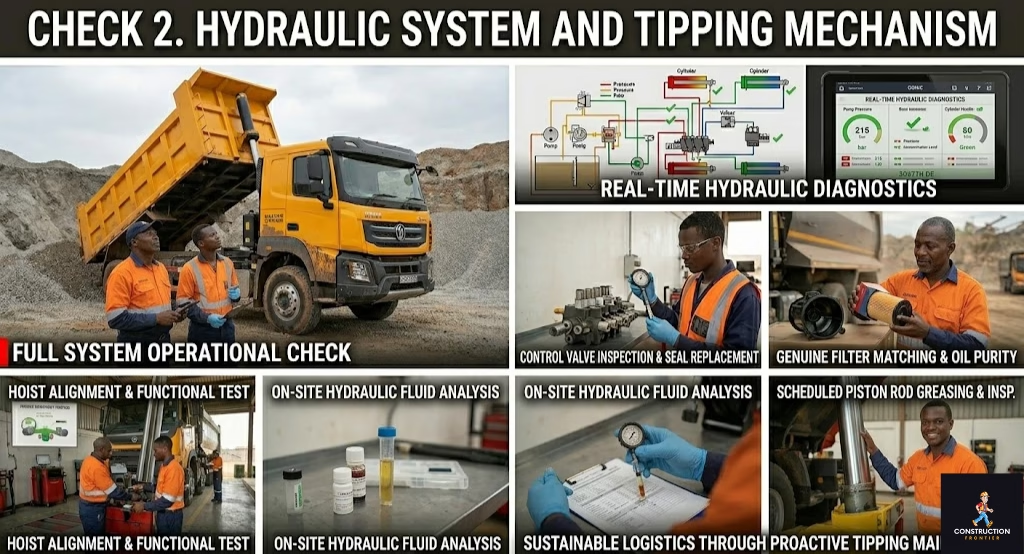
The hydraulic system defines the functional identity of Chinese tipper trucks in Africa, making it a critical element in any used dump truck inspection checklist. Failures here directly translate into operational downtime.
Checklist Focus
- Cylinder seals and piston integrity.
- Pump pressure consistency (measured in bar).
- Hose fatigue and leakage under cyclic loads.
Common Issues
- Oil leakage reducing lifting force.
- Pressure drops, causing slow tipping cycles.
- Asymmetric lifting leading to chassis torsion.
Engineering Insight
Hydraulic systems operate under repeated stress cycles. Contaminated oil introduces abrasive particles, accelerating seal wear and reducing efficiency.
- Hydraulic contamination is a primary cause of system inefficiency.
- Dump truck service intervals (~250 hours) are critical for detecting early wear.
Maintenance Strategy
- Replace hydraulic oil every 1,000–1,500 operating hours.
- Perform pressure testing under load.
- Inspect seals weekly in high-utilisation fleets.
Performance Table
| Metric | Normal Range | Failure Indicator | Cost Impact |
| Pump pressure | 180–250 bar | <150 bar | Reduced lifting capacity |
| Cycle time | 15–25 sec | >40 sec | Productivity loss |
| Failure rate | — | ~20–25% of breakdowns | High downtime |
Check 3. Transmission and Drivetrain Condition
The drivetrain absorbs torque loads continuously, making it a major wear zone; hence, Chinese tipper truck maintenance should be well adhered to in construction vehicle environments.
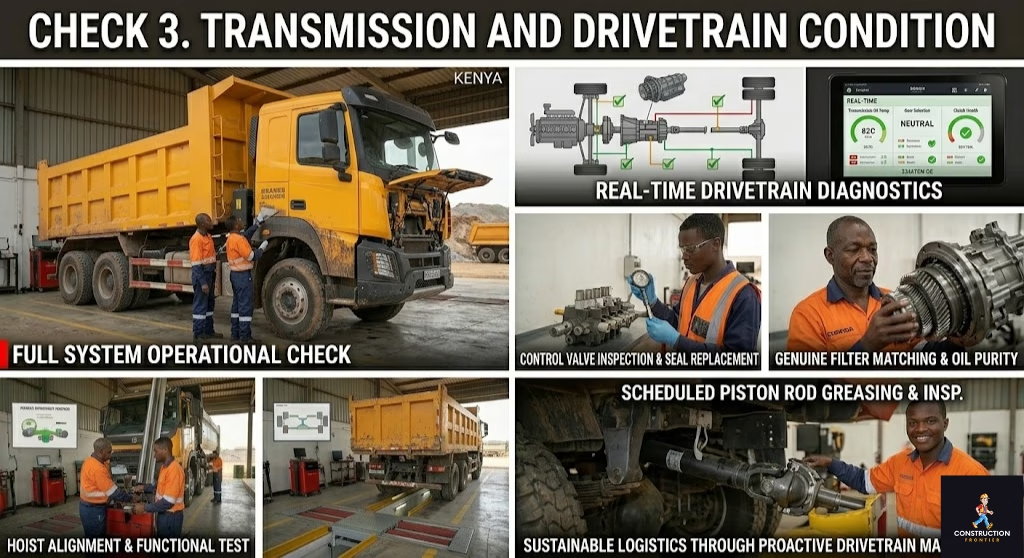
Inspection Points
- Gear engagement smoothness.
- Clutch wear and slippage.
- Driveshaft alignment and vibration.
- Differential lock functionality.
Why It Matters
- Torque loads from heavy hauling increase stress exponentially.
- Poor lubrication or misalignment leads to energy loss and overheating.
Engineering Insight
- Transmission inefficiencies increase fuel consumption by up to 10–15%.
- Clutch and drivetrain failures are strongly linked to poor driving behaviour and lubrication breakdown.
Best Practices
- Inspect transmission oil quality every 10,000 km.
- Align drivetrain components during major servicing.
- Monitor PTO (Power Take-Off) performance for hydraulic systems.
Performance Table
| Component | MTBF Range | Failure Rate | Operational Impact |
| Clutch system | 5,000–8,000 hrs | Medium | Torque loss |
| Differential | 10,000 hrs | Low | Reduced traction |
| Gearbox | 12,000 hrs | Medium | Downtime |
Check 4. Chassis and Structural Integrity
The chassis defines load-bearing capacity and durability in maintenance tips for tipper trucks in Africa.
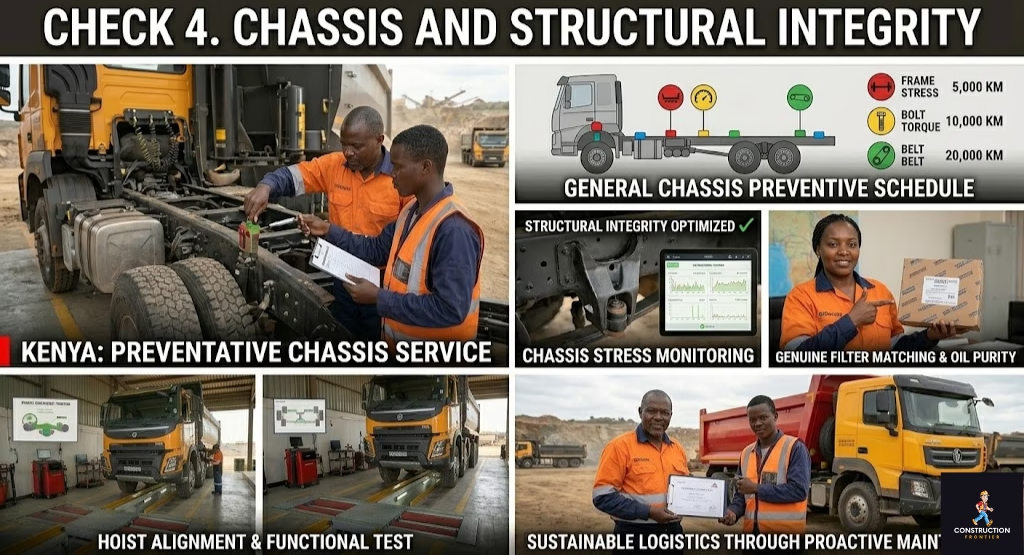
Inspection Focus
- Frame cracks and fatigue zones.
- Corrosion from environmental exposure.
- Evidence of structural welding repairs.
Engineering Insight
Repeated overloading creates micro-fractures that propagate under cyclic stress, leading to catastrophic failure.
- Structural fatigue increases exponentially beyond the rated payload.
- Poor roads accelerate stress accumulation.
Best Practices
- Conduct ultrasonic or visual crack inspections monthly.
- Apply anti-corrosion coatings.
- Reinforce high-stress zones.
Performance Table
| Parameter | Normal | Failure Risk | Impact |
| Load factor | ≤100% | >120% | Structural fatigue |
| Crack growth rate | Low | High | Frame failure |
| Repair cost | — | High | Asset downtime |
Check 5. Suspension System and Shock Absorption
Suspension systems absorb dynamic loads, making them critical in the truck maintenance guide in Africa.
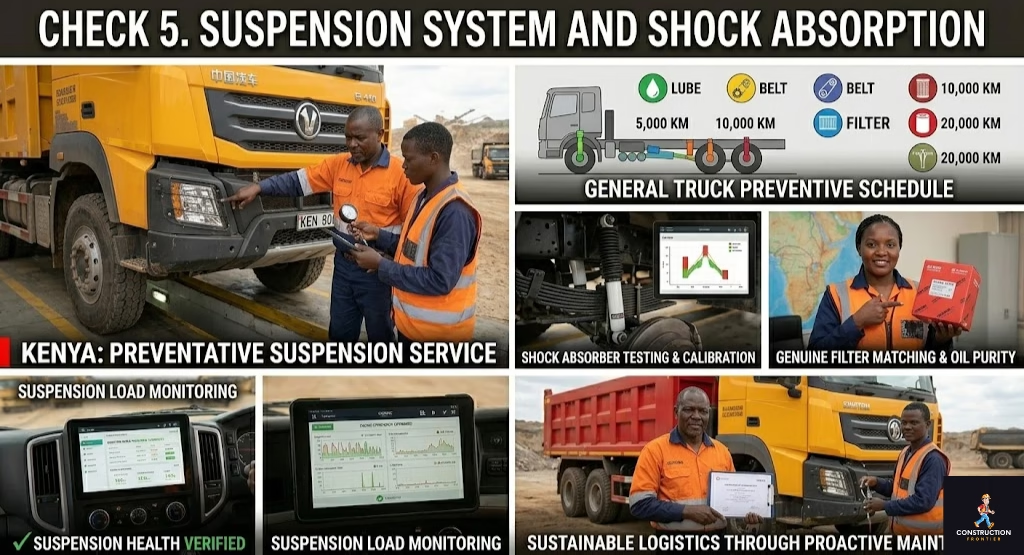
Checklist
- Leaf spring deformation.
- Shock absorber leakage.
- Bushing wear.
Engineering Insight
- Rough terrain increases suspension wear by up to 50%.
- Poor suspension increases chassis stress and tyre wear.
Best Practices
- Replace worn bushings proactively.
- Tighten suspension components regularly.
- Monitor ride height and alignment.
Performance Table
| Component | Failure Rate | MTBF | Impact |
| Leaf springs | High | 4,000–6,000 hrs | Load instability |
| Shock absorbers | Medium | 5,000 hrs | Reduced control |
Check 6. Brake System Efficiency
Braking systems are safety-critical in construction truck maintenance tips.
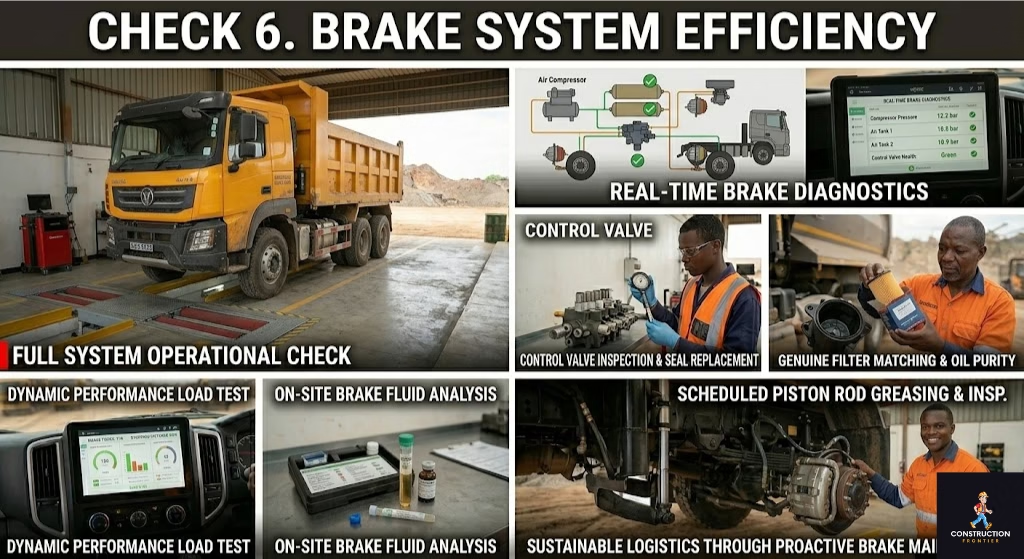
Inspection Areas
- Brake pad thickness.
- Disc wear.
- Air brake pressure systems.
Engineering Insight
- Tyres and braking systems represent the highest failure-prone components in heavy trucks.
- Brake failure risk increases under high loads and steep gradients.
Best Practices
- Inspect brakes every 10,000–20,000 km.
- Maintain air-pressure systems.
- Replace worn pads proactively.
Performance Table
| Parameter | Normal | Failure Indicator | Impact |
| Brake response | <1 sec | >2 sec | Safety risk |
| Pad thickness | >10 mm | <3 mm | Failure risk |
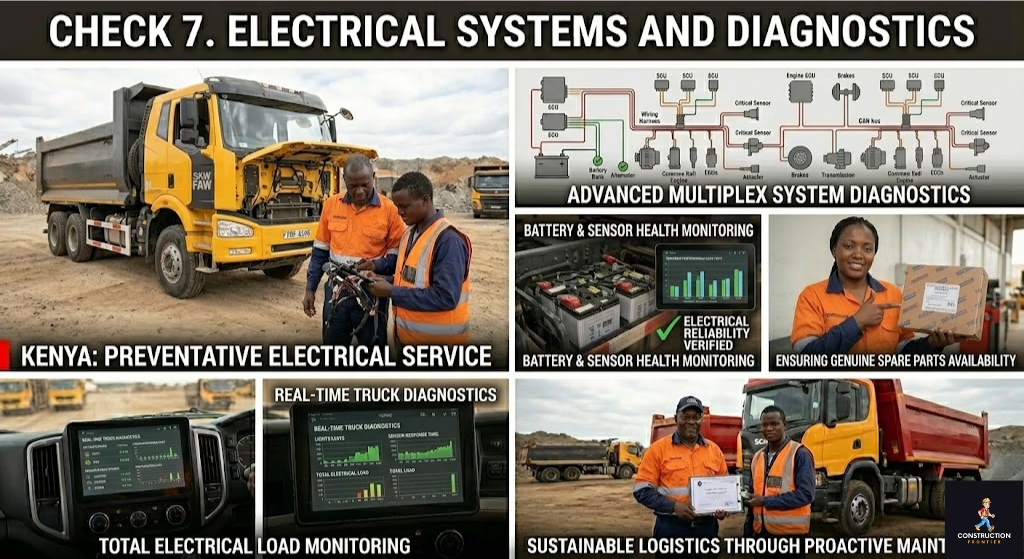
Check 7. Electrical Systems and Diagnostics
Electrical reliability is essential for modern Chinese dump truck maintenance.
Key Checks
- Battery voltage stability.
- Wiring insulation.
- Lighting systems.
Engineering Insight
- Dust and vibration cause wiring failures in ~18% of trucks.
- Alternator failure leads to a complete system shutdown.
Best Practices
- Perform regular diagnostic scans.
- Secure wiring harnesses.
- Replace ageing batteries.
Performance Table
| Component | Failure Rate | Impact |
| Wiring | Medium | System faults |
| Battery | High | Startup failure |
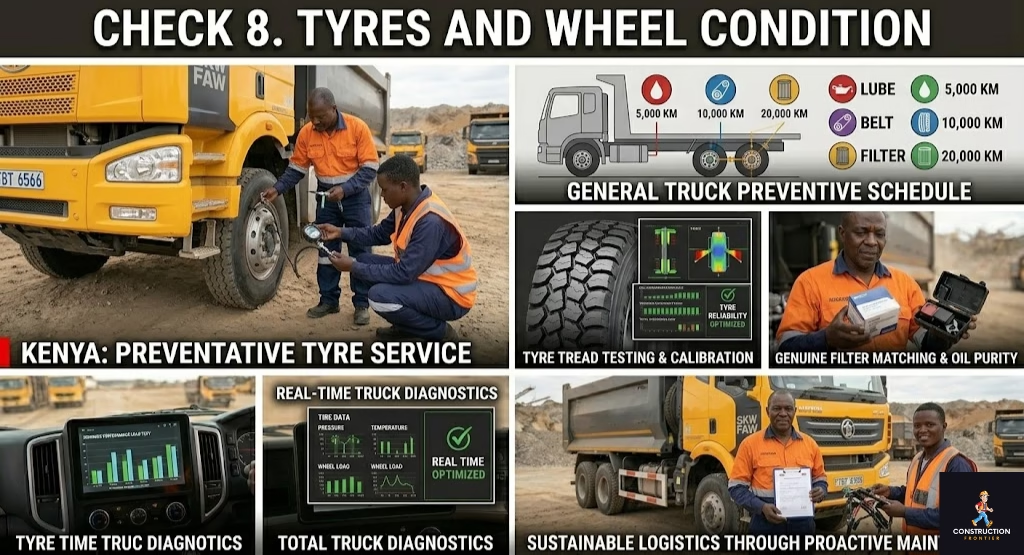
Check 8. Tyres and Wheel Condition
Tyres represent the highest failure frequency in heavy trucks. According to McKinsey & Company, tyres account for up to 49% of truck failures on highways due to poor road conditions.
Inspection Points
- Tread depth.
- Uneven wear.
- Inflation pressure.
Engineering Insight
- Tyres account for up to 49% of truck failures on highways.
- Poor tyre maintenance increases fuel consumption by up to 10%.
Best Practices
- Maintain optimal tyre pressure.
- Rotate tyres every 8,000–10,000 km.
- Perform wheel alignments regularly.
Performance Table
| Parameter | Normal | Failure Indicator | Impact |
| Pressure | Optimal PSI | Underinflated | Fuel loss |
| Tread depth | >8 mm | <3 mm | Safety risk |
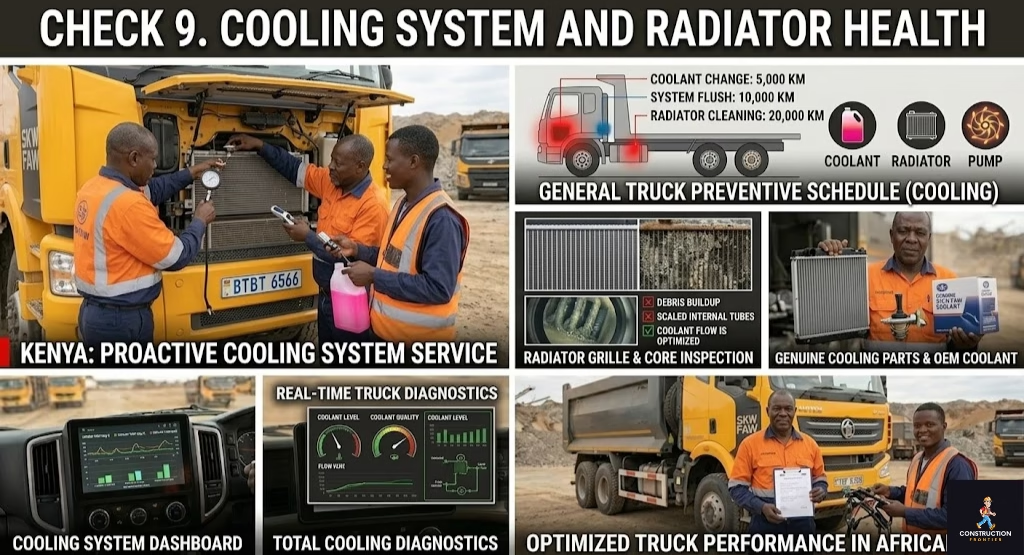
Check 9. Cooling System and Radiator Health
Cooling systems are critical for maintaining used tipper trucks from China in high-temperature African environments.
Checklist
- Coolant quality and levels.
- Radiator leakage.
- Fan operation.
Engineering Insight
- Overheating is a leading cause of engine failure.
- Cooling inefficiency reduces engine lifespan significantly.
Best Practices
- Flush coolant periodically.
- Inspect radiator fins and airflow.
- Maintain a proper coolant mixture.
Performance Table
| Parameter | Normal | Failure Indicator | Impact |
| Engine temp | 85–95°C | >105°C | Engine damage |
| Coolant quality | Clean | Contaminated | Overheating |
Final Engineering Takeaway
A properly executed used Chinese tipper truck maintenance checklist transforms maintenance from a reactive cost into a predictive asset management system.
Across all nine systems:
- Preventive maintenance can extend truck lifespan by up to 40%.
- Well-maintained trucks can reach 750,000–1,000,000 miles of service life.
For contractors operating tipper trucks from China in Africa, this checklist is not optional. It is the difference between the following:
- High-performing, revenue-generating fleets.
- And unpredictable, cost-intensive equipment failures.
Cost-Saving Benefits of Proper Maintenance of Tipper Trucks
A structured Chinese tipper truck maintenance checklist functions as more than a routine inspection tool. It operates as a financial control framework that directly influences fleet uptime, cost predictability, and project profitability. In high-utilisation environments across Africa, where tipper truck maintenance in Africa must withstand extreme operational stress, maintenance decisions determine whether a truck delivers consistent output or becomes a recurring cost burden.
When contractors adopt a disciplined Chinese tipper truck maintenance strategy, they shift from reactive expenditure to controlled lifecycle optimisation. Industry data consistently shows that unplanned failures cost significantly more than scheduled interventions. Emergency repairs often require expedited parts procurement, higher labour premiums, and project disruption penalties, all of which compound operational costs.
A well-executed tipper truck maintenance checklist delivers measurable cost advantages across multiple performance areas:
- Downtime reduction (30–40%) through early detection of engine, hydraulic, and drivetrain wear.
- Repair cost savings (20–30%) by preventing catastrophic failures in high-value components.
- Extended service life (3–5 years) due to controlled fatigue in chassis and suspension systems.
- Fuel efficiency gains (5–12%), particularly critical since fuel accounts for up to 45% of operating costs.
- Improved resale value (10–20%) supported by documented maintenance history.
From an engineering perspective, cost-effective maintenance for used tipper trucks stabilises operational performance while improving return on assets. Contractors who align maintenance schedules with actual operating conditions consistently outperform those relying on reactive repairs.
Engineering Cost Model: Preventive vs Reactive Maintenance
| Cost Component | Preventive Maintenance | Reactive Maintenance |
| Annual maintenance cost | 10–15% of asset value | 20–35% of asset value |
| Downtime per month | 2–4 days | 8–12 days |
| Failure predictability | High (planned) | Low (unexpected) |
| Repair cost per incident | Low to moderate | High (major replacements) |
This comparison highlights a critical point: truck maintenance of construction vehicles is not just technical compliance. It is a capital allocation strategy.
Further Reading: Proactive Equipment Care: Preventative Maintenance vs Reactive Maintenance in Construction Explained
Common Mistakes Used Chinese Tipper Truck Buyers Make
Even experienced contractors often undermine fleet performance by neglecting fundamental maintenance principles. These mistakes frequently originate during procurement but escalate throughout the truck’s lifecycle, increasing failure rates and operational costs. Let’s take you through the common mistakes that most procurement officers ignore:
1. Skipping Pre-Purchase Inspection
A recurring issue is the absence of a comprehensive used dump truck inspection checklist before purchase. Visual inspections alone fail to detect underlying problems such as engine compression loss, hidden chassis fatigue, or hydraulic inefficiencies. As a result, buyers inherit latent defects that manifest shortly after deployment.
2. Ignoring Maintenance History
Another major oversight involves ignoring service history. Trucks with inconsistent maintenance records exhibit significantly higher failure rates, particularly in hydraulics, transmissions, and cooling systems. This directly impacts reliability in demanding environments where maintaining used tipper trucks from China becomes critical for sustained operations.
3. Using Counterfeit or Low-Grade Spare Parts
The use of counterfeit or low-grade spare parts also remains a widespread problem. While initially cheaper, these components compromise system integrity and often fail prematurely. Over time, this increases lifecycle costs and contributes to common maintenance issues in Chinese tipper trucks. It is advisable that you go through our guide on OEM vs third-party maintenance in construction equipment.
4. Overloading Beyond Design Capacity
Overloading presents another major technical risk. Many operators exceed design payload limits, which accelerates fatigue in key structural components such as chassis frames, axles, and suspension systems. This practice not only reduces lifespan but also increases safety risks.
5. Unconsistent Servicing Schedules
Finally, inconsistent servicing schedules create cumulative wear across systems. Without a structured servicing schedule for tipper trucks in Africa, minor issues escalate into major failures, particularly in high-stress components like turbochargers and hydraulic pumps.
Technical Impact of Poor Maintenance Practices
| Mistake | Failure Risk Increase | Cost Impact |
| No inspection before purchase | +40% | High first-year repair costs |
| Counterfeit parts usage | +30% | Frequent replacements |
| Overloading | +50% | Structural damage and downtime |
| Irregular servicing | +35% | Reduced component lifespan |
Avoiding these issues ensures that our core nine maintenance tips for tipper trucks in Africa translate into real operational efficiency.
Africa & Emerging Markets Focus: Practical Realities
Operating tipper trucks from China in Africa requires adapting maintenance strategies to a fundamentally different environment compared to emerging markets. Infrastructure conditions, supply chain limitations, and operational practices all influence maintenance outcomes. Therefore, these are the key maintenance challenges facing these markets.
1. Limited Access to Certified Service Centres
In many regions, such as in Africa, access to top OEM-certified service centres remains limited. Contractors often rely on informal workshops, where diagnostic capability and repair quality vary significantly. This creates inconsistency in heavy truck servicing in Africa, affecting long-term reliability.
2. Inconsistent Spare Parts Supply Chains
Spare parts availability also presents a critical challenge. Delays in sourcing essential components such as injectors, hydraulic seals, and brake assemblies can immobilise trucks for extended periods. This directly impacts project timelines and fleet utilisation rates.
3. Harsh Environmental Conditions
Environmental conditions further compound these challenges. Dust ingress, high ambient temperatures, and poor road infrastructure accelerate wear across all systems. For example, inadequate air filtration can increase engine wear rates by up to 25%, while extreme heat places additional stress on cooling systems.
Emerging Practical Opportunities
Despite the above constraints, the ecosystem supporting Chinese dump truck maintenance is evolving rapidly. Dealer networks are expanding, offering improved access to spare parts, technical support, and mobile servicing units. Independent workshops are also improving their capabilities, particularly in diagnostics and heavy-duty repairs.
At the same time, digital tools are transforming maintenance practices. Fleet management systems now enable real-time monitoring of vehicle performance, maintenance scheduling, and fuel consumption. These developments are reshaping Chinese tipper truck maintenance in Africa, making structured maintenance more accessible and scalable.
Further Reading: 22 Best Chinese Tipper Truck Dealers in Africa: Verified List of Trusted Suppliers
Expert Tips for Fleet Managers Managing Used Chinese Tipper Trucks
Effective fleet management determines whether a used Chinese tipper truck maintenance checklist delivers its full value. Maintenance must be treated as a strategic function rather than an operational afterthought. Below are strategic maintenance tips for fleet managers.
1. Implement Preventive Maintenance Schedules
Preventive maintenance remains the most effective strategy for controlling lifecycle costs in tipper trucks from China in Africa. Contractors should align servicing intervals with operating hours, load cycles, and environmental exposure rather than relying on fixed kilometre intervals alone. High-load operations in mining or road construction accelerate wear on engines, hydraulics, and drivetrains, making condition-based servicing essential. A structured preventive approach reduces unplanned downtime, improves fleet availability, and stabilises maintenance budgets over time.
2. Standardise Inspection Protocols
A consistent inspection framework ensures uniform performance across the fleet and eliminates variability caused by informal maintenance practices. Using a standardised tipper truck maintenance checklist allows engineers and fleet managers to detect early-stage faults in critical systems such as hydraulics, chassis, and braking components. This approach improves fault traceability, enhances maintenance planning, and supports data-driven decision-making in large-scale construction operations.
3. Train Drivers and Operators
Operator behaviour directly influences the mechanical lifespan of used tipper trucks. Poor driving practices such as aggressive acceleration, improper gear selection, and over-revving increase engine wear, fuel consumption, and drivetrain stress. Structured training programmes focused on load management, efficient gear usage, and safe tipping operations can reduce mechanical failures significantly. Skilled operators also improve cycle efficiency, which directly impacts project productivity and profitability.
4. Maintain Detailed Service Records
Accurate maintenance records form the backbone of predictive maintenance strategies and asset lifecycle management. Recording service intervals, component replacements, and fault history allows contractors to identify recurring issues and optimise servicing schedules. This data also supports warranty claims, improves resale valuation, and enables better capital planning for fleet replacement cycles. In large fleets, digital maintenance logs integrated with telematics systems provide real-time insights into truck performance and reliability.
5. Partner with Reliable Parts Suppliers
Access to genuine spare parts remains a critical success factor in maintaining Chinese dump truck maintenance standards across Africa. Contractors should establish long-term partnerships with authorised dealers and OEM-backed suppliers to ensure consistent availability of high-quality components. Reliable supply chains reduce downtime, prevent the use of counterfeit parts, and maintain system integrity across engines, hydraulics, and braking systems. In remote project locations, pre-arranged supply agreements can significantly improve fleet uptime and operational continuity.
Operational Performance Benchmarks
| Metric | Industry Benchmark |
| Fleet utilisation rate | 75–85% |
| Preventive maintenance compliance | >90% |
| Average downtime per truck | <5 days/month |
| Maintenance cost ratio | 10–15% |
Advanced strategies such as predictive maintenance and telematics integration are increasingly being adopted. These technologies allow real-time monitoring of engine health, fuel consumption, and component wear, enabling data-driven decision-making.
Future Outlook: Used Chinese Trucks Maintenance in Africa
The future of the used Chinese tipper truck maintenance checklist and broader maintenance strategies across Africa is shifting toward data-driven, performance-based asset management. As infrastructure demand intensifies across transport, mining, and urban development sectors, contractors can no longer rely on reactive repair models. Instead, the industry is transitioning toward predictive maintenance frameworks that integrate digital monitoring, engineering analytics, and lifecycle optimisation. This evolution will redefine how contractors approach Chinese tipper truck maintenance and long-term fleet investment.
Integration of Telematics and IoT Systems
The adoption of telematics and IoT-enabled systems is transforming how fleet operators manage truck maintenance and guide Africa strategies. Modern tipper trucks increasingly incorporate onboard sensors that continuously monitor critical performance parameters, allowing real-time decision-making.
Key monitored parameters include:
- Engine performance metrics such as temperature, RPM, and load factor.
- Fuel consumption patterns to identify inefficiencies and abnormal usage.
- Component wear indicators across hydraulics, brakes, and drivetrain systems.
This level of visibility allows contractors to detect anomalies early, reducing failure rates and improving Mean Time Between Failures (MTBF). For large fleets operating in remote African regions, telematics significantly enhances reliability by minimising unexpected breakdowns and enabling remote diagnostics.
AI-Driven Diagnostics and Predictive Maintenance
Artificial intelligence is introducing a new layer of intelligence into used dump truck inspection checklist frameworks. AI-driven diagnostic systems analyse historical and real-time data to predict component failures before they occur.
This approach delivers measurable operational benefits:
- Reduction in diagnostic time by up to 50% compared to manual inspection processes.
- Improved repair accuracy through automated fault identification.
- Lower maintenance costs due to early intervention and reduced secondary damage.
For contractors managing multiple tipper trucks from China in Africa, predictive maintenance shifts maintenance from a cost centre to a strategic performance tool. It also aligns with global best practices in heavy equipment management, where uptime and reliability directly influence project profitability.
Improved Engineering Quality in Newer Chinese Trucks
The evolution of Chinese truck manufacturing has significantly improved the durability and reliability of newer models entering African markets. These improvements directly impact Chinese dump truck maintenance requirements by reducing failure frequency and extending service intervals.
Key engineering advancements include the following:
- Enhanced chassis design with higher tensile strength steel to resist fatigue and cracking.
- Improved corrosion and rust protection systems suited for humid and coastal environments.
- Integration of advanced electronic control systems for engine and transmission management.
These developments reduce the intensity of maintenance interventions required under the used Chinese tipper truck maintenance checklist guide, allowing contractors to achieve higher utilisation rates with lower lifecycle costs.
Expansion of Digital Equipment and Parts Marketplaces
Digital transformation is also reshaping how contractors source parts and maintenance services for the implementation of construction truck maintenance tips. Online platforms now provide direct access to OEM-certified components, technical manuals, and service providers.
This trend delivers several operational advantages:
- Faster procurement of genuine spare parts reduces downtime.
- Transparent pricing, enabling better cost control.
- Access to technical support and maintenance documentation.
For operators in remote or underserved regions, digital marketplaces eliminate traditional supply chain bottlenecks, ensuring continuity in cost-effective maintenance for used tipper trucks.
Technical Benchmark Block: Fleet Performance Metrics for Africa
The transition toward advanced maintenance strategies requires clear performance benchmarks. These metrics provide a reference framework for evaluating fleet efficiency under real operating conditions in Africa.
Key fleet performance indicators:
- Optimal utilisation rate: 75–85%, reflecting efficient asset deployment.
- Maintenance cost ratio: 10–15% annually, aligned with global heavy equipment standards.
- Fuel cost share: 35–45% of total operating cost, depending on terrain and load cycles.
- Mean Time Between Failures (MTBF): 1,200–2,000 operating hours, indicating reliability levels.
- Replacement cycle: 5–7 years, balancing depreciation and maintenance costs.
These benchmarks define the next phase of truck maintenance guide Africa strategies, where contractors move beyond basic servicing toward performance optimisation. In this model, maintenance is no longer reactive or routine. It becomes a measurable, data-driven function that directly influences profitability, asset longevity, and competitive positioning in Africa’s rapidly expanding construction sector.
Conclusion: Turning Maintenance into a Strategic Advantage
The used Chinese tipper truck checklist represents a structured approach to transforming second-hand equipment into reliable, high-performing assets. Contractors who apply disciplined Chinese tipper truck maintenance practices consistently achieve higher uptime, reduced operating costs, and improved project delivery outcomes.
More importantly, maintenance should no longer be viewed as a cost centre. In modern construction logistics, it functions as a strategic lever for profitability and resilience. As infrastructure demand continues to expand across Africa, the ability to manage fleet performance with engineering precision will define competitive advantage.
Contractors and investors who prioritise structured maintenance frameworks will not only extend asset lifespan but also optimise capital efficiency. In an increasingly competitive market, the difference between success and failure often lies in how well equipment is maintained, not just how it is acquired.
Stay Updated on Construction Equipment Insights
Stay ahead with expert insights on used Chinese tipper truck maintenance checklists, maintenance strategies, and construction equipment insights in Africa at Construction Frontier.