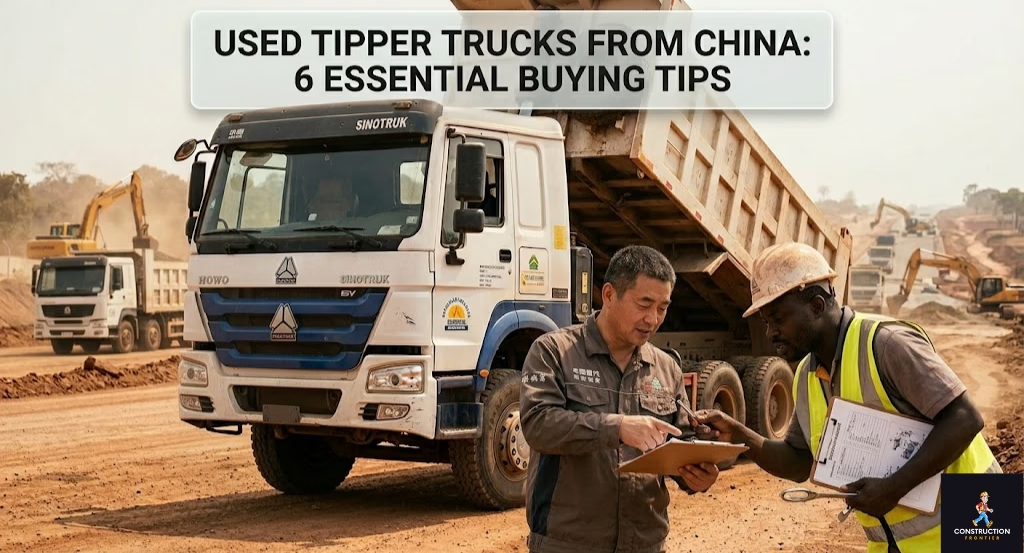
Used Tipper Trucks from China: 6 Essential and Profitable Buying Tips
The market for used tipper trucks from China has evolved into a critical procurement channel for contractors and infrastructure investors across Africa and emerging markets. The decision to invest in used tipper trucks from China is now driven by lifecycle cost efficiency, asset utilisation, and adaptability to harsh operating environments, rather than purely by upfront cost savings.
Technical Snapshot:
- Payload capacity: 10–30 tonnes, depending on axle configuration.
- Engine output: 260–420 HP with torque up to 1,800 Nm.
- Configurations: 4×2, 6×4, 8×4.
- Cost of used dump trucks from China: $15,000–$70,000.
- Average utilisation rate: 70–85%.
- Fuel consumption: 28–45 L/100 km under load.
- Payback period: 12–24 months.
For contractors evaluating used tipper trucks from China, the key lies not in acquisition alone but in optimised deployment within a structured framework of cost, durability, and productivity.
Introduction: Strategic Role of Used Tipper Trucks from China in Construction Logistics
Construction productivity is fundamentally governed by logistics efficiency. Material movement, particularly in bulk earthworks, aggregate transport, and spoil removal, directly influences project timelines and cost control.
Across Africa, infrastructure demand continues to rise, driven by transport corridor expansion, mining activity, and urbanisation. However, access to capital for new fleet acquisition remains constrained. This imbalance has accelerated the adoption of used tipper trucks from China, particularly among contractors seeking scalable and cost-efficient haulage capacity.
The shift towards Chinese-made tipper trucks reflects a broader transition in procurement philosophy. Contractors are increasingly prioritising lifecycle cost optimisation over upfront capital expenditure. Instead of focusing on ownership prestige, they evaluate utilisation rates, maintenance predictability, and operational resilience.
However, buying used tipper trucks from China introduces variability. Unlike new equipment, where performance parameters are predictable, used assets require mechanical engineering judgement. Differences in prior usage, maintenance regimes, and refurbishment standards can significantly affect reliability.
This creates a clear divide in market outcomes. Contractors who approach the used tipper truck market in China with structured technical due diligence consistently achieve higher productivity and lower lifecycle costs. Those who prioritise price alone often face downtime, repair escalation, and reduced asset value.
Why Used Tipper Trucks from China Dominate African Markets
The dominance of used tipper trucks from China is not a short-term trend. It is rooted in structural economic advantages and in engineering compatibility with African and emerging-market conditions.
1. Cost Advantage vs European and Japanese Trucks
The most immediate advantage of used tipper trucks from China is the cost differential. Acquisition costs are typically 30–60% lower than comparable European or Japanese units.
This cost advantage directly affects fleet strategy. Instead of deploying a limited number of high-cost trucks, contractors can scale fleets using multiple Chinese used tipper trucks, increasing redundancy and throughput capacity.
From a financial standpoint, this improves asset turnover and reduces exposure to single-point failure risks. Investors benefit from faster payback cycles and improved capital efficiency, particularly in projects with tight financing structures.
2. Availability and Market Penetration
The availability of used dump trucks in China is driven by rapid domestic fleet turnover. Infrastructure expansion within China generates high equipment utilisation, followed by systematic fleet renewal.
This creates a consistent supply pipeline for export markets. Contractors in Africa can therefore access relatively modern equipment without long lead times. Additionally, top construction trucks in the Chinese market are standardised in design. This simplifies maintenance, training, and spare parts management, especially for contractors operating multi-truck fleets.
3. Compatibility with African Local Conditions
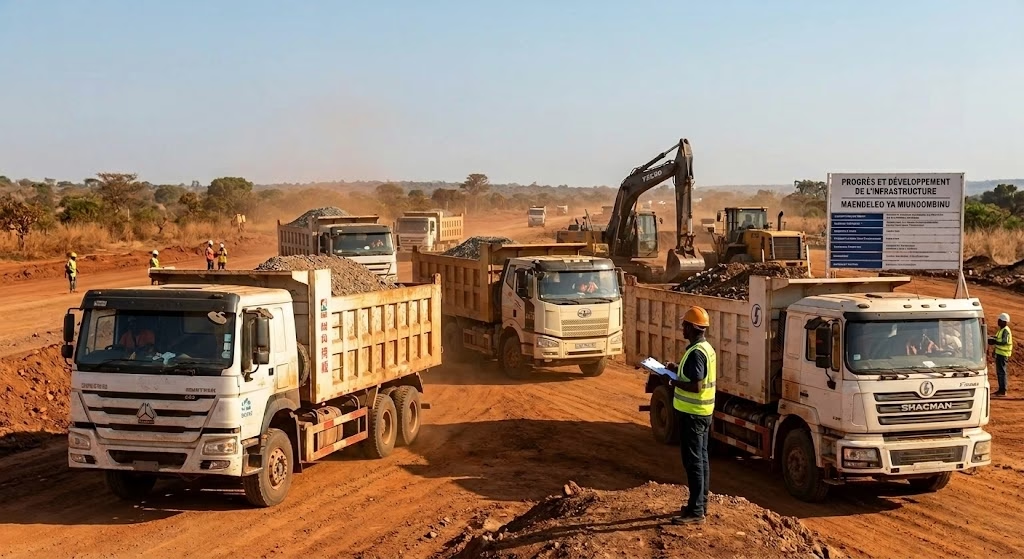
Operating conditions in Africa differ significantly from those in developed markets. Roads may be unpaved, loads are often variable, and maintenance infrastructure can be limited.
Used tipper trucks from China are engineered with these realities in mind. Key design characteristics include:
- Reinforced ladder-frame chassis for load stress resistance.
- High ground clearance for uneven terrain.
- Simplified mechanical systems that reduce reliance on advanced diagnostics.
These features make Chinese-made tipper trucks highly adaptable to demanding construction environments.
4. Popular Chinese Truck Brands in Africa
Several manufacturers dominate the construction truck market in China due to reliability and support networks:
These brands dominate due to parts availability, established service networks, and proven performance in high-load applications.
Market Overview: Used Tipper Truck Trade Between China and Africa
The trade ecosystem for used tipper trucks from China has evolved from fragmented secondary sales into a high-precision, multi-layered supply chain. For African contractors, this corridor offers a vital alternative to high-cost European imports, providing heavy-duty machinery that is often specifically engineered for the rugged terrain and high ambient temperatures of sub-Saharan infrastructure projects.
Professionalised Export Channels
The risk profile of buying used tipper trucks from China depends on the sourcing route. Understanding these three primary channels is essential for protecting capital investment:
- OEM-Linked Resale Programs: Driven by brands like Sinotruk (Howo) and Shacman, these programs offer the highest reliability. They typically include a documented service history and standardised refurbishment, often replacing critical wear components, such as hydraulic seals and fuel injectors, before export.
- Industrial Auctions: These platforms provide significant cost advantages but demand high technical literacy. Procurement officers must account for the “as-is” nature of auctions, where the lack of a refurbishment warranty necessitates a rigorous inspection checklist for used tipper trucks.
- Specialised Trading Companies: These entities act as facilitators, handling the complexities of importing trucks from China. While they simplify the “paperwork” of procurement, quality varies; it is critical to vet these suppliers for ISO 9001 compliance and verified export licences.
Key Import Routes in Africa
The logistics network for the Chinese used tipper trucks is anchored by well-established maritime routes. Shipping usually takes 25 to 45 days with RORO (roll-on/roll-off) or flat-rack containers, but the actual delivery time depends on how busy the ports are in the area:
- China → Port of Mombasa (Kenya): This is the main entry point for East African projects. It connects to Uganda, DRC, Burundi, and Rwanda through the Northern Corridor.
- China → Port of Dar es Salaam (Tanzania): A key stop for mining-heavy markets like Zambia and the DRC.
- China → Apapa/Tin Can Island (Nigeria): The main place where West African infrastructure is growing.
Note: Ocean transit is easy to predict, but “last-mile” factors, such as delays at customs and moving goods through transit corridors, can add 14 to 21 days to the total lead time.
Tipper Trucks Price Benchmarks (2026)
The cost of used dump trucks from China is currently influenced by domestic fleet upgrades in China shifting toward National VI emission standards, which has increased the supply of high-quality National V-approved units for export.
| Truck Category | Payload Capacity | Estimated Price Range (USD) |
| Light-Duty | 3–8 Tonnes | $15,000 – $25,500 |
| Medium-Duty | 10–20 Tonnes | $26,000 – $42,000 |
| Heavy-Duty | 25–40+ Tonnes | $45,000 – $75,000 |
Total Landed Cost (TLC) Modelling
Seasoned procurement officers know that the sticker price is only one variable. To avoid budget overruns when you import trucks from China, use the following percentage-based breakdown for Total Landed Cost:
- FOB Purchase Price (60–70%): The base cost of the vehicle at the Chinese port.
- Freight & Marine Insurance (10–15%): Fluctuates based on global bunker fuel prices and RORO vessel availability.
- Import Duties & Statutory Taxes (15–25%): Varies by country; for example, Kenya’s Railway Development Levy and VAT can significantly impact the final figure.
- Compliance & Registration (5–10%): Covers local roadworthiness inspections (e.g., QISJ or Bureau Veritas) and final licensing.
By accurately modelling these costs, contractors can ensure that construction trucks in the Chinese market deliver the expected 30-40% savings over new machinery without hidden financial surprises.
6 Essential Tips for Buying Used Tipper Trucks from China
The global trade of used tipper trucks from China has evolved into a sophisticated supply chain that offers a high-ROI alternative to new machinery. The Chinese tipper truck market, led by big companies like Howo (Sinotruk) and FAW, offers contractors and procurement officers heavy-duty durability at a much lower cost. Follow this structured six-step guide to buying used tipper trucks from China to make sure they are technically sound and ready to work on your site.
Tip 1: Source Exclusively from Verified and Authorised Dealers
Supplier verification is the primary risk mitigation step when you import trucks from China. The secondary market in China is divided between licensed export hubs and unregulated brokers who often bypass mechanical reconditioning.
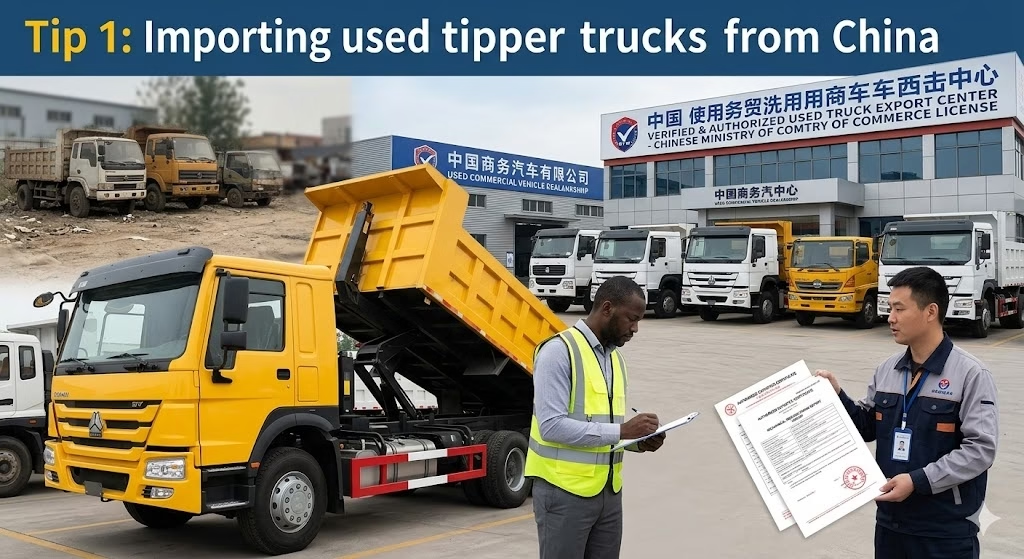
- The MOFCOM Standard: In 2019, the Chinese Ministry of Commerce (MOFCOM) and the Ministry of Public Security initiated a pilot programme for the export of used commercial vehicles. Only dealers with a used-car export qualification can legally issue the export-quality certificate.
- Risks of Unauthorised Sellers: Procurement through unlicensed trading companies often results in the delivery of units with tampered odometers or mismatched Vehicle Identification Numbers (VINs).
- Recommended Channels: Prioritise OEM-affiliated units, such as the manufacturer-authorised and approved service centres. These facilities use a 100-point inspection protocol and provide a standardised refurbishment report, ensuring the truck meets the requirements of the second-hand commercial vehicle export electronic file.
Tip 2: Execute a Critical Technical Inspection
A generic walk-around on used tipper trucks from China is insufficient for construction trucks in the Chinese market. You must evaluate the health of three core areas: the engine, the transmission, and the hydraulics.
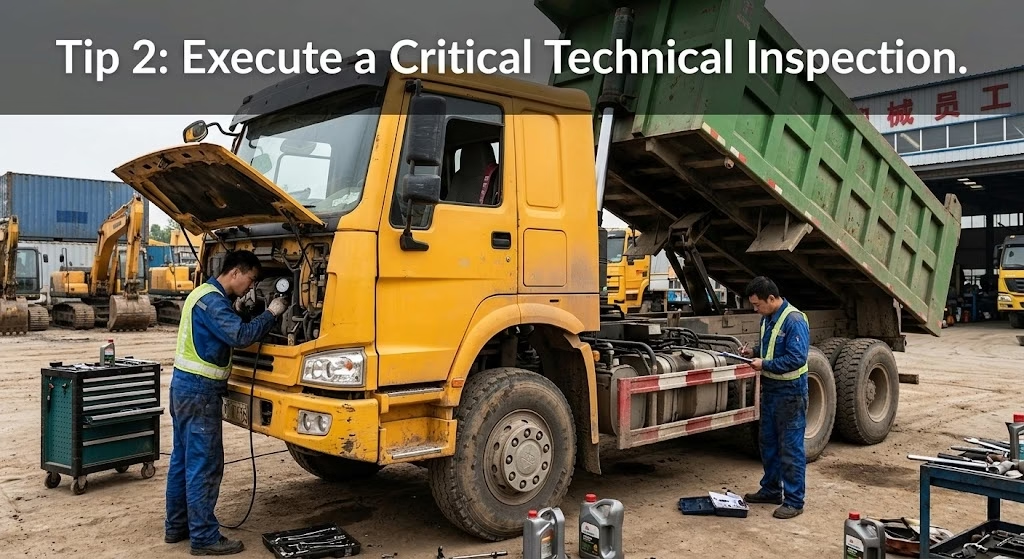
- Engine Performance and Blow-By: For used dump trucks from China, perform a crankcase blow-by test at operating temperature. Excessive smoke from the breather pipe indicates worn-out piston rings or liner fatigue. Evaluate the turbocharger impeller for axial play, as vibration here often precedes a catastrophic engine runaway.
- Hydraulic Tipping System: Inspect the multi-stage telescopic cylinder, often manufactured by Hyva. Any scoring on the chrome surface or weeping at the seals suggests a high-pressure failure is imminent. Test the Power Take-Off (PTO) engagement; it should engage silently and hold pressure without creeping while the cargo box is fully loaded.
- Structural Integrity: Check the chassis for fish-plating, which refers to welded reinforcement plates. In heavy-duty tippers, frame cracking typically occurs behind the cab or at the rear spring hangers due to torsional stress.
Tip 3: Align Configuration with Site-Specific Requirements
Mismatching a used tipper truck from China to your local terrain results in premature drivetrain failure and excessive fuel consumption.
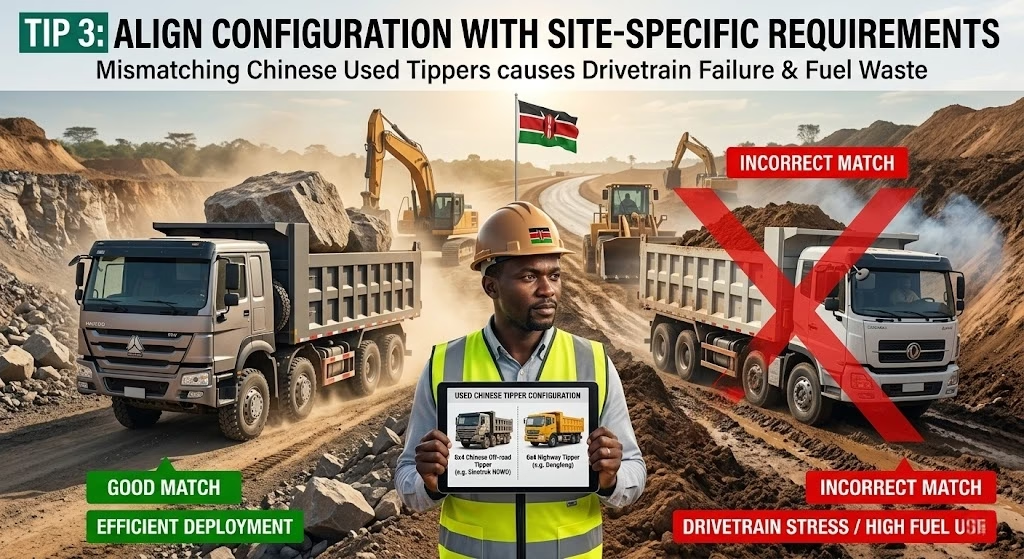
- Axle and Final Drive Selection:
- 6×4 Configuration: Usually features double-reduction axles or hub reduction. This is critical for off-road traction in mining or muddy construction sites in Africa, as it reduces the torque load on the axle shafts.
- 8×4 Configuration: Essential for high-volume earthmoving. Ensure the unit has a reinforced trunnion, the pivot point for the rear tandem axles, capable of handling 30- to 40-tonne payloads.
- Suspension Architecture: For heavy-duty hauling, specify multi-leaf 10- or 12-piston spring stacks. Avoid lightweight parabolic springs if the project involves uneven, unpaved haul roads.
Tip 4: Confirm Regional Spare Parts and Maintenance Ecosystems
The best used tipper truck suppliers in China are those whose engineering is already embedded in your local market.
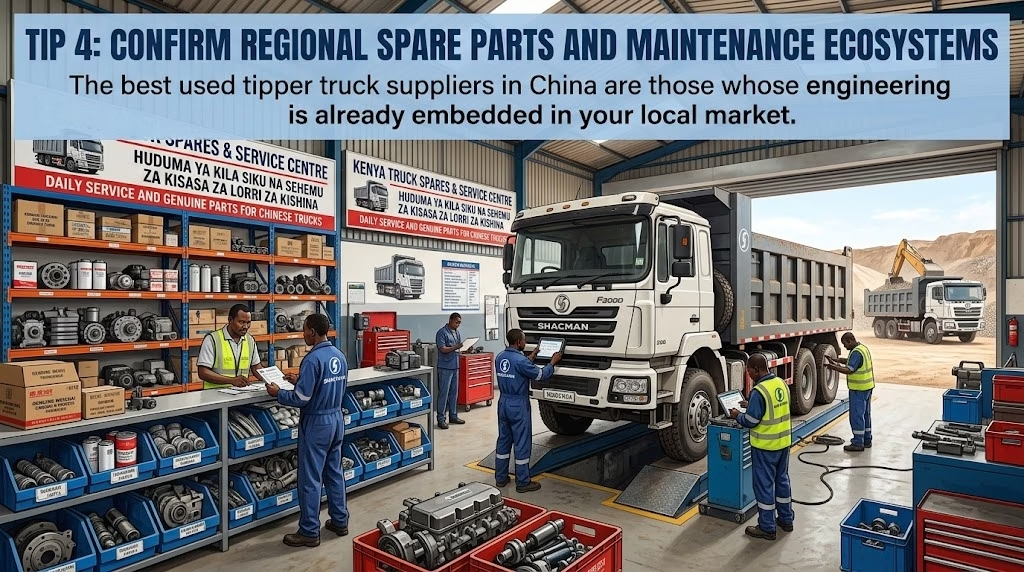
- Standardisation of Components: The Howo (Sinotruk) WD615 engine series is the most widely supported diesel engine in the developing world. Its mechanical Bosch-style fuel pump is repairable by local technicians without specialised electronic diagnostic tools.
- Brand Dominance: Statistically, Chinese tipper trucks such as Sinotruk, Shacman, and FAW account for over 70 per cent of Chinese truck exports to certain African countries, such as Tanzania, with 70-85 per cent. Choosing these brands ensures that items like air brake chambers, clutch plates, and filters are available over the counter.
Tip 5: Master Import Compliance and Emissions Standards
Regulatory friction is the leading cause of landed cost inflation when you import trucks from China.
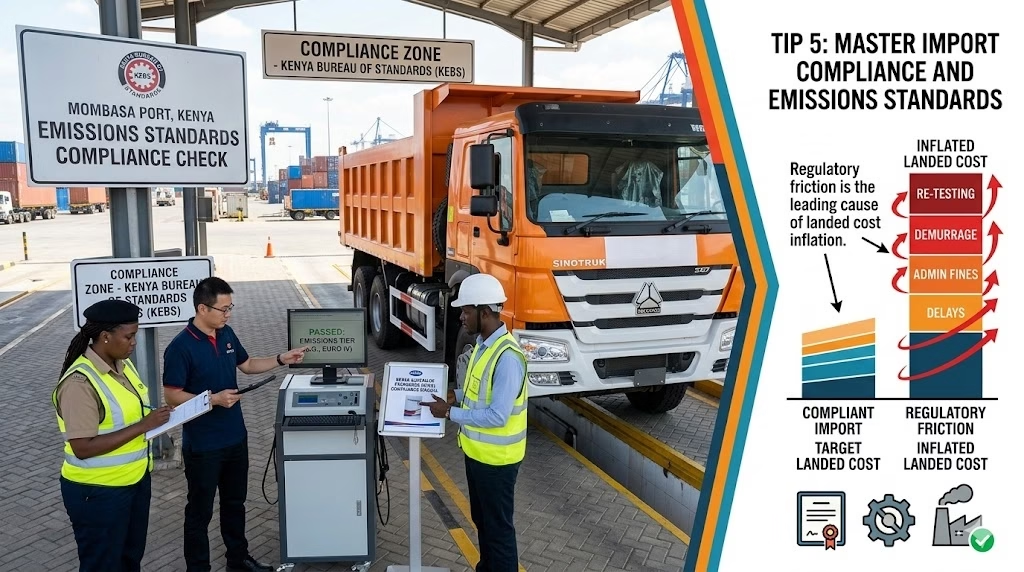
- Age and Valuation: Many countries, such as Kenya and Tanzania, enforce an 8-year age limit. Verify the production date on the chassis plate, as the year of first registration in China may differ.
- Emissions and Fuel Quality: Most Chinese used tipper trucks are National II, III, or IV, which are equivalent to Euro 2-4. Note that you should not import National VI or Euro 6 units into regions with high-sulphur diesel and contamination. The Diesel Particulate Filter (DPF), injector systems, piston rings, and SCR systems will fail within weeks, resulting in limp mode and permanent engine codes.
- Pre-Export Inspections: Ensure the truck receives a certificate of roadworthiness from a third-party agency, such as SGS or QISJ, before the bill of lading is issued.
Tip 6: Perform a Life-Cycle Total Cost of Ownership (TCO) Audit
The acquisition price of a used dump truck usually represents only 30 to 40 percent of its lifetime cost.
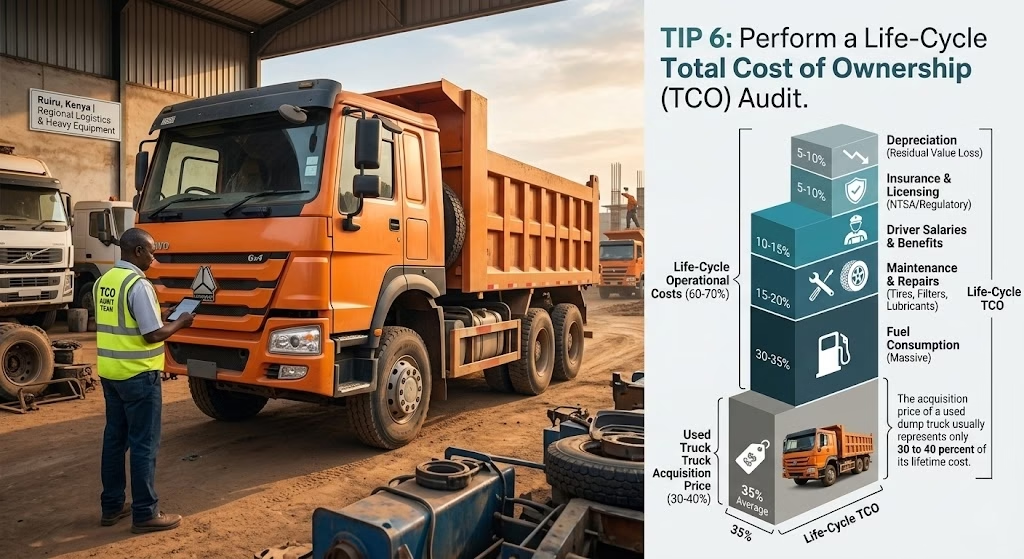
- Fuel and Uptime: In a standard 5-year project, fuel costs account for nearly 50% of the total cost of ownership. A truck with a worn-out fuel system or poor gear ratio can increase fuel costs by 15 percent annually.
- Residual and Resale Value: A Howo 371 hp tipper typically maintains a 20 to 30 percent higher resale value in the African secondary market than niche brands like BeiBen, popular in the Democratic Republic of Congo (DRC), or CAMC, largely due to its ease of repair.
- Financing and ROI: Given that a used Chinese tipper costs roughly 50 to 60 percent less than a new European equivalent, the payback period is often shortened by 18 to 24 months, significantly improving the project’s internal rate of return (IRR).
Further Reading: Invest in Construction Machinery and Equipment: 5 Proven Reasons
Comparative Analysis: Top Used Chinese Tipper Truck Models for Africa
For contractors and procurement officers, selecting the right model of a used tipper truck is as critical as the inspection itself. According to the China Chamber of Commerce for Machinery and Electronics (CCCME), China’s total value of mechanical and electrical product imports and exports last year reached $33.37 billion, marking a 7.3% year-on-year growth and accounting for 52.5% of the country’s overall trade volume.
Based on that information, these four brands dominate the export market due to their mechanical simplicity and existing spare parts ecosystems in Africa. For a comprehensive evaluation of these manufacturers, refer to our detailed guide on the top 5 Chinese tipper trucks in Africa.
1. SINOTRUK HOWO 7 and HOWO 371 Series
The SINOTRUK HOWO is the most widely used dump truck from China across the African continent.
- Technical Edge: It primarily utilises the WD615 engine series, a 9.7-litre Euro II/III power plant renowned for its tolerance of high-sulphur diesel.
- Market Position: Because it holds the largest market share in countries like Kenya, Ethiopia, Nigeria, and Ghana, its residual value remains the highest in the secondary market. It is the gold standard for standard road construction and urban infrastructure projects.
2. SHACMAN F3000 and X3000 Series
If your project involves heavy-duty mining operations or extreme off-road conditions, the SHACMAN is often the preferred choice.
- Technical Edge: SHACMAN trucks frequently feature Hande axles and Cummins M13 and M10 series, or Weichai WP10, WP12, and WP13 series, high-torque engines. The SHACMAN F3000 series is specifically reinforced for over-capacity loading, featuring a thicker steel gauge for the main frame web.
- Operational Advantage: The SHACMAN X3000 series offers an upgraded cabin for better driver ergonomics, which has been shown to improve site safety and operator retention on long-shift mining sites.
3. FAW J5 and J6 Series
The FAW J-Series dump truck is widely recognised as the most fuel-efficient and cost-effective option for long-distance haulage.
- Technical Edge: The J6 utilises a lightweight design philosophy without compromising structural rigidity. It is frequently equipped with an Eaton or FAST transmission, which provides smoother gear transitions and better fuel economy during laden highway driving.
- Ideal Application: This model is highly effective for “quarry-to-site” logistics where the truck spends 70 percent of its cycle on paved or semi-paved roads.
4. DONGFENG KC Series
The DONGFENG KC is engineered for simplicity and durability, specifically targeting rural infrastructure and agricultural development projects.
- Technical Edge: Dongfeng’s joint ventures with Cummins and DONGFENG-Nissan have resulted in a powertrain that is exceptionally easy to troubleshoot. The KC series features a high ground clearance and a simplified electrical system, reducing the risk of “sensor-related” downtime in humid or dusty environments.
- Market Position: It serves as a high-utility entry point for smaller contractors who require a used tipper truck from China with minimal electronic complexity.
Further Reading: Top 5 Chinese Tipper Trucks Dominating Africa and Emerging Markets
Strategic Procurement: Common Mistakes to Avoid When Buying Used Tipper Trucks from China
Even for seasoned procurement officers, the Chinese used tipper truck market contains several pitfalls that can turn a cost-saving acquisition into a financial liability. Avoiding these common errors is essential for maintaining the internal rate of return on major infrastructure projects.
1. Skipping the Independent Technical Inspection
The most common mistake when importing used tipper trucks from China is relying solely on the seller’s photographs or refurbishment certificates.
- The Risk: Static images cannot reveal engine blow-by, hydraulic pressure drops, or hairline cracks in the chassis web.
- Technical Solution: Always commission a third-party mechanical audit from a verified agency such as SGS, Intertek, or QISJ. An independent inspector will perform a high-pressure test on the tipping rams and check for metal shavings in the differential oil, which are primary indicators of imminent mechanical failure.
2. Ignoring Engine and Emission Specifications
A common oversight is purchasing a truck with an engine that is incompatible with local fuel quality or environmental regulations.
- The Mismatch: China is rapidly transitioning to National VI (Euro 6) standards. However, these modern engines require Ultra-Low Sulphur Diesel (ULSD) and AdBlue to function.
- Operational Failure: If you deploy a National VI used dump truck from China in a region where only high-sulphur diesel is available, the Diesel Particulate Filter (DPF) will clog within weeks. This triggers limp mode, which limits engine output to 20 percent and requires expensive diagnostic resets that are often unavailable at remote construction sites.
3. Selecting the Incorrect Axle and Gear Configuration
Procuring a truck based on price rather than technical suitability for the terrain leads to premature drivetrain fatigue.
- Configuration Error: Choosing a single-reduction axle for a heavy-duty mining application. While cheaper and lighter, single-reduction axles lack the torque multiplication provided by hub reduction (double-reduction) axles.
- Consequence: In muddy or steep off-road conditions, a single-reduction axle places excessive stress on the crown wheel and pinion, leading to catastrophic gear failure under load. Ensure the gear ratio is optimised for your specific haul route, whether it is high-speed highway transit or low-speed quarry extraction.
4. Underestimating the Total Landed Cost (TLC) and Logistics
Many contractors fail to account for the soft costs associated with importing trucks from China.
- Hidden Costs: The purchase price is often only 60 percent of the total investment. Neglecting to budget for marine cargo insurance, port handling charges, and demurrage fees can lead to significant budget overruns.
- Shipping Variability: Opting for the cheapest freight option can backfire. While containerised shipping (flat racks) might seem cheaper, RORO (Roll-on/Roll-off) is the industry standard for used trucks, as it prevents the saltwater corrosion often associated with deck-loaded units.
5. Overlooking Spare Parts Synchronisation
Buying a niche or Tier 3 Chinese brand because of a low entry price is a critical lifecycle error.
- The Support Gap: If the brand does not have an established footprint in your region, a simple failure of a brake booster or a clutch slave cylinder can result in weeks of downtime while waiting for air-freighted parts.
- Pro Tip: Stick to market leaders like SINOTRUK, SHACMAN, or FAW. These manufacturers share many “interchangeable” components across their WD615 engine platforms, ensuring that your used tipper truck from China remains operational through local over-the-counter parts support.
Further Reading: 10 Powerful Insights: OEM vs Third-Party Maintenance Explained for Smarter Equipment Management
Used Tipper Trucks Market Dynamics: Africa and Emerging Markets Focus
The surging demand for used tipper trucks from China is intrinsically linked to the unprecedented scale of infrastructure and extractive industry growth across the Global South. For many developing economies, the Chinese-made tipper trucks have become the primary mechanical drivers of national development.
The Infrastructure and Mining Boom
According to the African Development Bank (AfDB), the continent faces an annual infrastructure financing gap of approximately $68 billion to $108 billion. This deficit is being addressed through massive road construction, housing developments, and the expansion of the critical minerals mining sector.
- Sectoral Demand: In markets like the Democratic Republic of Congo (DRC), Zambia, and Guinea, used dump trucks from China are the preferred assets for pit-to-port logistics due to their high payload-to-cost ratio.
- Urbanisation: Rapid urban expansion in West and East Africa has created a constant requirement for 6×4 and 8×4 tipper configurations to support large-scale residential and commercial earthmoving.
Addressing Financing Constraints for SMEs
A critical barrier to growth for Small and Medium-Sized Enterprises (SMEs) is the high cost of new European or American machinery. Buying used tipper trucks from China offers a strategic entry point for local contractors.
- Capital Efficiency: A high-quality used dump truck in China typically costs 40-50% less than a new equivalent. This allows SME contractors to bid more competitively on government tenders while maintaining healthier debt-to-equity ratios.
- Simplified Financing: Regional banks and micro-leasing firms are increasingly comfortable financing Sinotruk and FAW assets due to their high resale value and ease of repair, thereby reducing lenders’ risk.
Local Assembly and After-Sales Trends
While importing trucks from China remains the dominant procurement method, there is a visible shift toward regional industrialisation.
- CKD and SKD Facilities: Leading manufacturers such as Sinotruk and FAW have established Completely Knocked Down (CKD) and Semi-Knocked Down (SKD) assembly plants in countries including Nigeria, Ethiopia, and South Africa.
- Impact on the Used Market: These plants ensure a steady flow of genuine spare parts and trained technicians into the local market. This ecosystem support significantly increases the operational lifespan of used tipper trucks from China, as they can be professionally serviced using the same infrastructure that supports new units.
Sustained Export Growth Outlook
The trajectory for construction truck exports in the Chinese market remains bullish through 2030.
- Environmental Policy Push: As China enforces stricter National VI emission standards domestically, a vast surplus of high-quality National IV and V units, which are ideal for the fuel quality found in emerging markets, will continue to enter the export pipeline.
- Strategic Partnerships: Under the Belt and Road Initiative (BRI), Chinese-led infrastructure projects often utilise Chinese machinery, further embedding these brands into the local supply chains of host nations.
Future Outlook: Emerging Trends in the Used Chinese Tipper Truck Market
The landscape of buying used tipper trucks from China is undergoing a technological and structural shift. Driven by China’s internal environmental policies and the global push for Construction 4.0. Several key trends are set to redefine how contractors in Africa and emerging markets procure and manage their fleets.
1. Integration of Digital Diagnostics and Telematics
The black box era of second-hand machinery is ending. Modern Chinese-used tipper trucks, particularly those manufactured after 2020, are increasingly equipped with integrated Controller Area Network (CAN) bus systems and GPS telematics.
- Enhanced Transparency: Fleet managers can now access “as-built” data, including historical engine load factors, fuel consumption maps, and fault code logs before purchase.
- Predictive Maintenance: The adoption of digital diagnostics allows for remote troubleshooting. For a used dump truck from China, this means a technician in a central hub can diagnose a hydraulic pressure drop or an injection timing error on a remote site, significantly reducing blind repair time.
2. Accelerated Adoption of Cleaner Engine Technologies
While National II and III engines remain popular for their mechanical simplicity, the export market is shifting toward National V and VI (Euro 5/6) compliance.
- Environmental Compliance: International financing for green infrastructure projects often mandates lower emission profiles. Consequently, importing trucks from China that feature Selective Catalytic Reduction (SCR) and Diesel Particulate Filters (DPF) is becoming a requirement for top-tier contractors.
- Fuel-Sensitivity Solutions: Manufacturers such as Weichai and Cummins are developing export-variant ECUs for their engines. These units are mapped to be more tolerant of varying sulphur levels in regional diesel, bridging the gap between high-tech Chinese domestic standards and global fuel realities.
3. Proliferation of Online Equipment Marketplaces
B2B e-commerce platforms and dedicated equipment marketplaces are disrupting the traditional broker-led model.
- Verified Listings: Platforms such as Alibaba, Made-in-China, and specialised machinery portals are implementing verified supplier and gold member tiers. These require third-party audits of the dealer’s physical yard and export history.
- Virtual Inspections: The growth of high-definition 360-degree video tours and live-streamed cold-start tests allows procurement officers to complete a preliminary inspection checklist for used tipper trucks without the expense of international travel.
4. Standardisation of Refurbishment Protocols
To compete with premium European used tipper truck brands, Chinese exporters are professionalising their remanufacturing processes.
- Certified Pre-Owned (CPO): Major players like Sinotruk, FAW, and Shacman are establishing official refurbishment centres. In these facilities, used construction trucks in the Chinese market undergo a factory-standard overhaul. including replacing all rubber seals, hydraulic hoses, and cabin upholstery.
- Warranty Backing: We are seeing an increase in limited powertrain warranties (typically 3 to 6 months) offered on high-end used units, providing a level of financial security previously unheard of in the second-hand export trade.
5. Rise of Electric and Hybrid Tipper Exports
As China leads the world in commercial EV adoption, the first wave of used electric tipper trucks is entering the secondary market.
- Niche Applications: While range remains a challenge for long-haulage, used electric tippers are becoming viable for “closed-loop” operations, such as municipal waste management and short-range quarrying in urban zones with strict noise and emission laws.
Technical Procurement Framework: Fleet Investment Benchmarks
For contractors and procurement officers, the decision to import trucks from China must be grounded in a rigorous financial and operational model. A used tipper truck from China typically offers a 40-60% reduction in initial capital expenditure compared to new European alternatives. However, its long-term profitability depends on its lifecycle performance.
To ensure a data-driven investment, project managers should adhere to the following technical procurement framework benchmarks:
- Target Utilisation Rate (75–85%): For a used dump truck from China to reach break-even, it must maintain a high operational uptime. Effective fleet management involves scheduling preventative maintenance (PM) during off-peak hours to ensure the vehicle is active for at least 20 out of 24 hours in multi-shift mining or construction environments.
- Maintenance Cost Ratio (10–15% Annually): While Chinese used tipper trucks have lower parts costs, older units require more frequent intervention. Budgeting 10 to 15 percent of the asset’s current market value for annual maintenance, covering hydraulic seals, brake linings, and filtration systems, is a standard industry practice.
- Fuel Cost Share (35–45%): Fuel remains the largest variable expense. Procurement officers should prioritise models with WEICHAI or CUMMINS engines, which are optimised for the high-torque, low-speed cycles typical of construction trucks in the Chinese market.
- Replacement Cycle (5–7 Years): Given the intensive duty cycles in Africa and emerging markets, a 5- to 7-year replacement cycle allows firms to rotate their fleet before major engine overhauls or structural fatigue significantly devalues the asset.
Used Tipper Trucks from China: Technical Specifications and Market Data
The following table provides an in-depth comparison of the most commonly used Chinese tipper truck configurations and their export to global markets.
| Technical Parameter | Light-Duty (4×2) | Medium-Duty (6×4) | Heavy-Duty (8×4) |
| Primary Usage | Urban Utility/Landscaping | Road Construction/Quarrying | Mining/Bulk Earthmoving |
| Common Engine Models | Yuchai/Cummins 3.8L | Sinotruk WD615/Weichai WP10 | Weichai WP12/Cummins ISM |
| Horsepower Range | 140 hp – 190 hp | 290 hp – 371 hp | 380 hp – 430+ hp |
| Payload Capacity | 3–8 Tonnes | 15–25 Tonnes | 30–45+ Tonnes |
| Transmission Type | 6-Speed Manual (WLY) | 10-Speed (Fast/HW19710) | 12-Speed (Fast/HW25712) |
| Typical Axle Type | Single Reduction | Hub (Double) Reduction | Heavy Hub Reduction |
| Est. FOB Price (Used) | $15,000 – $25,000 | $26,000 – $42,000 | $45,000 – $75,000 |
| Est. Annual Maint. | $1,500 – $2,500 | $3,500 – $5,500 | $6,000 – $10,000 |
| Market Share (Africa) | ~15% | ~65% | ~20% |
By applying this technical procurement framework, contractors can mitigate the risks of purchasing used tipper trucks from China and ensure their fleets remain a competitive advantage in the demanding global infrastructure sector.
Further Reading: Proactive Equipment Care: Preventative Maintenance vs Reactive Maintenance in Construction Explained
Conclusion: Engineering Discipline as a Strategic Lever in Capital Allocation
The global trade of used tipper trucks from China has transitioned from a secondary procurement option into a sophisticated asset class that underpins the rapid infrastructure expansion of the Global South. As capital allocation becomes increasingly sensitive to interest rate fluctuations and project margins, the decision to import trucks from China must move beyond a simple “low-entry-cost” mindset. The next phase of market evolution will be defined by a shift from reactive purchasing to proactive fleet lifecycle management. In this environment, the most resilient contractors will be those who view these vehicles not merely as depreciating hardware but as high-yield logistics tools that require rigorous technical discipline to unlock their full economic potential.
Looking ahead, the competitive frontier in construction logistics will be won through the digitisation of maintenance and the precision of Total Cost of Ownership (TCO) modelling. As Chinese-used tipper trucks integrate more advanced telematics and cleaner engine technologies, the gap between standard and optimised fleet performance will widen. Investors who move first to standardise their inspection checklists and synchronise their procurement with regional spare parts ecosystems will gain a decisive advantage in project delivery speed and secondary market resale value. Ultimately, the maturation of the used dump truck market in China offers a unique opportunity for emerging market players to bridge the infrastructure gap by treating engineering as a core financial strategy.
Frequently Asked Questions: Buying Used Tipper Trucks from China
Navigating the Chinese used tipper truck market requires a balance of technical knowledge and commercial due diligence. Below are the most common queries from contractors and procurement officers looking to import trucks from China.
1. Are used tipper trucks from China reliable for heavy-duty projects?
Yes, they are highly reliable, provided they are sourced through verified export dealers and undergo a rigorous mechanical audit. China’s top market leaders design their chassis specifically for the high-torsion environments of African and Southeast Asian mining and construction sites. Reliability is ensured by sticking to models with proven engines, such as the WD615 series.
2. What is the typical cost of used dump trucks from China?
The cost of used dump trucks from China generally ranges from $15,000 to $75,000 USD (FOB). Light-duty 4×2 models sit at the lower end, while heavy-duty 8×4 mining tippers with low operating hours command the higher price bracket. Always factor in an additional 20–40% for Total Landed Cost (TLC), including shipping, insurance, and local import duties.
3. Which Chinese truck brands offer the best value for Africa?
SINOTRUK (Howo), SHACMAN, and FAW are the premier choices due to their massive existing spare parts ecosystems. Sinotruk is the most ubiquitous for general construction, while Shacman is often preferred for heavy-duty mining. These brands offer the best resale value on the secondary market because local mechanics are already trained on their simplified mechanical systems.
4. What are the most critical items on an inspection checklist for used tipper trucks?
Before you buy used tipper trucks from China, you must verify the health of the engine (checking for blow-by), the structural integrity of the chassis (looking for fish-plate welds), and the hydraulic tipping system. Ensure the Power Take-Off (PTO) engages smoothly and that the multi-stage lift cylinder shows no signs of scoring or pressure leaks.
5. Can I import National VI (Euro 6) trucks into emerging markets?
It is generally discouraged unless your region has consistent access to Ultra-Low Sulphur Diesel (ULSD) and AdBlue. Most dump trucks exported from China are National III or IV (Euro 3/4) models, which are far more tolerant of varying fuel qualities and do not suffer from the “limp mode” issues associated with clogged DPF systems.
Maximise Your Construction ROI and Make Smarter Investment
Secure a competitive edge in global infrastructure with data-driven strategies for used tipper trucks from China and heavy machinery procurement. Join a community of industry leaders at Construction Frontier for technical guides, market benchmarks, and the latest trends in construction machinery and equipment.