
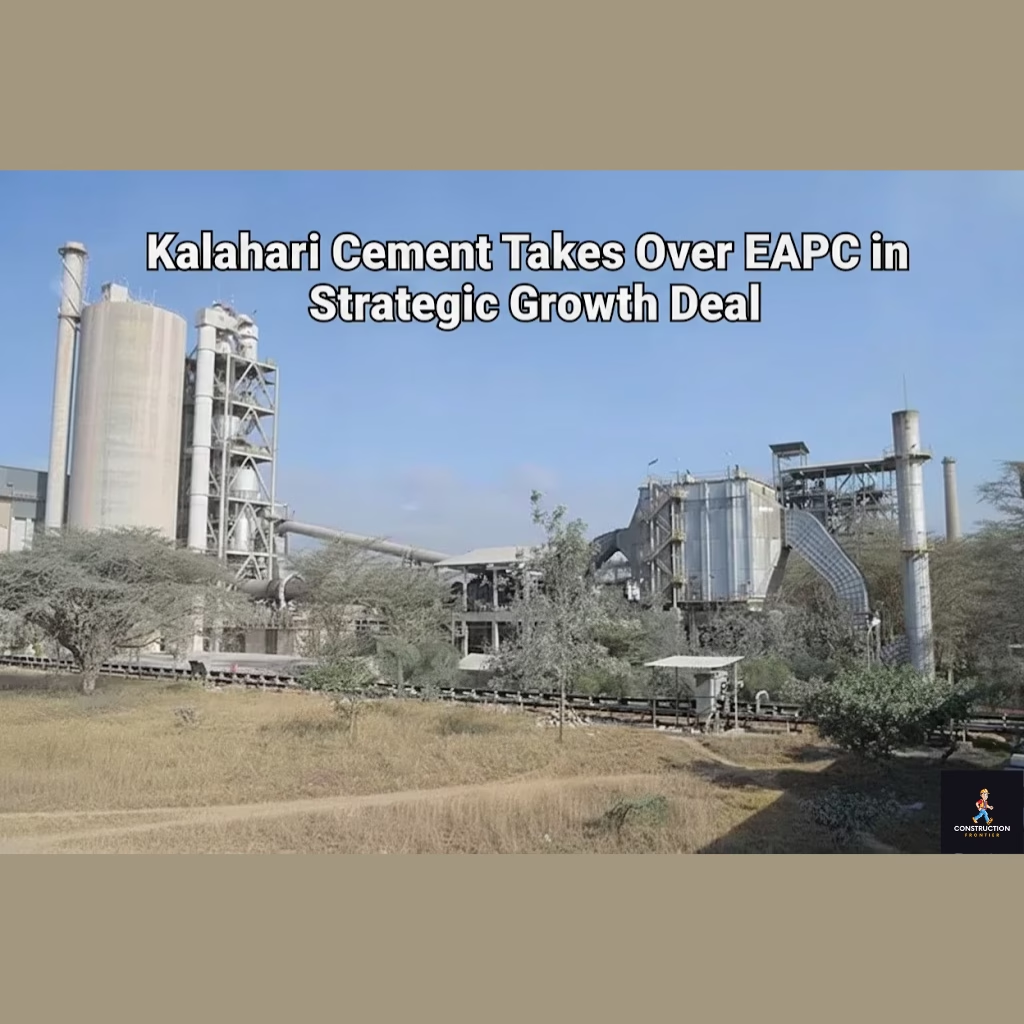
Kalahari Cement Takes Over EAPC in Strategic Growth Deal
Kalahari Cement takes over EAPC through a majority share acquisition that marks a turning point for Kenya’s cement industry. The deal reshapes ownership at East African Portland Cement, accelerates industry consolidation, and signals renewed investor confidence in Kenya’s construction materials market.
Kalahari Cement Takes Over EAPC and Reshapes Kenya’s Cement Landscape
The announcement that Kalahari Cement takes over EAPC has triggered renewed debate across the Kenyan construction and investment ecosystem. The transaction places one of the country’s oldest cement manufacturers under new strategic control at a time when Kenya’s cement industry consolidation trend continues to accelerate.
East African Portland Cement, commonly known as EAPC, has struggled for years with governance challenges, weak balance sheets, and underutilised production capacity. The entry of Kalahari Cement through a structured share acquisition changes the ownership equation and introduces a new strategic direction for the company.
For Construction Frontier, this is not just a corporate transaction. It represents a deeper shift in how capital, competition, and industrial strategy now shape the cement industry mergers in Kenya.
Deal Structure and Ownership Changes at EAPC
Kalahari Cement is 90% owned by Pacific Cement Limited and 10% by Comercio Et Conseil Limited, both of which are linked to Tanzania’s Amsons Group. The Kalahari Cement acquisition centres on the purchase of a controlling equity stake in East African Portland Cement under the leadership of tycoon Edhah Abdallah Munif. According to transaction disclosures, in late 2025, Kalahari Cement secured deals to acquire a 29.2% stake from Holcim-linked entities and a 27% stake from the National Social Security Fund (NSSF), acquiring a 68% majority shareholding, giving it effective control over EAPC’s board and strategic decisions.
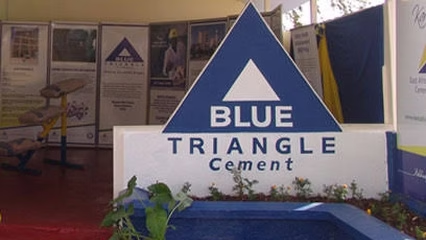
Key elements of the EAPC cement share deal include:
- Transfer of a controlling stake from existing shareholders to Kalahari Cement.
- Reconstitution of EAPC’s board to reflect new ownership control.
- Commitment to operational and financial restructuring.
- Alignment with regulatory oversight under Kenya’s capital markets framework.
The transaction follows regulatory engagement with institutions such as the Capital Markets Authority of Kenya, which oversees ownership changes in listed firms, and the Nairobi Securities Exchange, where EAPC maintains a long-standing listing.
This EAPC ownership change in Kenya ends years of uncertainty around control and decision-making, which previously limited access to fresh capital and long-term planning.
Why Kalahari Cement Targeted EAPC
Industry analysis shows that the Kalahari Cement takeover of EAPC follows a clear strategic logic rather than opportunistic asset stripping.
Several factors made EAPC attractive:
- Strategic Location
EAPC’s Athi River plant sits within Kenya’s most active construction corridor, close to Nairobi and major infrastructure projects.
- Installed Production Capacity
Despite underperformance, EAPC retains significant clinker and cement production assets that require optimisation rather than replacement.
- Brand Legacy
EAPC remains one of the most recognised cement brands in Kenya, with decades of market presence.
- Turnaround Potential
Financial distress created a valuation gap that favoured a strategic buyer with restructuring capability.
From a market-entry perspective, this explains why Kalahari Cement merged with EAPC rather than pursuing greenfield investments, which face higher capital costs and longer approval timelines.
Impact of the Kalahari Cement Acquisition on EAPC Operations
The impact of the Kalahari Cement acquisition will play out primarily at the operational level over the next 18 to 36 months.
Expected changes include:
- Plant Rehabilitation: Capital injection into kiln efficiency, energy systems, and maintenance backlogs
- Cost Optimisation: Improved procurement of clinker, gypsum, and fuel inputs
- Governance Reform: Clear separation between ownership, management, and political interests
- Market Repositioning: Competitive pricing strategies aligned with current demand cycles
This transition mirrors broader reform efforts across the region, where distressed cement assets increasingly attract private capital rather than prolonged state intervention.
Kenya Cement Industry Consolidation Gains Momentum
The deal reinforces a wider pattern of cement industry mergers in Kenya, driven by oversupply, rising energy costs, and tightening margins.
Kenya’s installed cement capacity exceeds domestic demand, forcing manufacturers to pursue scale, export markets, or operational efficiency. As explored in Construction Frontier’s market analysis on the Kenya cement market outlook 2026–2030, consolidation remains the most viable survival strategy.
Key consolidation drivers include:
- Persistent price competition across major urban markets.
- High electricity and fuel costs affect clinker production.
- Import pressure from regional producers.
- Capital constraints limit plant upgrades.
The Kalahari Cement EAPC share deal fits squarely within this structural adjustment phase.
Further Reading: Kenya Cement Market: Strong Growth Outlook 2026–2030
What the Deal Means for Cement Competition in Kenya
From a competitive standpoint, the East African Portland Cement ownership transaction alters market dynamics among established players. The Kenyan market currently features several dominant producers, as outlined in Construction Frontier’s review of the top cement companies in Kenya. The revitalisation of EAPC under Kalahari Cement introduces a more aggressive competitor into this landscape.
Likely competitive effects include:
- Increased price discipline among mid-tier producers.
- Greater emphasis on product differentiation and bulk supply contracts.
- Pressure on inefficient plants with ageing equipment.
- Renewed focus on institutional and infrastructure clients.
This shift matters for contractors, developers, and public-sector procuring entities seeking stable supply and predictable pricing.
1. Regional and Continental Implications
The Kenya cement industry merger news also carries regional significance. East Africa remains one of Africa’s fastest-growing construction markets, supported by infrastructure investment and urbanisation trends.
By stabilising EAPC, Kalahari Cement gains a platform for potential regional expansion, aligning with continental trends highlighted in Construction Frontier’s analysis of the top cement brands in Africa.
Strategic implications include:
- Export opportunities into Uganda, Tanzania, and South Sudan.
- Integration into regional clinker and limestone supply chains.
- Alignment with cross-border infrastructure projects.
These factors strengthen Kenya’s role as a cement manufacturing hub rather than a net importer.
Further Reading: Top 10 Cement Brands in Africa Powering the Infrastructure Boom
2. Regulatory and Market Confidence Signals
The successful completion of the transaction sends an important signal to investors and policymakers. It demonstrates that Kenya’s regulatory framework can support complex ownership transitions while protecting minority shareholders.
Institutions such as the Capital Markets Authority and Nairobi Securities Exchange continue to play a stabilising role in enforcing disclosure, governance, and shareholder protection standards. From a capital markets perspective, the EAPC ownership change in Kenya restores credibility to a stock that had suffered from prolonged uncertainty.
3. Risks and Execution Challenges Ahead
Despite the positive outlook, the Kalahari Cement takeover of EAPC carries execution risks that will determine its long-term success.
Key challenges include:
- Managing legacy debt obligations.
- Navigating labour relations during restructuring.
- Securing a consistent energy supply amid volatile fuel markets.
- Maintaining product quality during plant upgrades.
History shows that cement turnarounds succeed only when owners combine capital discipline with operational expertise.
Strategic Outlook for the Kenya Cement Market
Looking ahead, the deal reinforces a clear message. Kenya’s cement sector is entering a phase where scale, efficiency, and governance matter more than capacity expansion.
The question of what the Kalahari Cement deal means for the Kenya cement market extends beyond EAPC itself. It signals that underperforming industrial assets will increasingly change hands rather than stagnate.
For industry stakeholders, this creates:
- More reliable supply chains.
- Stronger corporate governance benchmarks.
- A clearer path toward sustainable pricing.
Further Reading: Top 7 Best Cement Companies in Kenya for Quality and Reliability
Conclusion: A Defining Moment for Kenya’s Cement Industry
The Kalahari Cement take over EAPC announcement marks one of the most consequential ownership shifts in Kenya’s cement sector in recent years. It closes a chapter of uncertainty at East African Portland Cement and opens a new phase defined by restructuring, competition, and consolidation.
More broadly, the transaction confirms that Kenya’s construction materials market continues to attract strategic capital, even under challenging operating conditions. For contractors, developers, and policymakers, this deal offers cautious optimism that industry fundamentals are realigning toward stability and long-term growth.
Stay Ahead of Cement Industry Shifts Across Africa
For in-depth analysis on cement markets, construction materials, and infrastructure investment trends shaping Africa and emerging markets, explore more expert insights at ConstructionFrontier.com.