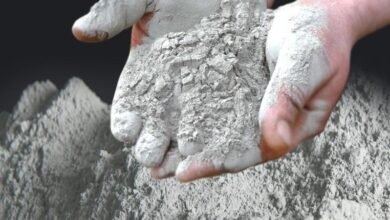
Cement Selection Guide for Construction Projects: 10 Valuable Strength, Performance, and Cost Insights
This cement selection guide for construction projects addresses the ten technical parameters that determine whether a structure achieves its design life or deteriorates under load, chemical attack, or environmental stress. Cement selection for construction projects spans compressive strength class, exposure category, heat of hydration, water-cement ratio, and total delivered cost, each of which affects structural performance and long-term durability across all project types and scales.
Technical Snapshot: Core Cement Selection Parameters
| Parameter | Detail |
| Primary Standards | ASTM C150, EN 197-1, BS 8500, IS 456 |
| OPC Strength Range | 33 MPa to 54 MPa at 28 days |
| Optimal W/C Ratio (Structural) | 0.35 to 0.45 |
| SRC C3A Limit | Below 5% |
| Low-Heat Cement C3A Limit | Below 6% |
| High-Alumina Cement Strength | 40 MPa to 80 MPa |
| Blended Cement Carbon Reduction | Up to 30% vs OPC |
| Key Exposure Classes | Mild, moderate, severe, very severe, extreme |
Cement selection is not a procurement decision; it is a structural and materials engineering decision. Matching cement strength and performance characteristics to site exposure conditions, structural loads, and budget constraints separates durable infrastructure from costly failures across Africa and global construction markets.
Introduction: Cement Selection in Construction Engineering
Every structural failure, premature deterioration, or budget overrun in concrete construction has a common thread: the wrong concrete mix for the conditions. Engineers and contractors who treat this cement selection guide as optional, choosing the cheapest or most available option, routinely produce structures that crack, spall, or corrode decades before their design life. The cement selection guide framework presented here provides engineers, procurement leads, and project managers with 10 actionable insights grounded in materials science, structural performance data, and cost economics.
The decisions made at the mix design stage cascade through the entire service life of a structure. Understanding the types of cement and their common uses in construction provides the foundation for applying the selection criteria in this cement selection guide for construction projects, since cement class determines which concrete grade a mix can achieve and what structural applications that grade supports. Whether the project is a high-rise frame in Lagos, an expressway bridge deck in Nairobi, a coastal jetty in Dakar, or a mass concrete dam foundation in the DRC, the ten insights in this cement selection guide provide the decision framework that the structural engineer, site engineer, and procurement manager all need.
Insight 1: Cement Strength and Performance Classification Is a Structural Obligation, Not a Marketing Label
Compressive strength class is the entry point of every cement selection decision, but its implications run deeper than the number stamped on a bag. Strength class sets the structural ceiling of the concrete mix, determines compatible concrete grades, and drives the selection between competing cement types in any project specification. Engineers must treat it as a structural variable, not a purchasing category, since mismatches between class and application result in concrete that either fails to meet design requirements or introduces cracking risks that no admixture can correct after the fact.
What Compressive Strength Class Actually Means
Cement strength and performance classification defines the minimum compressive strength that the cement paste must achieve at 28 days under standard curing conditions. This is the most fundamental parameter in any cement selection guide for construction projects.
Under ASTM C150, OPC grades span from 33 MPa to 54 MPa at 28 days, with Type I serving general construction and Type III designated specifically for high early strength where rapid form removal or load application is a programme driver. The EN 197-1 classification uses 32.5, 42.5, and 52.5 MPa strength classes, with N (normal) and R (rapid) suffixes indicating early strength gain rate. CEM I 52.5 R achieves a minimum of 30 MPa at two days and 52.5 MPa at 28 days, making it appropriate for fast-track structural frames and precast production.
OPC Grade 43 delivers a minimum 28-day strength of 43 MPa, with three-day strength at 23 MPa. OPC Grade 53 reaches 27 MPa at three days and a minimum of 53 MPa at 28 days, making it the standard choice for reinforced cement concrete (RCC), prestressed concrete, and high-grade structural pours where early form-stripping and construction speed are commercial requirements. Grade 33 serves non-structural work: plastering, masonry mortar, and low-load pathway construction.
Structural Consequence of Mismatched Strength Class
Specifying Grade 33 for a structural column, or Grade 53 for unreinforced masonry, creates problems in opposite directions. Grade 33 in a load-bearing element results in a concrete mix that cannot meet the minimum design compressive strength. Grade 53 in masonry generates excessive heat of hydration and shrinkage cracking in thin-section work, where the rapid early strength gain creates thermal differentials that the mortar bed cannot absorb. The six cement grades and their specific structural applications define these boundaries with granular precision; cross-referencing that guides against project element type is a mandatory step in the cement selection process.
Insight 2: Exposure Category Governs Chemistry, Not Just Grade
Strength class answers the structural load question; exposure category answers the durability question. A complete cement selection guide for construction projects addresses both simultaneously, because a cement with adequate compressive strength but the wrong chemical profile will deteriorate in aggressive environments regardless of its grade. This is the dimension of cement selection that most procurement decisions on African construction sites skip entirely, and the dimension responsible for the majority of premature infrastructure failures in the region.
The Five Exposure Classes and Their Implications for Choosing Cement
The five categories, mild, moderate, severe, very severe, and extreme, each demand a specific cement chemistry response, not merely a higher strength grade. A Grade 53 OPC placed in a sulphate-bearing soil environment deteriorates faster than a Grade 33 SRC, because cement strength and performance in the structural sense are inseparable from chemical resistance. ACI 318’s Chapter 19 durability requirements codify this principle explicitly: exposure class governs maximum water-to-cementitious materials ratio, cement type restrictions, and minimum specified compressive strength simultaneously, not as independent variables.
Mild exposure covers indoor structural elements and external elements in non-aggressive environments. Moderate exposure includes elements buried in non-aggressive soils or submerged in fresh water. Severe exposure applies to coastal zones, de-icing salt environments, and aggressive ground conditions. Very severe exposure covers direct seawater immersion, tidal and splash zones, and industrial environments above standard chemical concentration thresholds. Extreme exposure applies to acid environments, chemical plants, and sulphate concentrations exceeding 0.5% in soil or 1 g/L in groundwater.
The practical implications of choosing cement across Africa and emerging markets are significant. Coastal West Africa, East African rift soils, and North African sabkha environments place most structures in the severe-to-very-severe range, yet procurement decisions routinely ignore this reality and select OPC solely on purchase price. This is the most common and most avoidable cause of premature structural deterioration in the region.
Insight 3: Sulfate-Resisting Cement Solves a Chemistry Problem that OPC Cannot
OPC’s vulnerability to sulphate attack is a chemical limitation, not a quality failing. The problem lies in the compound chemistry of ordinary Portland clinker, and the solution requires selecting a cement manufactured to a fundamentally different chemical specification. Engineers who understand this distinction make better cement selection decisions in aggressive ground conditions; those who treat SRC as an optional upgrade rather than a technical requirement produce structures that deteriorate from the inside out.
C3A Content and the Cement Selection Case for SRC
When choosing cement for construction projects in aggressive ground, the first question is not the compressive strength class but the C3A content. A sulphate attack occurs when sulphate ions from soil or groundwater react with tricalcium aluminate (C₃A) in hydrated cement to form ettringite, a crystalline compound that expands within the concrete matrix, fracturing it internally.
OPC contains C3A at 8%-12%. Sulphate-Resisting Cement (SRC) restricts C₃A to below 5% and limits the combined (2C₃A + C₄AF) to below 25%, curtailing the ettringite-forming reaction at the chemical level. The American Concrete Institute confirms that sulphate-resistant cement, specifically ASTM C150 Type V or blended cements with high-sulphate (HS) designations, is the correct specification for concrete exposed to sulphates in soil or groundwater.
SRC cement strength and performance follow a slower development profile: approximately 10 MPa at three days, 16 MPa at seven days, and 33 MPa at 28 days. The trade-off is explicit: SRC sacrifices early strength for long-term chemical resistance and structural durability in aggressive environments. In coastal construction within 25 km of the sea, sewage treatment facilities, harbour piers, foundation slabs in sulphate-rich soils, and marine infrastructure, SRC represents the technically correct selection regardless of its cost premium over OPC.
The construction cement types that qualify for use in sulphate-bearing conditions include SRC, properly proportioned blended cements with GGBFS or fly ash at sufficient replacement levels, and Portland composite cements with certified sulphate resistance. OPC, regardless of grade, does not qualify for soil sulphate concentrations above moderate thresholds.
Further Reading: Supplementary Cementitious Materials (SCMs): 5 Valuable Facts Every Contractor Should Know
Insight 4: Portland Pozzolana Cement Outperforms OPC in Long-Term Durability Applications
PPC is frequently underspecified because its early strength gain is slower than OPC’s, creating the false impression of inferior performance. The opposite is true over a structure’s design life. PPC’s pozzolanic reaction mechanism progressively densifies the concrete microstructure in a way OPC cannot replicate, producing superior durability outcomes under any exposure condition, from moderate to very severe. Projects specifying 50-year or longer design lives in anything other than mild exposure conditions should undergo a serious evaluation of PPC versus OPC before finalising the specification.
Pozzolanic Reaction and Cement Performance Considerations
The pozzolanic reaction is central to cement performance considerations in construction for any project specifying a long service life in moderate-to-aggressive exposure conditions. Portland Pozzolana Cement (PPC) combines OPC clinker with pozzolanic materials, typically fly ash, volcanic ash, or calcined clay, in proportions that replace 15% to 35% of the clinker content. These materials react with calcium hydroxide liberated during OPC hydration to form additional calcium silicate hydrate (C-S-H), progressively densifying the concrete microstructure over 28 to 90 days.
The consequences of cement selection are significant. PPC gains strength more slowly than OPC in the first seven days but matches and frequently exceeds OPC strength at 90 days. More critically, the denser late-stage microstructure reduces chloride-ion permeability, reduces sulphate vulnerability, and lowers internal porosity, all of which extend structural service life. The performance comparison guide between OPC and PPC cement for contractors quantifies these differences across nine measurable parameters, including heat of hydration, chloride resistance, and setting time.
PPC also generates 15% to 25% less heat of hydration than OPC. This matters in mass concrete pours for foundations, retaining walls, and thick deck slabs where thermal cracking from differential cooling is a structural risk. For construction projects in East and West Africa, where ambient temperatures already stress fresh concrete, choosing cement with inherently lower hydration heat is a practical advantage that no admixture can fully replicate.
Insight 5: Low-Heat Cement Is Non-Negotiable for Mass Concrete
Mass concrete poses a thermal engineering challenge that cement grade selection alone cannot resolve. The problem is not material strength but energy: large concrete volumes generate heat faster than they can dissipate it, and the resulting temperature differentials create stresses that crack the structure before it carries any applied load. Selecting the correct cement is the primary design lever for managing this risk, and it must be resolved at the specification stage, not addressed after cracking occurs on site.
Heat of Hydration and Best Cement Selection for Thick Elements
The best cement for construction involving mass pours is not determined solely by compressive strength; it is determined by heat of hydration. ACI Committee 207 defines mass concrete as any volume with dimensions large enough to require measures to cope with heat generation from cement hydration and attendant volume change to minimise cracking, with structural design for such elements based primarily on durability and thermal action, not strength alone.
Low-heat cement controls C3A content below 6% and restricts C3S to defined limits, reducing total hydration heat from the 375–525 kJ/kg range typical of OPC to approximately 250–290 kJ/kg. That 30% to 45% reduction keeps peak concrete temperatures within manageable limits and eliminates the risk of thermal cracking for most mass pours.
Structural applications where the best cement selection strategy centres on heat of hydration include dam foundations, mat foundations for high-rise structures, bridge abutments with significant section thicknesses, retaining walls, and nuclear facility base slabs. Projects across sub-Saharan Africa where large-volume pours occur in ambient temperatures above 30°C face a compounded risk: both hydration heat and ambient heat drive the concrete core temperature simultaneously. On these sites, low-heat cement is not a specification option; it is a structural requirement.
Insight 6: The Water-Cement Ratio Determines Performance More Than Cement Grade Alone
Cement type and grade define what a mix can achieve; the water-cement ratio determines how much of that capability the hardened concrete actually delivers. A premium-grade cement specified correctly for the exposure class and application still produces weak, permeable, short-lived concrete if the W/C ratio is mismanaged on-site. This is the most common quality failure on African construction projects, where the gap between the specified mix design and the mix actually placed frequently runs to an additional 10 to 20 litres of water per cubic metre.
W/C Ratio: The Most Influential Variable in This Cement Selection Guide
Any cement selection guide for construction projects that omits the water-cement ratio is incomplete. Cement chemistry and strength class set the performance ceiling; the W/C ratio determines how closely the hardened concrete approaches it. A low W/C ratio produces a denser matrix with fewer pores: each gram of water beyond the 0.23 to 0.25 required for full hydration evaporates after setting, leaving microscopic voids that reduce both strength and durability.
For most structural concrete, optimal W/C ratios range from 0.35 to 0.45. High-quality structural concrete, demanding superior cement strength and durability, targets 0.40. Standard structural applications, including slabs, beams, and columns in mild-to-moderate exposure, operate between 0.45 and 0.55. Non-structural work accepts 0.55 to 0.70, prioritising workability over long-term durability.
A W/C ratio of 0.35 with Grade 53 OPC produces 28-day compressive strength above 50 MPa and very low chloride permeability. Raising that ratio to 0.60 with the same cement reduces compressive strength to 25–30 MPa, increases porosity substantially, and dramatically reduces cement performance in aggressive environments. The cement grade specifies the reaction chemistry; the W/C ratio governs the density of the hydrated matrix and thus the structural outcome.
Table 1: Concrete Performance by Water-Cement (W/C) Ratio Summary
| Structural Application | Optimal W/C Ratio | Cement Performance & Concrete Properties | Structural Outcome & Durability |
| High-Quality Structural | 0.35 – 0.45 (Target: 0.40) | Minimal excess water, dense micro-matrix, very low chloride permeability. | Compressive strength above 50 MPa (with Grade 53 OPC); superior long-term durability. |
| Standard Structural (Slabs, beams, columns) | 0.45 – 0.55 | Moderate capillary porosity, standard matrix density; suited for mild-to-moderate exposure. | Standard structural capacity balances workability with required design strength. |
| Non-Structural Work | 0.55 – 0.70 | High excess water evaporation, high porosity, extensive microscopic voids. | Compressive strength drops to 25–30 MPa; poor resistance to aggressive environments. |
| Theoretical Minimum (Full chemical hydration) | 0.23 – 0.25 | Complete binder reaction with zero capillary void formation. | Maximum potential density and performance ceiling of the chosen cement chemistry. |
Practical Control on Site
Controlling W/C ratio on construction sites in Africa and emerging markets is a persistent challenge. Site-mixed concrete suffers from estimating water volume by eye and from adding water during hot-weather pours to recover workability. Both practices destroy mix design integrity. Specifying maximum W/C ratios in contract documents and enforcing measurement of water additions are as important as correctly choosing cement in the first place.
Insight 7: Blended Cements and SCMs Deliver Both Performance and Cost Advantages
Blended cements and supplementary cementitious materials represent the most underutilised performance lever in African construction markets. They improve concrete durability, reduce the clinker content of the mix, and lower material costs simultaneously. The engineering case for their inclusion is strong across a wide range of project types, and the economics reinforce rather than conflict with it in most market conditions across the continent.
SCMs as Performance Modifiers and Cost Levers in Cement Cost Considerations
Cement cost considerations in construction projects cannot focus solely on the purchase price per tonne. Supplementary cementitious materials (SCMs), including fly ash, ground granulated blast furnace slag (GGBFS), silica fume, and natural pozzolans, alter concrete performance in ways pure OPC cannot achieve alone. The technical performance of SCMs and their role in structural concrete details how each material modifies hydration chemistry and long-term performance, providing the basis for selecting SCM type and replacement level.
Blended cement incorporating fly ash or GGBFS reduces carbon emissions by up to 30% compared to OPC production, a reduction that also translates directly into lower clinker content per tonne of finished cement. In markets where clinker costs have risen sharply, including Kenya, where locally produced clinker rose from $50 to $130 per tonne following the introduction of a 17.5% import levy, blended cements offer a direct cement cost lever alongside the durability benefits. This is a cost consideration for cement that project procurement engineers in Africa cannot afford to overlook.
GGBFS at 30% to 70% replacement improves resistance to chloride penetration significantly and serves as the SCM of choice for marine and coastal concrete. Silica fume at 5% to 10% replacement dramatically increases strength and reduces permeability, applicable for high-performance concrete in bridges, parking structures, and industrial floors where chemical exposure is a design concern. Both represent the best cement selection strategies for contractors and engineers working in aggressive or cost-sensitive environments.
Insight 8: Rapid-Hardening and High-Alumina Cements Serve Specific, Non-Routine Applications
Not every project fits the standard OPC or PPC framework. A small but important category of construction tasks demands either accelerated strength development that changes the construction programme or chemical resistance far beyond what Portland cement chemistry can deliver. Understanding which construction cement types apply in these cases and where they must not be applied is part of the technical completeness that separates a rigorous cement selection guide from a basic product overview.
When Time or Extreme Conditions Override Standard Cement Selection
Part of any rigorous cement selection guide for construction projects is knowing which construction cement types apply outside normal structural parameters. Rapid-hardening cement achieves at 24 hours what OPC achieves at 28 days: sufficient strength for form removal and load application. Structural applications are specific: road repairs reopening to traffic within hours, precast element production where daily form cycling drives project economics, and emergency structural repairs where construction downtime is not acceptable. Rapid-hardening cement does not provide superior ultimate strength over OPC; it compresses the time to reach equivalent strength at a cost premium reflecting finer grinding and tighter clinker chemistry control.
High-alumina cement (HAC), also known as calcium aluminate cement (CAC), occupies a different performance category entirely. Produced by fusing bauxite and limestone at high temperatures, HAC delivers compressive strengths between 40 MPa and 80 MPa, compared to OPC’s 20–54 MPa range. Its initial set is 3.5 hours, with a final set at 5 hours, and it achieves most of its design strength within 24 hours. HAC resists chemical attack from mild acids, alkalis, and sulphates, making it applicable to sewage infrastructure, industrial process environments, marine construction, and refractory applications where temperatures exceed 1,000°C.
The critical caution with HAC concerns conversion: over time in warm, humid conditions, metastable hydrate phases convert to stable but more porous phases, reducing strength by 30% to 50%. The United Kingdom banned HAC for structural use following a series of failures in the 1970s, such as roof failures at the Camden School for Girls and the Sir John Cass School. Across construction markets in Africa and emerging economies, HAC should be specified only for non-structural applications where its cement performance advantages apply, and conversion risk is managed through mix design and environmental control, including industrial flooring, refractory linings, sewage infrastructure, and emergency repairs.
Insight 9: Procurement Format Affects Performance and Budget Simultaneously
Cement specification and cement procurement are two separate decisions that most project teams conflate. A correctly specified SRC or blended cement loses its performance advantages if it arrives on site in a compromised condition: a set bagged product used under time pressure, or poorly stored bulk cement with moisture ingress that has initiated pre-hydration. Procurement format, storage protocol, and site handling discipline are the bridge between the specification stage and the actual concrete performance achieved.
Bulk Versus Bagged: A Cement Cost Consideration With Performance Implications
Cement cost considerations in construction projects extend beyond unit price to cover waste, consistency, and site handling loss. The decision framework for bulk versus bagged cement identifies seven contractor-preference factors that determine which format best serves project needs at different scales and site conditions.
Bulk cement costs 15% to 25% less per tonne than bagged cement in most markets, because it eliminates bag manufacturing, filling, palletising, and handling. Projects consuming above 200 tonnes per month typically justify bulk supply with on-site storage silos, recovering the silo capital cost within two to three months of the price differential. Bulk cement also eliminates the common site problem of using partially set bags of cement damaged by moisture in humid tropical climates, a practice that corrupts cement strength and performance without visible warning.
Bagged cement retains advantages for small-scale, dispersed, or logistically constrained sites: remote project locations without road access for bulk tankers, sites without power for pneumatic transfer equipment, and residential or small-commercial projects where concrete volumes do not justify silo infrastructure. The trade-off between cost and operational flexibility is a project-level decision that the procurement engineer must quantify rather than assume. In either format, proper storage and first-in, first-out stock rotation protect cement quality and preserve the cement’s performance characteristics specified at the mix design stage.
Further Reading: Bulk vs Bagged Cement: 7 Proven Contractor Preferences
Insight 10: Total Cement Cost Considerations Include Durability, Not Just Purchase Price
The gap between the price on the cement bag and the true cost of cement selection is the gap between what a project costs on procurement day and what it costs over its design life. Every cost analysis that stops at the purchase price misses the maintenance cycles, repair interventions, and early-replacement scenarios built into the structure’s future by a wrong cement decision made today. The lifecycle cost framework is not theoretical; it delivers a specific, quantifiable cost advantage for the premium specification in most aggressive-exposure scenarios, and that advantage compounds each year of the asset’s service life.
The True Economic Metric Is Cost Over Service Life
The purchase price per bag or per tonne is the metric most contractors use when selecting cement for construction projects. It is also the metric most likely to produce the wrong decision. The correct metric is lifecycle cost: the sum of initial material cost, construction cost, and the discounted value of maintenance, repair, and replacement over the structure’s design life. A complete cement selection guide for construction projects must incorporate this calculus to serve the investment, not just the budget line.
Cement cost dynamics across Africa illustrate the gap between nominal prices and true costs. In Nigeria, electricity costs account for 40% to 50% of cement production costs, with fuel for captive power plants alone contributing $30 per tonne in energy costs, compared to $6 per tonne in China. In 2023, Dangote, Lafarge, and BUA spent ₦598 billion on fuel and power, a 42% increase from 2022. Egyptian ex-factory prices stabilised between $74 and $78 per tonne in 2025. Nigerian 50 kg bags reached 9,700 naira in early 2025. These cost pressures push contractors toward the lowest available grade, which, in aggressive exposure conditions, increases lifetime maintenance costs by a multiple of the initial savings.
A structure built with standard OPC in sulphate-bearing East African rift valley soil may require repair or partial reconstruction within 15 to 20 years. The same structure built with SRC at a 10% to 15% cost premium reaches its 50-year design life without sulphate-related intervention. The net present value of that cement selection decision strongly favours SRC. The same lifecycle logic applies to selecting the best cement for home construction at the residential scale, where homeowners making a once-in-a-generation investment deserve the same rigour applied to infrastructure procurement. The best cement selection strategies for contractors and engineers are those that treat cement costs as a long-term investment rather than a daily procurement transaction.
Technical Block: Cement Selection Decision Framework for Construction Projects
This seven-step framework translates the ten insights above into a sequential specification process. It applies to every construction project type, from a single residential foundation to a multi-billion-dollar infrastructure corridor. Each step eliminates a category of risk: structural inadequacy, chemical deterioration, thermal cracking, site quality loss, or lifecycle cost mismanagement. Completing all seven before finalising any cement specification is the minimum standard a competent project engineer should apply.
1. Define Structural Element and Load Requirements
Identify whether the element is structural or non-structural, its design compressive strength class, and whether early strength is a construction programme requirement. Structural columns, beams, prestressed elements, and high-rise frames demand Grade 43 to Grade 53 OPC or equivalent EN 197-1 Class 42.5 to 52.5. Non-structural masonry and plaster accept Grade 33. Precast production cycles benefit from rapid-hardening CEM I 42.5 R or 52.5 R grade cements, where daily form cycling drives project economics.
2. Classify Exposure Environment
Map the site against the five exposure classes. Conduct soil sulphate testing in accordance with BS 1377 or ASTM D4327 for any buried structure. Classify the proximity to tidal, spray, or splash marine zones. Identify industrial process environments, acidic soils, or contaminated ground. The exposure class drives cement chemistry selection: OPC for mild exposure, PPC or blended cement for moderate exposure, SRC for severe-to-very severe sulphate exposure, and specialist cement or concrete protection systems for extreme conditions.
3. Match W/C Ratio to Structural and Durability Requirements
Set the maximum W/C ratio for both the exposure class and the design strength class simultaneously. Most structural work in moderate-to-severe exposure requires W/C ≤ 0.50. High-performance structural concrete targets W/C ≤ 0.45. Mass concrete with thermal cracking risk requires W/C control combined with low-heat cement to manage peak concrete temperatures and prevent early-age cracking.
4. Assess Heat of Hydration Risk
Calculate the pour volume and the minimum element section thickness. Any pour with a minimum dimension greater than 600 mm or a total concrete volume greater than 50 m³, placed in a single continuous pour, requires a heat of hydration analysis. Low-heat cement, SCM replacement at levels sufficient to reduce hydration heat by 30% or more, or a combination of pre-cooling and curing protocols must be part of the specification.
5. Evaluate SCM Availability and Cost Position
In markets where clinker costs are high, blended cements and site-level SCM addition offer cost management without compromising durability. Fly ash, where available from thermal power stations, replaces 15% to 25% of OPC clinker. GGBFS from steel plants replaces 30% to 70%. Both improve long-term cement performance in aggressive environments while reducing the cement cost per cubic metre of structural concrete.
6. Optimise Procurement Format Against Project Scale
Match procurement format to project cement consumption rate and site infrastructure. Projects above 200 tonnes per month justify bulk supply analysis. Logistically constrained sites default to bagged supply with strict moisture and shelf-life controls. In both cases, the procurement format decision must account for cement performance implications alongside cost.
7. Apply Lifecycle Cost Analysis Before Finalising Specification
Calculate the 50-year lifecycle cost for the specified construction cement type and for the premium alternative. Factor in maintenance intervals, repair cost per square metre, and the probability of structural intervention under the predicted exposure conditions. In most cases where the alternative is SRC, PPC, or blended cement, the lifecycle cost analysis favours the premium specification at a margin that justifies the initial uplift.
Conclusion: Cement Selection as a Strategic Construction Decision
A cement selection guide that focuses only on purchase price ignores the technical factors that shape structural durability, construction efficiency, and long-term project value. Cement chemistry, strength class, water-cement ratio, heat control, SCM use, and procurement format all influence how concrete performs during construction and throughout the structure’s service life.
The ten insights in this cement selection guide for construction projects provide a practical framework for choosing cement based on structural requirements, site conditions, environmental exposure, and project economics. Effective cement selection is not simply about finding the cheapest option. It is about balancing performance, durability, constructability, and long-term cost efficiency. For contractors, engineers, and developers, the right cement strategy improves build quality, reduces project risk, and supports stronger financial outcomes throughout the asset’s lifecycle.
Build Smarter with Expert Cement Selection Insights
Explore Construction Frontier: Construction & Building Materials for authoritative guidance, technical analysis, cement selection guide, and performance-driven strategies on concrete durability, structural strength, and cost-efficient construction materials for modern infrastructure projects.