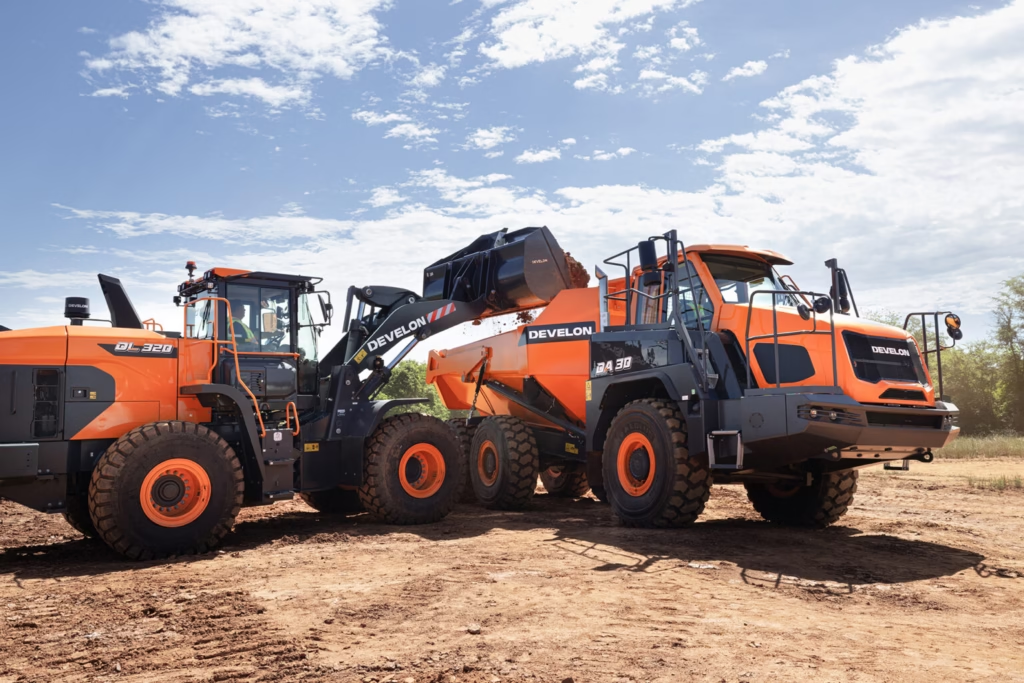
Develon-Hyundai Merger Forms a Strong Global Construction Giant
The Develon Hyundai merger marks a major consolidation within the global construction equipment market, combining scale, manufacturing strength, and technology under a single industrial platform. The move strengthens competitive positioning among heavy equipment manufacturers, accelerates global expansion ambitions, and signals a new phase of consolidation across the construction equipment industry.
Develon-Hyundai Merger Reshapes the Global Construction Equipment Market
The Develon-Hyundai merger represents one of the most consequential developments in the construction equipment industry in recent years. More than a corporate transaction, the merger reflects a strategic response to rising global competition, tightening margins, and accelerating demand for scale-driven efficiency.
As infrastructure pipelines expand across emerging markets, while mature regions demand cleaner, more intelligent machines and equipment, equipment manufacturers face increasing pressure to evolve. The Develon Hyundai merger news signals how leading players now prioritise consolidation as a tool for long-term relevance rather than short-term growth.
For contractors, dealers, fleet owners, and policymakers, the question is no longer whether consolidation will reshape the sector, but how quickly it will redefine competitive power.
Understanding the Strategic Logic Behind the Develon Hyundai Merger
To understand why Develon merged with Hyundai, it helps to examine the structural challenges facing the global construction equipment market.
Rising research and development costs, emissions compliance requirements, and digitalisation have raised the financial threshold for competing at scale. At the same time, customer expectations now extend beyond machine performance to include uptime guarantees, digital fleet management, and lifecycle support.
By combining forces, Hyundai Develon construction equipment can spread investment across a broader global footprint. The merger strengthens capital efficiency, accelerates innovation timelines, and enhances resilience against market volatility. Their new president for the merger of HD Hyundai Construction Equipment and HD Hyundai Infracore will be Moon Jae-young, effective 1st January 2026.
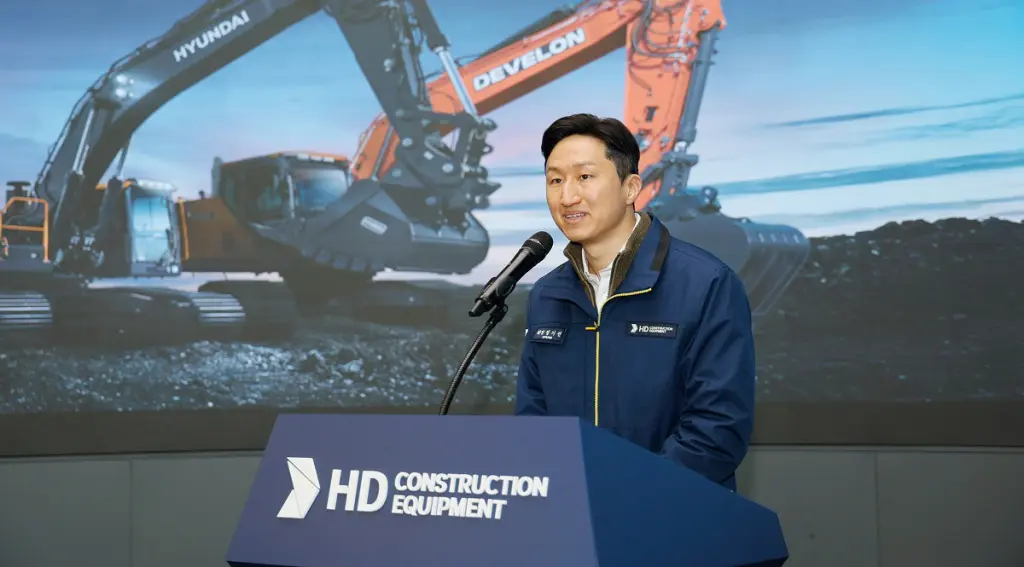
(New Hyundai-Develon Merger President Moon Jae-young)
This strategic alignment positions the combined entity to compete more effectively against established heavy equipment manufacturers with deep global roots.
Further Reading: Hyundai Doosan Construction Equipment Rebrands for Global Growth
Develon-Hyundai Construction Equipment and Industry Consolidation Trends
The consolidation trend in the construction equipment industry has accelerated over the past decade. Mergers and acquisitions increasingly shape competitive positioning, particularly among mid- to large manufacturers seeking global relevance.
The Develon-Hyundai merger creates a global giant by pooling manufacturing capacity, dealer networks, and technological expertise. Scale now matters more than ever, not only for production efficiency but also for negotiating supply chains, managing logistics, and supporting customers across continents.
This consolidation also reflects a broader shift within the global construction equipment market, where fragmented regional players struggle to sustain competitiveness without strategic alliances.
Impact of the Develon-Hyundai Merger on Global Competition
The impact of the Develon Hyundai merger extends far beyond corporate structure. Competitive dynamics across key regions will shift as the combined entity increases market reach and operational leverage.
In emerging markets, where infrastructure investment continues to rise, the merged group gains stronger pricing flexibility and dealer support capabilities. In mature markets, the focus shifts toward emissions compliance, digital integration, and fleet efficiency, areas where scale-driven Research and Development (R&D) offers a competitive edge.
Competitors now face a more formidable challenger, one capable of delivering both cost efficiency and technological sophistication across diverse market conditions.
What the Develon-Hyundai Merger Means for Contractors and Fleet Owners
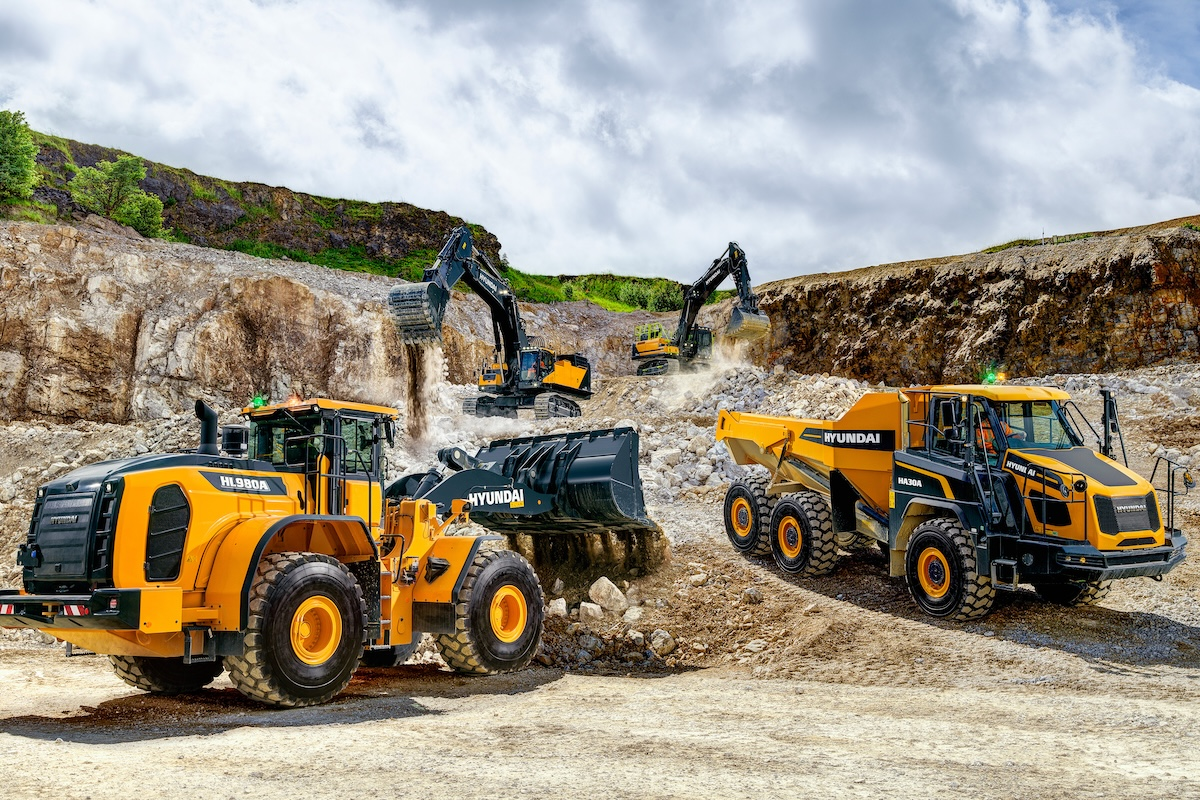
From a contractor’s perspective, what the Develon Hyundai merger means for construction extends into daily operations and long-term planning.
A larger global manufacturer typically brings improved parts availability, expanded service networks, and greater product consistency across regions. Fleet owners operating in multiple countries benefit from standardised platforms, streamlined maintenance, and easier operator training.
However, consolidation also raises questions around pricing power and brand differentiation. Contractors will closely monitor how the merged entity balances scale with customer responsiveness.
Develon-Hyundai Global Expansion Strategy Explained
The Develon-Hyundai global expansion strategy centres on capturing growth where infrastructure demand remains strongest while defending market share in mature economies.
Emerging markets in Africa, Southeast Asia, and South Asia continue to drive equipment demand through roads, energy projects, housing, and urban transport. A consolidated manufacturing and distribution platform improves the ability to scale rapidly in these regions.
Meanwhile, Europe and North America demand compliance-driven innovation. The merger strengthens the group’s ability to invest in low-emission engines, digital monitoring systems, and smart construction technologies.
This dual-market strategy reflects a realistic assessment of global demand patterns rather than a one-size-fits-all approach.
Technology, Innovation, and Product Development Implications
Technology remains a central driver behind the Develon-Hyundai merger. As construction equipment evolves, manufacturers must integrate automation, data analytics, and efficiency improvements into their product lines.
The merger enables shared research platforms and faster deployment of innovations across multiple equipment ranges. Instead of duplicating development efforts, the combined entity can focus on scalable solutions that improve productivity and reduce operating costs.
For customers, this may translate into more advanced machines entering the market at competitive price points, reinforcing the merged group’s long-term value proposition.
Dealer Networks and Aftermarket Strategy
Dealer strength often determines market success more than product specifications alone. The Develon Hyundai construction equipment platform gains a broader and more resilient dealer ecosystem through consolidation.
Unified training systems, aligned branding, and integrated after-sales support enhance dealer competitiveness. At the same time, consistency across regions simplifies marketing and improves customer confidence.
How effectively the merged group manages dealer integration will play a critical role in realising the full value of the merger.
Further Reading: HD Hyundai Merger: A Bold Step Toward Global Expansion
Implications for Heavy Equipment Manufacturers Industry-Wide
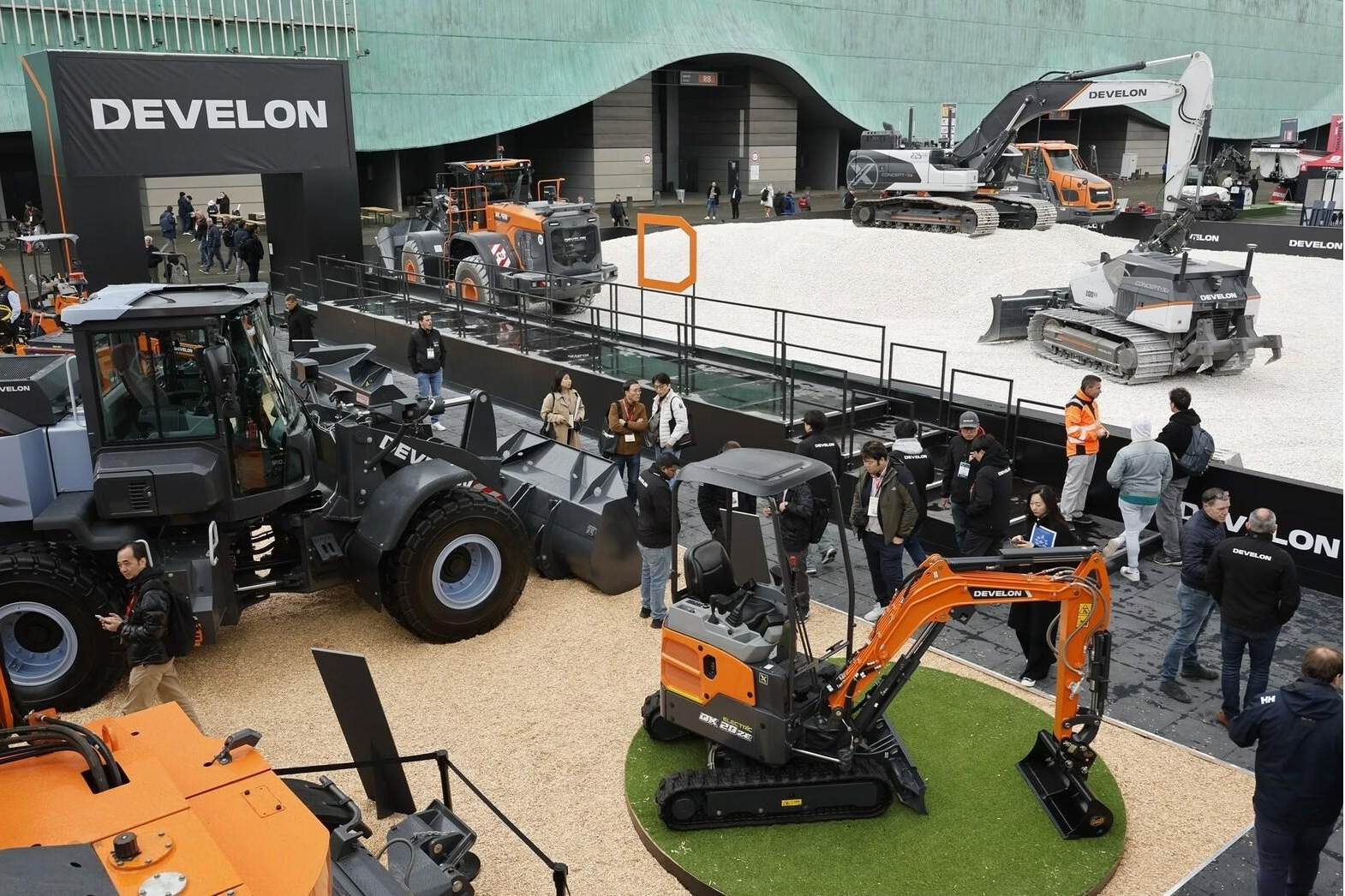
(HD Hyundai Infracore’s DEVELON booth at INTERMAT Paris 2024)
For other heavy equipment manufacturers, the merger sends a clear message. Scale, capital depth, and strategic alignment now define competitiveness in the global construction equipment market.
Smaller players may struggle to keep pace without partnerships or niche specialisation. Larger competitors will likely respond through further consolidation, technology partnerships, or aggressive expansion strategies.
The Develon-Hyundai merger news, therefore, acts as a catalyst, accelerating structural change across the entire industry.
Risks and Execution Challenges Ahead
While the strategic logic remains strong, execution will determine success. Integrating operations, aligning corporate cultures, and managing brand transitions introduce complexity.
Supply chain disruptions, regional regulatory requirements, and dealer realignment all present challenges that require disciplined management. History shows that mergers succeed not at signing, but through sustained operational execution. The market will closely watch how the combined entity navigates these transitional phases.
Looking Ahead: A New Phase for the Construction Equipment Industry
The Develon-Hyundai merger creates a global giant positioned to shape the next phase of industry evolution. Consolidation, innovation, and international reach now define competitive advantage in construction equipment.
As infrastructure investment accelerates across emerging markets and technology reshapes project delivery, the merged group enters the market with enhanced scale and strategic clarity.
The broader implication remains clear. The construction equipment industry is moving toward fewer, stronger global players, and the Develon-Hyundai merger stands as a defining example of this transformation.
Stay Ahead of Global Construction Trends
Follow Construction Frontier for authoritative construction intelligence, industry-shaping analysis, and emerging market insights across Africa and global mega projects. Explore news that explains not just what is happening, but why it matters to the future of construction. Visit ConstructionFrontier.com and stay ahead of the industry.