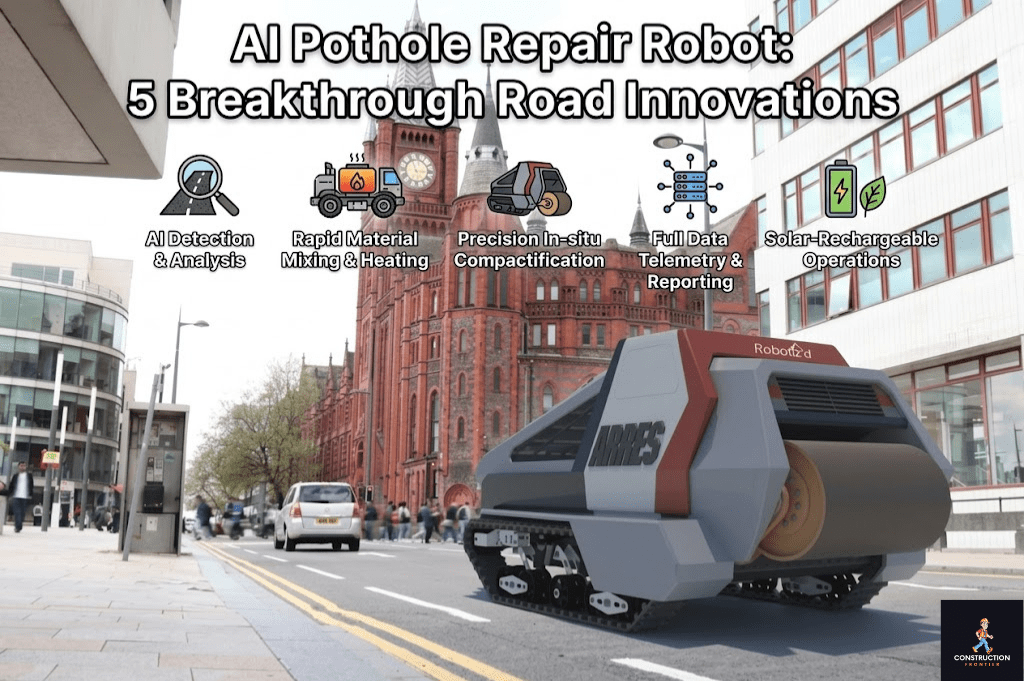
AI Pothole Repair Robot: 5 Breakthrough Road Innovations
The AI pothole repair robot marks a fundamental shift in road infrastructure maintenance by integrating artificial intelligence, robotics, and predictive analytics into a fully autonomous system. As ageing road networks face rising traffic loads and climate stress, traditional reactive methods are proving inefficient, with countries like the United Kingdom repairing nearly two million potholes annually while backlogs persist.
Through robotic pothole repair technology, authorities can adopt proactive strategies in which AI road maintenance robots detect, classify, and repair defects early, with automated road repair systems achieving repairs up to 70% faster, reducing costs by up to 90%, and lowering emissions. For contractors, engineers, and investors, this positions the technology as a high-impact solution for productivity, cost optimisation, and long-term infrastructure asset management.
Technical Snapshot: AI Pothole Repair Robot System
| System Component | Engineering Function | Performance Impact |
| AI vision system | Detects potholes and cracks using image processing | Improves detection accuracy up to 100% in trials |
| Robotic repair arm | Executes material placement and compaction | Ensures consistent repair quality |
| Material injection system | Delivers bitumen or repair compound | Reduces material waste by precision application |
| Sensor suite (LiDAR, cameras) | Measures geometry and depth | Enables predictive maintenance modelling |
| Control system (AI engine) | Automates full workflow | Enables autonomous operation |
Introduction: From Reactive Repairs to Predictive Infrastructure Management
Road maintenance has historically operated on a reactive model. Defects are reported, inspected, and repaired manually. This approach creates inefficiencies, delays, and escalating costs, particularly in large road networks. The AI pothole repair robot introduces a proactive model powered by smart road maintenance solutions. Instead of waiting for potholes to form, these systems detect micro-cracks and early-stage defects, preventing deterioration before it becomes structurally significant.
From an engineering perspective, this shift aligns with asset lifecycle management principles. Preventative intervention reduces long-term structural degradation, extends pavement lifespan, and optimises maintenance budgets. The integration of infrastructure maintenance robotics also addresses a critical industry challenge: labour dependency. With labour costs accounting for up to 65% of road maintenance budgets globally, automation provides a direct pathway to cost reduction and productivity improvement.
How the AI Pothole Repair Robots Work
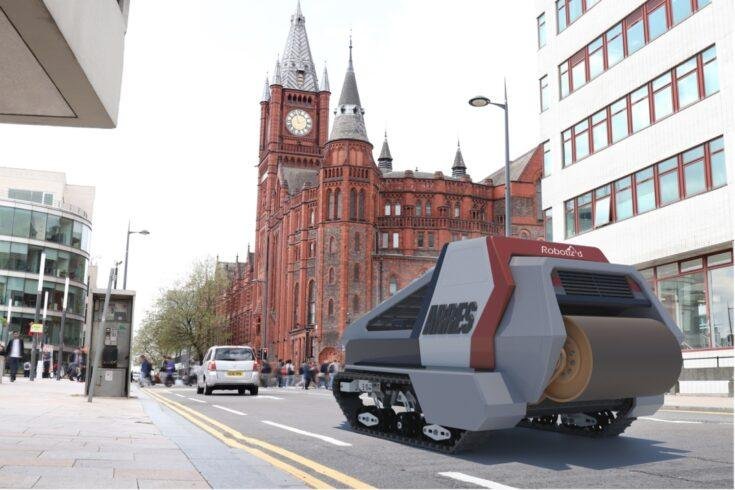
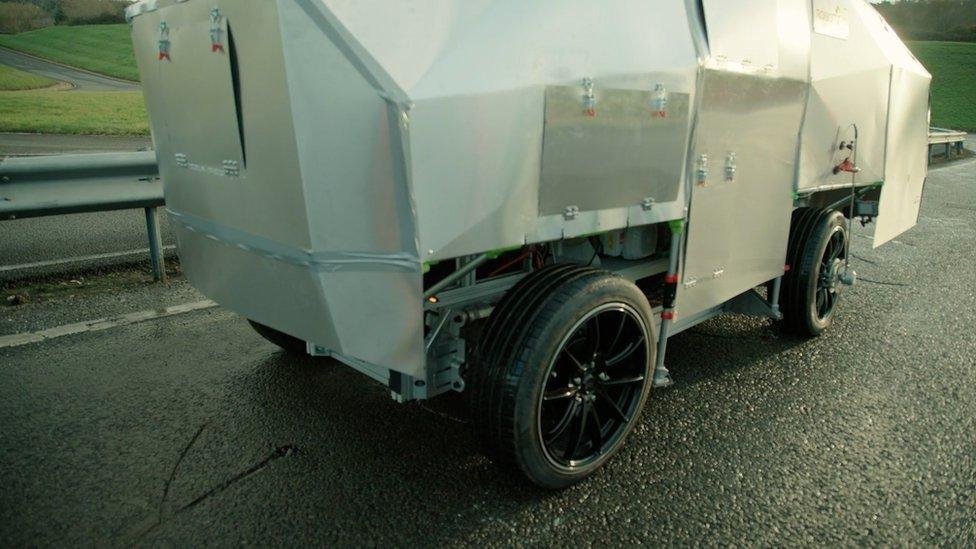
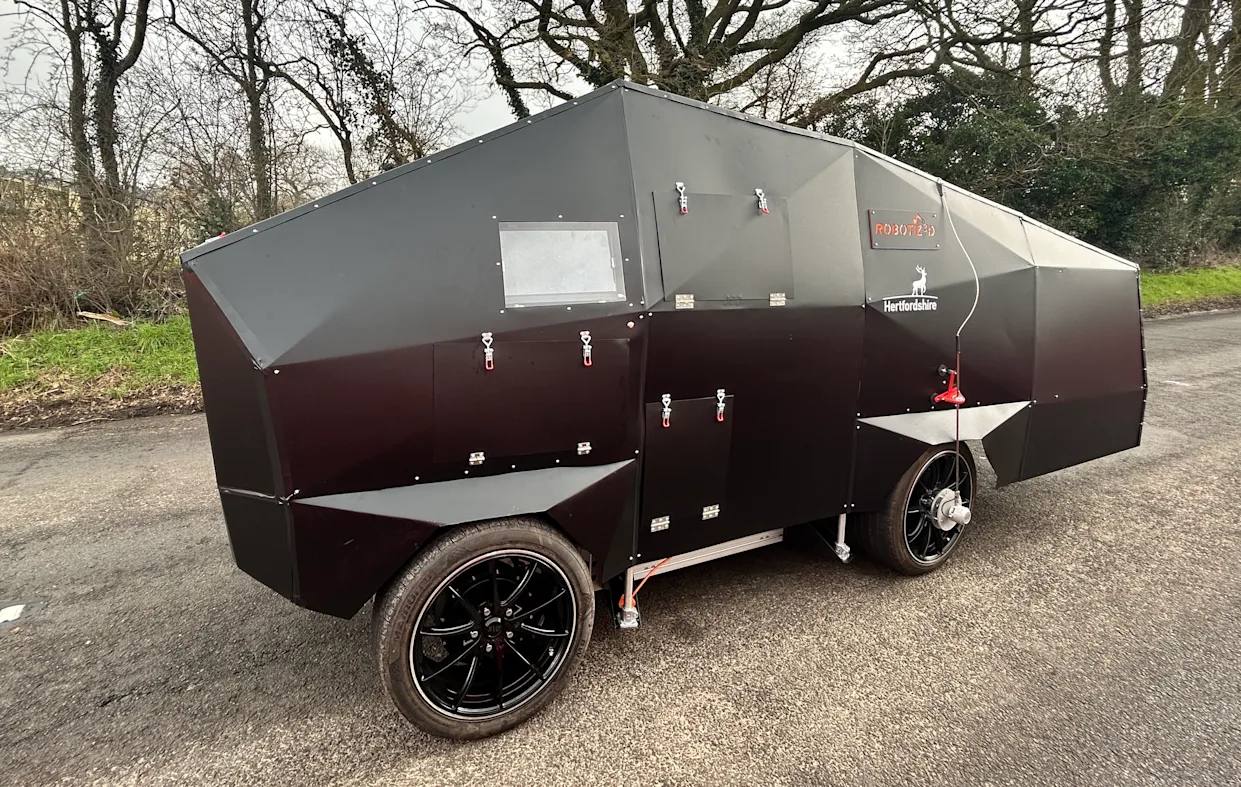
The operational capability of the AI pothole repair robot, such as the Robotiz3d, is built on a tightly integrated workflow that combines sensing, data processing, and physical repair into a single continuous system. This integration defines the next phase of automated pothole repair technology, where inspection and intervention no longer operate as separate processes but as a unified, real-time maintenance loop.
AI-Driven Detection and Mapping
The AI pothole repair robot relies on a multi-sensor architecture that typically combines high-resolution RGB cameras, LiDAR, and sometimes thermal imaging to capture surface-level and subsurface anomalies. These sensors generate dense point clouds and image datasets, which are processed using convolutional neural networks trained on real-world pavement defect libraries.
Field deployments in the UK demonstrated that machine learning models improved detection accuracy from 66% to nearly 100% after iterative training on local road conditions. This level of precision enables the robot to distinguish between:
- Surface wear and structural cracks.
- Early-stage fatigue cracking versus fully developed potholes.
- Temporary surface debris versus actual pavement defects.
This classification capability strengthens smart infrastructure maintenance solutions, as defects are not only detected but also prioritised based on severity indices aligned with pavement condition rating systems. From an engineering perspective, this eliminates subjective manual inspections and introduces standardised, repeatable condition assessment across entire road networks.
Automated Repair Execution
Once the defect is identified, the AI pothole repair robot transitions into a fully automated repair cycle. The system follows a programmed sequence calibrated to meet performance standards for asphalt repair:
- High-pressure air or vacuum cleaning removes loose debris and moisture.
- Precision injection or deposition systems apply bituminous or polymer-modified repair material.
- Compaction units ensure proper bonding and density.
- Surface finishing aligns the repair with surrounding pavement tolerances.
Each cycle typically completes in approximately 8 minutes, compared to 20 to 30 minutes using conventional manual crews. This efficiency is not just time-based but also process-controlled, ensuring consistent material application and compaction quality. For contractors, this represents a measurable upgrade to automated road repair systems, particularly in urban corridors where minimising lane-closure time directly affects project feasibility and cost.
5 Breakthrough Innovations in AI Pothole Repair Robots
The AI pothole repair robot integrates multiple engineering innovations that collectively redefine how road maintenance is executed. These innovations move beyond incremental improvements and introduce system-level transformation in infrastructure maintenance robotics.
1. Real-Time Defect Detection and Classification
The core innovation in AI road maintenance robots lies in continuous, real-time defect detection. Unlike periodic inspection regimes, the AI pothole repair robot operates as a mobile diagnostic platform. Its computer vision models achieve millimetre-level resolution, allowing accurate identification of crack width, depth, and propagation patterns. This enables:
- Continuous pavement monitoring across large networks.
- Immediate detection of defects before escalation.
- Data-driven prioritisation of maintenance interventions.
For large-scale road authorities, this capability addresses a fundamental limitation of traditional inspection cycles, which often span several months and allow defects to deteriorate significantly before intervention.
2. Fully Automated Repair Process
The transition from manual to autonomous execution defines the value of robotic pothole repair technology. The AI pothole repair robot integrates inspection and repair into a single autonomous system, eliminating the need for separate crews and workflows.
Operational data indicates:
- Up to 70% faster repair times.
- Significant reduction in material waste due to precise application.
- Consistent repair quality independent of operator skill.
This level of automation enhances the scalability of automated road repair systems, particularly for municipalities managing thousands of kilometres of roadway. From a project delivery standpoint, contractors benefit from reduced coordination complexity and improved scheduling reliability.
3. Predictive Maintenance and Lifecycle Extension
The AI pothole repair robot’s predictive capabilities are among its most strategic advantages. By analysing defect progression patterns, the system enables early intervention before structural failure occurs.
Industry data often cited by pavement maintenance experts, including the Pavement Preservation & Recycling Alliance (PPRA) and the Federal Highway Administration (FHWA), indicates that approximately 75% of unsealed cracks develop into potholes within a three-year period. Early-stage sealing using automated pothole repair technology interrupts this deterioration cycle.
This results in:
- Extended pavement service life.
- Reduced need for full-depth rehabilitation.
- Lower lifecycle costs under asset management frameworks.
For infrastructure investors, this aligns with long-term capital preservation strategies and enhances the economic case for adopting smart infrastructure maintenance solutions.
4. Reduced Traffic Disruption and Environmental Impact
Traditional maintenance methods often require extended lane closures, which create congestion and increase vehicle emissions. The AI pothole repair robot addresses this through rapid, targeted interventions.
Measured outcomes include:
- Repair durations reduced to minutes rather than hours.
- Minimal lane occupation, often without full closures.
- Up to a threefold reduction in CO₂ emissions due to efficient operations.
This efficiency strengthens the case for automated road repair systems in densely populated urban areas, where traffic management costs often exceed direct repair costs. From a sustainability perspective, reducing emissions supports compliance with environmental regulations and urban climate targets.
5. Labour Efficiency and Cost Optimisation
Labour accounts for a significant portion of road maintenance expenditure. The AI pothole repair robot reduces labour dependency by automating repetitive and hazardous tasks.
Operational benchmarks indicate:
- Labour requirements reduced by up to 70%.
- Improved workforce allocation towards higher-skill activities.
- Lower exposure to roadside safety risks.
For contractors, the benefits of robotic road repair systems extend beyond cost savings to include improved safety metrics and workforce productivity. This also addresses labour shortages in many regions, making rebar automation technology in infrastructure and similar robotics solutions increasingly essential for maintaining project continuity.
Further Reading: AI in Civil Engineering: Powering a New Era of Innovation
Technical Advantages for Contractors and Engineers
The AI pothole repair robot delivers quantifiable performance improvements across key operational metrics, making it a viable tool for large-scale infrastructure programmes.
1. Performance Efficiency
Let’s compare the metrics for both methods of road pothole repair: traditional versus AI robot.
| Metric | Traditional Method | AI Robot System |
| Repair time per defect | 20–30 minutes | ~8 minutes |
| Labour requirement | High | Reduced by up to 70% |
| Detection accuracy | Variable | Up to 100% |
| Cost efficiency | Moderate | Up to 90% savings |
These metrics demonstrate that automated pothole repair technology does not merely optimise one aspect of maintenance but improves the entire workflow.
2. Data Integration and Decision Support
Beyond physical repair, the AI pothole repair robot functions as a data acquisition platform. It generates continuous datasets that support advanced infrastructure management.
Key outputs include:
- Real-time pavement condition mapping.
- Historical defect progression data.
- Predictive maintenance modelling inputs.
These datasets integrate directly into asset management systems, enabling engineers to transition from reactive maintenance to predictive planning. This positions smart infrastructure maintenance solutions as a core component of modern road network management.
Global Industry Adoption and Strategic Implications
The adoption of AI pothole repair robots is accelerating globally as governments, contractors, and infrastructure investors respond to ageing road networks, rising maintenance backlogs, and rising performance expectations. Pilot programmes across Europe for the Heron Project, financed by the EU, particularly in Greece, France, Spain (for the Heron Project), and the United Kingdom (for Robotiz3d). The tests have demonstrated the operational viability of integrating infrastructure maintenance robotics into existing road maintenance frameworks. These deployments confirm that AI road-maintenance robots can operate in live traffic environments, interface with existing asset management systems, and deliver measurable gains in efficiency, accuracy, and cost control.
Transition from Reactive to Predictive Maintenance
The most significant structural shift enabled by the AI pothole repair robot is the move from reactive maintenance to predictive, data-driven intervention. Traditional road maintenance models rely on defect reporting and periodic inspections, often resulting in delayed repairs and accelerated pavement deterioration.
By contrast, automated road repair systems continuously monitor pavement conditions and intervene at early stages of defects. This predictive capability reduces pothole formation, extends pavement service life, and aligns maintenance activities with asset condition rather than fixed schedules. From an engineering perspective, this approach improves network performance by maintaining structural integrity before failure mechanisms fully develop.
Lifecycle Cost Optimisation and Investment Efficiency
Infrastructure investors and public agencies increasingly prioritise lifecycle cost management over short-term expenditure. The AI pothole repair robot directly supports this objective by reducing the frequency and severity of major rehabilitation works.
Data from pavement management studies by the InfraROB project, a major European Union-funded initiative (Horizon 2020), show that early intervention using robotic pothole repair technology can lower total lifecycle costs by 30–40%, primarily by avoiding full-depth reconstruction and reducing material consumption. In addition, consistent repair quality minimises premature failures, further improving return on investment.
For concession-based infrastructure, such as toll roads and public-private partnerships, this translates into:
- Lower long-term maintenance liabilities.
- Improved asset valuation and financial performance.
- Greater predictability in operational expenditure.
Enhanced Service Reliability and Network Performance
From a user perspective, road conditions directly affect safety, travel time, and vehicle operating costs. The deployment of the AI pothole repair robot enhances service reliability by ensuring defects are addressed quickly and consistently.
The ability of AI road maintenance robots to complete repairs in minutes, often without full lane closures, reduces disruption and improves traffic flow. This is particularly critical in high-density urban environments and strategic transport corridors where downtime has significant economic implications. Improved maintenance response times also help reduce the risk of pothole-related accidents, supporting broader road safety objectives.
Integration with Digital Infrastructure and Smart Cities
The global push towards smart infrastructure further strengthens the case for adopting the AI pothole repair robot. These systems generate high-resolution datasets on pavement condition, which can be integrated into digital twin platforms and asset management systems.
This integration enables:
- Real-time monitoring of road network performance.
- Predictive modelling of deterioration patterns.
- Optimised allocation of maintenance resources.
As cities invest in intelligent transport systems, smart infrastructure maintenance solutions powered by automated pothole repair technology become a foundational component of digital urban management.
Scalability Across Diverse Global Markets
One of the key advantages of the AI pothole repair robot is its scalability across different economic and geographic contexts. In developed markets, it enhances efficiency within already structured maintenance systems. In emerging markets, it provides a leapfrogging opportunity, enabling agencies to bypass inefficient legacy processes.
Globally, the technology is particularly suited for:
- High-traffic urban road networks requiring continuous maintenance.
- National highway systems with extensive coverage.
- Industrial and logistics corridors where pavement performance directly affects economic output.
This adaptability positions infrastructure maintenance robotics as a universal solution for modern road asset management.
Strategic Implications for Decision-Makers
For policymakers, contractors, and infrastructure investors, the strategic question is no longer whether the AI pothole repair robot should be adopted, but how quickly it can be integrated into procurement frameworks and operational workflows.
Key considerations include:
- Aligning procurement models to support technology adoption and innovation.
- Integrating robotic systems with existing maintenance contracts and asset management platforms.
- Developing technical capacity to manage and operate AI road maintenance robots effectively.
Early adopters will benefit from cost savings, improved infrastructure performance, and stronger positioning in increasingly competitive, technology-driven construction markets.
The global adoption of the AI pothole repair robot signals a broader transformation in infrastructure delivery, where automation, data, and predictive analytics converge to redefine how road networks are maintained. For industry leaders, embracing this shift is essential to achieving long-term efficiency, resilience, and sustainability in modern infrastructure systems.
Further Reading: Revolutionary Predictive Maintenance Using AI for Public Infrastructure: 7 Key Benefits and Real‑World Impact
AI Pothole Repair Robot for Africa’s Road Maintenance Challenge
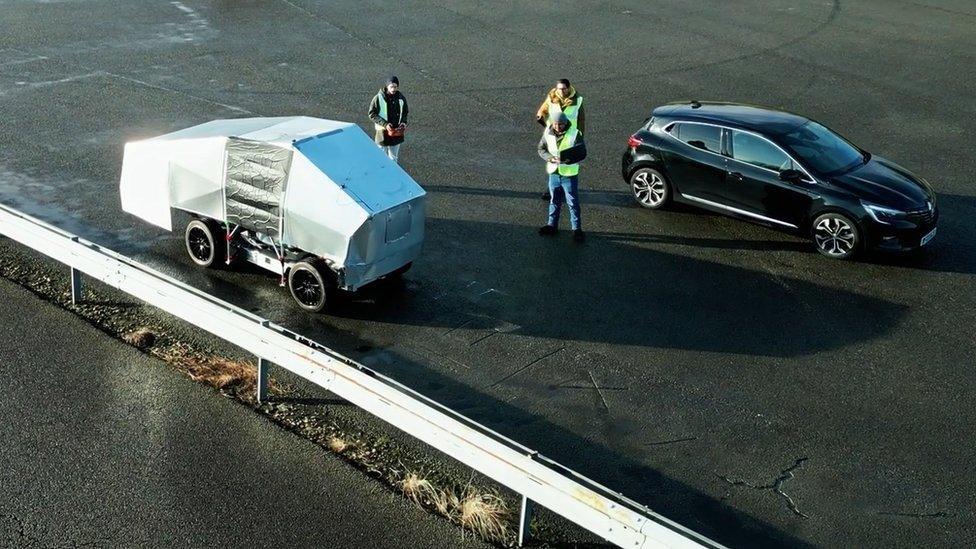
Across many African road networks, potholes are not isolated defects but systemic failures driven by overloading, inadequate drainage, and inconsistent maintenance cycles. In countries such as Kenya, Nigeria, and South Africa, rapid urbanisation and increased traffic loading have accelerated pavement deterioration beyond the capacity of traditional maintenance models. The AI pothole repair robot offers a viable, scalable solution in this context, shifting from reactive patching to structured, data-driven maintenance.
Engineering Suitability for Large-Scale Road Networks
From an engineering standpoint, the AI pothole repair robot is well-suited to Africa’s extensive and often deteriorating road networks. Manual inspection and repair methods remain inconsistent, with quality heavily dependent on labour skill and site conditions. In contrast, automated road repair systems deliver controlled material application, precise compaction, and repeatable repair quality. These factors are critical for improving pavement performance under heavy axle loads and extending service life across high-demand transport corridors.
Cost Efficiency and Lifecycle Cost Reduction
The economic case for deploying the AI pothole repair robot is particularly strong in budget-constrained environments. Many African governments face rising maintenance backlogs, where delayed intervention significantly increases long-term costs. Global pavement management data indicates that postponing minor repairs can increase rehabilitation costs by up to four times over the asset lifecycle. By enabling early-stage intervention through robotic pothole repair technology, the system reduces reliance on expensive full-depth reconstruction and supports more efficient allocation of limited maintenance budgets.
Operational Efficiency in High-Traffic Urban Corridors
Urban centres such as Nairobi and Lagos experience severe congestion, and conventional repair methods often exacerbate traffic disruption by extending lane closures. The AI pothole repair robot, capable of completing repairs within minutes, significantly reduces intervention time and minimises traffic impact. This efficiency improves maintenance turnaround and supports economic productivity on critical arterial routes and highways where downtime carries substantial indirect costs.
Workforce Transformation and Safety Improvement
While Africa has a relatively large labour pool, there is often a shortage of skilled road maintenance personnel and inconsistent adherence to safety and maintenance standards. The adoption of AI road-maintenance robots shifts workforce requirements from manual labour to higher-value roles, such as system supervision, data analysis, and maintenance planning. This transition improves safety by reducing worker exposure to high-risk roadside environments and aligns with broader infrastructure modernisation strategies.
Data-Driven Maintenance and Smart Infrastructure Integration
The integration of smart infrastructure maintenance solutions enhances long-term road asset management. The AI pothole repair robot continuously collects and processes pavement condition data, enabling agencies to develop digital road inventories and implement predictive maintenance strategies. This data-driven approach supports more accurate planning, optimised resource allocation, and improved infrastructure resilience, particularly for countries investing in smart cities and digital transport systems.
Priority Deployment Areas in African Markets
In practical terms, the deployment of the AI pothole repair robot can be prioritised in high-impact segments where efficiency gains are most significant:
- High-traffic urban corridors with frequent maintenance demand.
- Toll roads and concession-based highways, where performance metrics influence revenue.
- Industrial and logistics routes supporting mining, agriculture, and trade.
As infrastructure demand continues to grow across the continent, the transition towards infrastructure maintenance robotics will become increasingly necessary. The AI pothole repair robot provides a technically viable and economically scalable pathway to address chronic road deterioration, improve service delivery, and reduce long-term maintenance costs across Africa’s rapidly expanding road networks.
Technical Block: Operational Performance and ROI Analysis
| Parameter | Value | Strategic Impact |
| Repair speed improvement | Up to 70% faster | Reduced project timelines |
| Cost reduction | Up to 90% | Improved ROI |
| Labour reduction | Up to 70% | Lower operational costs |
| Detection accuracy | Up to 100% | Improved maintenance planning |
| CO₂ reduction | Up to 3x lower emissions | Sustainability compliance |
This structured performance profile reinforces the economic and operational case for adopting the AI pothole repair robot within national and municipal road maintenance strategies.
Future of AI in Road Construction and Maintenance
The future trajectory of the AI pothole repair robot lies in its integration into broader intelligent infrastructure ecosystems. The evolution of automated pothole repair technology will extend beyond standalone machines to interconnected systems.

Autonomous Fleet Deployment
Future deployments will involve coordinated fleets of AI road maintenance robots operating across entire road networks. These fleets will:
- Perform continuous monitoring and repair.
- Optimise routing based on real-time defect data.
- Increase network-wide maintenance coverage.
This model significantly enhances the scalability of automated road repair systems.
Integration with Digital Twins
The integration of the AI pothole repair robot with the digital twins application will enable real-time simulation and predictive analysis of road conditions.
Engineers will be able to:
- Visualise pavement performance over time.
- Simulate intervention scenarios.
- Optimise maintenance strategies based on data-driven insights.
This represents a major advancement in smart infrastructure maintenance solutions.
Advanced Materials and Self-Healing Roads
Material science developments will further enhance the performance of robotic pothole repair technology. The use of polymer-modified binders and self-healing asphalt will:
- Improve the durability of repairs.
- Reduce maintenance frequency.
- Enhance compatibility with automated application systems.
These advancements will directly influence the efficiency of automated pothole repair technology.
AI-Driven Infrastructure Management
The long-term vision for the AI pothole repair robot involves full integration into AI-driven infrastructure systems. Detection, analysis, and repair will operate as a seamless, autonomous cycle.
This will enable:
- Continuous optimisation of road network performance.
- Reduced lifecycle costs across infrastructure portfolios.
- Data-driven decision-making at both operational and strategic levels.
For industry leaders, this signals a structural shift in how road infrastructure is managed, maintained, and financed.
Further Reading: Drones in Construction Site Inspections: 10 Innovations Improving Safety and Accuracy
Conclusion: A Strategic Shift in Road Infrastructure Delivery
The AI pothole repair robot represents a paradigm shift in road maintenance, moving the industry from reactive repairs to predictive, data-driven infrastructure management. For contractors, engineers, and infrastructure investors, the value proposition is clear. The integration of robotic pothole repair technology delivers measurable improvements in speed, cost efficiency, and quality. These systems reduce labour dependency, optimise resource allocation, and improve project delivery timelines.
More importantly, the AI pothole repair robot aligns with long-term infrastructure strategies focused on sustainability, resilience, and lifecycle optimisation. By preventing defects before they escalate, the technology reduces the need for costly, large-scale repairs. As adoption increases, the AI pothole repair robot will become a standard component of modern smart road maintenance solutions. Its role in shaping the future of infrastructure maintenance robotics will be critical in delivering efficient, safe, and sustainable road networks globally.
Make Smarter Infrastructure Maintenance Decisions
At Construction Frontier, we break down complex innovations, such as the AI pothole repair robot, into clear, actionable insights for engineers, contractors, and infrastructure decision-makers. If you want to stay ahead in adopting smart road maintenance solutions, optimising costs, and delivering high-performance projects, explore more expert-driven content on ConstructionFrontier.com.