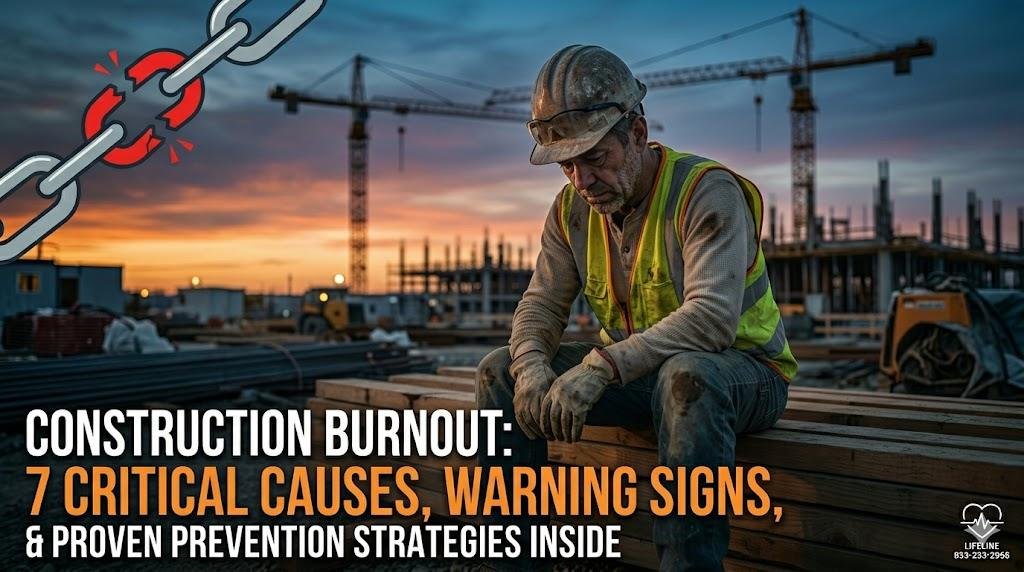
Construction Burnout: 7 Critical Causes, Warning Signs, and Proven Prevention Strategies
Construction burnout is a state of chronic physical, emotional, and psychological exhaustion caused by prolonged workplace stress unique to the built environment, including relentless deadlines, physical hazard exposure, job insecurity, and a culture that actively discourages help-seeking. It affects workers at every level of the industry, from tradespeople on the tools to project managers coordinating multi-million-dollar programmes.
The construction and real estate sector ranks among the top three most burnout-prone industries globally, with 77% of workers reporting burnout, behind only healthcare and hospitality. Understanding what drives construction burnout, how to recognise it before it escalates, and how organisations can implement credible prevention strategies is not a wellbeing luxury; it is a workforce survival imperative.
Technical Snapshot: Construction Burnout at a Glance
| Industry burnout rate | 77% of construction and real estate sector workers report burnout (Emolument) |
| Mental health prevalence | 83% of construction workers have experienced moderate-to-severe mental health issues |
| Anxiety and depression | 64% of US construction workers reported anxiety or depression in the past 12 months (Clayco, 2025), up from 54% in 2024 |
| Workforce stress rate | Over 80% of construction workers report experiencing stress at work (EHS Today) |
| Key burnout drivers | Long hours, physical demands, job insecurity, male-dominated culture, stigma |
| At-risk demographic | 87% of the construction workforce is male; men face elevated stigma barriers to help-seeking |
| Productivity impact | A 10% increase in overtime leads to a 2.4% decrease in productivity (US manufacturing research); 6-day workweeks show 14% efficiency loss (Construction Industry Institute) |
| Cost of inaction | Burnout drives absenteeism, turnover, and safety incidents; untreated substance use disorders cost employers USD 8,591 per worker per year (NORC/NSC) |
Construction burnout does not resolve itself. Left unaddressed, it compounds into safety incidents, workforce attrition, project delays, and, at its most severe, contributes to the mental health crisis that now claims more lives in the industry than physical site accidents. The seven causes examined below explain how the industry reaches that point and what can be done to reverse it.
Introduction: Why Construction Burnout Is the Industry’s Most Overlooked Productivity Crisis
Construction has long celebrated its capacity to withstand pressure. The culture prizes toughness, delivery under adversity, and an almost ritualistic stoicism in the face of impossible timelines. Those qualities have built remarkable structures across continents; they have also built the conditions for a burnout epidemic that the industry is only beginning to reckon with honestly.
Burnout is formally classified by the World Health Organisation as an occupational syndrome resulting from chronic, unmanaged workplace stress. Its three defining dimensions are emotional exhaustion, mental detachment or cynicism, and a marked reduction in professional efficacy. In construction, all three manifest at scale. More than 80% of construction workers report experiencing stress at work, and the industry consistently registers among the highest burnout rates of any sector.
This article identifies the seven critical causes of construction burnout, maps their warning signs, and outlines prevention strategies that organisations can implement at both the individual and structural levels. It forms part of Construction Frontier’s wider investigation into mental health across the built environment. Readers seeking context on broader industry mental health patterns can refer to our analysis of the construction industry suicide crisis, which establishes the stakes that make burnout prevention so operationally urgent.
7 Critical Causes of Construction Burnout
The causes of construction burnout in the construction industry are rarely isolated. They interact, reinforce one another, and accumulate over project cycles. Understanding each cause individually is the first step toward designing interventions that address root conditions rather than managing symptoms.
1. Chronic Overwork and Extended Hours
Construction timelines routinely push workers beyond the boundaries of sustainable output. Programmes compress, milestones shift, and the standard response is overtime, whether scheduled or imposed. Research from the Construction Industry Institute confirms that 6-day, 60-hour workweeks produce nearly a 14% decline in labour efficiency compared to standard schedules, and the degradation compounds over consecutive weeks. A 10% increase in overtime has been correlated with a 2.4% productivity decrease in heavy industry, a finding that undermines the core justification for overwork.
In UK construction, the Chartered Management Institute found that managers work an average of 1 hour 18 minutes over contract each day, equivalent to 40 unpaid days per year. Nearly half of those surveyed reported that the culture of long hours directly impaired their productivity. The exhaustion this generates is not just physical. Cognitive fatigue compounds decision-making errors, frays interpersonal tolerance, and removes the psychological recovery space workers need to remain functional across a project’s life cycle.
2. Physical Demands and Cumulative Fatigue
Construction is physically one of the most demanding industries in the world. Workers manage heavy loads, operate in extreme temperatures, maintain awkward postures for prolonged periods, and absorb vibration, noise, and chemical exposure as standard. Over time, this physical toll translates directly into psychological strain. The body’s chronic stress response, maintained across years of demanding site work, elevates cortisol levels, disrupts sleep architecture, and depletes the physiological reserves needed to cope with occupational pressure.
Research published in peer-reviewed journals confirms that job burnout is a significant predictor of musculoskeletal pain, prolonged fatigue, cardiovascular complications, and gastrointestinal issues. In construction, where workers are already managing these physical risks, burnout does not arrive as a separate event. It emerges from the cumulative interaction between bodily depletion and unrelenting work demands. Rotating physically intensive tasks and enforcing mandatory rest periods are not welfare gestures; they are productivity interventions with a documented evidence base.
3. Job Insecurity and Financial Pressure
The project-based, seasonal, and subcontracted nature of construction employment creates a financial precarity that runs as a persistent undercurrent through workforce mental health. Workers may complete a demanding programme, face several weeks of unemployment between contracts, and return to a new site under an entirely different management team with no continuity of culture or support. This cycle, repeated across careers, generates chronic financial anxiety that primes workers for burnout long before physical fatigue becomes the dominant factor.
Research on burnout correlates, confirming that financial strain ranks among the most significant contributing factors to the syndrome, with approximately 43% of burnt-out employees citing it as a key driver. In construction, where income volatility is structural rather than incidental, this financial pressure operates not as a background stressor but as a central feature of work identity. Construction workers experiencing job insecurity are simultaneously managing the demands of their current site role while carrying the cognitive load of income uncertainty, a dual burden with compounding psychological costs.
4. High-Stakes Decision-Making Under Pressure
Project managers, site supervisors, and contracts professionals in construction operate under a pressure profile that has few equivalents in other sectors. A single procurement decision, programme revision, or safety judgement can determine the commercial outcome of a project worth tens or hundreds of millions of dollars. Unlike office-based high-pressure roles, construction decision-making occurs against a backdrop of physical risk, where errors do not just affect budgets but put lives at stake.
This dual exposure to financial and physical consequences maintains decision-makers in a sustained state of heightened stress that is biologically indistinguishable from threat response. Sustained over months or years, it produces the emotional exhaustion that defines burnout. The causes of burnout in construction are inseparable from this decision-making pressure at senior levels, where the expectation to absorb and contain stress without disclosing it is most acute.
5. Cultural Stigma and the Silence Imperative
The construction workforce is 87% male, and the cultural norms that dominate the sector reflect a conception of masculinity that prizes stoicism, self-reliance, and emotional suppression. Admitting to construction burnout, stress, seeking help, or disclosing mental distress has historically been framed in construction as personal weakness, a reputational risk in environments where credibility is built through physical capability and unflinching composure.
A 2025 Clayco survey of over 2,000 US construction workers and executives found that 64% had experienced anxiety or depression in the previous 12 months, yet stigma and fear of professional consequences remained the primary barrier to disclosure. Research from the National Alliance on Mental Illness (NAMI) in partnership with Clayco confirmed that stigma continues to be the defining structural barrier to mental health intervention across the construction sector. When workers cannot name what is happening to them without risking their professional standing, burnout progresses unchecked until it manifests as absenteeism, substance misuse, or crisis.
6. Isolation and Workforce Fragmentation
Construction projects rarely draw their workforce from a stable, place-based community. Workers relocate between projects, spend extended periods away from family networks, and join crews assembled specifically for one programme before dispersing. Subcontractor layers introduce further fragmentation, with workers occupying the same site under different contractual, cultural, and supervisory arrangements. This structural isolation removes the social continuity that acts as a psychological buffer against burnout.
The temporary and fragmented nature of construction crews also limits the development of the workplace social capital that research consistently identifies as protective against burnout. Colleagues who do not know each other well are less likely to notice deteriorating wellbeing in a peer, less likely to raise concerns through management, and less likely to share the informal support that moderates occupational stress in stable teams. Workers who travel long distances to access projects amplify these construction burnout risks, combining physical fatigue with the psychological costs of extended separation from personal support systems.
7. Poor Work-Life Balance and Inadequate Recovery
A global review of mental health in construction published in a peer-reviewed journal identified poor work-life balance as the most commonly cited organisational risk factor for compromised worker mental health. In construction, work-life balance does not merely mean finishing at a reasonable hour. It encompasses the total demand placed on workers’ time, attention, and physiological reserves, including weekend working, out-of-hours communications, emergency site responses, and the expectation that project milestones take precedence over personal obligations.
Recovery from sustained occupational stress is not passive. It requires deliberate disengagement from work demands, social reconnection, physical restoration, and sleep of sufficient duration and quality. When construction schedules routinely encroach on these recovery periods, the biological mechanisms that protect against burnout are progressively degraded. Workers who refuse or avoid breaks and time off, as the BCCA Employee Benefit Trust has documented, are often exhibiting an early symptom of burnout rather than demonstrating commendable commitment, a distinction that supervisors and organisations need to understand and act on.
Warning Signs of Construction Burnout
Identifying burnout in construction workers requires moving beyond traditional health and safety surveillance, which is calibrated to detect physical risk rather than psychological deterioration. The warning signs of construction burnout operate across physical, behavioural, and performance dimensions, and they appear at both the individual and team levels. Early identification is the critical variable. Burnout that is recognised in its early stages is substantially more responsive to intervention than burnout that has progressed to crisis.
1. Physical Indicators
Physical exhaustion that does not resolve with normal rest is among the most reliable early indicators of construction burnout. Workers experiencing burnout report fatigue that persists through weekends and leave periods, a qualitative difference from the normal tiredness that follows a demanding day. Peer-reviewed research links construction burnout to chronic headaches, gastrointestinal disturbance, disrupted sleep, and musculoskeletal pain that does not correlate straightforwardly with physical injury. In construction, where physical discomfort is normalised, workers and supervisors may not immediately recognise these symptoms as burnout indicators rather than occupational wear.
2. Behavioural Indicators
Behavioural change in construction workers is often the earliest observable signal available to site supervisors and colleagues. Changes in performance quality, increased errors, social withdrawal from crew interaction, irritability, and heightened risk-taking behaviour can all indicate mental health deterioration. Increased reliance on alcohol or substances as a coping mechanism is a particularly serious behavioural signal. Construction workers are six to seven times more likely than workers in other professions to die of an overdose, with opioids as the leading cause, underscoring the severity of substance misuse as a burnout sequela.
3. Organisational Indicators
At the team and organisational level, burnout manifests as elevated absenteeism, increased safety incidents, declining output quality, and accelerating staff turnover. Safety fears have been linked to burnout in nearly half of construction workers, and fatigued, emotionally depleted workers make decisions under risk with diminished cognitive capacity. When safety incident rates begin rising on a project, construction burnout in the workforce should be considered a contributing factor alongside technical and procedural causes. Increased absenteeism and presenteeism together create a self-reinforcing cycle: reduced attendance forces remaining workers into overtime, accelerating their own progression toward burnout.
Further Reading: Construction Workers’ Suicide Rates: 8 Critical Causes and Proven Prevention Strategies
Proven Prevention Strategies for Construction Burnout
Preventing burnout in construction requires a structural response, not a pastoral one. Wellbeing posters and access to a helpline number are not prevention strategies; they are crisis-adjacent communications. Genuine burnout prevention in construction addresses the organisational conditions that generate burnout at source, while simultaneously building the individual and supervisory capacities to recognise and interrupt its progression.
1. Restructure Overtime Policies Around Evidence
The Construction Industry Institute’s research is unambiguous: sustained overtime degrades both productivity and worker health. Organisations that treat extended working hours as a standard programme management tool are accepting efficiency losses and workforce health costs as a known outcome. Alternating compressed schedules, such as 4-day, 10-hour rotations that eliminate the fatigue impact of 60-hour weeks, offer a documented alternative that maintains output while protecting recovery time. Overtime should be monitored as a leading indicator of construction burnout risk, not as a neutral operational variable.
2. Train Supervisors to Recognise Burnout
Foremen, superintendents, and site managers are the primary observation layer of construction burnout in construction’s workforce management structure. Most are promoted because of technical competence, not because they have been trained to identify or respond to psychological deterioration in their teams. Targeted training that equips supervisors to recognise behavioural warning signs, initiate supportive conversations, and navigate disclosure without professional judgement is among the highest-leverage burnout prevention investments an organisation can make. Mental health first aid, adapted for construction site contexts, provides a practical framework for this capability.
3. Deploy Employee Assistance Programmes Actively
Employee Assistance Programmes (EAPs) are one of the most evidence-supported interventions available for managing burnout at the individual level. Research consistently links EAP access to reductions in absenteeism, with one study finding EAP users lost 4.8 to 6.5% fewer work hours per month due to health-related issues. EAPs that are mobile-accessible and construction-site appropriate, covering counselling, financial guidance, substance use support, and mental health screening, can reach workers who might not engage with clinic-based services. The critical variable is active promotion by leadership. Benefits that workers do not know about or distrust cannot function as a prevention.
4. Normalise Mental Health Conversations at the Site Level
Toolbox talks are construction’s most consistent mechanism for transmitting safety culture. Integrating mental health content, including discussion of burnout, stress management, and access to support, into regular toolbox talk cycles normalises the topic in the setting where workers are most accessible. When site leadership openly acknowledges the pressure workers are under and frames seeking support as a competence rather than a failure, the cultural permission structure around disclosure begins to shift. Organisations such as MATES in Construction in Australia have demonstrated that peer-led, site-normalised mental health programmes can produce measurable reductions in distress indicators and construction burnout across construction workforces.
This cultural shift matters most at the point where burnout intersects most severely with mental health. The relationship between construction worker stress and elevated suicide risk is well-established, and normalising mental health conversations at the site level is one of the most effective upstream interventions available to the industry.
5. Redesign Workloads and Restore Recovery Time
Sustainable workload management in construction begins with programme planning that incorporates realistic human performance limits rather than optimistic milestone assumptions. Projects that plan from the outset with mandatory rest periods, task rotation for physically intensive roles, and protected leave entitlement are not projects that sacrifice productivity; they are projects that protect the workforce capacity on which delivery depends. Organisational research confirms that employees with supportive leadership are 70% less likely to experience burnout and that flexible scheduling reduces burnout rates meaningfully in controlled trials. These findings apply directly to the construction context.
6. Address Financial Insecurity Structurally
Financial anxiety is a documented construction burnout driver. Construction organisations cannot fully resolve the structural volatility of the project economy, but they can mitigate its impact on individual workers through more stable contracting arrangements, transparent communication about programme continuity, and access to financial wellbeing support through EAPs. Workers who understand what comes after the current project, and who have access to professional support for financial planning, carry a lower ambient stress load into each working day. Reducing the psychological overhead of income uncertainty is a legitimate burnout prevention lever.
7. Build Psychologically Safe Teams
Psychological safety, the shared belief within a team that interpersonal risk-taking will not result in punishment or humiliation, is one of the most robust predictors of team performance and one of the most effective structural buffers against construction burnout. In construction, where hierarchy is pronounced and the “tough it out” norm is deeply embedded, building psychological safety requires deliberate leadership behaviour, including leaders modelling vulnerability, resolving interpersonal conflicts directly, recognising work publicly, and consistently demonstrating that disclosure of difficulty produces support rather than professional consequences.
Further Reading: Construction Industry Suicide Crisis: 9 Disturbing Facts the Sector Can No Longer Ignore
Conclusion: The Business Case for Preventing Burnout in Construction
The commercial argument for construction burnout prevention is straightforward. Burnout drives absenteeism, turnover, safety incidents, and declining output quality, each of which carries direct and measurable project costs. Untreated substance use disorders alone, which are closely linked to burnout progression in construction, cost employers an estimated USD 8,591 per affected worker per year. Turnover costs in skilled trades are substantially higher, encompassing recruitment, induction, and the productivity ramp of replacement workers.
Burnout is also a workforce supply problem at an industry scale. An industry that consumes workers at unsustainable rates, fails to retain experienced tradespeople, and projects an image of chronic overwork to potential entrants will face compounding skills shortages at precisely the moment global infrastructure investment is accelerating. Preventing burnout in construction is not a response to a well-being trend. It is a strategic requirement for industry capacity.
The broader mental health crisis in construction is the high-visibility endpoint of conditions that begin with manageable stress and progress, unchecked, through burnout to crisis. The seven causes of construction burnout examined in this article are not incidental to that progression. They are its mechanism. Organisations that address them structurally will build workforces that are safer, more productive, and more capable of sustaining the delivery pipeline that the industry’s growth trajectory demands.
Stay Ahead of Construction Workforce Challenges
Explore Construction Frontier: Construction Workforce Safety, Mental Health & Human Performance for expert insights, industry analysis, and proven strategies addressing construction burnout, mental health, workforce productivity, and jobsite well-being across the global construction industry.