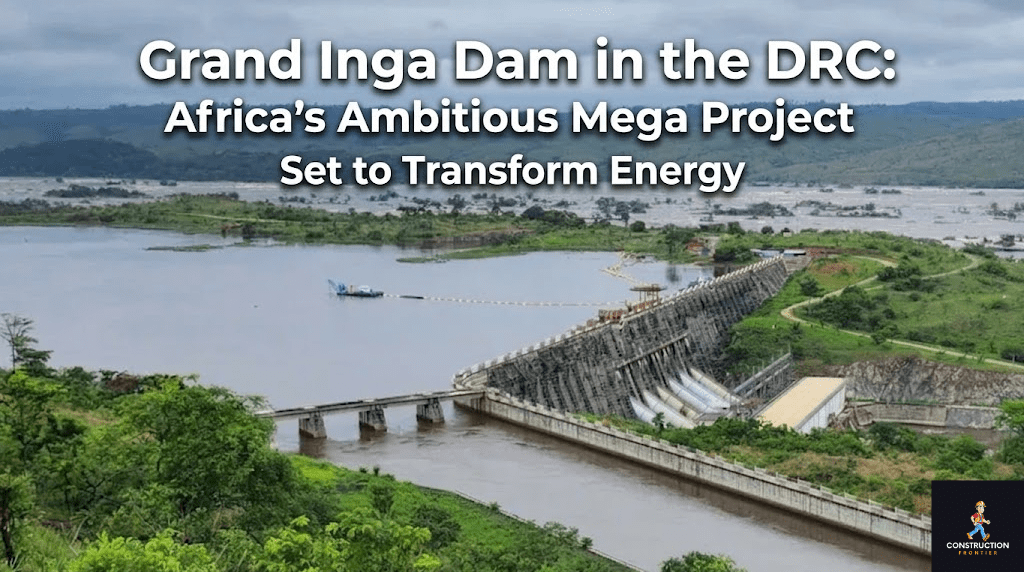
Grand Inga Dam in the DRC: Africa’s Ambitious Mega Project Set to Transform Energy
The Grand Inga Dam in the DRC is the world’s most ambitious hydropower project, designed to become Africa’s largest hydropower project with an ultimate capacity of 40,000 to 70,000 MW. By harnessing the Inga Dam along the Congo River, this African renewable energy infrastructure functions as a continental-scale engine. The Grand Inga Dam in DRC, capacity and economic impact will fundamentally transform the Congo River Grand Inga project timeline and cost, bridging the energy gap for 300 million people while fueling a new industrial era through a unified African grid.
Technical Snapshot: Grand Inga Dam in the DRC
- Location: Congo River, Inga Falls, Democratic Republic of Congo.
- Planned Capacity: ~40–70 GW.
- River Flow: ~42,000 m³/s (second largest globally).
- Elevation Drop: ~96–97 metres.
- Estimated Cost: $80–100+ billion.
- Development Model: Multi-phase, multi-dam hydropower complex.
- Status: The Inga III development phase is under preparation.
Introduction: The Grand Inga Dam in the DRC Mega-Project
The Grand Inga Dam in the DRC represents one of the most ambitious infrastructure concepts in modern engineering history. Positioned along one of the most powerful rivers on Earth, the project aims to harness the Congo River’s immense hydroelectric energy to deliver electricity at a scale unmatched globally. In a continent where energy access remains a primary constraint on economic growth, the Grand Inga Dam project emerges as a strategic solution with transformative implications.
Sub-Saharan Africa continues to face a structural electricity deficit, with over 600 million people lacking access to reliable power. This deficit directly limits industrialisation, constrains productivity, and increases reliance on expensive, environmentally polluting energy sources. The Grand Inga Dam in the DRC has a capacity and economic impact that extends far beyond energy generation. It represents a systemic intervention designed to unlock industrial growth, enable cross-border energy markets, and accelerate Africa’s transition toward renewable energy infrastructure.
Advanced Technical Overview of the Grand Inga Dam Project
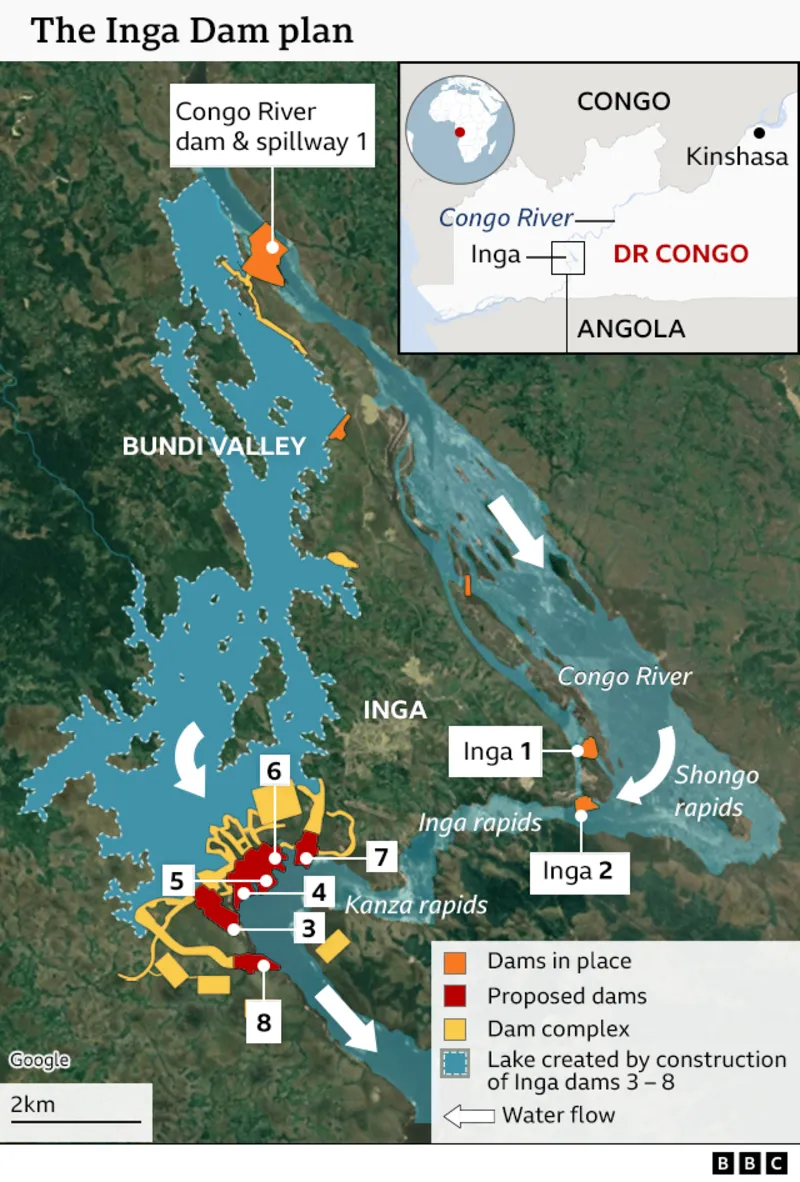
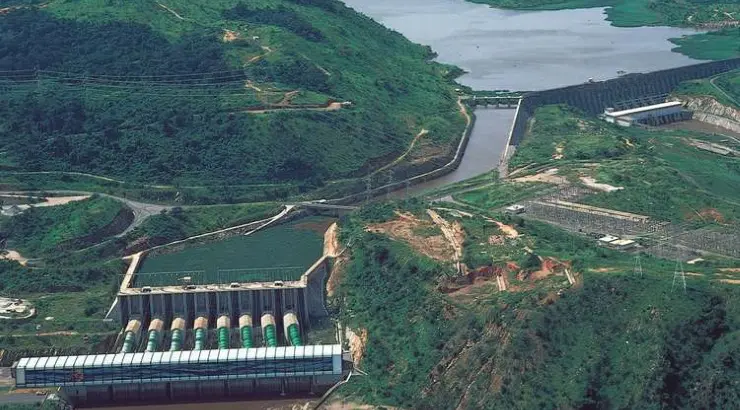
The Grand Inga Dam in the DRC represents the most ambitious hydropower expansion concept ever proposed, evolving from the existing Inga I (351 MW) and Inga II (1,424 MW) infrastructure into a multi-station continental power generation system. Unlike conventional dam projects, Grand Inga is not a single structure but a cascade-based hydropower complex integrated into the natural hydraulic energy of the Congo River system.
The defining engineering characteristic of the project is its run-of-river cascade architecture, meaning that electricity is generated through controlled diversion of river flow rather than reliance on a large artificial reservoir. This reduces the inundation footprint while maintaining extremely high generation potential due to the Congo River’s unmatched discharge stability.
Core System Architecture
The Grand Inga development is structured around three integrated subsystems:
- Hydraulic diversion system: Redirects portions of the Congo River flow into engineered canals and tunnels.
- Power station clusters: Multiple generation facilities distributed across the Bundi Valley system.
- Transmission backbone: High-voltage AC and HVDC export corridors connecting multiple African power pools.
From a systems engineering perspective, the project operates as a multi-node energy-extraction network rather than a linear dam-reservoir-turbine model.
Grand Inga Dam Key Hydropower Engineering Significance
The Congo River at Inga Falls provides a rare combination of:
- Extremely high discharge stability (~41,000–42,000 m³/s annual mean flow).
- Concentrated elevation drop of ~96–97 metres across a short geological corridor.
- Narrow gorge geometry enabling controlled diversion without massive impoundment.
This creates one of the highest natural hydraulic power densities on Earth, estimated at nearly 39–40 GW of theoretical potential at Inga Falls alone under partial utilisation scenarios.
Engineering Implication
Unlike reservoir-based dams such as the Three Gorges Dam, Grand Inga reduces:
- Sediment storage burden.
- Evaporation losses.
- Reservoir-induced seismic stress.
But increases:
- Tunnel engineering complexity.
- Flow regulation dependency.
- Multi-station synchronisation requirements.
This makes it a high-efficiency, high-control hydropower system, dependent on precision hydraulic engineering rather than on static storage.
Hydrological Engineering Analysis: Location and Strategic Position Along the Congo River
The Grand Inga site is located at the Inga Falls region of the lower Congo River, approximately 150 km from the Atlantic Ocean and 225 km southwest of Kinshasa. This positioning is not incidental; it is one of the most strategically optimal hydropower sites globally due to its unique hydraulic compression zone.
Hydrological Structure of the Inga Falls System
The Congo River at this location exhibits extreme hydraulic intensity:
Key Flow Parameters
- Mean annual discharge: ~41,000–42,000 m³/s.
- Drainage basin: ~3.7 million km² (second largest globally).
- Natural elevation drop: ~96 m across the Inga rapids system.
- Flow regime: perennial, low seasonal variability.
These characteristics ensure a high-capacity-factor hydropower environment, significantly above that of most African and global river systems.
Hydraulic Energy Potential Calculation Context
Hydropower potential is derived from:
- Large volumetric flow (Q).
- Significant head (H).
- Continuous year-round availability.
At Inga, both Q and H are simultaneously high, yielding a theoretical energy potential exceeding 40 GW at full-scale cascade exploitation.
Strategic Engineering Advantages of the Location
1. Natural Energy Concentration Zone
The Inga Falls acts as a hydraulic choke point, where the Congo River’s energy is compressed into a narrow corridor. This allows:
- Reduced dam footprint.
- Lower civil structure volume per MW generated.
- High turbine-density installation.
2. Short Transmission Distance to Atlantic Gateway
Located near the Atlantic coast, the site enables:
- Lower transmission losses to export corridors.
- Easier integration into submarine and cross-border High-Voltage Direct Current (HVDC) systems.
- Strategic export potential to Southern Africa and West Africa grids.
3. Geological Foundation Stability
The foundation consists of:
- Precambrian crystalline basement rock.
- High compressive strength bedrock (>100 MPa in many zones).
- Low-permeability structural formations.
This provides ideal conditions for:
- Deep tunnel boring systems.
- Underground powerhouse caverns.
- High-pressure water diversion tunnels.
Engineering Interpretation
The Inga site is one of the few global hydropower locations where:
“Hydraulic potential, geological stability, and continental transmission positioning converge simultaneously.”
This makes it a Tier-1 global energy megasite, comparable in strategic importance to oil superfields.
Vision Behind Africa’s Largest Hydropower Project: Continental Energy System Design
The Grand Inga Dam project is designed not as a national infrastructure asset but as a continental-scale energy backbone system supporting Africa’s long-term industrialisation and grid integration. According to the African Union and NEPAD flagship infrastructure frameworks, the Inga Dam project is classified as a strategic continental integration project under Agenda 2063.
1. Energy System Transformation Objective
The primary vision is to convert the Congo River into a:
- Continuous baseload electricity generator.
- Multi-country export hub.
- Industrial power anchor for mining and manufacturing belts.
The project targets integration across:
- Southern African Power Pool (SAPP).
- Eastern African Power Pool (EAPP).
- West African Power Pool (WAPP).
This creates a continental energy interconnection architecture that enables cross-border electricity trade at scale.
2. Industrialisation and Demand Anchoring Strategy
Grand Inga is designed to serve three major demand clusters:
1. Mining-Intensive Economies
- Copper belt (DRC–Zambia–Namibia corridor).
- Cobalt extraction zones (DRC).
2. Manufacturing Corridors
- Steel production clusters.
- Aluminium smelting facilities.
- Industrial chemical processing zones.
3. Urban Megrowth Centres
- Kinshasa metropolitan demand.
- Lagos–Accra–Abidjan industrial corridor (via export grids).
3. Integration with Renewable Energy Systems
Unlike standalone hydropower plants, Grand Inga is intended to:
- Stabilise intermittent solar generation in the Sahel and the Sahara regions.
- Provide grid inertia for wind-heavy systems in coastal regions.
- Function as a continental balancing power source.
This positions it as a renewable baseload stabilisation hub, not just a generator.
How Grand Inga Compares to Global Mega Dams: Engineering Benchmark Analysis
The Grand Inga Dam system fundamentally redefines the scale classification of hydropower.
Installed Capacity Comparison
| Project | Capacity (MW) | System Type | Structural Model |
| Three Gorges (China) | 22,500 MW | Reservoir dam | Single mega impoundment |
| Itaipu (Brazil/Paraguay) | 14,000 MW | Run-of-river | Dual-nation dam wall |
| Belo Monte (Brazil) | ~11,000 MW | Diversion system | Semi-modular |
| Grand Inga (DRC) | 40,000–70,000 MW | Cascade run-of-river system | Multi-station distributed architecture |
Grand Inga Dam: Project Phases, Design, and Technical Specifications
The Grand Inga Dam in the DRC isn’t just another power plant; it is the most ambitious energy project ever conceived. Unlike traditional dams that rely on a single reservoir, the Grand Inga system uses a cascade network to harvest energy from the Congo River. By tapping into the river’s massive flow and the natural drop at Inga Falls, this DRC hydropower project is designed to power an entire continent.
Engineers have planned the project in incremental stages. This makes sense for two reasons: the massive financial investment required and the technical challenge of taming one of the world’s wildest river systems.
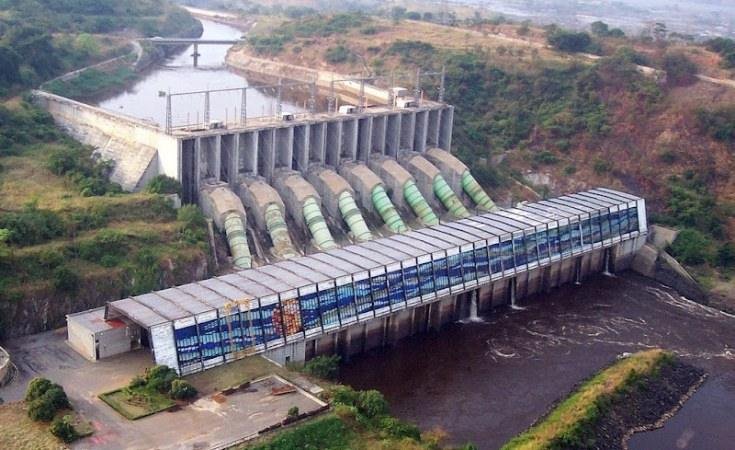
Planned Phases: From Inga I to the Grand Inga Expansion
The Grand Inga Dam project evolves through three interconnected layers, moving from legacy infrastructure to a futuristic energy web.
- The Foundation (Inga I & II): These existing stations are the site’s operational backbone. Inga I (351 MW) and Inga II (1,424 MW) were the first attempts to harness the Inga Dam along the Congo River. While they face issues like aging parts and silt buildup, they provide the vital data engineers need to design better turbines for tropical conditions.
- The Bridge (Inga III): This is the crucial transition. Inga III a $1 Billion development plan, won’t be a typical dam; it’s a diversion system. It will redirect part of the river into the Bundi Valley through tunnels and canals. This run-of-river design avoids flooding massive areas while generating between 4.8 GW and 11 GW. It is the testing ground for African renewable energy infrastructure at scale.
- The Future (Grand Inga Expansion): The final stage is a modular ecosystem of power stations. Each block can be built and financed separately, making the Congo River dam project scalable and easier to manage over decades.
Installed Capacity and Power Generation Potential
When we look at the largest hydropower project in Africa in detail, the numbers are staggering. The Grand Inga Dam in the DRC, in terms of capacity and economic impact, could reach an installed capacity of 40 GW to 70 GW. To put this into perspective, the current world leader, China’s Three Gorges Dam, has a maximum capacity of 22.5 GW.
What makes the Congo River Grand Inga project so reliable? The answer is the river itself. Because the Congo Basin sits on both sides of the equator, it receives rain year-round. This stable flow means Grand Inga can produce 250 to 300 terawatt-hours of electricity annually. One of the greatest benefits of the Grand Inga Dam for African power generation is its always-on reliability, which can fuel mining hubs and megacities from Cairo to Cape Town.
Engineering Design and Hydropower Technology
How the Grand Inga Dam will transform Africa’s energy supply lies in its clever engineering. It uses a hybrid design of river diversion and high-pressure underground tunnels. This setup extracts energy without the environmental damage caused by giant reservoirs.
Key features include the following:
- Smart Intakes: These regulate the massive water volume while filtering out river sediment that would otherwise grind down the turbines.
- Pressure Tunnels: Water travels through reinforced concrete tunnels, dropping 90 to 150 metres to create immense hydraulic pressure.
- Resilience: Because the power is split across multiple stations, maintenance can happen without turning off the lights for the rest of Africa.
Despite the challenges facing the Grand Inga Dam project, such as high costs and political complexity, the technical design remains a gold standard for Africa’s largest hydropower project.
A New Paradigm: The Grand Inga Hydropower Ecosystem
The Grand Inga Dam in the DRC represents a shift from traditional dam building to advanced energy network engineering. Instead of a single massive wall, this DRC hydropower project uses a distributed ecosystem of interconnected generation nodes along a natural river diversion.
Why This Design Matters for Africa’s Largest Hydropower Project:
- Modular Scalability: Capital and construction can be deployed in phases, matching regional demand and funding.
- System Resilience: By spreading power across multiple stations, the Congo River dam project eliminates the risk of a single-point failure.
- Grid Integration: This architecture treats generation and transmission as one unified system, making it the most advanced African renewable energy infrastructure concept to date.
By transforming a river into a high-tech energy corridor, the Grand Inga Dam project ensures long-term stability for the continent’s power supply.
Further Reading: Grand Ethiopian Renaissance Dam: Africa’s Monumental Hydropower Project Transforming Energy
Grand Inga Dam: A History of Ambition and the Road to 2035
The Grand Inga Dam project is one of the most complex infrastructure journeys in global energy history. Unlike standard projects that follow a linear path, this DRC hydropower project has evolved over decades, influenced by political shifts, engineering breakthroughs, and changing investment appetites.
It tells a classic story for mega-projects in Africa: the technical potential is world-class, but the timeline has been slowed by the challenges of high-level financing and regional governance.
Early Inga Dams: Setting the Foundation
The vision for the Inga Dam along the Congo River started with two foundational stations: Inga I and Inga II. Built at the Inga Falls section, these were originally designed as national power sources rather than a continental network.
- Inga I (1970s): Introduced the first 351 MW of capacity.
- Inga II (1980s): Expanded the site by an additional 1,424 MW.
While these plants proved the Congo River could sustain massive energy extraction, they have faced hurdles. Decades of ageing parts and limited maintenance mean they operate below their peak. However, they remain vital today. They provide the real-world data engineers need to understand sediment and river behaviour lessons that are now being used to design Africa’s largest hydropower projects, such as the Grand Ethiopian Renaissance Dam (GERD).
Key Milestones in Project Development
The Congo River Grand Inga project timeline and cost have shifted through three distinct eras:
- The Discovery (1950s): Early surveys identified Inga Falls as a global powerhouse, though the world lacked the financial tools to build it then.
- The Proof (1970s–1980s): Construction of the first two dams turned theory into physical reality.
- The Continental Pivot (2013–Present): Planning shifted from local use to regional export. This era introduced Inga III, the first phase designed to link the DRC to the Southern African Power Pool, an interconnected grid shared by multiple nations.
Between 2024 and 2025, the World Bank and other partners refocused on de-risking, a process of removing financial and political uncertainties before major construction begins.
Current Status: The Modular Future
Today, the Grand Inga Dam in the DRC is in an advanced pre-construction phase. The giant cascade of dams isn’t fully built yet, but the path forward is clear: Inga III is the next big step.
The main delay isn’t the engineering; it’s the money and the rules. To fix this, the World Bank approved a $250 million programme to finalise the technical and environmental groundwork. This helps the project reach bankable status, meaning it is stable enough for major global investors to fund.
The future of the project relies on a modular approach. Instead of building everything at once, engineers will roll out independent power blocks. This reduces risk and allows African renewable energy infrastructure to grow naturally alongside the continent’s rising demand for electricity.
Investment, Cost, and Financing Structure
The Grand Inga Dam in the DRC is one of the most expensive energy projects on Earth. With total costs estimated to exceed $80 billion, it isn’t just a single dam; it is a multi-stage investment platform.
Because the scale is so vast, the financial architecture is as complex as the engineering. It requires a carefully layered approach to risk, spreading the burden across governments, global lenders, and private investors.
Estimated Project Cost and Budget Breakdown
Three massive infrastructure pillars drive the timeline and cost of the Congo River Grand Inga project:
- Civil Engineering: This phase is the most expensive part. It involves carving out underground powerhouses, building massive river diversions, and tunnelling through ancient rock. These structures must be strong enough to withstand the Congo River’s immense hydraulic pressure for a century or more.
- Continental Transmission: Generating power is only half the battle. For the DRC hydropower project to be effective, it needs thousands of kilometres of high-voltage direct current (HVDC) lines to reach cities like Johannesburg or Lagos. In this project, the cost of moving the electricity is often as high as the cost of making it.
- Advanced Technology: Because the Congo River carries a lot of sand and grit, the turbines require specialised, sediment-resistant materials. This high-tech engineering increases the price tag but ensures the machinery doesn’t wear out prematurely.
Key Investors and International Partnerships
Financing Africa’s largest hydropower project requires a team effort from the world’s biggest financial players:
- The World Bank: They focus on the early, risky stages. By committing roughly $250 million to make Inga III bankable, they help prove to other investors that the project is a safe bet.
- The African Development Bank (AfDB): This partner ensures the dam aligns with Agenda 2063, the African Union’s master plan for turning the continent into a global powerhouse.
- Private Investors: Large engineering firms and sovereign wealth funds are ready to step in, provided there are solid power purchase agreements and contracts that guarantee someone will buy the electricity once it’s produced.
The Public-Private Partnership (PPP) Model
To manage such a giant undertaking, the project uses a public-private partnership model. This arrangement divides the work and the risk:
- The Public Side: The government manages the laws, the land, and the initial environmental rules.
- The Private Side: Companies bring the technical skills, heavy machinery, and specialised knowledge needed to run a 21st-century power grid.
By using this model, the Grand Inga Dam project can be built in stages. This modular approach means smaller sections like Inga III can start making money and providing power long before the entire system is finished.
The Economic Impact of the Grand Inga Dam
The Grand Inga Dam in the DRC is more than just a power station; it is a structural transformation tool. It has the potential to reshape the economy of the Democratic Republic of Congo and act as a catalyst for a new industrial era across the entire African continent.
Job Creation and Industrial Development in DRC
Building Africa’s largest hydropower project requires a massive workforce. During peak years, the project will generate thousands of jobs across multiple tiers:
- High-Tech Engineering: Demand for experts in hydrological engineering, precision tunnelling, and grid management.
- The Multiplier Effect: Beyond the dam itself, the project fuels a secondary economy. Local cement production, transport logistics, and regional services will expand to support the site, creating a ripple effect of indirect employment similar to major global infrastructure development models.
Powering Africa’s Industrial Growth
The benefits of the Grand Inga Dam for African power generation are most visible in the industrial sector. Currently, the DRC is a global leader in critical minerals like cobalt and copper, which are essential for the world’s EV batteries.
However, a lack of reliable power has forced the DRC to export raw ore instead of processing it at home. The Grand Inga Dam project changes the game by:
- Unlocking Mineral Value: Providing the stable, high-voltage power needed for smelting and refining minerals locally.
- Vertical Integration: Allowing the DRC to keep more of the profits from its natural resources within its borders.
- Industrial Corridors: Powering manufacturing hubs that can compete on a global scale.
Revenue Generation and Export Potential
How the Grand Inga Dam will transform Africa’s energy supply lies in its role as a regional power source. The system is designed to feed multiple regional power pools.
- South Africa: As a primary buyer, South Africa’s industrial heartland is a key target for exported power.
- Nigeria: With its massive population and growing energy needs, Nigeria represents a significant future market for DRC electricity.
- Foreign Exchange: By becoming a net energy exporter, the DRC could generate billions in annual revenue. This steady stream of foreign currency would provide the financial stability needed to fund schools, healthcare, and further national infrastructure for decades to come.
How Grand Inga Will Transform Africa’s Energy Supply
The Grand Inga Dam in the DRC is a structural shift in how an entire continent powers itself. Most energy projects are built for one country, but Grand Inga is a continental energy infrastructure system. It is designed to redistribute electricity across thousands of miles, turning the Congo River into a central hub for a massive, shared power network. This project addresses the three biggest hurdles to African growth: low electricity access, broken transmission lines, and the slow shift to green energy.
Addressing Africa’s Electricity Deficit
Today, the lack of power is the single biggest bottleneck for the African industry. In the DRC, only about 20% of the population has access to electricity. This isn’t just about a lack of power plants; it’s about a lack of baseload power, the reliable, 24/7 electricity needed to run a modern economy.
The Grand Inga Dam project targets this gap by:
- Redefining the Baseline: Generating power at a scale that significantly impacts all of Central and Southern Africa.
- Stability Over Volatility: Replacing expensive and dirty diesel generators with a steady, continuous stream of hydropower.
- A Traded Commodity: Shifting electricity from a scarce national resource to a regional product that countries can buy and sell.
Cross-Border Power Distribution Networks
Unlike typical dams that end at a national border, the Grand Inga hydropower project is the heart of a transnational export hub. It is the physical engine behind the African Union’s Agenda 2063, which aims to link all African economies.
To make this work, the project uses high-voltage direct current (HVDC) technology. HVDC is essential because it allows electricity to travel vast distances with almost no loss of power. This allows Grand Inga to connect to the following:
- The Southern African Power Pool: Powering the industrial mines of South Africa.
- The Eastern Africa Power Pool: Supporting the booming cities of Kenya and Ethiopia.
- The Central African Power Pool: Integrating the local grids of the Congo Basin.
Supporting the Renewable Energy Transition
The Grand Inga Dam in the DRC is the anchor for Africa’s green future. While solar and wind are growing fast, they are intermittent; they only work when the sun shines or the wind blows.
Hydropower provides the grid stabilisation needed to make solar and wind viable on a large scale. By providing a constant flow of reliable power, Grand Inga allows other renewable sources to plug into the grid without causing blackouts.
Ultimately, this DRC hydropower project does more than just provide light; it allows African mining and manufacturing to ditch fossil fuels and lead the world in low-carbon production.
Benefits of the Grand Inga Dam for African Power Generation
The Grand Inga Dam in the DRC is more than just a power station; it is a total upgrade for Africa’s energy architecture. It promises to solve the three biggest headaches for the continent: high costs, frequent blackouts, and energy insecurity.
1. Clean Energy at a Global Scale
The most obvious win is the sheer volume of green power. Because hydropower uses the river’s movement rather than burning fuel, it generates electricity with almost zero direct emissions. At full scale, it will be one of the largest renewable assets on Earth. Unlike solar panels or wind turbines that might need replacing in 20 years, these massive hydro structures can last over half a century, providing incredibly efficient carbon savings over time.
2. Breaking the Fossil Fuel Habit
A reliance on imported diesel to keep their backup generators running currently traps many African countries. This leaves economies vulnerable to global oil price spikes and drains foreign currency reserves.
- Lower Bills: By replacing diesel with stable, domestic hydropower, the DRC hydropower project can lower energy costs for everyone.
- Competitive Industry: For mining and manufacturing, where electricity is the highest expense, cheaper power means Congolese and African products become much more competitive on the global market.
3. A Shield for Energy Security
True energy security comes from being interconnected. Grand Inga acts as a stabiliser for the whole continent. Linking into high-voltage networks, it creates a shared system where power can be sent where it’s needed most. This resilience prevents regional blackouts that currently cripple energy-intensive industries, like mineral refining and data centres.
Challenges Facing the Grand Inga Dam Project
Even with its massive potential, the project has been in the planning stages for decades. The issue isn’t if we can build it, but how we handle the politics, money, and environment.
1. Governance and Stability in the DRC
A project of this magnitude requires a robust regulatory environment. The DRC has faced periods of institutional shifts and policy changes, which can make long-term investors nervous. For Africa’s largest hydropower project to move from blueprints to reality, it needs consistent rules that last across different political cycles. This governance gap is the main reason construction hasn’t started sooner.
2. Protecting the Heart of the Congo
While the diversion design avoids the massive flooding of traditional dams, its scale still matters. The Congo River is a global biodiversity treasure.
- Ecosystem Balance: Moving such giant volumes of water could change how sediment flows or how fish migrate.
- Community Impact: Even without a massive reservoir, building transmission lines and infrastructure means some communities will need to be resettled. Following international social safeguards is non-negotiable to ensure local people aren’t left behind.
3. The Financial High-Wire Act
The price tag for Grand Inga is historic: tens of billions of dollars. The project creates a few big risks for lenders:
- Long Wait Times: It takes years to build, meaning investors won’t see a return for a long time.
- Cross-Border Math: Since the plan relies on selling power to neighbours, like South Africa or Nigeria, everyone has to agree on pricing and contracts years in advance.
- Risk Sharing: This is why the Public-Private Partnership model is so vital. It spreads the risk so that no single government or company has to carry the entire financial burden alone.
Further Reading: Discover 10 Critical Project Management Challenges in African Infrastructure
The Congo River’s Role in Hydropower Development
The Congo River is the physical and hydrological engine behind the Grand Inga vision. It is the most voluminous river in Africa and one of the most stable in the world. This stability, paired with a massive natural drop at Inga Falls, makes it a perfect candidate for large-scale power.
Unlike many rivers that flood or dry up with the seasons, the Congo stays remarkably consistent. Because its basin sits on both sides of the equator, it gets rain year-round when it’s dry in the north, and it’s wet in the south. This ensures a steady flow that makes the Inga Dam along the Congo River a rare and reliable source of continuous energy.
The Hydrological Strength of the Congo River
The river’s power comes from two things: its massive volume and the steep drop at Inga Falls.
- Massive Discharge: The Congo moves over 40,000 cubic metres of water every second.
- Natural Drop: At the Inga Gorge, the river drops nearly 100 metres. This steep gradient allows engineers to capture energy from the moving water without needing to build a giant, high-impact reservoir.
- Predictable Silt: While all tropical rivers carry sediment, the Congo’s levels are unusually stable. This makes it easier to design turbines that can handle wear and tear over decades.
Why the Congo Basin is Key to Africa’s Energy Future
The Congo Basin holds one of the world’s largest untapped renewable energy reserves. It offers a unique mix of high rainfall, massive water volume, and very little industrial water diversion upstream.
- Giant Potential: The basin could theoretically produce over 100 GW of power, yet today we only use a tiny fraction.
- Continental Anchor: While solar and wind are excellent, they are intermittent. The Grand Inga hydropower project provides the always-on power needed to stabilise Africa’s fragmented electrical networks. It acts as a natural reservoir for a whole continent.
Grand Inga in the Context of Africa’s Mega Projects
The Grand Inga Dam in the Democratic Republic of Congo stands out as a unique project. Grand Inga, unlike most African energy projects that cater to a single country, operates as a transcontinental system, connecting multiple nations into a unified grid.
Comparing Grand Inga to Other African Projects
Africa has several massive renewable projects, like the Grand Ethiopian Renaissance Dam (GERD) or Egypt’s Aswan Dam. However, Grand Inga is different in scale and reach:
- Vast Capacity: Most major African dams stay below 10 GW. Grand Inga is projected to exceed 40 GW, which is nearly a third of all the electricity currently produced in Africa.
- Cross-Border Focus: Most dams serve their home country first. Grand Inga is built specifically for export, using high-voltage lines to send power to Southern, Eastern, and even West Africa.
Strategic Importance in African Continental Development
The Grand Inga Dam in the DRC is a flagship project for the African Union’s Agenda 2063. It is the backbone of a vision for a unified African energy market.
- Industrial Growth: By providing reliable, low-cost power, the project allows for the creation of new industrial corridors where manufacturing and mining can thrive.
- Economic Unity: By reducing energy price disparities between regions, it facilitates trade and growth among African nations.
Future Outlook of the Grand Inga Dam
The Grand Inga Dam in the DRC is not a project with a simple opening day; it is a multi-decade journey. The growing energy needs of an entire continent and the intricate interplay of global finance shape its future. Unlike smaller projects, Grand Inga operates on a long-term implementation horizon, evolving as Africa evolves.
Rollout Strategy: The Power of Inga III
Because of its unprecedented scale, the project uses a modular strategy. Developers are implementing a modular strategy by rolling out independent power stations, allowing for individual financing and activation instead of constructing a single massive dam at once.
- The Next Milestone: The immediate focus is on Inga III, which is set to be the first major expansion.
- Phased Growth: Each subsequent phase is designed to stand alone. This keeps the Congo River Grand Inga project timeline and cost manageable, allowing construction to speed up or slow down based on available funding and regional demand.
A Continental Energy Shift
The long-term goal is to shift Africa away from isolated national power grids and toward a single, interconnected architecture.
- A Regional Hub: Grand Inga will serve as the heart of a continental load-balancing system, sending clean power wherever it’s needed most, from the mining heartlands of South Africa to the booming cities of West Africa.
- Industrial Transformation: By providing a stable, high-capacity base, the project allows for the birth of new industrial corridors, turning the DRC from a raw resource exporter into a manufacturing power.
Investment Opportunities Beyond the Dam
The project creates a ripple effect of opportunities for global and regional investors:
- Infrastructure: giant contracts for high-voltage direct current (HVDC) transmission lines and specialised engineering.
- Industry: New industrial zones and mineral processing hubs built specifically to use Inga’s low-cost power.
- Financing: Opportunities for Public-Private Partnerships (PPPs) that allow private capital to share in the long-term rewards of a continent-sized utility.
Further Reading: Dangote Oil Refinery Nigeria: Africa’s Game-Changing Mega Project Reshaping Energy
Conclusion: Africa’s Defining Energy Megaproject
The Grand Inga Dam in the DRC represents one of the most significant infrastructure propositions ever conceived on the African continent. Its scale, engineering ambition, and strategic positioning within Africa’s energy transition framework place it at the centre of long-term continental development planning.
If successfully executed, the project will not only address structural electricity deficits but will also redefine the relationship between energy infrastructure and industrial development in Africa. It introduces a new paradigm in which hydropower is no longer viewed as a national resource but as a continental infrastructure asset capable of shaping regional economic integration.
The broader significance of Grand Inga lies in its ability to influence capital allocation patterns across Africa’s infrastructure sector. It will determine how future investments are structured, how regional energy markets evolve, and how industrial ecosystems are developed around large-scale power availability. In its final form, the Grand Inga Dam project will stand as a benchmark for global hydropower development and a defining example of how large-scale infrastructure can transform economic trajectories at a continental scale.
Stay Updated on Africa’s Infrastructure Megaprojects
Stay ahead of Africa’s infrastructure transformation with Construction Frontier: Africa Mega Projects. Explore deep technical insights, expert analysis, and investment intelligence shaping the future of African renewable energy infrastructure.