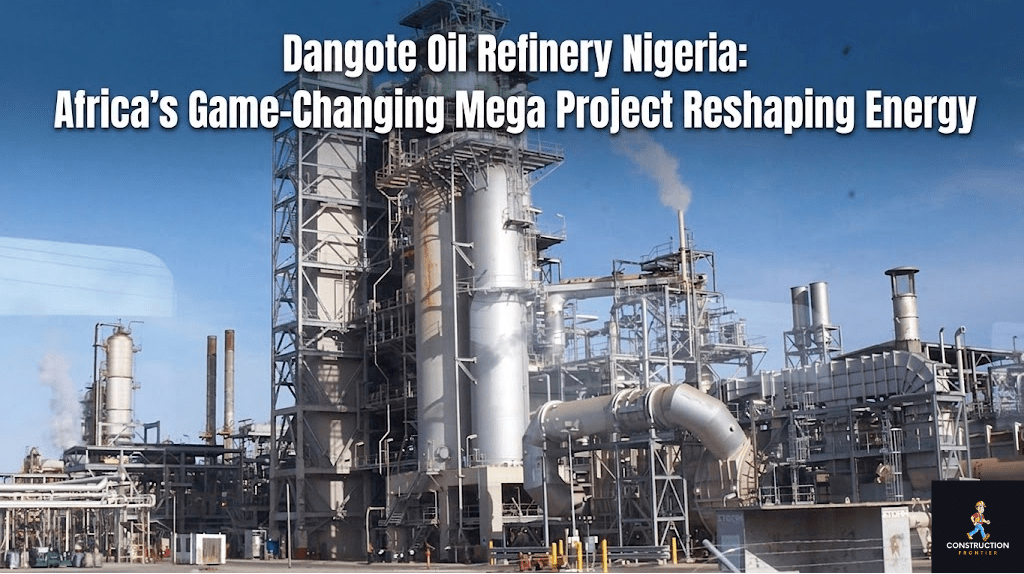
Dangote Oil Refinery Nigeria: Africa’s Game-Changing Mega Project Reshaping Energy
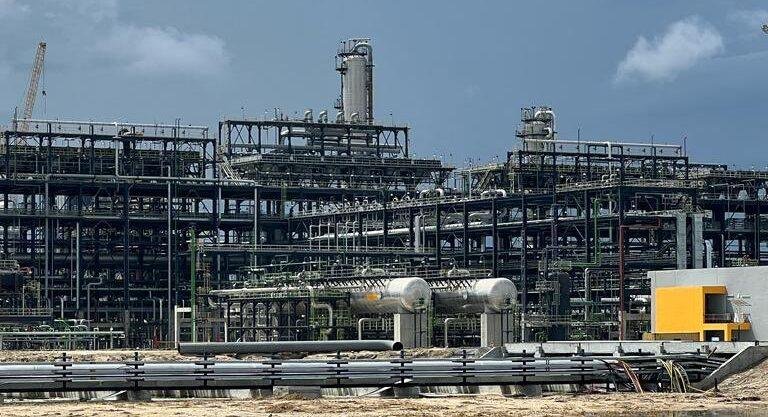
The Dangote Oil Refinery stands as Africa’s largest refinery and one of the most ambitious industrial developments globally. Located in Lagos, Nigeria, this mega facility has a refining capacity of approximately 650,000 barrels per day (bpd), positioning it as a transformative force in the continent’s energy landscape. The Dangote Oil Refinery in Nigeria is strategically designed to reduce the country’s dependence on imported petroleum products, strengthen domestic refining capacity, and establish Nigeria as a net exporter of refined fuels across Africa. Beyond production, the Lagos mega refinery project redefines oil and gas infrastructure in Africa, linking industrial growth, energy security, and regional trade into a single integrated system.
Technical Snapshot: Dangote Oil Refinery Strategic Framework
- Capacity: ~650,000 barrels per day
- Location: Lekki Free Trade Zone, Lagos
- Project Cost: $19+ billion
- Output: PMS (petrol), diesel, aviation fuel, LPG
- Market Reach: West and Central Africa
- Strategic Role: Energy security, industrial growth, export hub
- Operational Lifespan: 40–60 years
Introduction: The Dangote Oil Refinery in Nigeria
The Dangote Oil Refinery in Nigeria represents a structural shift in the way large-scale industrial infrastructure is conceptualised and executed in emerging markets. As Africa’s largest refinery, the project moves beyond traditional refining to integrate petrochemicals, logistics, and export systems into a unified industrial ecosystem.
Within the broader context of oil and gas infrastructure in Africa, the Dangote refinery in Lagos addresses a long-standing paradox: crude-rich nations importing refined fuels. Nigeria, despite being Africa’s largest oil producer, has historically depended on imported petroleum products due to insufficient domestic refining capacity.
The Dangote Group’s refinery directly addresses this structural imbalance. By delivering large-scale, high-efficiency refining capacity, it strengthens regional energy markets, reduces import dependency, and positions Nigeria as a dominant player in West and Central Africa’s fuel supply chain.
Project Location and Strategic Importance of the Lagos Mega Refinery Project
The performance and long-term viability of the Dangote Oil Refinery are fundamentally anchored in its geographic positioning, logistics integration, and proximity to both upstream crude supply and downstream distribution networks. Unlike conventional refinery siting, the Dangote refinery in Lagos was deliberately located to function as a fully integrated coastal energy hub, optimised for both domestic supply and export scalability.

Geographic Position in Lagos Free Zone
The Dangote Oil Refinery in Nigeria is situated within the Lekki Free Trade Zone (LFTZ), spanning approximately 2,500 hectares (6,180 acres) along Nigeria’s Atlantic coastline. From a project development standpoint, this location offers three critical engineering and economic advantages:
1. Coastal Deep-Water Access
The refinery sits adjacent to deep-sea maritime routes, allowing direct access for large crude carriers, including Aframax and ultra-large crude carriers (ULCCs). This eliminates reliance on congested inland terminals and reduces logistics costs associated with crude import and product export.
2. Industrial Cluster Integration
The Lekki Corridor is evolving into Nigeria’s largest industrial zone, hosting petrochemicals, fertilisers, and port infrastructure. This enables the Lagos mega-refinery project to operate as part of a vertically integrated industrial ecosystem rather than as a standalone facility.
3. Export-Oriented Free Zone Benefits
Operating within a free trade zone allows tax efficiencies, streamlined customs processes, and improved capital flow, all of which enhance the refinery’s competitiveness in global fuel markets.
From an infrastructure-planning perspective, this positioning positions the Nigerian oil refinery project as a strategic export platform, not just a domestic energy asset.
Access to Crude Supply and Export Infrastructure
The Dangote Oil Refinery incorporates one of the most sophisticated crude supply and product evacuation systems ever deployed in Africa.
Subsea Pipeline Infrastructure
The refinery is connected to upstream oil fields via an estimated subsea pipeline spanning 1,100 km, one of the largest in the world. This system ensures continuous delivery of crude feedstock, reducing reliance on road or rail transport and significantly lowering supply chain risk.
Single Point Mooring (SPM) Systems
The marine infrastructure includes:
- 2 crude SPM systems for offshore unloading.
- 3 product SPM systems for export operations.
- Handling capacity for vessels up to the Suezmax class.
These systems enable direct offshore loading and unloading, eliminating port congestion and improving turnaround efficiency.
High-Capacity Subsea Pipelines
- Crude pipelines: 48-inch diameter.
- Product pipelines: 24-inch diameter.
- Total subsea network: ~120 km for marine integration.
This dual pipeline architecture allows simultaneous crude intake and product export, creating a continuous-flow refining system.
From an operational standpoint, this positions the Dangote refinery in Lagos as a logistics-optimised refinery, capable of maintaining high utilisation rates with minimal supply disruption.
Dangote Oil Refinery Engineering Design and Refinery Configuration
The Dangote Oil Refinery is engineered as a deep conversion refinery with a high Nelson Complexity Index (NCI) designed to maximise output from both light and heavy crude while meeting stringent environmental standards.
Refining Process Technology and Complexity
The refinery operates with a Nelson Complexity Index (NCI) of ~10.5, exceeding the average for many U.S. refineries at 9.5 and European refineries at 6.5.
This high complexity enables the following:
- Processing of multiple crude grades, including heavy and sour crude.
- Conversion of low-value residues into high-value products.
- Production of Euro V-compliant fuels.
Technically, the refinery performs three core transformations:
- Fractionation: separation of crude into hydrocarbon cuts.
- Conversion: cracking long-chain hydrocarbons into lighter fuels.
- Upgrading: reforming molecules to improve fuel quality.
This configuration ensures minimal residual output and maximised product yield, a defining characteristic of Africa’s largest oil refinery project.
Key Units and Processing Systems
The refinery integrates advanced processing units designed for high throughput and conversion efficiency:
Crude Distillation Unit (CDU)
- Central separation system.
- Includes one of the world’s largest distillation columns (~112 m height).
- Enables high-precision separation and throughput.
Residue Fluid Catalytic Cracking (RFCC)
- Converts heavy residue into lighter products.
- Includes one of the heaviest refinery regenerators ever installed (~3,000 tonnes).
- It is critical to maximise yield from heavy crude.
Hydrocrackers and Reformers
- Break down heavy hydrocarbons under high pressure and temperature.
- Improve the octane rating and fuel quality.
- Enable production of cleaner fuels.
Auxiliary Units
- Alkylation units.
- Naphtha hydrotreaters (NHT).
- Continuous Catalytic Reforming (CCR).
Together, these systems create a fully integrated refining chain, ensuring high efficiency and minimal waste.
Storage, Tank Farms, and Marine Facilities
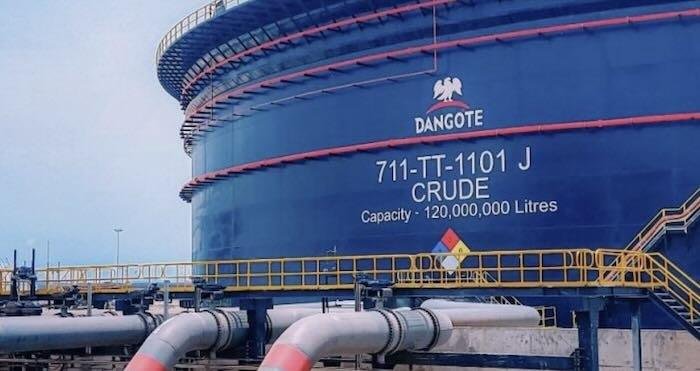
The Lagos refinery project incorporates extensive storage and handling infrastructure to support continuous operation.
Key features include:
- Large-scale crude and product storage tanks.
- Buffer storage for operational continuity.
- Integration with marine export terminals.
The marine facility enables the following:
- High-volume export operations.
- Freight optimisation.
- Reduced turnaround time for vessels.
This infrastructure supports the refinery’s role as a regional export hub.
Environmental and Emissions Control Systems
The Dangote Oil Refinery is designed to comply with global environmental standards, including:
Key systems include:
- Sulfur Recovery Units (SRU)
- Remove hydrogen sulphide from process streams.
- Enable production of ultra-low-sulphur fuels.
- Gas Treatment Systems
- Amine treatment removes CO₂ and H₂S.
- Converts “sour gas” to “sweet gas” for safe usage.
- Advanced Scrubbing Technologies
- Reduce particulate and gaseous emissions.
- Improve air quality compliance.
These systems ensure the refinery aligns with Euro V fuel standards, positioning it competitively in global markets.
Dangpte Oil Refinery Production Capacity and Output Specifications
The Dangote Oil Refinery in Nigeria: Capacity and Impact represents the largest single addition to refining capacity in Africa’s history.
Installed Refining Capacity
- Nameplate capacity of 650,000 barrels per day.
- Largest single-train refinery globally.
- Potential expansion to 1.4 million bpd under planned upgrades.
This scale positions the refinery as a global refining powerhouse, not just a regional facility.
Product Output Breakdown
At full capacity, the refinery produces:
- ~50 million litres/day of petrol.
- ~17 million litres/day of diesel.
- Aviation fuel (Jet A-1).
- LPG and petrochemical feedstocks.
In addition, it produces:
- Polypropylene for plastics manufacturing.
- Industrial feedstocks for downstream industries.
This diversified output strengthens both energy and industrial value chains.
Operational Efficiency and Throughput
The refinery achieves high efficiency through:
- Continuous-flow processing systems.
- Advanced automation and control systems.
- Integrated logistics infrastructure.
Its high Nelson complexity allows the following:
- Maximum conversion of crude into high-value products.
- Reduced residual fuel output.
- Improved profit margins per barrel.
Export Potential and Regional Supply
The Dangote refinery in Lagos is already exporting refined products to the following:
- Ghana
- Cameroon
- Togo
- Tanzania
It is also engaging in supply discussions with major markets across Africa.
From a regional energy perspective, the refinery:
- Reduces Africa’s reliance on European and Asian imports.
- Strengthens intra-African energy trade.
- Supports the development of integrated fuel markets.
This establishes the Dangote Oil Refinery as a continental supply anchor, fundamentally reshaping Africa’s energy trade dynamics.
Construction Strategy and Execution of the Dangote Group Refinery
The execution of the Dangote Oil Refinery is among the most complex privately delivered industrial projects globally. Unlike conventional refinery developments led by international oil majors, the Dangote Group refinery adopted a hybrid EPC self-delivery model, combining owner-led execution with integration with global contractors. This approach required synchronising civil works, process engineering, logistics infrastructure, and modular assemblies within a reclaimed coastal environment.
1. Engineering, Procurement, and Construction Model
The Dangote Oil Refinery in Nigeria adopted a multi-layered EPC/EPCM hybrid structure, where the owner retained strategic control while outsourcing specialised engineering and execution packages.
Core EPC Delivery Structure
| Component | Delivery Model | Key Entities | Technical Role |
| Project Ownership | Owner-EPC Hybrid | Dangote Group | Overall coordination, financing, integration |
| EPC Contractor (Core Works) | Lump-sum EPC | China National Chemical Engineering Company (CNCEC) | Structural works, process units installation |
| Project Management Consultancy | EPCM | Engineers India Limited (EIL) | Design validation, supervision, integration |
| Technology Licensing | Process Licensors | Honeywell UOP, others | Refining process design and optimisation |
| Modular Fabrication | Offshore Manufacturing | Indian & Chinese yards | Pre-fabrication of critical systems |
Key Insight:
Only a limited number of global entities have executed refinery projects under owner-led EPC structures. The Dangote Oil Refinery stands out because the project sponsor retained unusually high control over execution, reducing dependency on external oil majors.
2. Material Sourcing and Logistics
The Lagos mega refinery project required one of the most extensive industrial logistics operations in Africa, driven by the scale and complexity of refinery components.
Material and Equipment Scale
| Category | Quantity/Scale | Source | Technical Implication |
| Structural Steel | ~150,000 tonnes | China (prefabricated) | High-speed assembly via modular erection |
| Sand Fill (Land Reclamation) | ~65 million m³ | Local dredging | Raised site elevation by ~1.5 m for flood resilience |
| Process Equipment Modules | Thousands of units | India & China | Pre-integrated systems reduced on-site fabrication |
| Heavy Equipment | Ultra-heavy cranes | Global suppliers | Enabled lifting of >2,000-tonne modules |
Logistics Architecture
The refinery relied on a multi-modal logistics system:
- Marine transport: Delivery of oversized modules directly to the site via Atlantic access.
- Heavy-lift cranes: Installation of preassembled process units.
- On-site fabrication yards: Final assembly and integration.
Engineering Significance
- Modularisation reduced construction time by 20–30% compared to stick-built methods.
- Offshore fabrication improved quality control and precision alignment.
- Logistics integration enabled parallel construction streams, accelerating delivery.
3. Workforce and Technical Expertise
The Dangote Oil Refinery required a workforce structure comparable to large-scale petrochemical complexes in Asia and the Middle East.
Workforce Composition
| Category | Estimated Workforce | Role |
| Total Workforce (Peak Construction) | 30,000+ Nigerian personnel, 6,400 Indian and 3,250 Chinese workers. | Multi-disciplinary execution |
| Engineers (Local + International) | Thousands. 900 young Nigerian engineers trained. | Process, civil, mechanical systems |
| Skilled Technicians | Large-scale deployment. | Welding, instrumentation, assembly |
| Local Workforce | Majority share | Logistics, fabrication, and civil works |
Technical Capacity Development
- Approximately 80% of its refinery workforce is Nigerian.
- 900 young Nigerian engineers have been trained internationally in refinery operations.
- Process engineers trained by Honeywell UOP.
- Specialised training in:
- Catalytic cracking systems.
- Process control automation.
- Maintenance engineering.
Execution Insight
The workforce strategy combined:
- Global expertise (India, China, Europe).
- Local workforce scaling and training.
This hybrid model ensured:
- High technical accuracy.
- Long-term knowledge transfer into Nigeria’s energy sector.
4. Construction Challenges and Engineering Solutions
The Dangote refinery’s construction cost and timeline reflect a project executed under significant constraints, requiring adaptive engineering solutions.
Key Challenges vs Engineering Solutions
| Challenge | Engineering Impact | Solution Implemented |
| Swampy Terrain (70% of site) | Low bearing capacity, flood risk | 65 million m³ sand fill + elevation raising |
| Supply Chain Complexity | Delays in critical equipment | Modular fabrication + offshore assembly |
| Infrastructure Deficit | Limited road/port capacity | Dedicated marine logistics systems |
| Financing Constraints | Cash flow variability | Phased execution + external debt financing |
| Crude Supply Uncertainty | Operational delays | Pipeline + offshore SPM integration |
Technical Insight
The transformation of a swamp into a fully industrialised refinery platform represents one of the most significant geotechnical interventions in Africa’s industrial history.
Construction Timeline and Project Milestones
The Dangote refinery construction cost and timeline span over a decade, reflecting both the scale of the project and the complexity of execution in an emerging market.
Project Initiation and Planning Phase
| Phase | Timeline | Key Activities |
| Concept Development | 2013 | Project announcement, initial financing (~$3.3bn secured) |
| Design & Planning | 2014–2015 | EPCM contracts, site relocation to Lekki |
| Pre-Construction | 2015–2016 | Land acquisition, site preparation |
Strategic Shift
Relocation to Lekki significantly improved:
- Export access.
- Industrial integration.
- Long-term scalability.
Major Construction Milestones
| Year | Milestone | Technical Significance |
| 2016 | Construction commencement | Foundation works and infrastructure setup |
| 2017–2019 | Structural build-out | Installation of core refinery structures |
| 2020–2022 | Mechanical installation | Process units, pipelines, and utilities integration |
| 2023 | Mechanical completion | Ready for commissioning |
Commissioning and Operational Phases
The commissioning process followed a phased startup model, typical of high-complexity refineries.
Commissioning Sequence
| Phase | Output Level | Systems Activated |
| Phase 1 (2023) | ~350,000–370,000 bpd | CDU, hydrogen plant, sulfur units |
| Phase 2 (2024) | Increased throughput | Diesel, jet fuel production |
| Phase 3 (2024–2025) | Petrol (PMS) production | Full refining chain activated |
| Full Ramp-Up | ~650,000 bpd | Complete operational integration |
Current Operational Status
As of 2026:
- The Dangote Oil Refinery has reached full operational capacity (~650,000 bpd).
- It is exporting refined products across Africa.
- It is undergoing expansion toward 1.4 million bpd capacity.
Operational Reality
- Initial ramp-up faced:
- Crude supply constraints.
- Market integration challenges.
- However, the refinery now operates as follows:
- A regional export hub.
- A strategic energy asset.
Economic Impact: How Dangote Oil Refinery Will Transform Nigeria’s Economy
The Dangote Oil Refinery introduces a structural correction to Nigeria’s longstanding energy imbalance by internalising values that were previously exported in crude form and reimported as refined products. The refinery functions as a macroeconomic stabiliser, directly influencing foreign exchange flows, industrial productivity, and national revenue generation.
Reduction of Fuel Imports and Forex Savings
Before the commissioning of the Dangote Oil Refinery in Nigeria, the country relied heavily on imported refined petroleum products despite being Africa’s largest crude oil producer. Daily petrol imports ranged from 500,000 to 700,000 barrels, with annual import bills estimated at $10 billion to $15 billion.
With the Dangote Oil Refinery in Nigeria, which has significant capacity and impact, this dependency declines sharply. At full operational capacity of approximately 650,000 barrels per day, the refinery can meet Nigeria’s entire domestic demand for petrol, diesel, and aviation fuel.
Key macroeconomic outcomes include:
- Elimination of large-scale fuel importation.
- Estimated annual foreign exchange savings of up to $10 billion.
- Improved balance of payments and exchange rate stability.
This transition effectively converts Nigeria’s energy model from an import-dependent to a self-sufficient one, with significant implications for fiscal resilience.
Industrial Growth and Local Manufacturing
The Dangote refinery in Lagos operates as a central industrial node within a broader petrochemical ecosystem. Its output extends beyond fuels to include feedstocks critical for manufacturing and industrial production.
Key industrial linkages include the following:
- Petrochemicals supporting plastics and packaging industries.
- Integration with fertiliser production systems.
- Lower energy input costs for manufacturing sectors.
- Improved supply reliability for transport and logistics.
Polypropylene production from the refinery strengthens downstream manufacturing, particularly in:
- Consumer goods.
- Automotive components.
- Industrial packaging.
This positions the Nigerian oil refinery project as a catalyst for value-added industrialisation by reducing its dependence on imported intermediate goods.
Job Creation and Skills Development
The Dangote Group refinery has generated substantial employment across both construction and operational phases. At peak construction, the project engaged over 30,000 workers, while ongoing operations support thousands of permanent technical and administrative roles.
Beyond direct employment, the refinery contributes to broader job creation through:
- Supply chain expansion.
- Logistics and distribution networks.
- Industrial support services.
Technical capacity development remains a critical outcome. Engineers and technicians have received training in:
- Process engineering systems.
- Refinery operations and maintenance.
- Industrial automation and control systems.
This strengthens Nigeria’s long-term engineering capability and reduces reliance on foreign expertise.
Contribution to GDP and National Revenue
The Lagos refinery project’s economic impact extends to national economic performance through increased industrial output and export potential.
The refinery enables Nigeria to:
- Capture a higher value per barrel of crude oil.
- Increase domestic production of refined products.
- Generate export revenue from surplus output.
Over time, such procedures contribute to:
- GDP growth driven by industrial expansion.
- Increased government revenue through taxes and duties.
- Enhanced fiscal stability.
The Dangote Oil Refinery, therefore, functions as both an energy asset and a macroeconomic growth engine.
Energy Impact: Benefits of Dangote Oil Refinery to Africa’s Energy Sector
The Dangote Oil Refinery introduces a structural shift in Africa’s energy landscape by addressing refining deficits and improving regional supply stability.
Strengthening Regional Energy Security
Africa imports a significant portion of its refined petroleum products, exposing economies to supply disruptions and external price shocks. The Dangote Oil Refinery in Nigeria reduces this dependency by providing a stable, large-scale source of refined fuels within the continent.
Key outcomes include:
- Reduced reliance on European and Asian refineries.
- Improved fuel availability across West and Central Africa.
- Strengthened regional supply chains.
This initiative establishes the refinery as a strategic energy anchor within Africa.
Stabilisation of Fuel Prices
Historically, global refining margins, shipping costs, and exchange rate volatility have influenced fuel prices across Africa. The Dangote refinery in Lagos shortens the supply chain by producing fuels locally.
This approach results in:
- Reduced exposure to international logistics costs.
- Lower price volatility.
- Improved predictability for governments and industries.
The presence of Africa’s largest refinery stabilises regional fuel markets.
Support for Africa’s Energy Transition
While fossil fuels remain central to Africa’s energy mix, the Dangote Oil Refinery contributes to cleaner energy systems by producing low-sulphur fuels that meet Euro V standards.
This initiative supports:
- Reduced emissions from transport and industry.
- Improved fuel efficiency.
- Alignment with global environmental standards.
The refinery plays a transitional role, enabling cleaner energy use while renewable systems continue to scale.
Role in Expanding Oil and Gas Infrastructure in Africa
The Dangote Oil Refinery in Nigeria establishes a benchmark for large-scale industrial infrastructure in Africa.
Its significance includes the following:
- Demonstrating the feasibility of privately financed mega-refinery projects.
- Encouraging investment in downstream oil and gas infrastructure.
- Strengthening intra-African trade in refined products.
This reinforces the benefits of the Dangote refinery to Africa’s energy sector as both a technical and economic milestone.
Environmental and Sustainability Considerations
The Dangote Oil Refinery in Nigeria incorporates advanced environmental and sustainability systems designed to meet global regulatory frameworks and minimise operational impacts on air, water, and soil. As Africa’s largest refinery, meeting international emission standards and environmental compliance is not only a regulatory requirement but also a strategic necessity for global market access and export competitiveness.
Emission Reduction Technologies
The Dangote Oil Refinery produces products that meet Euro V quality specifications, including premium motor spirit (PMS), diesel, and aviation fuel, with significantly lower sulphur content than many imported alternatives. Euro V standards typically limit sulphur content to 10 parts per million (ppm) for diesel and petrol, thereby markedly reducing sulphur oxide (SOx) emissions from combustion engines and improving air quality compared with Euro III or unregulated fuels commonly used in many African markets.
Key technical systems deployed include:
- Sulphur Recovery Units (SRUs): These units strip sulphur compounds from hydrocarbon streams during processing, preventing them from entering finished products and reducing sulphur dioxide emissions when fuels are combusted.
- Low-NOx Combustion Systems: These are installed in utility boilers and heaters to minimise nitrogen oxide formation and lower NOx emissions, which contribute to smog and respiratory health issues.
- Advanced Scrubbing and Flue Gas Treatment: Multi‑stage gas cleaning systems prevent particulate matter and volatile organic compounds (VOCs) from entering the atmosphere.
These technologies are consistent with best practices in medium-to-high-complexity refineries globally and align the facility with the regulatory standards required for export to markets in Europe and the Middle East.
Waste and By‑Product Management
Unlike legacy refineries with minimal waste controls, the Dangote Oil Refinery incorporates systems to manage solid, liquid, and gaseous waste streams in line with regulatory and environmental best‑practice frameworks.
Key practices include the following:
- Hydrocarbon Waste Recovery: Process by‑products and residual hydrocarbons from refining units are collected, treated, and reintegrated into fuel production cycles where technically feasible, reducing waste output.
- Effluent Treatment Systems (ETP): Industrial wastewater generated during refining operations is treated through multi‑stage biological and chemical processes to remove oil, suspended solids, and toxic contaminants before safe discharge or reuse. This mitigates potential impacts on coastal and freshwater ecosystems near the Lagos Free Trade Zone.
- Sludge and Solid Waste Management: Residual sludge from separators and treatment units undergoes stabilisation and controlled disposal in compliance with environmental licence conditions, minimising soil contamination risks.
While detailed public environmental impact data specific to Dangote’s refinery wastewater and effluent composition are proprietary, independent environmental and social impact assessments commissioned prior to construction highlight the necessity of robust waste management in such mega-projects.
Environmental Impact Mitigation
Mitigation measures extend beyond pollution controls into monitoring and adaptive management:
- Air Quality Monitoring: Continuous ambient air quality stations track key pollutants, including SO₂, NO₂, particulate matter (PM₂.₅ and PM₁₀), and VOCs, around the refinery perimeter, enabling compliance checks and early detection of anomalies.
- Water Resource Protection: Treated effluent undergoes quality testing against national and international discharge limits; water recycling systems reduce fresh water withdrawal from local sources, thereby preserving coastal aquifers.
- Soil and Habitat Conservation: Pre‑construction impact assessments informed topsoil protection strategies and, where feasible, habitat restoration planning, particularly in areas affected by site land clearance and sand-fill operations.
While large industrial sites inevitably alter local landforms and ecosystems, such mitigation systems help ensure that the Dangote Oil Refinery adheres to environmental management plans (EMPs) sanctioned during permitting.
Alignment with Global Sustainability Goals
The refinery’s design and operations incorporate sustainability principles aligned with Environmental, Social, and Governance (ESG) criteria and United Nations Sustainable Development Goals (SDGs), including the following:
- SDG 7 — Affordable and Clean Energy: By producing cleaner fuels domestically, the facility supports energy security while reducing reliance on high‑emission imported products.
- SDG 9 — Industry, Innovation, and Infrastructure: The refinery’s integration of advanced refining technology represents a significant industrial milestone in sub‑Saharan Africa.
- SDG 12 — Responsible Consumption and Production: Through waste minimisation and recycling, the project promotes efficient resource use.
These alignments are increasingly critical for institutional investors and export credit agencies evaluating energy infrastructure projects for financing and market entry.
Dangote Oil Refinery Investment Scale and Financing Structure
The Dangote Oil Refinery represents not only a technical landmark but also a major financial commitment with implications for investment frameworks in Africa.
Total Project Cost and Capital Investment
The refinery’s capital cost exceeds US$19 billion, making it one of the largest private industrial investments in Africa’s history. The investment covers:
- Refinery and petrochemical complex construction.
- Engineered infrastructure (marine terminals, pipelines, power systems).
- Environmental and emissions control systems.
- Initial working capital for commissioning and early operations.
This level of investment positions the Dangote Oil Refinery among the top‑tier refinery projects worldwide, both in scale and complexity.
Funding Sources and Financial Model
The financial structure of the project combines equity, loan financing, and syndicated facilities from regional and international banks:
- Equity Investment: The Dangote Group directly provided a significant portion of funding, demonstrating high corporate confidence in long-term returns.
- Syndicated Term Loans: African Export‑Import Bank (Afreximbank) underwrote approximately US$2.5 billion of a US$4 billion syndicated term loan, with Access Bank also serving as a co‑mandated lead arranger. This consolidated funding supports capital structure optimisation now that the refinery is in full production.
- Refinancing Facilities: Earlier syndicated financing included a US$1.35 billion tranche to refinance part of the initial construction outlays, indicating strong institutional confidence in operational stability and profitability.
Such blended debt/equity structures are increasingly common for large energy infrastructure projects, but are notable in the African context for achieving scale without relying entirely on state guarantees.
Return on Investment and Payback Outlook
The refinery’s financial viability rests on its ability to:
- Displace fuel imports at scale, reducing Nigeria’s annual import bill.
- Export surplus refined products across West and Central Africa.
- Generate refining margins in line with global benchmarks.
Although detailed financial performance data remains private, industry analysts project a payback period of 7–10 years under typical refining-margin scenarios, supported by continued export demand and regional supply shortages. Strategic financial backing from institutions such as Afreximbank underscores confidence in long‑term cash flows.
The refinery’s economic impact also enhances government revenue through taxes and duties associated with increased refined product trade.
Lessons for Mega Infrastructure Financing in Africa
The Dangote Oil Refinery illustrates that large-scale private infrastructure can be financed successfully within African capital markets when:
- Projects anchor financing to long‑term revenue streams rather than short‑term speculative credit.
- Regional financial institutions play a leadership role in syndicating investment loans.
- Sponsors absorb operational risk and align internal capital with project performance metrics.
This model serves as a reference point for future megaprojects that seek to mobilise both domestic and international capital without sovereign guarantees.
Dangote Oil Refinery Comparative Analysis with Global Refinery Projects
With a nameplate capacity of approximately 650,000 barrels per day, the Dangote Oil Refinery in Nigeria surpasses all other refining facilities on the African continent, including refineries in South Africa and North Africa, in both scale and complexity. It is also recognised as the largest single-train refinery in the world, a configuration in which one processing train handles the full throughput, improving operational efficiency and reducing mechanical complexity.
Global Benchmarking
When compared with major refinery complexes in the Middle East, Asia, and North America:
- Middle Eastern mega refineries often exceed 1 million bpd through multiple trains, but few match the complexity and feedstock flexibility built into Dangote’s design.
- Asian refining hubs, such as India’s Jamnagar complex, exceed Dangote’s capacity in aggregate but comprise multiple integrated units across a broader industrial campus.
- In North America and Europe, refinery closures have reduced refining capacity, increasing the strategic importance of large new facilities like Dangote for global supply chains.
The Dangote Oil Refinery competes effectively on product quality (Euro V fuels) and export readiness, making it a strategic global refining asset.
Competitive Advantages
Several integrated strengths distinguish the Dangote Oil Refinery:
- Strategic Coastal Location: Direct access to deep‑sea shipping lanes enables crude imports and product exports without the constraints of inland logistics.
- Feedstock Flexibility: The ability to process a range of crude grades, including heavy and light sweet crudes, enhances operational resilience.
- Single‑Train Efficiency: Streamlined operations reduce internal transfer losses and maintenance complexity.
- Export Infrastructure: Dedicated marine terminals and pipeline connectivity position the refinery as a regional supply hub for West and Central Africa.
Together, these competitive advantages support the refinery’s role as a continental energy anchor and a global refining benchmark.
Risks and Operational Challenges of Africa’s Largest Refinery
While the Dangote Oil Refinery represents a transformative milestone for Nigeria and Africa’s refining landscape, its operational profile reveals several critical risk categories that industry professionals must understand, manage, and mitigate. These risks span technical execution, crude supply continuity, market dynamics, and regulatory frameworks, all of which have direct implications for refining stability, profitability, and long‑term asset value.
Technical and Operational Risks
1. Critical Unit Bottlenecks and Capacity Constraints
One of the most significant technical challenges facing the refinery has been the Residual Fluid Catalytic Cracking (RFCC) unit, a core conversion component crucial for transforming heavy residues into higher-value gasoline, diesel, and LPG. Global energy analytics firms have reported repeated outages and delayed restarts of the RFCC unit, which have restricted crude processing rates and delayed ramp‑up to full capacity. In early 2026, the RFCC restart was repeatedly postponed, suggesting that the refinery may remain below its nameplate capacity for months as the unit stabilises.
- Operational impact: RFCC reliability has kept actual crude runs at 280,000–320,000 bpd in early 2026, well below the design capacity of 650,000 bpd.
- Outcome: Undercuts gasoline production volumes and affects the full economic value chain of refined fuel output and exportable surplus.
Beyond RFCC, the initial commissioning phases of large refineries often involve extended stabilisation periods for complex process units. Industry data indicates that ramping conversion units to design throughput can take 24–36 months, especially for systems as large and advanced as those in Dangote’s configuration, where condensed residue conversion is essential for profitability.
2. Maintenance and Reliability Concerns
Unlike smaller or simpler refineries, large complexes strongly rely on synchronised maintenance protocols. Recent reports show the refinery has undergone multiple shutdowns of its gasoline units for maintenance more than would typically be expected for a new facility, causing periodic reductions in throughput and crude demand.
This dynamic underscores a perennial issue for new mega‑refineries:
- Maintenance routines must balance uptime with safety and reliability.
- Early operational years often reveal latent mechanical alignment, catalyst activity, and equipment reliability issues, especially in high‑temperature catalytic systems.
Without effective predictive maintenance systems and redundancy, unplanned downtime can significantly erode margins and complicate supply planning for downstream markets.
Crude Supply and Feedstock Risks
For a facility of this scale, securing a reliable crude supply is a fundamental operational requirement. The Dangote refinery’s success depends on the consistent delivery of feedstock at volumes aligned with production schedules.
However, the Economist Intelligence Unit (EIU) has highlighted that inadequate crude supply arising from Nigeria’s endemic issues with theft, underinvestment in production fields, and logistical challenges poses systemic risks to both refinery operations and broader economic stability.
Key observations include the following:
- Nigeria’s crude production has struggled to reach OPEC+ targets due to infrastructure deficits and security issues, limiting volumes available for domestic refining.
- The state oil firm, Nigerian National Petroleum Company (NNPC), has historically struggled to meet committed volumes, often supplying far less crude than needed to sustain optimal throughput.
The EIU warned that sustained shortfalls in crude deliveries could slow the refinery’s full ramp-up, distort Nigeria’s current account surplus, and exert downward pressure on foreign currency reserves, underscoring the intrinsic link between upstream supply and refinery risk profiles.
In the market context, domestic policies such as Nigeria’s Naira‑for‑Crude scheme, which allows refineries to pay for allocated crude in local currency, have been partially successful but insufficiently scaled, with only 250,000–300,000 bpd of crude actually delivered under the programme in 2025.
Market and Pricing Risks
1. Refining Margin Volatility
As global refining margins fluctuate, the refinery’s profitability exhibits sensitivity to oil price dynamics. Analysts projecting market conditions in mid‑2025 noted that refining margins in key export markets could halve within a short period due to shifts in supply and demand, reducing the economic cushion available to large refiners. Where profit margins contracted (e.g., from above $20 per barrel to below $7 per barrel in some benchmarks), this can compress net revenues unless offset by scale or export premiums.
2. Competition and Domestic Market Dynamics
Although the Dangote facility dwarfs existing capacity, other refineries are under construction in Nigeria and the broader region. Reports indicate that approximately 23 new refineries under development could eventually add more than 850,000 bpd to the nation’s capacity, intensifying competition once they become operational. However, operational and supply challenges persist across the industry.
Market risks also include:
- Potential price undercutting by imported blended fuels (even if of lower quality).
- Flux in domestic fuel pricing policies that influence demand elasticity.
Regulatory and Policy Risks
Government policies, subsidy regimes, and regulatory frameworks can materially influence refinery economics. Nigeria’s historical approach to petrol subsidies, which officially ended in 2023 but continues through informal mechanisms, exerts pressure on pricing structures and can indirectly affect refinery operations and profitability.
Other regulatory risks include:
- Enforcement of local content requirements for crude supply.
- Tax changes designed to protect domestic refiners versus importers.
- Licensing dynamics for new refinery entrants.
These policy environments are dynamic, and a misalignment between industry objectives and regulatory incentives can skew profitability and demand forecasts.
Risk Mitigation Strategies
To manage these risks, several mitigation strategies are being deployed and recommended:
- Technical mitigation: Predictive maintenance systems, advanced process control algorithms, and redundancy planning for critical process units (e.g., RFCC, CDU, and utilities).
- Supply risk mitigation: Strengthening contractual crude supply agreements with NNPC and international producers, leveraging pipeline and offshore SPM infrastructure for more secure imports when needed.
- Market risk diversification: Expanding export markets beyond West Africa to cushion regional demand cycles and local pricing volatility.
- Policy engagement: Active industry engagement with regulators to align crude allocation, currency policies, and protective tariffs with refining economics.
Each of these approaches is essential to ensure the refinery remains resilient across operational and market cycles.
Future Outlook of the Dangote Oil Refinery
The Dangote Oil Refinery is poised to transition from a nationally transformative asset to a continentally strategic energy hub. Its future trajectory encompasses capacity growth, integration with petrochemical production, and expanded regional market influence.
Full Capacity Projections and Expansion
The refinery currently operates at its nameplate capacity of 650,000 barrels per day (bpd), and industry reports suggest incremental capacity optimisation to approximately 700,000 bpd by late 2025 through process efficiency improvements and operational refinement.
Simultaneously, Dangote Group has articulated an ambitious expansion strategy to double refining capacity to 1.4 million bpd within the next three years, positioning the complex as one of the largest integrated refining and petrochemical facilities in the world.
This expansion anticipates not only increased fuel output but also significant growth in associated petrochemical streams, such as:
- Polypropylene production: increasing from ~900,000 to ~2.4 million tonnes annually.
- Urea fertiliser output: tripling to ~9 million tonnes per year.
- Expanded base oils and linear alkyl benzene capacities, enhancing feedstock value chains.
Expansion and Petrochemical Integration
Integration with petrochemical operations enhances midstream economics by turning lower‑value residues into high‑margin products. A successful expansion would enable Dangote to compete not only in fuels but also in intermediate petrochemical markets critical to plastics, detergents, and industrial materials, broadening revenue streams and improving the durability of cash flow.
This strategic pivot supports broader regional industrialisation goals and aligns with emerging energy transition priorities that favour product diversification over raw commodity exports.
Long‑Term Role in Africa’s Energy Market
The Dangote facility is expected to remain a central player in Africa’s energy infrastructure for decades, serving as a stable source of refined products, a regional export anchor, and a platform for broader industrial growth.
Key long-term strategic roles include:
- Energy security supplier: Reducing reliance on imported petroleum products across West and Central Africa.
- Pricing reference anchor: Influencing regional pricing benchmarks for petrol and diesel.
- Industrial catalyst: Enabling downstream industries reliant on petrochemical feedstocks.
Recent global geopolitical events have accelerated this shift; for example, disruptions in Middle Eastern fuel exports have increased demand for Dangote’s gasoline exports, reinforcing its role as a stabiliser supplier across multiple African markets.
Conclusion: Strategic Importance of the Dangote Oil Refinery in Nigeria
The Dangote Oil Refinery stands as a defining industrial infrastructure project not only for Nigeria but also for the entire African energy landscape. It integrates advanced refining technology with strategic supply chain design and regional market access, creating a platform that delivers energy security, industrial growth, and export capacity at scales previously unseen in sub‑Saharan Africa.
While operational risks such as technical unit reliability, crude supply continuity, market pricing dynamics, and regulatory complexity present real challenges, the refinery’s strategic mitigation strategies and expansion vision position it for sustained success.
As the facility moves toward full operational stabilisation and future capacity expansion, the Dangote refinery in Lagos will continue to influence capital allocation decisions across Africa’s energy sector, shape regional industrial policies, and demonstrate how large-scale infrastructure can drive long-term economic resilience, technological advancement, and regional integration.
Stay Updated on Africa’s Mega Energy Projects
Stay ahead of Africa’s mega-infrastructure transformation with Construction Frontier. Explore deep technical insights, market intelligence, and expert analysis shaping oil and gas infrastructure in Africa.