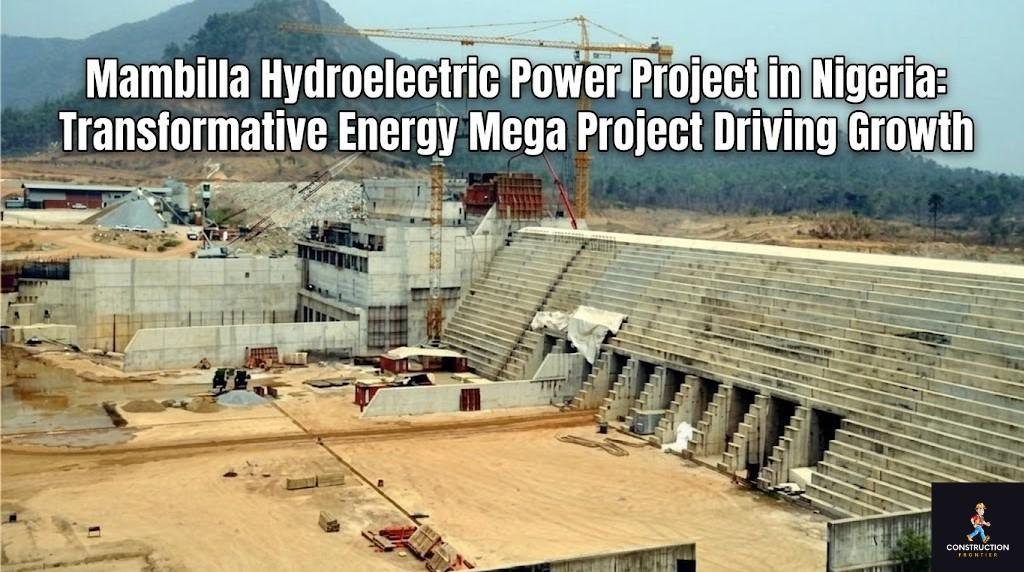
Mambilla Hydroelectric Power Project in Nigeria: Transformative Energy Mega Project Driving Growth
The Mambilla Hydroelectric Power Project is a critical Nigerian renewable energy project designed to solve the nation’s electricity deficit. As a cornerstone of Africa’s hydropower infrastructure, this Donga River dam will deliver 3,050 MW of clean baseload power, significantly boosting Nigeria’s electricity generation capacity. By integrating into the national grid via 700 kV transmission lines, Mambilla acts as a regional energy hub, supporting the West African Power Pool (WAPP) and driving industrial growth.
Technical Snapshot: Mambilla Hydroelectric Power Project
- Installed Capacity: ~3,050 MW (Baseload Power).
- Dam Engineering: Roller-compacted concrete (RCC) gravity system.
- Estimated Cost: $5.8–$6.5 billion (Public-Private Partnership).
- Hydrology: Donga River Basin (key Benue River tributary).
- Grid Integration: 330 kV and 700 kV HVDC infrastructure.
Introduction: Mambilla Hydroelectric Power Project in Nigeria
The Mambilla Hydroelectric Power Project represents one of the most strategically significant energy investments in West Africa, positioned to address Nigeria’s chronic electricity deficit through large-scale renewable generation. Nigeria’s installed capacity has historically exceeded 13 GW on paper, yet actual available generation fluctuates far below demand due to gas constraints, grid inefficiencies, and ageing infrastructure.
Against this backdrop, the Mambilla Hydroelectric Power Project in Nigeria emerges not merely as another generation asset but as a structural intervention in the country’s energy architecture. Its scale, exceeding 3 GW, places it among the largest hydropower projects in Nigeria and Africa, designed to deliver stable baseload electricity while reducing reliance on thermal generation.
From a systems perspective, this Nigerian hydropower project aligns with long-term national ambitions to diversify the energy mix, strengthen grid reliability, and unlock industrial productivity. It also solidifies Nigeria’s role in the broader African hydropower infrastructure, where large-scale renewable assets increasingly serve as a foundation for economic transformation.
Overview of the Mambilla Hydroelectric Power Project
The Mambilla Hydroelectric Power Project is a multi-dam hydropower development located in northeastern Nigeria, designed to harness the hydrological potential of the Donga River system. It represents a cornerstone of Nigeria’s renewable energy expansion strategy and one of the most capital-intensive infrastructure investments in the country’s history.
Location and Strategic Importance in Taraba State
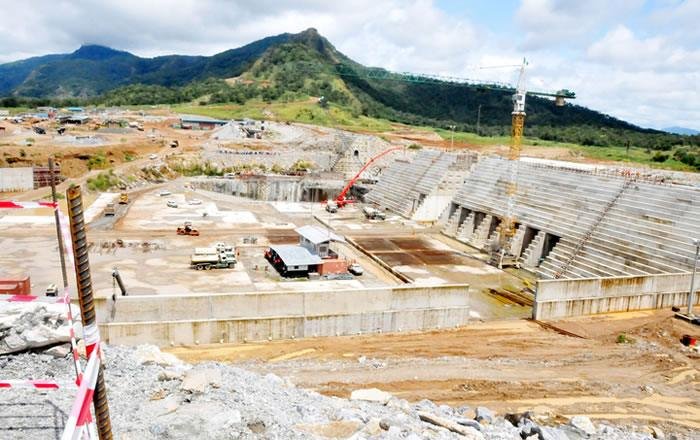
The Taraba State power project is situated on the Mambilla Plateau, a high-altitude region offering favourable hydraulic gradients and stable rainfall patterns. This geographic positioning provides a critical engineering advantage by enabling efficient hydropower generation without requiring extreme reservoir impoundment.
The plateau’s elevation facilitates gravity-driven water flow through engineered channels, increasing energy conversion efficiency while reducing structural stress on dam components. Additionally, proximity to the Benue River system enhances hydrological continuity, ensuring consistent water inflow essential for baseload generation.
Nigeria strategically situates the Mambilla power plant in a region with limited industrial development but high infrastructure potential. This creates a dual benefit: energy generation and regional economic activation.
Project Vision Within Nigeria’s Energy Strategy
The Mambilla Hydroelectric Power Project in Nigeria aligns directly with national energy diversification policies aimed at reducing dependence on gas-fired power plants. Thermal generation heavily skews Nigeria’s energy mix, exposing the grid to supply volatility and fuel price fluctuations.
By integrating large-scale hydropower, the project supports long-term stability, enabling Nigeria to transition toward a more balanced and resilient energy portfolio. Within the broader context of Nigeria’s renewable energy project frameworks, Mambilla serves as a flagship initiative demonstrating the viability of large-scale clean energy infrastructure.
Position Among the Largest Hydropower Projects in Nigeria and Africa
With an installed capacity exceeding 3,000 MW, the Mambilla Hydropower Project ranks among the largest hydropower projects in Nigeria and Africa, alongside continental benchmarks such as the Grand Ethiopian Renaissance Dam (GERD), the Cahora Bassa Dam, and the Grand Inga Dam.
Its scale positions it not only as a national asset but also as a regional energy node capable of supporting cross-border electricity trade. Within Africa, hydropower infrastructure represents a transition from medium-scale dams to mega hydropower systems capable of driving industrial clusters.
Further Reading: Grand Ethiopian Renaissance Dam: Africa’s Monumental Hydropower Project Transforming Energy
Mambila Hydroelectric Power Project Technical Design and Engineering Specifications
The engineering blueprint for the Mambilla project represents a sophisticated hydraulic system that leverages the unique topography of the Mambilla Plateau. Unlike traditional dams that rely solely on river volume, this project utilises a massive 1,007-metre drop, also known as ‘static head’, placing it among the world’s most high-pressure hydropower systems. The design integrates four separate dams, two immense underground powerhouses, and over 33 kilometres of hydraulic tunnels to move water across the plateau’s uneven terrain. This cascade-and-drop configuration maximises the potential energy of the Donga River, ensuring that every cubic metre of water generates the highest possible wattage.
Installed Capacity and Generation Potential
The Mambilla Hydroelectric Power Project in Nigeria boasts a nameplate capacity of 3,050 MW, anchoring its capacity and cost profile. This output is specifically designed to function as the backbone of Nigeria’s national grid, providing much-needed baseload power and the consistent, 24/7 electricity required to run heavy industry.
Under optimal hydrological conditions, the plant is expected to generate approximately 5.46 billion kWh annually. This massive injection of power is projected to increase Nigeria’s total national grid capacity by nearly 30 percent, drastically reducing the country’s reliance on expensive, small-scale diesel generators.
Generation and Capacity Metrics
| Technical Parameter | Specification | Strategic Impact |
| Total Nameplate Capacity | 3,050 MW | Primary baseload source for West Africa |
| Projected Annual Yield | 4,700 – 5,457 GWh | Equivalent to powering 3 million homes |
| Operational Availability | Over 90 percent | High reliability due to stable plateau rainfall |
| Turbine Configuration | 12 x 250 MW units | Allows for modular maintenance without shutdowns |
Dam Structure, Reservoir, and Hydrology
The hydrological integrity of the project rests on the Donga River Basin, a tributary of the Benue River. The project uses roller-compacted concrete technology for its primary dams, a method that involves layering and compacting dry concrete with heavy rollers.
Mega-projects favour this technique due to its significantly faster speed compared to traditional pouring, resulting in a monolithic structure capable of withstanding extreme hydraulic loads. These dams create a multi-reservoir system that acts as a buffer against seasonal drought, ensuring the turbines have a steady water supply even during the dry season.
Key Dam Infrastructure
| Dam Component | Construction Type | Height / Length | Primary Engineering Role |
| Nya Dam (Gembu) | RCC Gravity | 100m / 515m | Primary reservoir for water regulation |
| Sumsum Dam | RCC Gravity | 35m / 460m | Intermediate flow control |
| Nghu Dam | Rockfill (Clay Core) | 95m / 680m | High-pressure storage for head maintenance |
| Api Weir | Concrete Weir | Diversion Structure | Redirects river flow into intake tunnels |
Powerhouse Systems and Transmission Infrastructure
The heart of the project lies in its underground powerhouse complex, designed to protect sensitive machinery from the elements and manage the immense pressure generated by the 1,000-meter drop. The project will deploy Pelton turbines, which are specifically engineered for high-head environments.
These turbines use high-velocity water jets to strike buckets on a wheel, converting the vertical drop into mechanical energy. To move this power to the rest of Nigeria, the project includes a massive transmission expansion, featuring 700kV high-voltage direct current lines. These lines are critical because they allow electricity to travel long distances, such as to Makurdi and beyond, with minimal energy loss.
Transmission and Electromechanical Data
| System | Technical Detail | Engineering Justification |
| Turbine Type | Vertical Pelton Wheel | Optimized for 1,000m+ high-head pressure |
| Evacuation Lines | 700kV & 330kV DC | Reduces line loss over the 700km corridor |
| Drop Shaft | 1,007 Meters | Creates massive kinetic energy for generation |
| Grid Destination | Makurdi & Jalingo Nodes | Strategic connection to National Control Centre |
Project Cost, Financing, and Investment Structure
The Mambilla Hydroelectric Power Project, Nigeria’s capacity and cost, represents one of the largest financial undertakings in African history. The project is structured as a bilateral infrastructure deal that blends sovereign debt with state-funded equity. As of 2026, the budget is closely managed to account for the high costs of tunnelling through the plateau’s igneous rock and the specialised logistics required to move heavy turbines into the remote Taraba State highlands.
Total Project Cost and Budget Allocation
With a total estimated cost of USD 5.8-USD 6.5 billion, the budget is distributed across three main phases:
- Civil engineering works: includes the design and construction of dams and tunnels.
- Electromechanical works: covering the turbines and generators.
- Transmission works: focusing on the power lines.
A significant portion of the budget is also allocated to environmental and social impact mitigation, which includes the resettlement of approximately 100,000 people and the restoration of local ecosystems affected by the new reservoirs.
Capital Expenditure Breakdown
| Budget Pillar | Estimated Share | Key Expenditure Items |
| Civil Works | 55 percent | Dams, 33km of tunnels, underground powerhouses |
| Electromechanical | 25 percent | 12 Pelton turbines and control systems |
| Transmission | 12 percent | 700km of towers and HVDC lines |
| Social & Environmental | 8 percent | Resettlement and land compensation |
Funding Sources and International Partnerships
The project operates under a government-to-government financing model. The Export-Import Bank of China is the primary lender and is expected to provide 85 percent of the funding through a low-interest, long-term loan. The remaining 15 percent is the counterpart funding provided by the Federal Government of Nigeria. The project is being executed by a consortium of Chinese state-owned enterprises, including China Gezhouba Group and Sinohydro, ensuring it benefits from the same engineering expertise used to build the Three Gorges Dam.
Public-Private Investment Opportunities
Although the core generation is state-owned, the Mambilla renewable energy project offers opportunities for private-sector involvement through public-private partnerships. The government is actively seeking private investors for ancillary infrastructure, including maintenance of transmission corridors and development of local distribution mini-grids. This model allows specialised private firms to manage operational risks, while the government ensures long-term energy security for the nation.
Investment Framework
| Investment Tier | Opportunity Type | Potential Investor Profile |
| Ancillary Infrastructure | Maintenance & Spares | Specialised Electromechanical Firms |
| Downstream | Local Distribution Grids | Independent Power Producers |
| Logistic Support | Haulage & Security | Regional Infrastructure Contractors |
Construction Phasing, Delivery Constraints, and Execution Timeline
The Mambila hydroelectric project timeline and development challenges reflect a non-linear infrastructure delivery pathway. Unlike conventional hydropower projects that follow a predictable, linear build, Mambilla has evolved through intermittent phases of feasibility refinement, contractual restructuring, and institutional realignment. This complex trajectory was necessary to improve risk allocation and to define the technical requirements for a project of this magnitude.
Early Planning and Feasibility Engineering Evolution
Initial investigations for the Mambilla Hydroelectric Power Project in Nigeria date back to the late 20th century. Early hydrological assessments identified the Mambilla Plateau as the premier site for high-head hydropower in West Africa. While the original vision focused on single-dam configurations, engineering revisions eventually led the project to become a multi-dam cascade system. This evolution was strategic, designed to optimise the 1,007-metre hydraulic head and maximise generator efficiency.
These revisions incorporate modern geotechnical data and optimisation models for turbines. Transitioning to a bankable engineering design required precise modelling of flood routing capacity, sediment load behaviour, and long-term reservoir performance. While these updates improved the project’s technical accuracy, execution was historically slowed by limited institutional capacity and the need for a more robust project structuring framework.
Contract Structuring, Procurement Strategy, and Milestone Progression
A major turning point in the Mambilla dam project timeline and development challenges occurred with the formalisation of Engineering, Procurement, and Construction (EPC) agreements with Chinese state-backed contractors. This integrated EPC framework aligns design, sourcing, and building responsibilities under a single consolidated structure, reducing technical friction.
Project Contract Phases
| Project Milestone | Technical Objective | Execution Constraint |
| Engineering Design | Finalising 33 km tunnel geometry & drop shafts | Geotechnical data verification |
| Environmental Approval | Social impact & resettlement compliance | Regulatory and legal clearances |
| Site Mobilisation | Heavy machinery transport to the Taraba highlands | Logistical and access road readiness |
| Financial Close | Activation of export credit facilities | Sovereign guarantees & legal finalisation |
Financing is tied to conditional disbursement mechanisms. Funds are only released after reaching specific milestones, such as detailed engineering completions or site mobilisation benchmarks. While this approach improves accountability, it creates dependencies that can slow progress when legal or sovereign guarantees remain unresolved.
Current Development Status and Realistic Construction Horizon
The Mambilla Hydroelectric Power Project in Nigeria is currently in an advanced pre-construction phase. The focus of progress lies on resolving contractual disputes, finalising financing, and organising site accessibility logistics. Once we remove these legal and financial barriers, we anticipate a compressed construction schedule for the project.
RCC dam construction, underground powerhouse excavations, and transmission deployments will occur simultaneously to minimise the delivery window. Realistically, the construction horizon is estimated at 5 to 7 years, provided funding flows remain uninterrupted and multi-contractor execution is tightly coordinated.
Grid-Scale Power Integration and Nigeria’s Baseload Capacity Expansion
The Mambilla Hydroelectric Power Project is structurally positioned as a baseload generation asset. Its integration into the national grid represents a fundamental shift from fragmented, fuel-dependent generation to a centralised, renewable architecture capable of meeting industrial-scale electricity demands.
Structural Impact on Nigeria’s Generation Deficit
The Mambila hydropower project significantly contributes 3,050 MW of firm generation to Nigeria’s electricity supply. Historically, Nigeria’s delivered capacity has lagged behind its installed capacity due to gas supply disruptions and transmission bottlenecks.
- Non-Fuel Dependency: Unlike thermal plants, hydropower is not vulnerable to gas pipeline vandalism or fuel price volatility.
- High Availability: The plant offers predictable output based on the Mambilla Plateau’s hydrological cycles.
- Economic Efficiency: By providing a massive volume of low-cost power, the project reduces the reliance on expensive diesel backup generators, lowering the marginal cost of electricity across Nigeria.
Baseload Stability and Frequency Regulation Dynamics
As a high-capacity baseload facility, the Mambilla power plant in Nigeria provides the continuous output required to stabilise a grid that is currently prone to frequency deviations and load shedding. Hydropower is uniquely flexible; it allows for rapid ramp-up and ramp-down, which is essential for balancing intermittent energy sources like solar and wind.
Beyond simple generation, Mambilla provides critical ancillary services:
- Voltage Regulation: Maintains steady voltage levels across the grid.
- Spinning Reserve: Provides immediate backup power to prevent system collapses during peak demand or unexpected outages.
- Frequency Control: It acts as a stabilising anchor for the evolving national energy mix.
Transmission Integration and National Grid Reinforcement
The effectiveness of the Mambilla Hydroelectric Power Project in Nigeria depends on its transmission corridors. The project includes high-capacity lines designed to evacuate 3,050 MW from a remote Taraba State to major loading centres.
| Infrastructure Item | Technical Specification | Strategic Benefit |
| Primary Transmission | 700 kV HVDC Corridors | Minimises energy loss over 700km distances |
| Secondary Integration | 330 kV Regional Lines | Reinforces local grids in North-East Nigeria |
| Load Distribution | Connection to Makurdi & Jalingo | Improves redundancy and reduces regional imbalances |
From a systems perspective, Mambilla is more than a generation asset; it is a catalyst for grid modernisation. Reinforcing the transmission network enables efficient power distribution in Nigeria’s primary economic and manufacturing centres.
Further Reading: Dangote Oil Refinery Nigeria: Africa’s Game-Changing Mega Project Reshaping Energy
Macroeconomic and Industrial Impact of the Mambilla Hydropower System
The Mambilla Hydroelectric Power Project operates as a high-impact macroeconomic asset designed to dismantle the energy constraints that have historically stifled Nigeria’s GDP growth. By providing over 3,000 MW of reliable baseload power, the project shifts the national economic trajectory from an energy deficit to industrial readiness. Its influence permeates every level of the economy, from regional job creation in Taraba State to the stabilisation of national fiscal accounts.
Employment Generation and Regional Economic Activation
The Taraba State power project is a primary driver for multi-sectoral employment. During the intensive seven-year construction window, the project creates a tiered labour market:
- Specialised Technical Roles: Demand for hydropower engineers, geotechnical experts, and high-pressure tunnelling specialists.
- General Construction Labour: Large-scale deployment for dam wall construction, site clearing, and road expansion.
- Secondary Multiplier Effect: The project activates a robust regional supply chain. Local industries in cement, steel fabrication, and transportation logistics receive a direct stimulus.
Long-term, the benefits of the Mambilla power project for Nigeria’s economy manifest in the permanent workforce required for plant operations, grid maintenance, and environmental monitoring. This develops a localised knowledge economy in Taraba State that specialises in high-voltage renewable systems.
Industrial Expansion and Energy-Driven Capital Investment
Reliable electricity is the most significant determinant of industrial viability in West Africa. The Mambilla Hydropower Project directly targets the high failure rate of manufacturing start-ups by offering stable, large-scale power suitable for heavy industry.
- Reduced Operational Risk: Consistent power allows for long-term capital planning. Industries such as steel smelting and mining, which cannot tolerate frequency fluctuations, gain a viable operational environment.
- Competitiveness: By providing a cheaper energy alternative to diesel, the project lowers the cost of goods produced in Nigeria. This enhances the nation’s standing as a manufacturing hub under the African Continental Free Trade Area (AfCFTA) framework.
Revenue Structuring and Regional Energy Market Positioning
The Mambilla Hydroelectric Power Project in Nigeria positions the nation as a regional energy titan. Its output allows Nigeria to evolve from an energy-constrained market into a primary supplier for the West African Power Pool.
| Economic Factor | Strategic Outcome |
| Foreign Exchange | Revenue from electricity exports to neighbouring ECOWAS nations |
| Fiscal Stability | Long-term revenue streams from domestic industrial tariffs |
| Regional Influence | Strengthening energy interdependence across West Africa |
Economic Effects of the Mambilla Hydroelectric Power Project
The Mambilla Hydroelectric Power Project functions as a structural economic intervention rather than a standalone utility. It addresses the systemic productivity losses caused by Nigeria’s unstable power grid, which, according to World Bank data and recent economic assessments, is estimated to cost the economy approximately $26.2 billion (roughly ₦20 trillion) annually in lost economic output.
Industrial Energy Cost Compression and Productivity Gains
The most immediate impact of the Mambilla hydropower project on Nigeria’s electricity supply is the drastic reduction in self-generation costs. Currently, Nigerian manufacturers rely on expensive diesel and gas-fired captive plants.
- Cost Compression: Grid electricity from Mambilla is projected to be significantly cheaper per kilowatt-hour than diesel-generated power at $0.05 to $0.07 (₦82.50 to ₦115.50) per kWh. In contrast, as of late 2024 and early 2025, private diesel-powered generation in Nigeria is estimated to cost between $0.30 and $0.55 (₦915 to ₦1,800) per kWh.
- Efficiency: Consistent power eliminates the downtime associated with grid collapses, which is a critical productivity factor for energy-sensitive sectors like cement and agro-processing.
Distributed Electrification and Rural Economic Integration
This Nigerian hydropower project is a catalyst for rural economic activation. While large industries benefit from high-voltage lines, the project’s transmission infrastructure allows for the expansion of the grid into previously underserved northern regions.
- Agro-Industrial Growth: Stable power enables the development of cold-chain logistics and mechanised processing in rural Taraba and surrounding states.
- Human Capital Development: Electrification improves healthcare delivery, educational technology access, and digital connectivity, expanding the productive base of the labour force.
National Energy Sovereignty and Systemic Security Gains
Historically, Nigeria’s reliance on imported petroleum products for backup power has weakened its energy security. The Mambilla project reduces this structural vulnerability.
| Security Pillar | Technical Impact |
| Import Reduction | Lower demand for imported diesel reduces foreign exchange outflows |
| Price Stability | Renewable energy provides a hedge against global oil price volatility |
| Sovereignty | Shifting to internally controlled, 100% renewable resources |
By providing a domestically generated, carbon-neutral baseload, the Mambilla Hydropower Project serves as a stabilising anchor for Nigeria’s energy future. Internal resource management, rather than external market shocks, determines the nation’s industrial path.
Environmental Performance, Ecosystem Impact, and Sustainability Governance
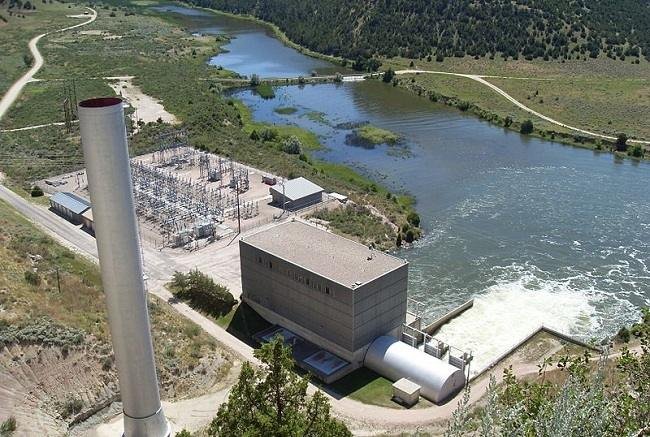
The environmental profile of the Mambilla hydroelectric power project represents a complex trade-off between continental decarbonisation and localised ecological transformation. As a central pillar of the Nigerian hydropower project portfolio, Mambilla is designed to align with the United Nations Sustainable Development Goals (SDGs), specifically targeting Goal 7 (Affordable and Clean Energy) and Goal 13 (Climate Action). However, the project’s massive footprint necessitates a sophisticated sustainability governance framework to mitigate the risks inherent in high-altitude tropical river diversion.
Low-Carbon Energy Transition and Climate Alignment Benefits
Hydropower stands as the premier renewable technology for high-density baseload generation. The Mambilla project serves as a strategic climate mitigation asset by displacing carbon-intensive thermal power.
- Emissions Displacement: By generating 3,050 MW of carbon-free electricity, Mambilla will remove millions of tonnes of CO₂ equivalent from Nigeria’s annual emissions profile.
- Air Quality Improvement: Shifting industrial demand from distributed diesel and heavy fuel oil (HFO) generators to centralised hydro reduces particulate matter (PM2.5) and nitrogen oxides (NOx) in urban centres.
- Lifecycle Efficiency: Hydropower offers a superior Energy Return on Investment (EROI) compared to solar or wind, providing a stable energy output over a projected 50-to-100-year infrastructure lifespan.
Hydrological Alteration and Ecosystem Sensitivity
The creation of the Nya, Sumsum, and Nghu reservoirs along the Donga River will fundamentally alter the basin’s natural hydrology. These changes require rigorous monitoring to protect the biodiversity of the Taraba highlands.
- Flow Regulation: Reservoir impoundment modifies the river’s pulse, affecting downstream wetlands and riparian zones that rely on seasonal flooding for nutrient cycling.
- Sediment Dynamics: The dams will trap nutrient-rich silt, requiring advanced sediment bypass systems to prevent downstream erosion and maintain reservoir capacity.
- Habitat Connectivity: The infrastructure introduces fragmentation risks for local aquatic species. Integrated bypass channels and reforestation programs are essential for maintaining ecological corridors.
Environmental Safeguards and Sustainability Compliance
The project operates under a strict compliance architecture to meet international financing standards, especially those required by the China Exim Bank and multilateral observers.
| Governance Mechanism | Technical Function | Regulatory Standard |
| Environmental Flow (E-Flow) | Ensures minimum water release to sustain downstream life | International Hydropower Association (IHA) |
| Resettlement Action Plan (RAP) | Manages the relocation and compensation of affected residents | World Bank Safeguard Policies |
| Catchment Management | Reforestation to prevent erosion and reservoir siltation | Nigeria’s Federal Ministry of Environment |
Structural Execution Risks and Delivery Constraints
The Mambilla dam project timeline and development challenges are defined by a triad of interdependent risks: legal, financial, and logistical. These constraints have historically prevented the transition from technical readiness to physical implementation.
Contractual Disputes and Legal Bottlenecks
The most persistent barrier to the Mambilla Hydroelectric Power Project in Nigeria has been the presence of long-standing legal disputes. As of early 2026, the project continues to navigate the fallout from historical procurement disagreements and land-use claims.
- ICC Arbitration: Legal challenges involving previous contractors have tied up sovereign guarantees and complicated the finalisation of new EPC (Engineering, Procurement, and Construction) frameworks.
- Contractual Realignment: Moving forward requires a clean legal slate to satisfy international lenders who demand absolute contractual certainty before releasing multi-billion-dollar tranches.
Capital Deployment and Financing Synchronisation
Financing 3,050 MW of high-head hydro is a massive fiscal challenge. The Nigerian renewable energy project framework for Mambilla is sensitive to synchronisation risk, the danger that delays in one funding source will stall the entire build.
| Financing Risk | Impact on Execution | Mitigation Strategy |
| Disbursement Lags | Stops construction of critical-path items like tunnel boring | Milestone-based escrow accounts |
| Currency Volatility | Increases the cost of imported electromechanical components | Fixed-price EPC contracts in USD/CNY |
| Sovereign Debt Caps | Limits the government’s ability to provide 15% counterpart funds | Public-Private Partnership (PPP) equity splits |
Remote Site Logistics and Infrastructure Access
The Mambilla Plateau is one of Nigeria’s most remote regions, characterised by high altitudes and rugged terrain. The logistics of the Mambilla power plant in Nigeria are comparable to the world’s most difficult mountain infrastructure projects.
- Heavy Haulage: Transporting 250 MW Pelton turbines and massive tunnel boring machines (TBMs) requires the total reconstruction of regional access roads and bridges.
- Heavy seasonal rains: Restrict construction, impacting ground stability for RCC pouring and tunnel safety.
- Supply Chain Resilience: The project requires a dedicated logistics corridor to move millions of tonnes of cement, steel, and fuel from coastal ports to the Taraba highlands, over 700 kilometres away.
These logistical constraints directly influence the Mambilla dam project timeline and development challenges, making the estimated 7-year construction horizon highly dependent on early-stage infrastructure preparation.
Comparative Positioning Within Africa’s Hydropower Megaproject Ecosystem
The Mambilla Hydroelectric Power Project occupies a strategic mid- to upper-tier position in Africa’s hydropower infrastructure. While it is distinguished by its 3,050 MW nameplate capacity, its true value lies in its role as a regional energy hub that interacts with West African power markets. Unlike legacy assets that primarily serve national demand, Mambilla is a transitional asset, a bridge between domestic generation and cross-border energy trade.
Benchmarking Against Africa’s Largest Hydropower Systems
At 3,050 MW, Mambilla is projected to be Nigeria’s biggest power plant, though it remains below the scale of continent-defining mega-projects like Ethiopia’s Grand Ethiopian Renaissance Dam (GERD), which exceeds 6,000 MW.
Continental Hydropower Comparison (2026)
| Project Name | Country | Capacity (MW) | Primary Engineering Advantage |
| Grand Inga (Planned) | DRC | 40,000+ | World’s largest potential hydropower site |
| GERD | Ethiopia | 6,000+ | Largest operational facility in Africa |
| Mambilla | Nigeria | 3,050 | High-head (1,007m) cascade optimisation |
| Cabora Bassa | Mozambique | 2,075 | Critical southern African export node |
Mambilla differs from these systems in key ways:
- Modular Resilience: Its cascade design uses four separate dams rather than one massive wall, reducing the risk of a single-point failure.
- High-Head Efficiency: It leverages a 1,007-meter drop to drive Pelton turbines, ensuring high energy conversion even with lower water volumes compared to lowland dams.
- Export-First Logic: Unlike the Aswan High Dam, which focuses heavily on irrigation, Mambilla is a modern infrastructure asset built specifically for industrialisation and regional power exports.
Further Reading: Grand Inga Dam in the DRC: Africa’s Ambitious Mega Project Set to Transform Energy
Role in West African Power Pool (WAPP) Integration
Mambilla is a foundational anchor for the West African Power Pool (WAPP). It serves as a dispatchable renewable source that stabilises a regional grid that is increasingly reliant on variable solar and wind power.
- Stabilisation Node: It provides spinning reserve and inertia to prevent regional blackouts across interconnected ECOWAS nations.
- Transmission Reach: Through 700km of HVDC and 330kV lines, Mambilla will supply firm power to neighbours like Niger, Togo, Benin, and Chad.
Mambilla Project Strategic Trajectory and Long-Term System Evolution
Phased execution and grid integration readiness define the future of the Mambilla Hydroelectric Power Project. As of early 2026, the project is transitioning from pre-construction to mobilisation, aiming for full commercial operations by 2030.
Phased Commissioning and Capacity Integration
The project will follow a modular rollout. Instead of a single launch, the 12 turbine-generator units will be commissioned in blocks. This phased approach allows the following:
- Early Revenue: Injecting initial power into the grid as soon as the first powerhouses are ready.
- Grid Adaptation: Allowing the Transmission Company of Nigeria (TCN) to incrementally absorb 3,050 MW without destabilising the national grid.
Long-Term Structural Impact on Nigeria’s Energy System
At full scale, Mambilla fundamentally rewrites Nigeria’s generation mix.
- Baseload Stabiliser: It shifts the grid away from a 70% reliance on gas-fired thermal plants, which are prone to fuel-supply disruptions.
- Vision 30:30:30: It is the single largest contributor to Nigeria’s goal of 30 GW total capacity and 30% renewable energy by 2030.
- Industrial Catalyst: By lowering the marginal cost of electricity, it enables domestic mineral processing and the expansion of heavy manufacturing hubs.
Capital Expansion and the Renewable Investment Ecosystem
Mambilla unlocks a secondary wave of investment in Nigeria’s renewable energy project landscape.
- Downstream Clustering: Industrial energy zones are expected to emerge near the Makurdi and Jalingo transmission nodes.
- Gender-Responsive Procurement: The Federal Ministry of Power is actively streamlining procurement to ensure women-owned SMEs participate in the maintenance and service supply chains.
- Blended Finance: The project’s 85:15 funding split with China Exim Bank serves as a blueprint for future large-scale financing of Africa’s hydropower infrastructure.
Technical Block: System-Level Engineering and Financial Architecture
A highly integrated infrastructure model defines the capacity and cost profile of the Mambilla Hydroelectric Power Project in Nigeria. It synchronises civil engineering, mechanical energy conversion, and long-range transmission on a single, high-performance energy platform.
1. Hydraulic and Structural Engineering
- Operational Regime: The system uses a medium-head, high-flow configuration specifically optimised for Pelton or Francis turbine efficiency curves. This ensures consistent generation despite the seasonal discharge fluctuations of the Donga River basin.
- RCC Dam Technology: The use of Roller-Compacted Concrete (RCC) significantly accelerates construction timelines while providing superior resistance to continuous hydrostatic loads.
- Sediment Control: Advanced intake filtration and management systems are integrated into the design to mitigate turbine abrasion and extend the operational life of the electromechanical hardware.
2. Electromechanical and Powerhouse Configuration
- Generation Redundancy: The powerhouse architecture features 12 high-capacity units. This modularity allows for staggered maintenance cycles, ensuring that the 3,050 MW facility maintains high availability for baseload grid support.
- Underground Caverns: By situating the powerhouses in deep rock caverns, the project enhances structural stability and reduces the environmental footprint on the plateau surface.
3. Transmission and Grid Integration
- High-Voltage Corridors: To combat line losses over 700 kilometres, the project utilises HVDC (high-voltage direct current) technology. This is critical for moving remote power from Taraba State to Nigeria’s urban and industrial loading centres.
- System Services: Beyond simple output, Mambilla functions as a grid stabiliser, providing frequency regulation, voltage control, and a spinning reserve to prevent national grid collapses.
4. Financial and Capital Structure
A hybrid capital model manages the capacity and cost of the Mambilla hydropower project.
| Capital Source | Function | Delivery Mechanism |
| Sovereign Funding | 15% Counterpart equity from FGN | Direct project oversight |
| Export Credit | 85% Debt from international lenders | Milestone-based disbursement |
| EPC Framework | Contractor-driven execution | Integrated design and build |
Analytical Insight: From a systems perspective, Mambilla is a foundational asset for Nigeria’s energy security. Its design serves two masters: the immediate need for massive generation and the long-term necessity for a modernised, stable national grid architecture.
Conclusion: Strategic Energy Infrastructure Defining Nigeria’s Industrial Future
The Mambilla Hydroelectric Power Project represents a fundamental structural benchmark in the evolution of Africa’s energy landscape. Its strategic positioning marks a critical shift away from isolated national generational assets toward integrated, export-oriented platforms that anchor regional industrialisation. By combining high-capacity hydropower with long-range transmission and industrial demand stimulation, the project establishes a multi-layered infrastructure model that redefines the relationship between capital allocation and economic transformation. This benchmark effectively signals a new era for African hydropower infrastructure, where energy assets are no longer viewed as mere utilities but as foundational drivers of regional energy trade and the maturity of industrial markets.
Looking forward, the Mambilla trajectory provides critical industry insights into the management of high-capacity, long-horizon infrastructure systems. The project serves as a reference case for how renewable energy infrastructure projects in Nigeria and across the continent must navigate the interplay of international financing, contractual resilience, and sovereign risk management. As the West African Power Pool (WAPP) continues to integrate, Mambilla’s success will directly influence investor confidence and the future flow of capital into large-scale renewable systems. Ultimately, this project stands as a catalyst for a more unified African energy market, setting the standard for how strategic infrastructure can permanently elevate a nation’s industrial and economic trajectory.
Stay Updated on Africa’s Energy Infrastructure
For ongoing insights into Africa’s hydropower infrastructure, megaprojects, and emerging investment opportunities, visit ConstructionFrontier: Africa Mega Projects. Stay informed on the engineering, finance, and policy forces shaping the continent’s energy future.