

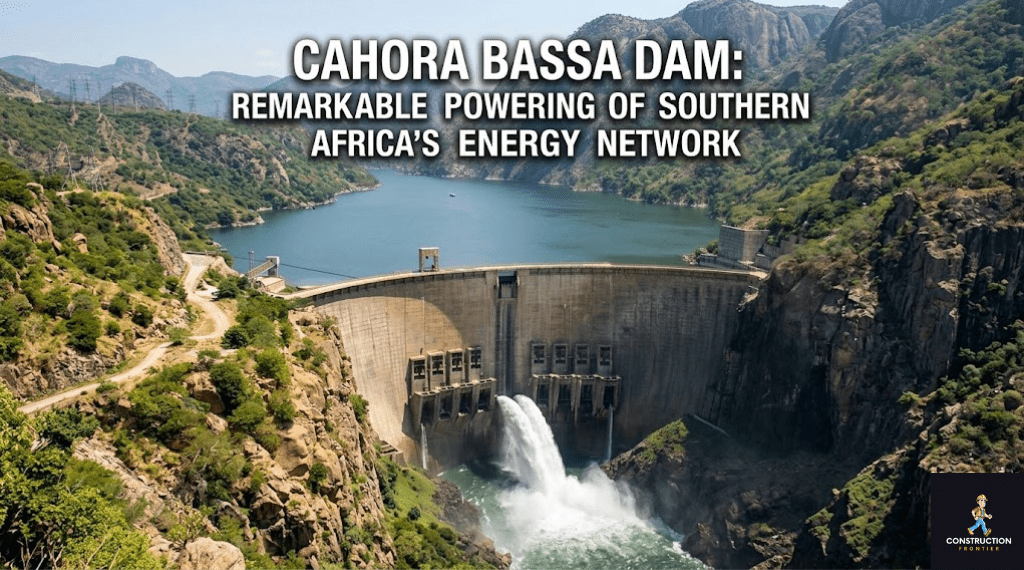
Cahora Bassa Dam: Remarkable Powering of Southern Africa’s Energy Network
The Cahora Bassa Dam, formally known as the Cahora Bassa hydroelectric power station, is a 2,075-megawatt high-head hydropower facility located on the Zambezi River in Tete Province, Mozambique, forming one of the most critical generation assets within Southern Africa’s energy infrastructure and serving as a primary source of baseload electricity for cross-border power distribution.
Operated by Hidroeléctrica de Cahora Bassa (HCB), the project integrates a double-curvature concrete arch dam, a large-scale reservoir system, and high-capacity turbine-generating units designed to supply electricity to regional grids, particularly to South Africa. Since the full ownership transfer to the Mozambican government in 2007, the Cahora Bassa Dam has evolved into a strategic export-oriented energy system, delivering consistent power output while supporting Mozambique’s role in regional electricity markets.
Technical Snapshot: Core Project Specifications
- Location: Zambezi River, Tete Province, Mozambique.
- Dam Type: Double-curvature concrete arch dam.
- Dam Height: ~171 metres.
- Reservoir Capacity: ~63 billion cubic metres.
- Reservoir Surface Area: ~2,700 km².
- Installed Capacity: 2,075 MW.
- Turbine Configuration: 5 × Francis turbines (~415 MW each).
- Annual Generation: ~14–16 TWh.
- Primary Export Market: South Africa.
- Transmission System: High-voltage direct current (HVDC) lines exceeding 1,400 km.
- Operator: Hidroeléctrica de Cahora Bassa (HCB).
- Ownership: Government of Mozambique (majority stake).
- Commissioning Period: 1974 (initial operation), full national control in 2007
The Cahora Bassa Dam does not simply function as a national hydropower asset. It operates as a regional energy stabilisation system within Southern Africa’s energy infrastructure, converting the Zambezi River’s hydraulic potential into a continuous electricity supply that underpins industrial activity, supports cross-border energy trade, and reinforces Mozambique’s position as a long-term power exporter in Africa.
Introduction: Engineering Legacy of the Cahora Bassa Dam in Regional Energy Systems
The Cahora Bassa Dam stands as one of the most strategically significant infrastructure achievements in Africa’s post-colonial era. Situated on the Zambezi River in Mozambique’s Tete Province, it has formed the backbone of electricity supply across Southern Africa since it began transmitting power in 1977, despite decades of political turbulence and civil conflict. At the time of its construction, the Cahora Bassa Dam was the fifth-largest dam in the world and the last megaproject built in Africa during the era of decolonisation, specifically designed to export energy, making it one of the largest dams ever constructed for that sole purpose.
The dam’s significance goes well beyond its physical scale. The Cahora Bassa hydroelectric power station has an installed capacity of 2,075 megawatts from five Francis turbines, and its reservoir, Lake Cahora Bassa, is Africa’s fourth-largest artificial lake, spanning 2,739 square kilometres and holding 55.8 cubic kilometres of water. Together, these figures define a project that did not simply generate electricity but reshaped the energy geography of an entire subcontinent. Its operational relevance extends far beyond Mozambique’s borders, with the bulk of its output travelling more than 1,400 kilometres by high-voltage direct current transmission to power South Africa’s industrial grid.
The Cahora Bassa Dam also reflects a long-term infrastructure philosophy that remains relevant today: centralised, high-capacity hydroelectric generation paired with cross-border transmission infrastructure. That philosophy has shaped Mozambique’s role in Southern Africa’s energy infrastructure over the past five decades, and it is now driving the next generation of investment in the Zambezi River dam project corridor.
Strategic Overview of the Cahora Bassa Dam within the Zambezi Basin
Cahora Bassa Dam functions simultaneously as a national infrastructure asset and a regional energy stabilisation system. Its position within the Zambezi River dam project network and Southern Africa’s energy infrastructure places it at the centre of a regional power architecture that spans multiple sovereign jurisdictions. This section examines its geographic and hydraulic advantages, traces the historical forces that shaped its construction, and explains the ownership structure that governs it today.
Location and Strategic Position on the Zambezi River
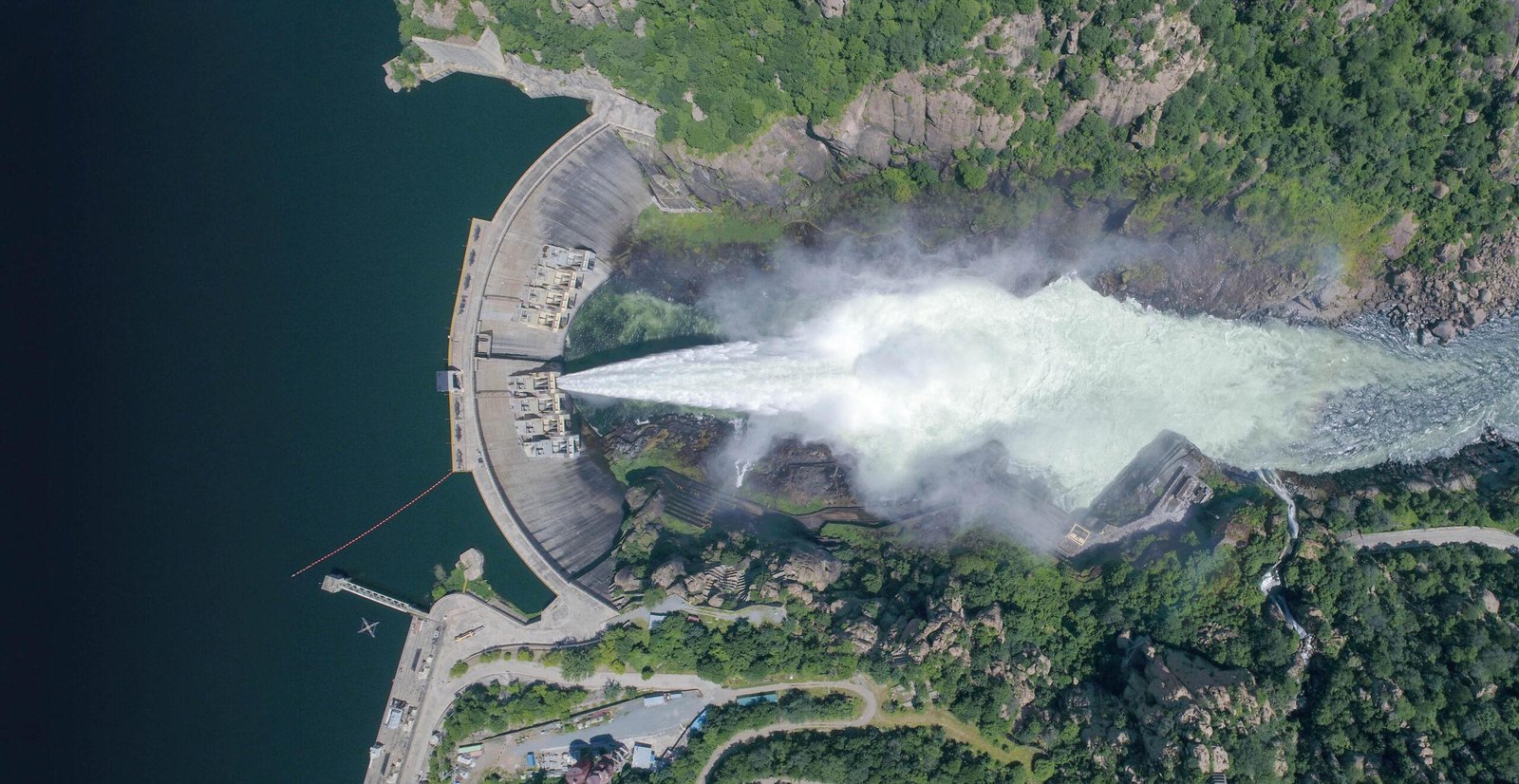
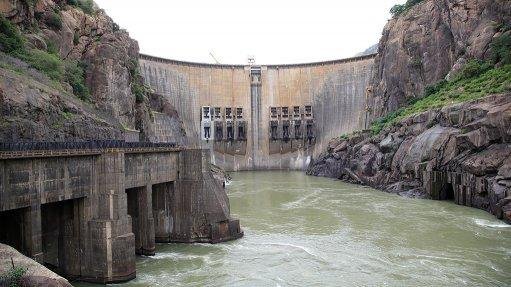
The Cahora Bassa Dam is an arch dam and hydroelectric facility on the Zambezi River in western Mozambique, located approximately 125 kilometres northwest of Tete. It stands 171 metres high and 303 metres wide at the crest. This position within the Cahora Bassa gorge is not incidental.
The site offers a hydraulic advantage rooted in three geological and hydrological realities. The gorge directs the river’s flow through a narrow passage, generating high hydraulic head conditions that optimise turbine efficiency. The surrounding rock formations provide the geological competence required to anchor a large arch dam structure safely. And the province of Tete lies within reach of the regional transmission corridors linking Southern African grids.
The Zambezi River Basin is the largest in Southern Africa, with a total drainage area of approximately 1.4 million square kilometres. The basin currently has approximately 5,000 MW of installed hydropower generation capacity, including the Cahora Bassa Dam and the Kariba Dam upstream. The Cahora Bassa Dam operates at the downstream end of this vast catchment, meaning it benefits from accumulated inflows across the entire upper basin before water reaches the gorge. This positioning makes it, under normal hydrological conditions, one of the most productive generation sites in the region.
Historical Development and Construction Background
Construction of the Cahora Bassa Dam began in 1969, as authorised by Portugal’s colonial administration. The dam was built by a consortium of Portuguese, German, British, and South African companies, with construction completed in 1974. The last of the five generators was installed in 1979.
The project was politically charged from the start. Colonial planners envisioned the dam as the cornerstone of economic development in Mozambique, designed to generate hydroelectric power primarily for export to South Africa, securing revenue to finance infrastructure and counterbalance independence movements through demonstrated progress. This export focus positioned it as the world’s largest dam built explicitly for energy sales abroad.
Construction began filling the reservoir in December 1974, and within six months it reached just 12 metres below its full supply level. The timing was consequential: Mozambique achieved independence in 1975, just as the dam was entering operation. The civil war that followed caused severe damage to the HVDC transmission infrastructure, and the Cahora Bassa HVDC system was out of service from 1985 to 1997 due to the Mozambican Civil War. The Portuguese government paid approximately USD 2.5 billion to repair the damaged transmission lines before commercial operation resumed in October 1997. Commercial operation began in 1977, with the initial 960 MW produced by three generators.
Ownership and Operational Structure
Hidroeléctrica de Cahora Bassa (HCB) was formally established on June 24, 1975, during Mozambique’s transition to independence. Initially, Portugal held 82% of HCB, with Mozambique at 18%. In 2007, Mozambique gained majority control at 85%, while Portugal retained 15% through Redes Energéticas Nacionais (REN).
The Mozambican state currently holds 90% of HCB’s share capital, with Portuguese company REN holding 7.5% and Electricidade de Moçambique holding 2.5%. In 2024, HCB conducted a public offering at Bolsa de Valores de Moçambique, selling 2.5% of its capital and signalling the company’s evolution toward greater transparency and market participation.
Today, Hidroeléctrica de Cahora Bassa operates as Mozambique’s premier hydropower company and the largest independent power producer in Southern Africa, managing not only the dam itself but also the HVDC transmission lines, converter substations, and the high-voltage AC transmission network feeding Mozambique’s domestic grid.
Technical Specifications and Engineering Design of the Cahora Bassa Dam
The engineering configuration of the Cahora Bassa Dam represents a high-head hydropower system built for long-term operational efficiency and sustained large-scale energy export. Understanding how it works demands a close look at its generation equipment, its reservoir geometry, and the world-pioneering transmission technology that carries its output to South Africa. These three layers together explain how the Cahora Bassa hydroelectric power station powers Southern Africa at the scale it does.
Installed Capacity and Power Generation Systems
Cahora Bassa is an electromechanical giant, housing five massive generator sets. The facility uses Francis turbines, the industry standard for high-head environments, where the combination of water pressure and high flow volume creates maximum rotational force.
To maintain its status as a top-tier producer, the plant is currently undergoing the REABSUL II rehabilitation programme. This mid-three-digit million-euro project, awarded to ANDRITZ Group, is designed to modernise the ageing infrastructure and push the plant’s efficiency beyond its original design limits.
Table 1: Generation Capacity and Upgrade Metrics
| Feature | Original Specification | Post-REABSUL II Upgrade |
| Individual Unit Capacity | 415 MW | 433 MW |
| Total Plant Capacity | 2,075 MW | 2,165 MW |
| Turbine Type | Francis Turbine | Enhanced Efficiency Runner |
| Annual Generation Target | 13,100 – 15,000 GWh | Optimised Baseload Output |
| System Gain | Baseline | +90 MW Total Capacity |
Despite shifting hydrological conditions, the plant has demonstrated remarkable resilience. In 2024, during a severe El Niño-induced drought, Hidroeléctrica de Cahora Bassa (HCB) reported a production of 15,753 GWh. This high output during an adverse climate event proves the exceptional quality of its reservoir management and technical discipline.
Dam Structure, Reservoir, and Hydrology
The physical scale of the Cahora Bassa Dam is essential to its role as a regional water regulator. Standing 171 metres high, the double-curvature arch dam creates a massive energy battery in the form of Lake Cahora Bassa.
- Massive Storage: The reservoir holds 63 billion cubic metres of water, extending 240 kilometres westward to the borders of Zambia and Zimbabwe.
- Operational Flexibility: This volume allows HCB to regulate the Zambezi River, storing water during floods and releasing it during dry spells to maintain consistent power generation.
- Ecological Footprint: Beyond power, the lake supports over 4,000 hippos and vital regional fisheries. However, the focus on power generation means downstream ecosystems still face challenges due to altered natural flood cycles.
- Upstream Dependency: The dam’s performance is inextricably linked to the Upper Zambezi Basin. Because the water source lies outside Mozambique, HCB must coordinate closely with upstream dam operators in Zambia and Zimbabwe.
Transmission Infrastructure and Grid Connectivity
The Cahora Bassa HVDC system is an international engineering landmark. Commissioned between 1975 and 1979, it was the first ultra-high-voltage DC scheme in Africa and the first in the world to operate at ±533 kV.
Table 2: HVDC Transmission Technical Profile
| Component | Technical Specification | Functional Role |
| Transmission Type | Bipolar HVDC | Long-distance, low-loss energy transfer |
| Operational Voltage | ±533 kV | World-first ultra-high-voltage standard |
| Maximum DC Capacity | 1,920 MW | Primary export link to South Africa |
| Transmission Distance | 1,414 Kilometers | Links Songo (MOZ) to Apollo (RSA) |
| Infrastructure Scale | ~4,200 Towers | Spans rugged terrain across Mozambique |
The Songo-to-Apollo Energy Corridor
The process of moving 2,075 MW across half a continent involves a sophisticated conversion sequence:
- Generation: Turbines produce AC power, sent via 220 kV lines to the Songo converter station.
- Conversion: Songo uses thyristor-based technology to convert AC into DC for the 1,414 km journey.
- Transit: Power travels southward through more than 4,200 towers, minimising line losses that typically plague long-distance AC lines.
- Injection: At the Apollo station near Pretoria, the power is converted back to AC and injected into Eskom’s grid, providing a critical clean energy source for South Africa’s industrial heartland.
Further Reading: Grand Ethiopian Renaissance Dam: Africa’s Monumental Hydropower Project Transforming Energy
Operational Role of the Cahora Bassa Dam in Powering Southern Africa
How the Cahora Bassa Dam powers Southern Africa is not a simple question of generation and transmission. It involves a web of power purchase agreements, cross-border energy trading arrangements, and grid interdependencies that make the dam indispensable to regional energy stability. This section examines its baseload contribution, the regional distribution networks it feeds, and the specific export relationship with South Africa that has defined its commercial model since 1979.
Electricity Supply in Southern Africa
Nearly all of Mozambique’s electricity derives from the 2,075 MW Cahora Bassa Dam, the largest hydropower dam in Southern Africa. The country procures up to 500 MW from the dam for domestic use and transports the remainder to South Africa, Zimbabwe, Botswana, and the wider Southern African Power Pool. This asymmetry between domestic use and export has shaped Mozambique’s energy politics for five decades and is now at the centre of a major policy debate about reorienting the dam’s output toward national development.
The Cahora Bassa hydroelectric power station delivers something that variable renewables cannot: firm, dispatchable baseload power. Its output is not subject to daily solar cycles or wind intermittency. It generates around the clock, providing the stable foundation on which industrial operations, grid management, and urban electricity supply in Southern Africa depend. HCB accounts for approximately 78.7% of Mozambique’s electricity production and exports, underscoring both the dam’s national importance and the country’s continued reliance on a single generation asset.
Cross-Border Power Distribution Networks
As a cornerstone of the SAPP framework, Cahora Bassa enables 12 member nations to share resources, balance loads, and reduce the massive capital costs of individual national reserves. The dam’s ability to provide spinning reserve solidifies Mozambique’s role as a net exporter and stabilises the entire subregion’s grid.
Recent data shows a clear trend toward improved technical performance. Transmission losses in the HVDC system dropped from 7.60% in 2023 to 6.76% in 2024, a direct result of ongoing modernisation.
Table 3: 2024 Energy Distribution Profile
| Off-taker | Energy Received (GWh) | Strategic Role |
| Eskom (South Africa) | 8,319 | Primary industrial baseload provider |
| EDM (Mozambique) | 3,451 | National domestic and industrial supply |
| ZESA (Zimbabwe) | 499 | Regional grid balancing support |
| Total Delivered | 12,269 | (Net of internal transmission losses) |
Cahora Bassa Dam Electricity Exports to South Africa
The export relationship with South Africa’s Eskom Holdings SOC Ltd is the single most significant financial driver in the history of Mozambican infrastructure. Since 1979, this partnership has turned the Zambezi’s flow into hard currency, funding the expansion of Mozambican public services and infrastructure.
- Fiscal Powerhouse: In 2024 alone, HCB generated USD 547 million in revenue, contributing USD 302 million directly to the national treasury.
- Sovereign Wealth: Since the landmark 2007 ownership reversion, HCB has paid the Mozambican state approximately EUR 1.588 billion (115 billion meticais) in fees and taxes.
- Recent Surge: Over 30% of those total historical payments occurred in just the last two years (2023–2024), highlighting the plant’s increasing profitability.
The 2030 Strategic Watershed
The energy landscape of Southern Africa is approaching a monumental shift. President Daniel Chapo has confirmed that the legacy Power Purchase Agreement (PPA) with Eskom will expire on December 31, 2030.
Table 4: Post-2030 Strategic Outlook
| Factor | Current Status (Pre-2030) | Future Projection (Post-2030) |
| Primary Buyer | Fixed (Eskom) | Market-driven (SAPP or domestic) |
| Pricing Model | Legacy fixed-rate PPA | Market-reflective/Spot-market rates |
| Energy Sovereignty | Contractually tied exports | Full Mozambican dispatch control |
| Strategic Goal | Debt servicing & export revenue | Industrialisation & domestic energy security |
This transition marks the end of a half-century era. By 2030, Mozambique will have the full power to decide the final destination for its clean energy, prioritise internal industrialisation, or negotiate higher-value contracts within the SAPP spot market.
Mozambique’s Strategic Position in Regional Electricity Supply
Mozambique’s role in regional electricity supply flows directly from its control of the Cahora Bassa Dam. Few countries in Africa occupy a more influential position in cross-border energy trade, and the decisions Mozambique makes in the coming decade about where to direct the dam’s output, how to expand generation capacity, and how to integrate its grid nationally will shape Southern Africa’s energy infrastructure for a generation. This section examines the broader hydropower portfolio context, Mozambique’s position as a regional hub, and the economic architecture that supports energy exports.
Mozambique Hydropower Projects and Energy Portfolio
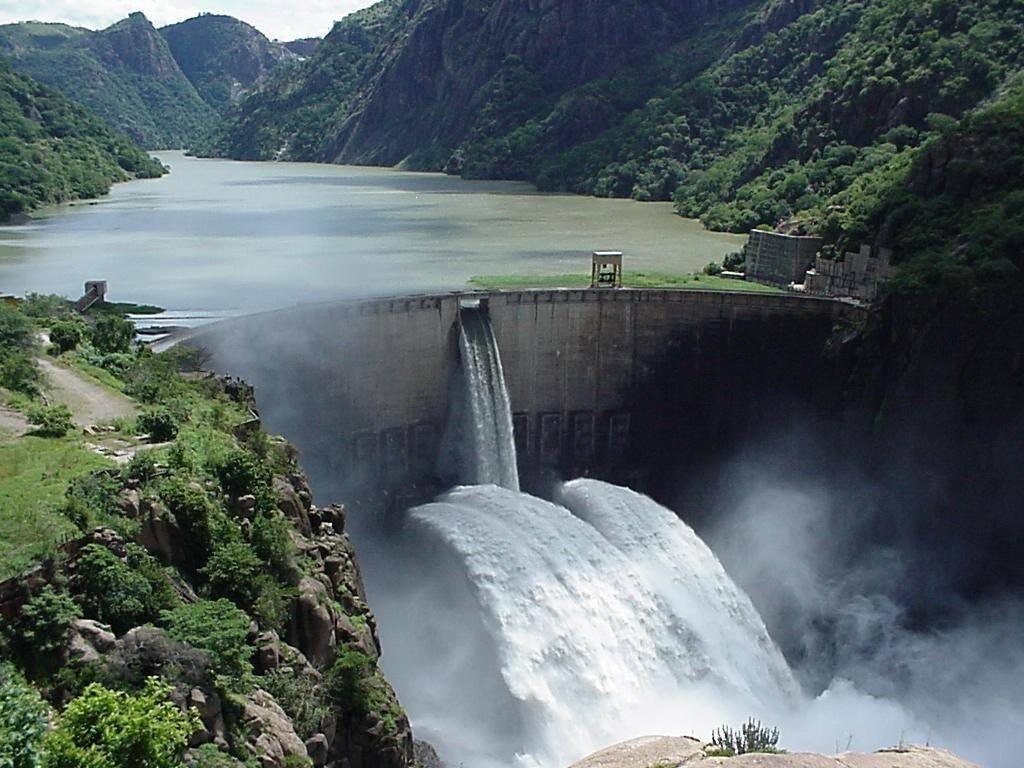
While the Cahora Bassa Dam is the titan of Mozambique’s energy estate, the nation is aggressively diversifying its hydropower projects. An EDF-led consortium is currently developing the Mphanda Nkuwa project, which will add 1,500 MW of capacity downstream of Cahora Bassa. Other high-potential projects in the pipeline include the 1,000 MW Chemba, 650 MW Lupata, and 210 MW Boroma plants. These will augment existing smaller facilities, such as the Massingir (25 MW), Chicamba (44 MW), and Mavuzi (41 MW) stations.
Despite this expansion, the Cahora Bassa Dam project remains the unmatched anchor. Its 2,075 MW capacity dwarfs all other national assets combined. However, relying on a single facility creates systemic risk. The El Niño-driven droughts of 2023 and 2024 saw reservoir levels drop to their lowest in 50 years, highlighting the urgent need for the broader portfolio development currently underway.
| Project Name | Status | Projected Capacity |
| Cahora Bassa (Existing) | Operational | 2,075 MW |
| Mphanda Nkuwa | Development | 1,500 MW |
| Chemba | Proposed | 1,000 MW |
| Lupata | Proposed | 650 MW |
Mozambique as a Regional Energy Hub
Mozambique is positioning itself as the definitive energy heart of the Southern African Development Community (SADC). President Daniel Chapo has explicitly targeted hub status, backed by a triple-threat strategy:
- Cahora Bassa rehabilitation.
- Cahora Bassa North expansion.
- Mphanda Nkuwa development.
This step-change in generation aims to transition the region from energy scarcity to a structural surplus by the mid-2030s.
Domestic progress is equally rapid, where electricity access in Mozambique surged from 31% in 2018 to 60% in 2024. Electricidade de Moçambique (EDM) connected 563,000 homes in 2024 alone, with a target of 600,000 for 2025. The core of the energy transition strategy is a pivot scheduled for 2030: repatriating exported power for domestic industrialisation while using new capacity to satisfy regional trade obligations.
Economic Importance of Energy Exports
The Cahora Bassa Dam is a critical fiscal engine. In 2024, Mozambique earned USD 431 million from electricity exports to Eskom (South Africa) and Zesco (Zambia). These revenues are essential for servicing national debt and funding the infrastructure programmes that drive Mozambique’s economic growth.
The financial resilience of Hidroeléctrica de Cahora Bassa (HCB) is record-breaking. Despite historic drought levels in 2024, HCB posted its largest-ever profit of USD 220 million. This performance proves the commercial strength of low-variable-cost hydropower. In 2025, HCB is projected to contribute approximately USD 292 million to the state treasury through taxes, concession fees, and dividends.
Benefits of the Cahora Bassa Hydroelectric Project
The benefits of the Cahora Bassa hydroelectric project reach across energy systems, industrial economies, and regional development frameworks. This section examines three dimensions: the renewable generation base it provides, the industrial growth it enables across Southern Africa, and the grid resilience it contributes to Southern Africa’s energy infrastructure.
1. Reliable Renewable Energy Generation
Hydropower from the Cahora Bassa Dam is clean, low-carbon, and dispatchable. Unlike solar or wind, it generates regardless of time of day or weather conditions, making it the most valuable form of renewable energy for grid operators managing supply and demand in real time.
The Cahora Bassa hydroelectric power station supplies over half of Mozambique’s electricity needs and exports it to South Africa, Zimbabwe, and other neighbours via high-voltage direct current lines. For a region where the majority of generation still relies on coal-fired plants, the dam represents not just an electricity supply but also a credible low-carbon anchor in the Southern African energy mix.
The scale of this renewable contribution is substantial. At peak production of 16,057 GWh in 2023, the Cahora Bassa Dam avoided approximately 13.8 million tonnes of CO₂ emissions compared to coal-fired generation at standard emissions intensity, a significant contribution to the subregion’s decarbonisation pathway.
2. Industrial and Economic Growth in Southern Africa
The electricity supply in Southern Africa that the Cahora Bassa Dam enables directly supports the region’s industrial base. South Africa’s mining industry, smelting operations, and manufacturing sector all consume power that travels from the Zambezi River gorge to the Apollo converter station near Pretoria and then into the grid. The dam also supplies electricity to Maputo and Tete, as well as to the Moatize coal mines near Tete, demonstrating its reach across multiple categories of industrial demand in Mozambique.
The Mozal aluminium smelter near Maputo depends on the Cahora Bassa Dam’s generation, either directly or through Eskom wheeling arrangements, and requires approximately 900 MW of continuous supply while marketing its output as clean energy. This single industrial facility represents one of Mozambique’s largest export earners and exists, in a meaningful sense, because of the dam’s generation capacity.
3. Strengthening Southern Africa’s Energy Infrastructure
The Cahora Bassa Dam’s contribution to Southern Africa’s energy infrastructure goes beyond megawatts. It demonstrates that large-scale cross-border clean energy trade is technically feasible, commercially viable, and politically sustainable over multi-decade horizons. The HVDC transmission system connecting Songo to Apollo, now over four decades in service, remains the most significant long-distance power transmission project on the continent and has informed the design of subsequent cross-border energy infrastructure across Africa.
Southern Africa presently faces a shortage of 10,000 MW. The Cahora Bassa Dam, operating consistently at or near its design capacity during normal hydrological years, covers a meaningful portion of that deficit for South Africa while supplying the domestic grids of Zimbabwe, Zambia, and Mozambique. Without it, the region’s power balance would be materially worse, and electricity costs for South African industry, which drives the subregion’s largest economy, would be higher.
Further Reading: Grand Inga Dam in the DRC: Africa’s Ambitious Mega Project Set to Transform Energy
Zambezi River Energy Infrastructure Analysis
The Cahora Bassa Dam does not operate in isolation. It sits within the Zambezi River dam project system as the basin’s dominant downstream generator, dependent on upstream conditions and interdependent with other hydropower assets across six countries. A proper analysis of Zambezi River energy infrastructure requires understanding both the hydrological interdependencies that define the basin and the strategic significance of the corridor as a continental energy corridor.
Role of Cahora Bassa in the Zambezi Basin
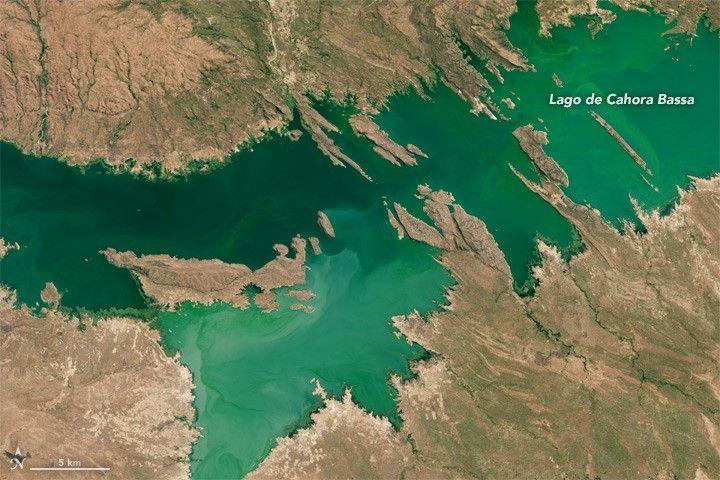
The Zambezi River Basin has a total drainage area of approximately 1.4 million square kilometres and currently has approximately 5,000 MW of installed hydropower generation capacity across the Cahora Bassa and Kariba dams, with an additional 13,000 MW of hydropower potential identified in the basin. The Cahora Bassa Dam accounts for the largest share of current installed capacity and acts as the basin’s downstream flow regulator, influencing water availability, sediment transport, and ecological conditions across the lower Zambezi valley.
Because Mozambique sits at the end of the river system, upstream dam operations in Zambia and Zimbabwe directly affect inflows into the Cahora Bassa reservoir. When Kariba Dam reduces its releases, as it did during the 2024 drought when Lake Kariba sat at critically low levels, the downstream impact is a reduction in inflows to Cahora Bassa, compressing generation options and forcing HCB to draw down stored water to meet contractual supply obligations. This upstream dependency is the Cahora Bassa Dam’s most significant structural vulnerability, one that no engineering upgrade can fully resolve.
Regional Hydropower Synergies and Dependencies
The analysis of the Zambezi River’s energy infrastructure reveals a basin whose hydropower assets are operationally interdependent yet lack a unified coordination framework that fully optimises regional water and energy management. Upstream decisions, whether driven by power generation needs, irrigation demands, or flood management priorities, cascade downstream and affect Cahora Bassa’s generation efficiency.
There are also genuine synergies. During high-rainfall periods, upstream reservoirs fill and release controlled volumes that sustain Cahora Bassa inflows, enabling the dam to operate near or above design targets. In those years, the basin functions as an integrated, multi-reservoir hydropower system with Cahora Bassa as the final stage in the energy conversion chain. Developing the downstream Mphanda Nkuwa run-of-river plant, which will operate on water released from Cahora Bassa, adds a further stage to this cascade, improving overall basin energy conversion efficiency.
Strategic Importance of the Zambezi River Dam Projects
The Zambezi River Basin is highly susceptible to extreme droughts, often multi-year, and floods that occur nearly every decade. During the severe 1991-1992 drought, reduced hydropower generation resulted in an estimated USD 102 million reduction in GDP, a USD 36 million reduction in export earnings, and the loss of 3,000 jobs across the basin economies. These figures illustrate why the Zambezi River dam project system is not merely an engineering portfolio but a macroeconomic stabilisation mechanism for Southern Africa.
The strategic case for continued investment in Zambezi hydropower, at Cahora Bassa, Mphanda Nkuwa, and the additional upstream sites under study, is therefore strong. Expanding capacity within the basin increases the region’s buffer against hydrological variability, reduces dependence on coal-fired generation, and deepens the economic integration enabled by stable cross-border energy trade.
Challenges Facing the Cahora Bassa Dam
For all its achievements, the Cahora Bassa Dam faces real and growing challenges that require direct acknowledgement. These are not theoretical risks for the distant future; they are structural pressures actively shaping the dam’s operational performance and long-term strategic relevance right now.
(Source: Engineering News)
1. Ageing Infrastructure and Maintenance Needs
HCB CEO Tomás Matola was direct on this point when addressing the World Bank’s president: “From the supply side, our big challenge is because of the age of our equipment. It is 50 years old, so all our equipment is obsolete, so now we need to do a deep rehabilitation of our power plant and substations.” The five generating units, installed in the 1970s, have exceeded their designed service life. Without rehabilitation, the risk of unplanned outages increases, and with it the risk of simultaneous supply disruptions to South Africa, Zimbabwe, and Mozambique’s domestic grids.
The REABSUL II rehabilitation programme awarded to ANDRITZ covers five new Francis turbine runners, modernisation of control and protection systems, rehabilitation of hydromechanical structures, and rehabilitation of the Songo Converter Substation, identified as a weak link in the power transmission chain.
After three years of preparatory work, Cahora Bassa’s generating units will be replaced one by one, ensuring the stable and continuous operation of the remaining units. This sequenced approach minimises downtime, but it stretches the upgrade program across several years.
2. Climate Change and Hydrological Variability
The drought caused by El Niño from 2023 to 2025 highlighted the Cahora Bassa hydroelectric power station’s climate vulnerability. On 31 December 2024, the reservoir level reached 305.20 metres above sea level, corresponding to just 21.19% of useful storage capacity, a figure that, if sustained, would have forced generation curtailments with immediate consequences for regional energy supply. HCB management explicitly If drought conditions persist into the critical first quarter of the hydrological year, they will severely affect the following year’s electricity production.
Climate modelling of the Zambezi River Basin indicates that the region will experience more extreme rainfall and drought events, with a tendency toward reduced mean annual runoff over the coming decades. These risks have profound implications for future hydropower in the basin. The Cahora Bassa Dam was designed using historical flow records that do not reflect the intensified climate variability now projected for the basin, meaning its operational framework needs to be updated to account for a more volatile hydroclimatic future.
3. Transmission Losses and Grid Limitations
The Cahora Bassa HVDC system recorded transmission losses of 6.76% of total production in 2024. For a system delivering over 12,000 GWh annually, this figure represents nearly 840 GWh of electricity generated but never consumed, roughly equivalent to the annual consumption of a medium-sized African city. While HVDC technology is inherently more efficient over long distances than AC alternatives, the age of the converter equipment and the 1,400-kilometre line length mean losses remain an ongoing engineering focus.
A separate structural challenge is Mozambique’s fragmented national grid. Because Mozambique’s grid is not linked nationally, the country’s largest electricity consumer, the Mozal aluminium smelter near Maputo, cannot receive a direct power supply from the Cahora Bassa Dam and instead sources its supply through Eskom. This grid disconnection means that Mozambique simultaneously exports the bulk of its generation while importing electricity for its capital and industrial base, a paradox that the national transmission investment programme now underway seeks to resolve.
Environmental and Social Considerations
The engineering achievements of the Cahora Bassa Dam must be weighed against the impacts that affected hundreds of thousands of people and continue to shape ecological and social conditions along the Zambezi Valley.
Ecological Impact on the Zambezi River
The creation of the reservoir transformed the lower Zambezi ecosystem in unforeseen ways, and its effects remain largely irreversible. An estimated 1 million people living downriver have been affected by ecological consequences in the region’s fertile agricultural floodplains and by the decline in fish and other wetland wildlife populations.
The dam’s regulation of river flow eliminated the seasonal flood pulse that historically recharged floodplain soils, sustained fishery nurseries, and supported the coastal mangrove ecosystem at the Zambezi Delta. Commercial prawn fisheries in the delta declined substantially after the dam’s construction, directly affecting coastal communities dependent on fishing livelihoods.
The results have included longer droughts and shorter but more intense rainfall, leading to recurring droughts, periodic massive flooding, soil erosion, food shortages, and disease. Every decade since the dam’s construction has seen massive floods displace thousands of households and inundate much of the most valuable farmland. These outcomes are not accidental; they reflect the fundamental alteration of a river system that millions of people depended on before the reservoir was created.
Community and Resettlement Issues
Some 50,000 people were displaced during the construction of the Cahora Bassa Dam. Reservoir impoundment in the early 1970s displaced approximately 25,000 peasants living along the Zambezi River through forced evictions. Relocation efforts, overseen by Portuguese colonial authorities amid wartime pressures, prioritised rapid construction over comprehensive support, leading to insufficient compensation, poor site selection for new settlements, and disrupted access to ancestral lands.
The communities affected lost seasonal flood-recession agriculture, fishing grounds, and the social fabric of villages that had occupied the valley for generations. Oral histories of the displacement record the loss with a clarity that official engineering reports do not.
Modern hydropower standards, embedded in the International Finance Corporation’s (IFC) Performance Standards and Equator Principles, require free, prior, and informed consent from affected communities; genuine livelihood restoration programs; and ongoing grievance mechanisms. The Cahora Bassa Dam’s legacy explains why those standards exist, and why the Mphanda Nkuwa project downstream has been redesigned to reduce reservoir size and minimise displacement impacts.
Sustainable Hydropower Management Practices
HCB has made significant progress in modernising its environmental and social management approaches. The 2025 rehabilitation programme with ANDRITZ includes environmental compliance components and operational optimisations that reduce downstream flow variability. HCB noted that for the first time in its 50-year history, it recorded no workplace accidents in 2024, reflecting improvements in operational safety culture. The company supports community programs in Songo and Tete and participates in national electrification projects.
Managing a major dam whose ecological impact predates modern environmental governance poses a broader challenge that requires a long-term adaptive management framework. Minimum environmental flow releases that restore some degree of floodplain connectivity, sustained investment in fishery monitoring, and support programmes for community livelihoods represent the practical tools available for improving outcomes within the dam’s operational constraints.
Comparison with Other Mozambique Hydropower Projects
No single comparison defines the status of the Cahora Bassa Dam more clearly than its relationship to the other hydropower assets within Mozambique’s energy portfolio. Understanding where it sits in that landscape clarifies both its unique strengths and the portfolio gaps that future projects must address.
How Cahora Bassa Compares to Other Hydropower Stations
Among all Mozambique hydropower projects, the Cahora Bassa Dam has no near competitor. The Cahora Bassa hydroelectric power station is the largest hydroelectric scheme in southern Africa, with a powerhouse containing five 415-MW turbines.
The next largest existing assets, Chicamba at 44 MW and Mavuzi at 41 MW, are two orders of magnitude smaller. The planned Mphanda Nkuwa project at 1,500 MW will, when complete, represent the first Mozambican hydropower asset meaningfully comparable to Cahora Bassa, though it will still operate at roughly 70% of the existing dam’s installed capacity.
The Cahora Bassa Dam also differs from the rest of the portfolio in its transmission infrastructure. It operates the first HVDC scheme ever built in Africa and the first anywhere in the world to operate above 500 kV, a distinction that reflects the technological ambition of its original design and the engineering legacy it represents.
Unique Strengths of the Cahora Bassa Hydroelectric Power Station
Three structural advantages distinguish the Cahora Bassa hydroelectric power station from every other electricity generation asset in Mozambique and most others in sub-Saharan Africa.
- Installed Capacity: 2,075 MW places it among the top five hydropower plants on the continent.
- HVDC Export Infrastructure: provides direct access to South Africa’s 400 kV grid, the most developed transmission network in sub-Saharan Africa, giving Cahora Bassa’s output immediate access to the region’s largest electricity market.
- Five Decades of Operational History: HCB gets deep institutional knowledge of Zambezi Basin hydrology, reservoir management, and long-distance transmission, knowledge that directly supports the design and operation of every future Mozambique hydropower project.
Future Outlook of the Cahora Bassa Dam
The Cahora Bassa Dam enters its second half-century facing a combination of operational challenges and strategic opportunities that will define its next phase. The rehabilitation now underway, the planned expansion of the northern bank, and the 2030 expiry of the Eskom power agreement together create a pivotal moment in the dam’s evolution.
Modernisation and Capacity Expansion Plans
The planned Cahora Bassa North project will consist of three turbines, each with a 415 MW nameplate capacity, for a total of 1,245 MW of generation. Construction is expected to commence in 2028 with commercial operation by 2032, with power to be sold to Zimbabwe’s ZESA Holdings under a power purchase agreement. This expansion has received the backing of the World Bank, which is in discussions with the Mozambican government to raise financing. The combined Cahora Bassa Dam expansion projects are estimated to cost more than USD 6 billion.
In parallel, the REABSUL II rehabilitation programme replaces ageing turbine runners and control systems on the existing five generation units, increasing unit capacity from 415 MW to 433 MW and adding 90 MW of total output. Together, the rehabilitation and northern bank expansion will increase the total Cahora Bassa system capacity to well above 3,300 MW, making it an even more dominant feature of Southern Africa’s energy infrastructure in the 2030s.
Increasing Regional Energy Demand and the 2030 Inflexion Point
Southern Africa currently faces a shortage of 10,000 MW, and Mozambique plans to increase power generation to benefit both domestic and regional markets. The Cahora Bassa Dam’s expanded capacity arrives at precisely the right moment in the regional energy cycle. The ageing and progressive retirement of South Africa’s coal fleet are significant factors. Demand for clean, reliable electricity across SAPP is growing. The dam’s expansion intersects with this demand growth trajectory at a time when the political will to develop Zambezi hydropower has rarely been stronger.
The 2030 expiry of the Eskom power purchase agreement represents the single most consequential decision point in the Cahora Bassa Dam’s near-term future. Mozambique’s Energy Transition Strategy sets a clear short-term hydropower priority: repatriating the 8 to 10 TWh of electricity currently exported to South Africa for domestic use from 2030, alongside the addition of 2 GW of new national hydropower capacity by 2031.
How Mozambique navigates this transition will determine whether the Cahora Bassa Dam becomes the engine of Mozambique’s industrialisation or remains primarily a regional export asset, while balancing export revenues that fund national development with the domestic electrification imperative.
Long-Term Role in Southern Africa Energy Infrastructure
The Cahora Bassa Dam will remain the central pillar of Southern Africa’s energy infrastructure for decades to come. Its combination of installed capacity, proven transmission infrastructure, operational experience, and planned expansion places it in a category that no other project in the region will match in the near term.
The downstream Mphanda Nkuwa plant, expected to generate 1,500 MW when it begins operations in 2031, is positioned as southern Africa’s biggest hydropower project in 50 years and will operate in tandem with the Cahora Bassa Dam, drawing on water releases from the upstream reservoir to support a complementary run-of-river generation profile.
Together, the Cahora Bassa Dam system and Mphanda Nkuwa will provide Mozambique with a generation base that positions the country not merely as a participant in regional energy trade but as the strategic energy anchor of the Southern African Development Community, fulfilling President Chapo’s ambition and confirming the Zambezi River dam project corridor as one of the most consequential energy infrastructure corridors on the African continent.
Further Reading: Mambilla Hydroelectric Power Project in Nigeria: Transformative Energy Mega Project Driving Growth
Technical Block: System-Level Engineering and Operational Profile of Cahora Bassa Dam
The Cahora Bassa Dam is a masterwork of African hydropower, integrating double-curvature arch mechanics, high-capacity Francis turbine technology, and 533 kV high-voltage direct current (HVDC) transmission. It serves as a foundational node within the Southern African Power Pool (SAPP), bridging the gap between the region’s massive hydrological potential and regional industrial demand.
1. Structural Engineering Profile
The dam utilises a double-curvature concrete arch design, a geometry specifically chosen to transfer hydrostatic pressure directly into the surrounding river abutments.
- Dimensions: The structure stands approximately 171 metres high with a crest length of 303 metres.
- Concrete Volume: Over 500,000 cubic metres of concrete were used, balancing structural integrity with material optimisation for high reservoir loads.
- Engineering Logic: The arch design minimises material usage while providing high durability against the intense pressure of the Zambezi River.
2. Hydrological System Characteristics
The reservoir, Lake Cahora Bassa, is one of the largest man-made lakes in the world and serves as the system’s primary energy storage.
- Storage Capacity: Approximately 63 billion cubic metres.
- Scale: The reservoir extends 240 kilometres, enabling a highly regulated flow regime that smoothes out seasonal variability.
- Basin Risk: While reliable, the dam’s performance depends on the Zambezi River Basin, meaning a significant portion of the inflow is subject to upstream management in neighbouring countries.
3. Power Generation Architecture
The powerhouse is an electromechanical giant designed for continuous, high-volume energy conversion.
- Turbine Technology: 5 x Francis-type turbines, each rated at 415 MW.
- Capacity: A total installed capacity of 2,075 MW, making it a top-tier producer of clean energy in Africa.
- Generator Performance: The units have a rating of 480 MVA and are optimised for stable conversion efficiency even under fluctuating load conditions.
4. Transmission and Regional Grid Integration
Cahora Bassa is world-renowned for its HVDC (High-Voltage Direct Current) system, a necessity for long-distance energy export.
- The Apollo-Songo Line: A transmission corridor extending over 1,400 kilometres between Songo (Mozambique) and the Apollo substation (South Africa).
- Technical Specification: Operates at approximately 533 kV across more than 4,000 transmission towers.
- Efficiency: The HVDC configuration drastically reduces line losses, enabling Mozambique to function as a reliable power exporter for the Southern African market.
5. System-Level Strategic Role
At its core, the Cahora Bassa Dam project provides three essential functions for the Mozambican economy and the regional grid:
- Baseload Reliability: Delivering consistent, always-on electricity.
- Regional Export Hub: Acting as a primary source of revenue through cross-border trade.
- Grid Stabilisation: Balancing frequency and load fluctuations across interconnected national systems.
This multi-layered functionality positions the dam not merely as infrastructure but as a core node within Southern Africa’s integrated power system.
Conclusion: Strategic Longevity of Cahora Bassa Dam in Africa’s Energy Evolution
The Cahora Bassa Dam stands as one of the most structurally significant and operationally resilient assets within Southern Africa’s energy infrastructure. Its scale, engineering sophistication, and design have allowed it to function as a cornerstone of regional electricity supply for decades. Most importantly, it demonstrates how large-scale hydropower can anchor cross-border energy systems, enable industrial growth, stabilise national grids, and support long-term economic integration across multiple countries.
Looking ahead, the relevance of the Cahora Bassa Dam will increasingly depend on how effectively it integrates into a diversified energy mix shaped by renewables, grid digitalisation, and evolving demand patterns. For policymakers, investors, and infrastructure developers, it provides a benchmark for capital-intensive energy systems that balance engineering performance with geopolitical and economic realities. It’s the continued evolution that will shape the conception, financing, and delivery of future Zambezi River dam projects and continental-scale power systems.
Stay Updated on Africa’s Energy Infrastructure Megaprojects
Stay ahead of Africa’s infrastructure transformation with Construction Frontier: Africa Mega Projects. Explore deep technical insights, expert analysis, and investment intelligence shaping the future of African hydropower infrastructure.





Very insightful and thourough research done on the project.
We value expansive project deep dives, unlike superficial journalistic view. Thank you.