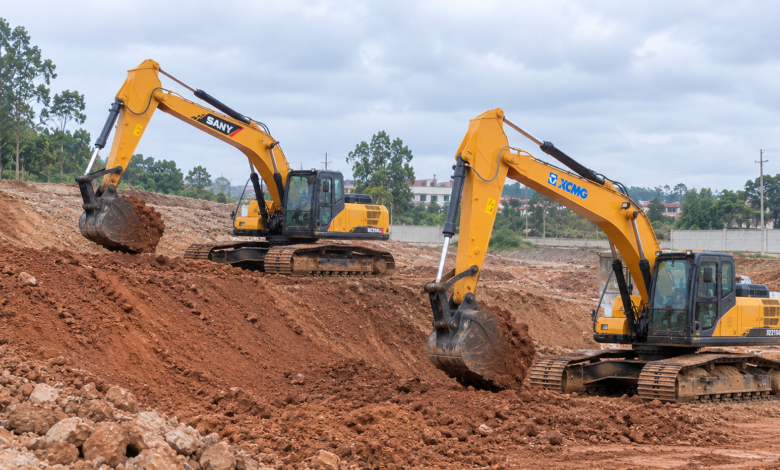
XCMG vs SANY Equipment in Africa: 7 Decisive Gaps for Confident Buyers
XCMG vs SANY equipment in Africa comes down to seven gaps: product strength, wheel loader and grader depth, growth disclosure, parts depots, parts cost against waiting time, resale and financing, and duty fit. SANY reported Africa revenue up 47.66% to approximately USD 790.2 million in the first half of 2026 and runs a 20,000 m² parts centre in Johannesburg. XCMG ranks third worldwide with approximately USD 14.2 billion in equipment sales and fields heavy mining fleets at Guinea’s Simandou project. The better brand depends on the buyer’s country, duty cycle, and nearest stocked parts depot.
Technical Snapshot: XCMG vs SANY Equipment in Africa at a Glance
| Parameter | Detail |
| Global rank (Yellow Table 2026) | XCMG third, with approximately USD 14.2 billion in equipment sales and a 5.8% share; SANY sixth |
| Overseas revenue, first half of 2026 | SANY USD 4.724 billion (61.33% of core revenue); XCMG approximately USD 4.56 billion (above 50% of total revenue) |
| Africa revenue disclosure | SANY USD 790.2 million, up 47.66%; XCMG publishes no comparable Africa figure |
| Network evidence | SANY: 20,000 m² Johannesburg parts centre serving 14 countries; XCMG: over 300 overseas dealers and 2,000 service and parts outlets worldwide, plus a Simandou service base |
| Strongest lines by reported revenue mix | SANY: excavation, piling, concrete; XCMG: earthmoving, hoisting, mining |
| Binding constraint | Parts depth in the buyer’s own country, not brand rank |
| Fastest levers | Name the depot in the contract, fix the engine and configuration, and score the weighted matrix |
| Benchmark metric | Ownership cost including parts-waiting days; break-even at 1.9 major parts events in the worked case |
| Ownership and structure shift | Both makers now earn over half of revenue abroad, and Africa leads SANY’s growth |
This guide scores the seven gaps in XCMG vs SANY equipment in Africa and converts them into a weighted decision rule that buyers can test against any dealer quote.
Introduction: XCMG vs SANY Equipment in Africa
XCMG vs SANY equipment in Africa is now the defining contest among Chinese excavator brands in Africa, and the two compete on service as much as on price. The two makers rank third and sixth in the global ranking of equipment manufacturers, and both earn more than half of their revenue overseas. Africa gives them their fastest growth: SANY added approximately USD 255 million of African revenue in six months, while XCMG opened a Nigerian trading subsidiary and fielded a service base at Guinea’s Simandou iron ore project. Buyers who treat the choice as a price comparison miss where the money moves.
The problem is information, not steel. Supplier blogs contradict one another on which brand owns the denser African network, and neither maker publishes country-level uptime or parts fill rates. SANY reports Africa revenue by region, whereas XCMG reports dealer counts without isolating Africa. Risk, therefore, concentrates in the parts depot nearest the machine, a fact that no brochure names and no ranking measures.
This guide compares the two brands across seven gaps: product strength, wheel loader and grader depth, growth disclosure, depot and service coverage, parts cost against waiting time, resale and financing, and duty fit. It serves engineers, fleet owners, procurement teams, and investors, rests on company filings, customs statistics, and named deployments, and labels every supplier claim it cannot verify. It closes with a weighted scoring rule and a downtime break-even test that any buyer can run against a dealer quote.
Decision Criteria: How the Seven Gaps Work
Each gap tests one decision a buyer must make, and each rests on a different quality of evidence. Product and duty gaps rest on what each maker builds and fields. Footprint and service gaps rest on where help sits when a machine stops. The cost gaps rest on what ownership charges over five years. The table grades the evidence behind each gap, so readers know which findings are firm and which need their own verification before capital moves.
Seven Gaps at a Glance: Decision Driven and Evidence Strength
| Gap | Decision it drives | Evidence strength |
| 1. Excavation depth against earthmoving and lifting breadth | Which brand to shortlist for a given fleet mix | Strong, from company revenue mix |
| 2. Wheel loader and grader strength | Loader and grader selection | Weak for loaders, moderate for graders |
| 3. Growth disclosure against mining-project presence | How far to trust brand momentum | Strong for SANY, thin for XCMG |
| 4. Stocked depots against deployed specialists | Downtime risk by country | Moderate, from company claims |
| 5. Parts pricing against parts waiting | Which purchase discount is worth taking | Weak on price, moderate on lead time |
| 6. Resale and financing | Exit value and funding route | Weak, regional and anecdotal |
| 7. Duty cycle fit | Mining, roads or general earthmoving | Moderate, from named deployments |
Product Range and Flagship Models
The two lineups overlap in 20-tonne excavators and diverge almost everywhere else. The first gap compares where each maker earns its revenue, and the second compares wheel loaders and graders, the machines that decide most quarry and haul-road outcomes. Together, they show why XCMG vs SANY equipment in Africa is a question of fleet mix before it is a question of badges.
Gap 1: Excavation Depth Against Earthmoving and Lifting Breadth
SANY earns its living from digging. Its excavation machinery revenue rose 21.77% to USD 3.141 billion in the first half of 2026, accounting for about 40% of group revenue, while piling machinery climbed 63.11% to USD 322.4 million in SANY’s first-half revenue by region. Its African portfolio leans on excavators, concrete and road equipment, a profile that the wins and limits of SANY in Africa examine in detail.
XCMG spreads its revenue wider. Its 2025 earthmoving machinery revenue reached RMB 30.131 billion, hoisting RMB 20.983 billion and mining machinery RMB 9.377 billion, which equal approximately 30%, 21% and 9% of its RMB 100.823 billion total. The proven XCMG models on African sites reflect that spread, so any XCMG vs SANY excavator comparison starts with fleet mix. The categories differ in scope between the two makers, so compare the shape of each mix, not the totals.
Lineup Comparison: SANY and XCMG by Equipment Class
| Class | SANY | XCMG | Evidence grade |
| 20-tonne crawler excavators | SY215 series, widely sold | XE215 series, widely sold | Model-level Africa data thin |
| Wheel loaders, 5-tonne class | Competes in the class; no verified Africa fleet data | ZL50GN anchors the class | Weak |
| Motor graders and road rollers | Motor graders listed in its Africa portfolio since 2017; road milling arriving | Long-standing strength | Moderate |
| Cranes | Crawler cranes and port machinery | Truck cranes | Moderate |
| Concrete and piling | Strongest line; piling revenue up 63.11% | Concrete machinery shipped; revenue not split out | Moderate |
| Mining haulage and electric | Excavator and loader fleets in published cases | XDE260 haul trucks and XE1350E electric excavator | Strong for XCMG |
Gap 2: Wheel Loader and Grader Strength
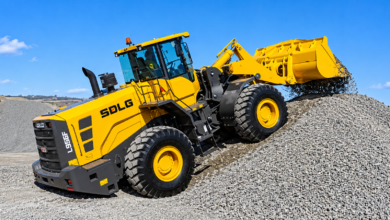
XCMG vs SANY wheel loader comparisons online rest on dealer opinion, and no independent source in this research publishes loader availability for either brand in Africa. The class that matters is the 5-tonne loader, where XCMG’s ZL50GN meets SANY’s equivalent. A third Chinese rival belongs on the same shortlist too, and buyers’ love for SDLG wheel loaders explains its pull.
Judge each loader on four checks instead of the badge: bucket volume at the same rated load, engine make and local parts support for that engine, dust filtration, and a named stock of wear parts within one day’s haulage. The XCMG vs SANY wheel loader decision then turns on the depot because both makers fit comparable engines and hydraulics from global suppliers.
Graders favour XCMG on reputation. Supplier sources describe motor graders and road rollers as its historic strength, and its mid-power graders suit haul-road shaping on mines and gravel networks. SANY has listed motor graders in its African portfolio since at least 2017, yet it publishes no evidence of a grader fleet for the continent.
Africa Footprint by Region and Country
Footprint separates marketing from capability. The third gap compares what each maker discloses about Africa, and the regional table compares evidence across southern, West, East and North Africa. Both views matter, because XCMG vs SANY equipment in Africa behaves differently in a Johannesburg depot catchment than at a Guinean mine.
Further Reading: SANY Construction Equipment in Africa: 7 Proven Wins and Honest Limits
Gap 3: Growth Disclosure Against Mining-Project Presence
SANY discloses what XCMG does not. Strong Africa growth at both makers shows in SANY’s filing, where Africa revenue rose 47.66% to USD 790.2 million in the first half of 2026, the fastest of any region. That equals 16.7% of SANY’s USD 4.724 billion overseas revenue, implying approximately USD 255 million in new African revenue over six months.
XCMG reports that overseas revenue passed 50% of its total for the first time, at approximately USD 4.56 billion, across more than 60 overseas subsidiaries, over 300 dealers and over 2,000 service and parts outlets. It does not split out Africa. Its African evidence comes from projects instead, as the regional table below shows.
The surge in China’s construction machinery exports frames the demand. First-half shipments rose 21.7% to USD 34.37 billion, and exports to Africa and Latin America together rose 44.1% to USD 10.08 billion. Hunan, SANY’s home province, exported CNY 2.55 billion of machinery to Africa in five months, up 85.2%, led by Mali (up 171.9%) and Guinea (up 179.7%). The growth of Hunan construction machinery in Africa covers every Hunan maker, not SANY alone.
Regional Footprint: Southern, West, East, and North Africa
Regional Evidence: SANY and XCMG Across Four African Regions
| Region | SANY evidence | XCMG evidence | Largest evidence gap |
| Southern Africa | Johannesburg regional headquarters since 2006; parts centre serving 14 countries; industrial park commissioned in November 2025 | Dealer-led presence; no published depot size or stock value | XCMG depot data |
| West Africa | Resident branches; depth varies by country | Nigerian trading subsidiary opened in 2026; Nigerian mining truck assembly line; Simandou fleet and service base in Guinea | SANY depot depth |
| East Africa | Nairobi showroom; certified used brand launched in Kenya in November 2026 | Nairobi Africa office since 2011; bank financing partnerships reported in 2019 | Current fleet counts for both |
| North Africa | North Africa business unit named in a 2017 company release, covering Algeria and Egypt among others | No verified company figure found | XCMG, and current data for both |
Three conclusions follow. SANY’s evidence concentrates in southern Africa, where its depot sits. XCMG’s evidence concentrates in mining corridors, above all Guinea. Kenya hosts both makers, and the 2026 Changsha equipment exhibition in Nairobi reported 1,300 buyers and USD 189.4 million in contracts, so the depot test decides there. North Africa remains the thinnest evidence base for both brands, and XCMG and SANY dealers in Africa publish little there.
Dealer, Parts, and Service Coverage
Downtime, not purchase price, decides most fleet outcomes, and dealer coverage controls downtime. The fourth gap compares how each maker builds support, with SANY leaning on stocked depots and XCMG on deployed specialist teams, and the following section sets out how to test any dealer claim. XCMG vs SANY parts availability matters most in the first week after a breakdown, when the nearest stocked pump or bearing decides whether the machine works again. Ask for written XCMG vs SANY parts availability data for your own country, not the continent.
Gap 4: Stocked Depots Against Deployed Specialists
SANY holds the inventory. Its Johannesburg parts centre spans 20,000 m², SANY’s largest on the continent, and supplies 14 Southern African countries, a set-up built around minimal downtime and maximum productivity for customers. The company reports parts stock of R170 million and 24-hour aftersales through branches, within a wider supply of SANY products across Africa.
SANY also builds local capacity. It commissioned a Johannesburg industrial park in November 2025 and reports cumulative African sales above USD 3 billion, details of which appear in the coverage of SANY’s South African industrial park. Its 2024 customer summit counted resident branches in over 30 African countries, which shows reach wider than the southern depot alone.
XCMG deploys people. Its Simandou company fields more than 80 technical specialists supporting haul trucks, battery-powered dump trucks and graders, part of XCMG’s wider mining equipment supply push. Approximately 400 XCMG machines worked through the project’s development, and the overhaul centre now under construction adds on-site rebuild capacity.
XCMG vs SANY after-sales support splits by customer type, and the trade-off is structural. A depot shortens waits for routine parts, while a resident team speeds diagnosis on large machines. Mid-size contractors need the depot, and XCMG and SANY dealers in Africa differ most on that point. Mine operators with 100-tonne-plus fleets need the team. XCMG vs SANY after-sales support therefore favours SANY in southern contractor markets and XCMG at mines, and the Technical Block scores that split. An XCMG vs SANY excavator buyer in Johannesburg and one in Guinea face different answers.
How to Test Dealer Claims Before You Sign
Supplier blogs disagree on which brand has the denser African network because each writer sells one ecosystem. Treat every claim about XCMG vs SANY equipment in Africa as unverified until the dealer supplies five items: a named parts depot, a stock list for filters, hydraulic pumps, and wear parts, a stated response time, a count of trained technicians, and two operator references. XCMG and SANY dealers in Africa that cannot supply all five sell a brand, not support.
Do not expect cross-brand parts interchange. The two makers use different designs, mountings, and part numbers, even where both buy hydraulics from the same global suppliers, so a mixed fleet needs two stock lists and two catalogues. The guide to sourcing spare parts in Africa maps the channels that keep both lists filled.
XCMG vs SANY after-sales support terms differ by country, so decide early who services the machine. OEM versus third-party servicing determines who is responsible for a failure under warranty. Buyers who want to browse listings or request a quote can start at PlantBridge Africa, then run the five-item test on whichever dealer quotes.
SANY vs XCMG reliability claims deserve the same scrutiny. No independent dataset in this research publishes machine availability or component life for either brand in Africa. Buyers trust JCB because of service reach built over decades, and that is the standard both Chinese makers must now match.
Total Cost of Ownership and Resale
Ownership cost covers more than the invoice. The fifth gap compares part costs with how long machines wait for them, and the sixth covers resale and financing. Evidence here is thinner than in the footprint section, so the table grades confidence as well as direction. XCMG vs SANY equipment in Africa often looks cheaper on one side and faster on the other, and the arithmetic later in this guide prices that trade.
Further Reading: XCMG Equipment in Africa: 7 Reliable Models and Smart Buying Tips
Gap 5: Parts Pricing Against Parts Waiting
In XCMG vs SANY equipment in Africa, supplier claims point one way on price: XCMG specification parts cost less than SANY equivalents, by margins that range from 10% to 45% depending on the seller and the part. The ranges conflict, and no neutral source verifies them, so treat them as direction only. Lead time also differs. Suppliers report shorter waits for SANY parts where a local subsidiary holds stock, and three to six weeks from either factory for low-volume parts.
That trade sits at the core of XCMG vs SANY parts availability: a lower parts price buys little if the machine waits two weeks longer. The total cost of ownership steps show how to price every line of a quote, including freight, duty, clearing, and spares, before comparing brands.
Quantify the wait before negotiating, and do not let SANY vs XCMG reliability anecdotes stand in for hours of downtime. A loader or excavator idle for a week forfeits a week of contribution, and downtime cost and profit protection explain how to price that loss. The technical block applies the idea with a break-even rule.
Gap 6: Resale and Financing
Resale evidence is regional and anecdotal. Supplier sources claim XCMG holds value better in West African and mining markets, and SANY elsewhere, yet no transaction dataset verifies either claim. Two verifiable moves matter more. SANY launched a certified used machinery brand in Kenya on 6 November 2026 to improve affordability and reliability for local users, which gives its used units an OEM-backed exit route.
XCMG built bank financing into its Kenyan sales early. Reporting on Kenya’s heavy equipment market from 2019 records partnerships offering up to 100% financing with grace periods of 6 to 12 months, designed to cushion contractors against delayed county payments. That evidence dates from 2019, so verify current terms in writing.
Chinese excavator brands in Africa share one cost pattern, so whichever brand wins, the price is in the hidden costs of Chinese equipment, from thinner parts channels to weaker resale. Buyers who benchmark against Western resale norms can read the Caterpillar and Komatsu differences for the global leaders’ own trade-offs.
Used units need extra care. Apply the checks in used Chinese truck inspection tips to excavators and loaders as well: match serial and engine plates to the documents, read hydraulic and undercarriage wear, and confirm hours from a second source.
Ownership Cost Levers: Direction of the SANY and XCMG Gap, and Confidence
| Lever | Direction of the gap | Confidence | Verify before signing |
| Genuine parts price | XCMG lower, per suppliers | Low | Written quotes for ten common wear parts |
| Parts lead time | SANY’s shorter; where a subsidiary stocks | Moderate | Depot stock list and response time |
| Fuel burn | No independent data for either brand | Low | Telemetry or trial hours on your own site |
| Resale | Regional, unverified | Low | Recent sale records in your country |
| Financing | XCMG bank programmes (2019); SANY certified used channel (2026) | Moderate | Current terms in writing |
Application Fit: Mining, Roadworks and General Earthmoving
The duty cycle separates the brands more cleanly than any specification sheet. The seventh gap compares mining, roadworks and general earthmoving, and a closing section covers mixed fleets, telematics and operators. XCMG vs SANY for mining in Africa favours the maker with haul trucks and resident teams, while roadworks and general earthmoving split by equipment class and by depot.
Gap 7: Duty Cycle Separates the Two Brands
XCMG vs SANY for mining in Africa matters most because mining sets the pace: approximately 75% of African excavator demand comes from copper, gold, lithium and other non-ferrous and precious metals mining. Published evidence tilts the contest towards XCMG. Rio Tinto’s SimFer joint venture signed a USD 110 million Simandou equipment supply deal covering 34 haul trucks of 230 tonnes, plus graders, loaders, and excavators, and XCMG reports supplying approximately 400 machines through the project.
XCMG also delivered Mozambique’s first electric mining excavator, the XE1350E, alongside an integrated road construction package, part of its global equipment deliveries for infrastructure and mining. Published SANY mining cases in this research are smaller excavator and loader fleets. That proves capability, not mine-wide haulage, so read it as an evidence gap rather than a product verdict.
Duty Fit: Which Brand the Evidence Favours by Application
| Duty | Evidence favours | Reason | Main risk |
| Open-pit haulage and large loading | XCMG | Simandou contract, XDE260 haul trucks, resident specialists | Dealer depth outside mining corridors |
| Quarry and aggregate loading | Even | Both field loaders and excavators; no independent data | Loader evidence gap |
| Roadworks and haul roads | Even, by class | XCMG graders and rollers; SANY milling arriving | SANY grader depth unverified |
| General earthmoving, 20-tonne excavators | SANY where its depot reaches | Parts depot proximity | XCMG depot depth varies by country |
| Concrete, piling and port work | SANY | Piling revenue up 63.11%; concrete heritage | XCMG not tested here |
Roadworks split by class. XCMG’s graders and rollers suit gravel and haul roads, whereas SANY’s first 2-metre milling machine on a 22-kilometre Gauteng provincial road signals a push into rehabilitation. SANY milling work in Gauteng shows delivery to a paying customer, though one machine is not a fleet.
General earthmoving is the genuine tie. In the 20-tonne class, XCMG vs SANY excavator choices differ little on paper, and the depot decides. The XCMG vs SANY wheel loader question stays open for quarries until either maker publishes loader availability. A contractor in SANY’s southern depot catchment benefits from its stock, and a contractor near an XCMG hub benefits from its dealer. XCMG vs SANY excavator quotes should therefore carry the depot name, the engine code and the response time.
Mixed Fleets, Telematics and Operators
Mixed fleets suit many African contractors because each brand wins a different duty. They raise stock cost, since two ecosystems need two part lists. Ask both makers for telematics access in the contract and set service intervals by hours, so each machine reports its own wear. Preventive over reactive maintenance cuts repair spend most at remote sites, where a parts order takes weeks.
Train operators on the exact variant. Operator training for safer sites reduces abuse failures, which no depot can repair away. A trained crew also gives a fair test of SANY vs XCMG reliability, because poor operation hides real differences between brands.
Technical Block: Scoring XCMG vs SANY Equipment in Africa, Downtime Break-Even and Disclosure Bounds
Three calculations turn the seven gaps in XCMG vs SANY equipment in Africa into a decision. A weighted matrix scores both brands for three site profiles, a break-even test prices the parts-depot gap against a purchase discount, and a disclosure bound shows what the published Africa revenue figures can and cannot prove. Every input marked as an assumption is a planning value. Replace it with quotes, site data, and your own operating records before committing capital.
1. Weighted Decision Matrix: Scoring SANY and XCMG by Site Profile
Five criteria carry fixed weights: parts and service reach in the buyer’s country (30), application fit (25), ownership cost and resale (20), product range fit (15), and financing and local support (10). Each brand scores from 1 to 5 per criterion, and weighted points equal weight times score, for a maximum of 500. The scores are judgements built from the evidence in this guide, not measurements, so replace them with your own.
Profile A is a Gauteng contractor running excavators and road equipment. Profile B is a West African mine-support fleet of haul trucks, graders and large excavators. Profile C is a Nairobi building and roads contractor running excavators and loaders, so the XCMG vs SANY wheel loader question applies most to it.
Weighted Decision Matrix: Illustrative Weighted Points for Three Site Profiles (Maximum 500)
| Criterion (weight) | A: SANY | A: XCMG | B: SANY | B: XCMG | C: SANY | C: XCMG |
| Parts and service reach (30) | 150 | 90 | 90 | 120 | 120 | 120 |
| Application fit (25) | 100 | 75 | 75 | 125 | 100 | 100 |
| Ownership cost and resale (20) | 60 | 60 | 60 | 80 | 60 | 80 |
| Product range fit (15) | 60 | 45 | 45 | 75 | 60 | 45 |
| Financing and local support (10) | 40 | 30 | 30 | 30 | 30 | 40 |
| Total | 410 | 300 | 300 | 430 | 370 | 385 |
| Share of maximum | 82% | 60% | 60% | 86% | 74% | 77% |
Profile A favours SANY by 110 points, or 22 percentage points of the maximum. Profile B favours XCMG by 130 points, or 26 percentage points. Profile C ends 15 points apart, or 3 percentage points, which sits inside scoring error. The rule follows: a lead of 10 percentage points or more picks the leader unless the break-even test fails; a lead under 5 sends the decision to the named depot and landed cost; a lead between 5 and 10 picks the leader only if the depot appears in the contract.
2. Downtime Break-Even Test for the Parts-Depot Gap
Assume a USD 100,000 landed purchase price, a 12% brand discount with the thinner depot (USD 12,000), a daily contribution of USD 450 per excavator, a seven-day wait for a major part at a stocked depot, and a 21-day wait at a thin one. Each major parts event then costs (21 − 7) × 450 = USD 6,300 more at the thin depot.
Break-even events equal the discount divided by the extra cost per event: 12,000 ÷ 6,300 = 1.9. A buyer who expects more than two major parts events over ownership loses the discount. At one event a year for five years, the thin depot costs 5 × 6,300 = USD 31,500, which exceeds the discount by USD 19,500.
The rule is simple: maximum rational discount equals expected events times extra waiting days times daily contribution. In this case, it reaches USD 31,500, or 31.5% of the purchase price, far above the 12% on offer.
3. Disclosure Bounds: What the Africa Revenue Figures Can and Cannot Prove
SANY’s USD 790.2 million equals 16.7% of its USD 4.724 billion overseas revenue and approximately 10% of its USD 7.89 billion group revenue. A 47.66% rise implies a first-half 2025 base of USD 535.2 million (790.2 ÷ 1.4766), so SANY added approximately USD 255 million in six months.
XCMG’s overseas revenue of approximately USD 4.56 billion sits within 4% of SANY’s. If XCMG earned between 8% and 17% of that in Africa, its Africa revenue would fall between approximately USD 365 million and USD 775 million, a range wide enough to place it either well behind SANY or level with it. The published figures show that SANY is growing fast in Africa. They prove nothing about who sells more there.
Treat growth as momentum, not as market share, until a maker publishes Africa revenue on the same basis.
Conclusion: Match the Brand to the Depot and the Duty Cycle
SANY is the stronger default for excavator-led fleets in southern Africa and for urban contractors, because its Johannesburg parts centre, 14-country coverage and certified used channel shorten waiting and protect exit value. XCMG is the stronger pick for open-pit mining, graders and heavy haulage in West African corridors, so XCMG vs SANY for mining in Africa ends in XCMG’s favour on current evidence, where its Simandou fleet, resident specialists and Nigerian base match the duty. Nairobi sits in the middle: both makers operate there, so the named depot decides. Among Chinese excavator brands in Africa, SANY leads on growth disclosure and depot depth, XCMG leads on mining evidence, and general earthmoving ties.
The decision rule is numeric. Score both brands on the five weighted criteria for your own site. A lead of 10 percentage points or more picks the leader, and a lead under 5 sends the decision to the named depot and landed cost. Then run the break-even test, because XCMG vs SANY parts availability only matters when waiting days carries a price: with an assumed USD 12,000 discount and USD 6,300 of extra cost per parts event, any buyer who expects more than two major events should take the stocked depot over the discount. Reject any quote that cannot name its depot, its engine code, and its payload.
Follow through before the purchase order leaves the desk. Collect two operator references per dealer, write the variant and the depot into the contract, and request telematics access. Contractors who do this turn XCMG vs SANY equipment in Africa into a controlled-risk choice. Contractors who buy on brand rank or discount alone buy a wait for parts, and SANY vs XCMG reliability stories won’t fix it. No growth figure from either maker repairs it either.
Match the Right Brand to Your Next African Site
Explore Construction Frontier: Equipment Brands & Manufacturers for brand comparisons, ownership guides, and buyers’ checklists built for African sites. Subscribe to receive each new equipment analysis first.