JKIA Expansion Plan: 5 Authoritative Lessons Behind JKIA’s Promising Aviation Future
The JKIA airport expansion plan emerged from the wreckage of a cancelled Ksh 258 billion concession after President Ruto terminated the Adani Group’s 30-year takeover bid for JKIA in November 2024 amid corruption allegations. Eighteen months later, Jomo Kenyatta International Airport is running a fully government-funded, two-track rebuild: upgrading current operations while a new terminal and second runway rise nearby, targeting 22.31 million passengers by 2045, up from a facility straining under 8.93 million today.
Technical Snapshot: JKIA Expansion Plan Core Project Specifications
| Specification | Detail |
| Airport | Jomo Kenyatta International Airport (JKIA), Nairobi |
| Current passenger volume | 8.93 million annually (2025) |
| Original design capacity | 7.5 million annually |
| Projected 2045 capacity | 22.31 million passengers |
| New terminal capacity (Phase 1) | 10 million passengers, expandable to 15 million |
| Second runway length | 4.8 to 4.9 kilometres |
| Funding model | Government of Kenya, financed through public procurement and development bank partnerships |
| Master plan window | 2025 to 2045 |
| Cancelled Adani proposal value | Ksh 258 billion (approximately $1.85 billion) |
What happened at JKIA between 2024 and 2026 has become the reference case for how African governments negotiate, unwind, and recover from failed airport concessions without stalling the underlying project. The JKIA Expansion Plan carries five lessons that extend well beyond Nairobi and into every mega-concession currently on the continent’s negotiating table.
Introduction: The JKIA Expansion Plan After the Adani Deal Collapse
Jomo Kenyatta International Airport (JKIA) sits at the centre of East Africa’s aviation network, and its condition has direct consequences for Kenya Airways, the region’s cargo economy, and Nairobi’s standing as a transit hub. This shift is part of a wider pattern across the continent’s airport mega-projects, where governments are rethinking financing models, contractor selection, and capacity targets in response to rising passenger demand and regional competition. For most of the past decade, JKIA ran on ambition that outpaced its infrastructure. A single runway handled traffic volumes it was never engineered for, and successive governments floated expansion plans that stalled at the negotiation stage.
The Adani proposal changed that dynamic, first by nearly succeeding, then by collapsing in spectacular fashion. What followed is a case study in how a government recovers from a failed mega-concession without losing the underlying project. This piece walks through why the Adani deal fell apart, what Kenya built in its place, and the five lessons the episode offers for airport planners, investors, and policymakers working on infrastructure across the continent.
The Adani Proposal and Why It Collapsed
Before examining what Kenya built next, it helps to understand exactly what fell through and why. The Adani proposal was not a minor procurement dispute; it was a 30-year concession covering one of Africa’s busiest airports, and its unwinding involved courts, parliament, and international prosecutors.
The Deal Terms
Adani Airports Holdings Limited submitted a Privately Initiated Proposal to the Kenya Airports Authority in March 2024, and KAA cleared it for a feasibility study within seventeen days. The proposal would have handed Adani a 30-year concession to develop, expand, and operate JKIA in exchange for an investment package valued at roughly Ksh 258 billion. The structure mirrored a build-operate-transfer model: Adani would fund the new terminal, runway, and airfield, then recoup its investment over decades of airport revenue before eventually handing control back to the state.
Table 1: Adani JKIA Concession, Key Deal Parameters
| Deal Parameter | Detail |
| Proposal type | Privately Initiated Proposal (PIP) |
| Concession period | 30 years |
| Investment value | Ksh 258 billion (~USD 1.85 billion) |
| Structure | Build-operate-transfer |
| Proposal submitted | March 1, 2024 |
| Feasibility clearance | 17 days after submission |
| Deal signed | October 11, 2024 |
| Deal cancelled | November 21, 2024 |
The Legal and Governance Challenge
Civil society groups moved quickly. The High Court issued a conservatory order barring the Cabinet and KAA from signing any concession agreement with Adani, following a petition by Tony Gachoka, Mount Kenya Jurists, and several political parties, who argued that the process lacked public participation. The Law Society of Kenya, Katiba Institute, and the Kenya Human Rights Commission filed a parallel case, contending that officials withheld critical information from the public throughout the negotiation. Aviation workers joined the opposition too: staff feared the concession would trigger job losses and hand a strategic national asset to a foreign operator without adequate safeguards. The JKIA expansion plan, at this stage, existed only as a contested proposal tied up in litigation.
The Corruption Trigger
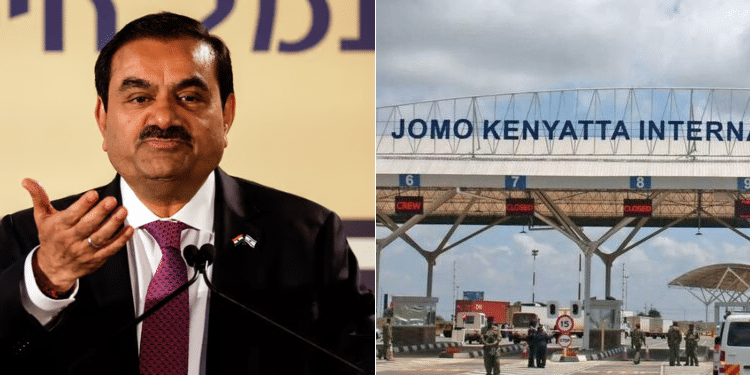
The deal’s final collapse came from outside Kenya’s borders. On November 20, 2024, US prosecutors charged Adani Group founder Gautam Adani with fraud, alleging that executives paid over USD 250 million in bribes to Indian officials to secure solar energy contracts. The next day, President William Ruto used his State of the Nation address to order the immediate cancellation of both the JKIA concession and a related Ksh 96 billion transmission line deal between Adani Energy Solutions and the Kenya Electricity Transmission Company, citing new evidence from investigative agencies and partner states.
Parliament reportedly greeted the announcement with applause. KAA formally confirmed the termination in a letter dated February 26, 2025, and by March 2026, the courts had dismissed the last standing legal challenge, ruling that the matter had become moot once the cancellation took effect.
Kenya’s New Airport Expansion Plan
Cancelling a concession is one thing; replacing it with a credible, fundable alternative is another. Kenya did not abandon the underlying need for capacity. Instead, KAA commissioned a fresh technical process and rebuilt the project on public financing rather than a private concession.
The Integrated Master Plan
Working with infrastructure consultancy Sidara, KAA finalised an integrated master plan and feasibility study in February 2026, covering the period from 2025 to 2045. The plan projects passenger volumes climbing from 8.93 million in 2025 to 22.31 million by 2045, an annual growth rate of roughly 4.6 percent, alongside air cargo volumes doubling from about 407,000 tonnes to 860,000 tonnes over the same period. Kenya’s new airport plan treats this growth curve as the baseline for every subsequent design decision, from taxiway geometry to terminal pier count.
Table 2: JKIA Growth Projections, 2025 to 2045
| Metric | 2025 Baseline | 2045 Projection | Growth |
| Passenger traffic | 8.93 million | 22.31 million | ~4.6% annually |
| Air cargo volume | 407,000 tonnes | 860,000 tonnes | ~2.1x |
| Runway configuration | Single runway | Dual parallel runways | Simultaneous operations |
| Terminal capacity | 7.5 million design capacity | Up to 25 million combined | ~3.3x |
The Two-Track Construction Model
Rather than closing JKIA for a single, sequential rebuild, the plan runs two tracks simultaneously. The first upgrades the existing terminal and runway over roughly fifteen months, adding rapid exit taxiways and a partial parallel taxiway to lift interim capacity to 12 million passengers.
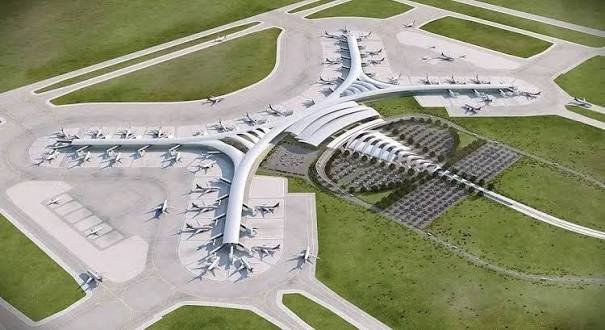
The second, breaking ground roughly a kilometre from the current terminal, builds an entirely new X-shaped passenger complex designed for 10 million passengers in its first phase, expandable to 15 million. A second runway, expected to be 4.8 to 4.9 kilometres long, is planned to end JKIA’s dependence on a single strip, though industry analysts have flagged that its construction is scheduled later in the phasing table than some engineers consider prudent, given the airport’s current congestion.
Table 3: JKIA Two-Track Construction Phasing
| Phase | Scope | Timeline | Capacity Outcome |
| Phase 1: Interim upgrade | Rapid exit taxiways, partial parallel taxiway, terminal reconfiguration | ~15 months from 2026 start | 12 million passengers |
| Phase 2: New terminal complex | X-shaped terminal, four piers, central processing hall | ~3 years, groundbreaking 2026 | 10 million passengers (Phase 1), expandable to 15 million |
| Phase 3: Second runway | 4.8 to 4.9km parallel runway | Targeted for completion by 2027, deferred in later phasing tables | Simultaneous take-offs and landings |
| Phase 4: Airport City and SEZ | Hotels, logistics parks, commercial districts | Long-term, tied to the 2045 master plan horizon | Non-aeronautical revenue diversification |
The Funding Structure
KAA has been explicit that the programme carries no private concession. Transport Cabinet Secretary Davis Chirchir confirmed the roughly Ksh250 billion upgrade is financed through public procurement, with support from international development banks including the African Development Bank and the World Bank. KAA issued tender documents in March 2026 for the new terminal and runway upgrades, and construction on the initial works is scheduled to begin in 2026.

The airport’s expansion also includes an Airport City and Special Economic Zone, a commercial layer intended to diversify revenue beyond aeronautical fees, a model already tested at hubs that Nairobi is competing against, including Ethiopia’s new Bishoftu International Airport and its accompanying logistics infrastructure.
Further Reading: Bishoftu International Airport: Inside Ethiopia’s New Promising $12.5bn Mega Aviation Hub
Five Lessons From the JKIA Expansion Plan Journey
The JKIA episode is not simply a Kenyan story. It is a reference point for any government weighing private concessions against public financing for critical transport infrastructure, and each lesson below has direct application across the continent’s current airport pipeline.
Lesson One: Speed of Approval Is Not a Substitute for Scrutiny
A seventeen-day turnaround from proposal submission to feasibility clearance looks efficient on paper, but it left almost no room for the kind of public and technical review that a 30-year, multi-billion-dollar concession demands. The JKIA expansion plan only regained public trust once it slowed down and routed contracting through the standard Public Procurement and Disposal Act process. Fast approval timelines invite exactly the scrutiny that eventually unwound this deal.
Lesson Two: Concession Structures Need Transparent Comparators
One detail from the court record stands out: petitioners argued Kenya could raise the required $1.85 billion independently, without surrendering a 30-year lease over a strategic national asset. Once that comparator became public, the concession lost political cover. Any government considering a build-operate-transfer structure for airport infrastructure should publish the alternative financing scenario alongside the concession terms, so the public can judge the trade-off rather than accept it on faith.
Lesson Three: Reputational Risk Travels With Foreign Partners
Kenya’s deal did not collapse because of a domestic scandal. It collapsed because its foreign partner faced fraud charges in a completely separate jurisdiction. Any government entering a long-term concession with an international conglomerate inherits that partner’s global legal exposure, whether or not the underlying African project has any connection to the alleged misconduct. Due diligence on infrastructure partners now has to extend well past the borders of the deal itself.
Lesson Four: Cancellation Does Not Have to Mean Delay
Kenya’s fastest pivot in this episode was refusing to let the cancellation turn into an indefinite hold on JKIA’s modernisation. Within roughly 15 months of Ruto’s announcement, KAA had a completed master plan, a tender out to market, and a construction start date. Governments elsewhere on the continent, facing collapsed concessions, from stalled port deals to contested rail contracts, can draw a direct parallel: the underlying infrastructure gap does not disappear with the failed contract, and neither should the government’s momentum.
Lesson Five: Regional Competition Sets the Real Deadline
Kenya’s airport plan makes it clear that the 22-million-passenger target by 2045 is intended to keep JKIA ahead of regional rivals. Ethiopia is building an entirely new hub near Bishoftu, designed to handle up to 110 million passengers, and Rwanda’s Bugesera International Airport is advancing with Qatari backing. Kenya’s new airport plan is not being built in isolation; it is being built against a clock set by neighbouring capitals, a dynamic that mirrors the competitive pressure driving Egypt’s own Cairo International Airport expansion as North African hubs jockey for the same transcontinental transit traffic.
Further Reading: Bugesera Airport: 5 Remarkable Engineering Insights Behind Rwanda’s Transformative $2bn Aviation Hub
Table 4: East and North African Airport Hub Comparison
| Hub | Country | Target Capacity | Strategic Edge |
| JKIA | Kenya | 22.31 million by 2045 | Cargo leadership, East African gateway position |
| Bishoftu (new build) | Ethiopia | Up to 110 million | Built from scratch, dual parallel runways |
| Bugesera | Rwanda | Regional hub scale | Qatari-backed financing and design |
| Cairo Terminal 4 | Egypt | North African transit hub scale | Transcontinental connectivity |
Technical Block: JKIA’s Expansion Engineering and Investment Profile
The lessons above explain the politics and process behind the JKIA expansion plan. The technical detail below sets out the specific engineering and investment parameters that define the programme and the honest gaps that still need to be closed before Nairobi can credibly call JKIA a modern aviation hub.
1. Runway and Airfield Specifications
JKIA currently operates on a single 4-kilometre runway, designated 06/24, a configuration that forces full operational shutdowns even for minor incidents. The master plan’s near-term response includes two rapid-exit taxiways and a partial parallel taxiway, engineered to reduce runway occupancy time by roughly 5.9 seconds per aircraft.
The planned second runway, at 4.8 to 4.9 kilometres, would allow simultaneous take-offs and landings for the first time in the airport’s history. The African Development Bank had already approved a $160 million loan for a similar 4.9-kilometre parallel runway back in 2017, a project that was shelved when financing stalled; its return to the current master plan under a different funding structure underscores how long this specific engineering fix has been on Kenya’s agenda.
Table 5: JKIA Airfield Specifications, Current vs. Planned
| Airfield Parameter | Current State | Planned State |
| Runway count | 1 (designated 06/24) | 2 (parallel configuration) |
| Runway length (existing) | 4 kilometres | Retained, upgraded |
| Runway length (new) | N/A | 4.8 to 4.9 kilometres |
| Taxiway configuration | Limited, congestion-prone | Rapid exit taxiways + partial parallel taxiway |
| Occupancy time-saving | Baseline | ~5.9 seconds per aircraft reduction |
| Aircraft movement capacity (2017 loan basis) | 25 movements/hour | Up to 45 movements/hour |
2. Terminal and Passenger Capacity
The centrepiece of the new JKIA expansion plan is an X-shaped terminal with four piers and a central processing hall, separating domestic and international flows more cleanly than JKIA’s current patchwork of incrementally expanded buildings. Phase one targets 10 million passengers annually, with structural headroom to reach 15 million as traffic grows toward the 2045 forecast of 22.31 million. Interim works on the existing terminal aim to lift capacity to 12 million passengers during the roughly three-year construction window, so JKIA can keep operating at full capacity while the new complex rises about a kilometre away.
3. Financing and Procurement Structure
KAA has repeatedly denied any role for Adani in the current programme, stating the modernisation is fully government-funded and implemented under established public-sector procedures. Financing draws on the Government of Kenya’s capital, alongside development bank support from institutions such as the African Development Bank and the World Bank, and contracting is carried out under the Public Procurement and Disposal Act rather than through a privately initiated proposal route. The same contractor is expected to handle both the existing terminal upgrade and the new complex, a decision intended to keep design standards consistent across the two parallel workstreams.
Conclusion: What JKIA’s Recovery Proves About Kenya’s Infrastructure Discipline
The JKIA expansion plan survived a genuine crisis, and it did so by doing something African infrastructure programmes rarely manage: replacing a collapsed mega-deal with a credible public alternative within 18 months rather than letting the project drift for a decade. The government’s decision to fund the rebuild directly, publish a full master plan, and route contracting through standard procurement law addresses the exact governance failures that sank the Adani proposal in the first place.
The unresolved question is whether the phasing holds up under the pressure of JKIA’s current congestion. Deferring the second runway to a later phase, even though every technical document acknowledges its necessity, is the kind of decision that looks manageable on a planning chart but becomes a bottleneck a decade later, particularly as Ethiopia and Rwanda build runway redundancy into their own hubs from day one.
The JKIA expansion plan deserves credit for recovering from the Adani collapse without losing years to indecision, but its ultimate success will be judged by whether the second runway and the all-weather instrument landing capability that comes with it are in place before JKIA’s single-strip limitation becomes the constraint that costs Nairobi its regional hub status.
Explore More of Africa’s Airport Megaprojects
The JKIA expansion plan reflects a wider transformation reshaping African aviation. Explore Construction Frontier’s Africa Mega Projects for in-depth technical analysis, engineering reviews, and project insights into the continent’s most ambitious airport developments and infrastructure investments.