Cairo International Airport Expansion: 5 Remarkable Engineering Insights Driving Egypt’s $3.5bn Aviation Transformation
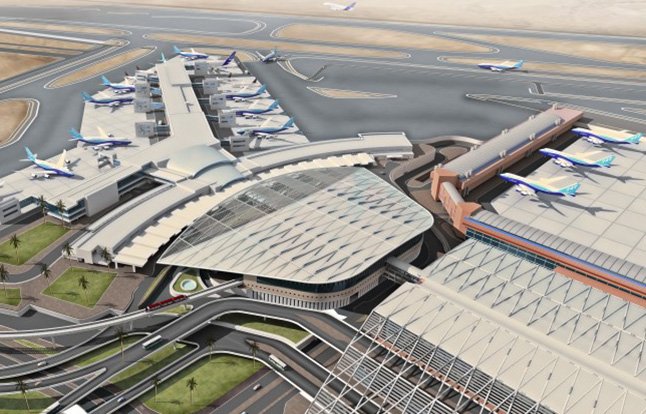
Egypt is executing a $3.5 billion expansion of Cairo International Airport, centred on a new fourth terminal, engineered to increase the hub’s total handling capacity from around 30 million to more than 60 million passengers a year. The Cairo International Airport Terminal 4 expansion serves as the technical centrepiece of Egypt’s aviation infrastructure strategy and is designed to cement Cairo’s position as North Africa’s dominant long-haul transit hub. Construction runs on an approximate four-year build cycle once the main works package mobilises, self-financed through Egypt’s Holding Company for Airports and Air Navigation in partnership with national engineering entities.
Technical Snapshot: Cairo International Airport Expansion Core Project Specifications
| Specification | Detail |
| Project Name | Cairo International Airport Expansion, Terminal 4 Programme |
| Location | Heliopolis, northeast Cairo, Egypt |
| Estimated Cost | US$3.5 billion (reported range extends to US$4.5 billion) |
| New Terminal Capacity | 30 to 40 million passengers annually |
| Total Airport Capacity, Post-Completion | 60 to 65 million passengers annually |
| Current Annual Traffic (2025) | Approximately 31 million passengers |
| Construction Timeline | Approximately four years from full mobilisation |
| Financing Model | Self-financed: Holding Company for Airports and Air Navigation with national entities |
| Runway Configuration | Three runways: 3,301m, 4,000m, 3,999m |
| Cargo City Capacity | 1 million tonnes annually, expandable to 2 million tonnes |
The scale of this Cairo International Airport expansion places it among the most consequential aviation infrastructure programmes on the African continent, and its outcome will decide whether Cairo keeps pace with its Gulf and Turkish rivals.
Introduction: Cairo International Airport Expansion
Cairo International Airport handled roughly 31 million passengers in 2025, a figure that has already exceeded the design ceiling set for Terminals 1 through 3. That gap between demand and capacity is the entire rationale for the current Cairo International Airport expansion, and it sits at the centre of the wider aviation construction wave reshaping the continent’s airports. Minister of Civil Aviation Sameh El-Hefny confirmed in October 2025 that Egypt would self-finance a $3.5 billion build-out centred on a new Terminal 4 rather than pursue further incremental patchwork on ageing terminal stock.
This is not Egypt’s first attempt to solve Cairo’s capacity problem through construction. Terminal 2 underwent a $387 million rebuild between 2012 and 2016, backed by a $280 million World Bank loan, and Terminal 3 opened in 2009 as the EgyptAir and Star Alliance hub capable of handling the Airbus A380. Cairo Airport construction has therefore shifted from renovation logic to a wholesale capacity doubling, and that shift carries specific engineering implications worth examining, insight by insight.
Reading the Egypt airport expansion cost and timeline correctly matters here. A $3.5 billion outlay spread over roughly 4 years is an aggressive schedule for a live, operating hub, and it shows Egyptian planners treating this as a single continuous programme rather than a series of staggered upgrades. Understanding why Egypt is expanding Cairo Airport now, rather than in five or ten years, comes down to one fact: the airport has already outgrown its design envelope.
1. Cairo Airport Terminal 4: Engineering Capacity for 30 Million Passengers from Scratch
Terminal 4 is not an extension bolted onto existing infrastructure. It is a standalone facility designed to carry half of Cairo’s future traffic on its own, which changes the engineering brief entirely compared with the terminal renovations Egypt has previously delivered. Cairo Airport Terminal 4 is, in effect, the single largest piece of Cairo Airport’s new terminal construction the country has undertaken since Terminal 3 opened in 2009.
Terminal-by-Terminal Comparison
| Terminal | Opened | Design Capacity | Primary Function |
| Terminal 1 | 1963 | ~9 million passengers/year | Domestic routes and non-Star Alliance carriers |
| Terminal 2 | 1986, rebuilt 2016 | 7.5 million passengers/year | International routes, mixed alliance traffic |
| Terminal 3 | 2009 | ~11 million passengers/year (Phase 1) | EgyptAir and Star Alliance hub, A380-capable |
| Terminal 4 | Under construction | 30 to 40 million passengers/year | Standalone smart terminal, transit-focused |
Set against that table, the scale mismatch is obvious: Terminal 4 alone is designed to out-capacity Terminals 1 through 3 combined, which is the clearest evidence that this is a capacity reset rather than an incremental add-on.
Design Capacity and Structural Scope
Officials have set the design ceiling for Cairo Airport Terminal 4 at a minimum of 30 million passengers annually, with flexibility to absorb demand up to 40 million as EgyptAir’s fleet expansion and transit volumes grow. That target aligns with what Singapore’s Changi Terminal 5 and Istanbul’s later phases were built to handle, meaning Egyptian consultants are designing to a peak-hour flow rate and gate configuration comparable to those of the world’s busiest transfer hubs.
The Terminal 4 approval documents reviewed by Egyptian officials describe a fully integrated architecture for air navigation, ground operations, and passenger services, built around this target from the outset. This is Cairo Airport’s new terminal construction, designed for a 2040s traffic profile, not a fix for today’s congestion.
Unified Terminal Identity Across the Complex
A less obvious but structurally significant decision is the plan to unify the visual and operational identity of Terminals 2, 3, and 4. Egypt’s aviation planners are re-engineering wayfinding, signage, and passenger transfer logic across all three buildings simultaneously, rather than treating Terminal 4 as an isolated asset. This matters because a Cairo Airport passenger capacity upgrade has historically failed to address the connectivity problem between terminals, forcing transit passengers to endure inefficient landside transfers. Addressing that at the master-planning stage is a clear sign that this Cairo Airport passenger capacity upgrade is engineered as one system, not three disconnected buildings.
2. Airside Infrastructure: Why Three Runways Still Need Reinforcement
A new terminal is only as useful as the runway and taxiway network feeding it, and Cairo’s airside infrastructure carries its own capacity constraints that this Cairo International Airport expansion must resolve in parallel with the terminal build. Any credible cost and timeline model for Egypt’s airport expansion has to account for airside works alongside the terminal, since a bottleneck on the runway system would undermine the entire Cairo International Airport Terminal 4 expansion, regardless of how well the terminal itself performs.
Runway Configuration and Throughput Limits
Cairo operates three parallel runways, and their configuration sets a hard ceiling on how much of Terminal 4’s design capacity can actually be flown, regardless of how efficiently the terminal itself processes passengers.
Runway Specifications
| Runway | Designation | Length | Status |
| Runway 1 | 05L/23R | 3,301 m | Original parallel runway |
| Runway 2 | 05C/23C | 4,000 m | Central runway, primary heavy-aircraft strip |
| Runway 3 | 05R/23L | 3,999 m | Replaced a former crossing runway, commissioned in 2010 |
All three handle wide-body aircraft, but movement sequencing at a hub already near saturation limits how many extra daily slots Terminal 4 can realistically support without airside congestion undoing the terminal’s capacity gains.
Ground Access and Metro Extension Studies
Egyptian planners are studying a metro extension to serve Terminal 4 directly, a detail that signals awareness of a common airport expansion failure mode: building passenger capacity without matching landside access. Without rail connectivity, a 30-million-passenger terminal generates road congestion that erodes the time savings the new facility is meant to deliver. This is the same principle that shaped ground transport planning for East Africa’s newest gateway, Rwanda’s Bugesera Airport, where road and utility corridors were sequenced before the terminal build. It is a lesson every Cairo Airport construction phase now needs, since airside and landside capacity must scale together for the Cairo International Airport expansion to deliver its promised journey times.
Further Reading: Bugesera Airport: 5 Engineering Insights Behind Rwanda’s $2bn Aviation Hub
3. Smart Systems Engineering Behind Egypt’s Aviation Infrastructure
Terminal 4 is being marketed by Egyptian officials as a smart terminal, and that label carries specific engineering content rather than serving solely as marketing language.
Biometric Processing and E-Gate Rollout
Egypt has already begun phasing out paper arrival and departure cards, piloting the change at the Seasonal Flights Terminal and Terminal 3 before a full rollout. Electronic gates, developed jointly by the Ministry of Civil Aviation and the Ministry of Interior, are intended to substantially reduce immigration dwell time. Cairo Airport Terminal 4 is being designed around these systems as native infrastructure rather than as a later retrofit, which is a materially cheaper and more reliable way to deploy biometric processing at scale.
Automated Baggage and Digital Passenger Flow
Automated baggage handling, self-check-in kiosks, and integrated digital wayfinding form the second layer of Egypt’s aviation infrastructure upgrade. These systems reduce the staffing burden per passenger processed, which matters when the target throughput doubles while the workforce cannot realistically double in proportion. Egypt is applying lessons from Terminal 3’s Star Alliance “Move Under One Roof” consolidation, where combining airline operations into a single automated system reduced transfer friction. Officials frame this as part of the Egypt aviation hub investment plan 2026, with Terminal 4 as its most visible milestone.
4. Cargo City: The Freight Engineering Layer Behind the Terminal
Passenger capacity dominates headlines, but the Cairo International Airport expansion includes a substantial freight component that deserves equal engineering attention, and it is a significant part of the wider Egypt airport investment case.
Cargo Capacity and Site Planning
The new Cargo City component is designed for an initial capacity of 1 million tonnes annually, expandable to 2 million tonnes, roughly doubling Cairo’s current air freight handling capacity. Egypt’s geographic position between three continents makes cargo throughput a genuine commercial asset, particularly for time-sensitive exports and e-commerce logistics moving between Europe, the Gulf, and Sub-Saharan Africa. This freight ambition sits inside the Egypt aviation hub investment plan 2026, since cargo yields tend to be more stable across economic cycles than pure passenger revenue.
Port and Rail Integration Plans
Ministry officials have floated studies linking the airport’s freight infrastructure to Suez Port and Ain Sokhna Port under the Sea Land Project, aligning Egypt’s airport investment with the wider transport network. Integrating an aviation cargo hub with maritime freight corridors is exactly the multimodal thinking that distinguishes a genuine North Africa aviation hub from a facility that merely handles high passenger volume, and it reinforces Cairo’s claim to North Africa aviation hub status beyond passenger numbers alone.
5. Financing the Cairo International Airport Expansion Without Foreign Debt
The delivery model behind this programme is itself an engineering and institutional decision, not just a financial one, and it shapes how quickly the works can proceed. It also determines how the Egypt airport expansion cost and timeline will hold up under real-world construction conditions since self-financed programmes carry different risk profiles to internationally financed ones.
Self-Financing Through State Entities
Unlike the 2010 Terminal 2 rebuild, which relied on a $280 million World Bank loan, Terminal 4 is structured as a self-financed undertaking led by the Holding Company for Airports and Air Navigation with several national entities, reportedly including Egypt’s Armed Forces Engineering Authority. This structure removes multilateral lender oversight from the critical path, which can accelerate procurement but places full completion risk on domestic balance sheets.
Financing Model Comparison
| Programme | Cost | Financing Structure | Delivery Partner |
| Terminal 2 Renovation (2012–2016) | $387m construction, backed by a $280m World Bank loan | Multilateral loan plus government co-financing | Limak Holding (Turkey) |
| Terminal 4 Expansion (current) | $3.5bn (reported up to $4.5bn) | Fully self-financed: Holding Company for Airports and Air Navigation with national entities | Contractor selection ongoing |
The shift from lender-backed to self-financed delivery is itself the biggest structural difference between how Egypt built its last major terminal and how it is building this one.
Private Sector Involvement Without Asset Sale
Egypt has been explicit that airports remain sovereign assets and will not be sold, even as the ministry pilots private management contracts elsewhere, starting with Hurghada International Airport, where over 60 international firms have sought qualification documents. Those lessons are expected to inform how Terminal 4’s commercial areas and non-aeronautical revenue streams are eventually operated. This Egypt airport investment structure mirrors the trend visible in Ethiopia’s Bole International Airport programme, where state ownership is retained even as operational partnerships expand: a pragmatic middle path for Egypt airport investment that wants private-sector efficiency without surrendering sovereign control.
Challenges Facing the Cairo International Airport Expansion
No project of this scale proceeds without friction, and three risk categories stand out as genuine delivery challenges rather than routine project noise. Each bears directly on the cost and timeline of Egypt’s airport expansion that officials have publicly committed to.
1. Sequencing Construction Around a Live, Operating Hub
Cairo cannot close for 4 years while Terminal 4 is under construction. Every phase of this Cairo Airport construction programme has to be sequenced around continuous flight operations across three existing terminals, which constrains crane positioning, delivery routes, and night-works scheduling in ways that greenfield builds, such as Ethiopia’s Bishoftu International Airport, simply do not face. This live-hub constraint is, on its own, a sufficient reason for Egypt to expand Cairo Airport through a phased build rather than a single shutdown.
2. Terminal 1’s Unresolved Condition
Terminal 1, dating to 1963, remains the oldest and most criticised facility in the complex, and a modern Terminal 4 will not fix Cairo’s reputation if Terminal 1 stays untouched. Egypt has yet to commit to a firm renovation or replacement timeline for it alongside the headline expansion.
3. Regional Competitive Timing
Dubai, Istanbul, and Doha are simultaneously expanding capacity at a scale that dwarfs Cairo’s programme, and Egypt’s aviation infrastructure investment has to close a gap while those hubs are also moving targets. A four-year build cycle means Cairo Airport Terminal 4 will open into a market that has shifted substantially, putting real pressure on the cost and timeline of the Egypt airport expansion while holding firm against scope creep.
Technical Block: Cairo International Airport Expansion Data and Regional Outlook
The figures behind this Cairo International Airport expansion only take on meaning when set against Cairo’s regional competitors and Africa’s broader airport investment cycle, both of which are moving in parallel. Together, they show why the Egypt airport investment thesis extends well beyond Terminal 4 alone.
1. Passenger Growth Trajectory and Design Assumptions
Cairo carried approximately 27.7 million passengers in 2024 and roughly 31 million in 2025, a growth curve that, if sustained, would saturate even the upper 40-million capacity band of Cairo Airport Terminal 4 well within its first decade of operation. Egypt’s Ministry of Civil Aviation has set a national target of 72.2 million annual passengers across all Egyptian airports, underscoring that the Cairo International Airport Terminal 4 expansion is one component of a far larger Egypt aviation hub investment plan rather than an isolated capital project. This is a Cairo Airport passenger capacity upgrade sized for a national strategy, not a single terminal’s problem.
2. Cairo’s Position Among Africa’s Airport Megaprojects
Cairo sits alongside a cluster of African airport programmes reshaping the continent’s connectivity map, a trend examined in depth across global airport megaprojects currently under construction. Kenya’s decision to pursue an entirely new international airport following the collapse of its JKIA modernisation deal illustrates a different strategic path to the same problem Egypt faces: ageing infrastructure outpaced by traffic growth. Where Kenya opted for a greenfield rebuild, Egypt chose to expand its existing hub, a decision shaped by Cairo’s entrenched status as EgyptAir’s home base and its established Star Alliance transfer operations, and one that keeps this Cairo Airport construction programme anchored to infrastructure already generating revenue rather than starting from bare desert.
Regional Hub Investment Comparison
| Hub | Total Investment | Target Capacity | Runways | Status |
| Cairo International Airport (Terminal 4) | $3.5bn–$4.5bn | 60 to 65 million passengers/year | 3 | Under construction |
| Istanbul Airport | ~$12bn across four phases | 200 million passengers/year at full build-out | 6, phased | Phases 1–2 operational, full completion targeted 2028 |
| Dubai Al Maktoum (DWC) | ~$35bn | Up to 260 million passengers/year | 5 | Phased construction underway |
| Doha Hamad International Airport | ~$8bn (expansion phases A and B) | 65 million passengers/year | 2 | Expansion completed March 2025 |
Set against Istanbul’s and Dubai’s spending, Cairo’s $3.5 billion outlay is modest, which is precisely the point: Egypt is not trying to out-build the Gulf megaprojects; it is trying to close the specific capacity gap that is costing it transit traffic today.
Further Reading: Kenya’s New Airport Plan: 5 Lessons From the JKIA-Adani Deal Collapse
Conclusion: Why the Cairo International Airport Expansion Will Define North Africa’s Skies
Egypt is not simply adding a terminal. It is attempting to convert Cairo from a busy but capacity-constrained national gateway into a genuine North Africa aviation hub capable of competing directly with Istanbul and the Gulf carriers for long-haul transfer traffic.
The engineering decisions embedded in this Cairo International Airport expansion, from the unified terminal identity across Terminals 2 through 4 to the biometric processing systems to the Cargo City’s multimodal freight ambitions, all point toward a single strategic objective: building infrastructure that does not need replacing again within a single decade, unlike the terminal-by-terminal patchwork Egypt pursued through the 2000s and 2010s. Cairo Airport Terminal 4 is the physical proof point of that shift, and it is the single largest bet within Egypt’s aviation infrastructure programme to date.
The self-financed delivery model is the clearest signal of Egyptian intent here. By keeping the Cairo International Airport Terminal 4 expansion off multilateral lenders’ books, Egypt retains full control over specification, timeline, and commercial structuring, accepting greater fiscal exposure in exchange for design and delivery autonomy. Whether that autonomy translates into an on-schedule, on-budget outcome will depend heavily on how well Egyptian contractors sequence construction around a live operating hub carrying over 30 million passengers a year. This is the fundamental engineering answer to why Egypt is expanding Cairo Airport now rather than waiting: the traffic has already arrived, and the infrastructure has not yet caught up.
Explore More of Africa’s Airport Megaprojects
Cairo’s expansion is just one of several transformative aviation projects reshaping the continent. Continue exploring the engineering, investment, and construction behind Africa’s largest airport developments in Construction Frontier: Africa Mega Projects.