Bugesera Airport: 5 Definitive Engineering Insights Behind Rwanda’s Promising USD2bn Aviation Hub
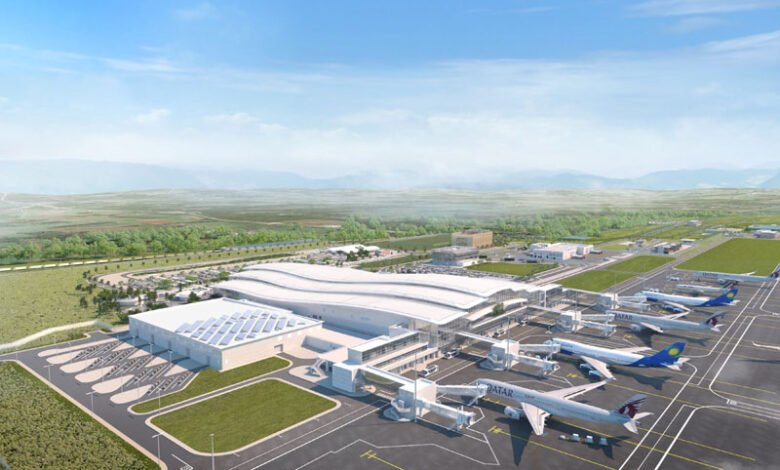
Bugesera Airport is Rwanda’s USD 2 billion aviation hub under construction 40 kilometres south of Kigali, built on a public-private partnership between the Rwandan government and Qatar Airways. Phase one delivers a 4.2-kilometre runway, a 130,000-square-metre terminal, and capacity for 7 million passengers a year, with completion now targeted for 2027. The project positions Kigali’s new airport as East Africa’s primary long-haul gateway, replacing the capacity-constrained Kigali International Airport.
Technical Snapshot: Bugesera Airport Core Project Specifications
| Specification | Detail |
| Location | Bugesera District, approximately 40 km south of Kigali |
| Total investment | USD 2 billion |
| Ownership structure | Qatar Airways (60%), Government of Rwanda (40%) |
| Runway | 4.2 km, code 4F, capable of handling the Airbus A380 and Boeing 747-8 |
| Terminal footprint | 130,000 square metres |
| Phase one capacity | 7 million passengers per year, 150,000 tonnes of cargo |
| Phase two capacity (2032 target) | 14 million passengers per year |
| Lead contractors | Mota-Engil (Portugal), UCC Holding (Qatar), CCC (Greece), operating as a joint venture, UMC |
| Expected opening | 2027 |
Bugesera Airport is not simply Rwanda’s biggest infrastructure bet since independence; it is a living case study in how a landlocked, capacity-starved economy rebuilds its entire aviation strategy around a single greenfield site.
Introduction: Rwanda’s Aviation Hub Takes Shape
Bugesera Airport has moved from concept sketches to poured concrete over nine years, and the pace of that transformation says as much about Rwanda’s ambitions as the airport itself. The site sits in Bugesera District, roughly 40 kilometres by road from Kigali, chosen precisely because Kigali International Airport had run out of room to grow. Kigali International Airport (KGL) was designed for 400,000 passengers per year, yet traffic climbed from 135,189 in 2004 to 710,000 by 2016, according to the environmental and social impact assessment filed for the new site.
Landlocked between residential neighbourhoods and a shrinking apron, Kigali International Airport had no room to expand. Understanding why Rwanda is building Bugesera Airport starts with that constraint: no amount of remodelling at the old site could deliver the runway length or apron space a modern Rwandan aviation hub requires. For readers tracking the continent’s shift toward greenfield aviation infrastructure, the Africa airport mega-projects guide sets out how Bugesera Airport fits alongside comparable hub-building efforts across the region.
What makes Bugesera International Airport distinct from most African aviation projects is the depth of foreign capital behind it. Qatar Airways does not merely lend its name to the development; it owns 60 percent of the asset and has structured the project to feed directly into RwandAir’s long-haul network. That decision reshaped Bugesera Airport’s engineering brief from a modest regional facility into a 130,000-square-metre hub for ultra-long-haul widebody traffic, turning what began as a USD 418 million contract into a full USD 2 billion airport project for Rwanda, spanning four phases. The five insights below unpack how that happened on the ground, from the runway’s structural specifications to the financing mechanics that keep Bugesera Airport solvent.
Insight 1: A Redesign That Tripled the Terminal’s Ambition
Bugesera Airport did not reach its current scale in a single step. The original 2016 concept, backed by a USD 418 million commitment from the Portuguese contractor Mota-Engil, envisioned a modest 30,000-square-metre terminal capable of handling roughly one million passengers annually. Construction under that plan began in 2017, and by early 2018, the site was only 10 per cent complete, reflecting the limited scope rather than any engineering failure.
The Qatar Airways Intervention
Everything changed in December 2019, when Qatar Airways agreed to take a 60 percent equity stake in the project. The airline brought design consultancy Dar Group onto the programme, and Dar’s team, with experience across more than 300 airports worldwide, rebuilt the master plan from the ground up. The terminal grew to 120,000 to 130,000 square metres, the passenger target jumped to 7 million annually for phase one alone, and the site footprint expanded to cover roughly 2,500 hectares. This was not a cosmetic upgrade. Redesigning a partially built greenfield airport mid-construction required re-sequencing earthworks, revisiting drainage calculations, and renegotiating the contractor structure, all while keeping the original 2017 groundworks usable.
Why the Scale Jump Made Engineering Sense
A terminal built for one million passengers uses fundamentally different structural spans, baggage-handling throughput, and apron geometry than one built for seven million passengers. Rwanda’s engineers and Dar’s design team judged that retrofitting a small terminal later would cost more than building Bugesera Airport for scale now, a calculation that mirrors the phased-capacity logic seen at Ethiopia’s Bishoftu International Airport, where planners similarly front-loaded structural capacity to avoid disruptive future expansion. Bugesera Airport’s revised design also folded in a presidential terminal and dedicated general aviation facilities, additions that only make financial sense once passenger volumes justify the fixed overhead of separate terminal buildings within Rwanda’s aviation infrastructure network.
Further Reading: Bishoftu International Airport: Inside Ethiopia’s New Promising $12.5bn Mega Aviation Hub
Insight 2: Engineering a Runway for the World’s Largest Aircraft
A regional airport and a long-haul hub are built to different physical tolerances, and nowhere is that clearer than in the runway specification at Bugesera Airport. Rwanda’s aviation authorities settled on a code 4F runway design, the highest ICAO classification, reserved for aircraft with wingspans exceeding 65 metres.
Bugesera Airport Construction Progress on the Airside
The finished runway stretches 4.2 kilometres and is engineered to accommodate the Airbus A380 and Boeing 747-8 without the load restrictions imposed by shorter, lower-classification runways. That length and pavement strength matter because Bugesera Airport’s entire commercial case rests on ultra-long-haul connectivity: routes to the Americas and East Asia require aircraft carrying maximum fuel loads at takeoff, and a code 4F runway removes the payload penalties that would otherwise apply. According to Jules Ndenga, chief executive of Rwanda’s Aviation, Travel and Logistics Holding, the runway and its supporting drainage systems were substantially complete by the end of 2024, ahead of the terminal building programme, marking one of the clearest signs of progress in the construction of Bugesera Airport to date.
Drainage as a Structural Priority
Rwanda experiences two distinct tropical wet seasons a year, and the Bugesera site sits close to the Nyabarongo Wetland, an internationally recognised Important Bird Area, with Akagera National Park roughly 40 kilometres to the northeast. Engineers designed the runway’s culverts specifically to prevent any increase in upstream flooding risk to that wetland system, rather than treating stormwater as an afterthought.
The environmental and social impact assessment also mandated boreholes across the site to monitor shallow perched groundwater, a check on whether excavation was altering the water table beneath the runway and taxiway subgrade. That programme ran alongside the earthworks that brought the runway to substantial completion by the end of 2024, ahead of the terminal building programme.
Insight 3: The Contractor Alliance Behind Bugesera’s Vertical Phase
Delivering a project of this scale required more capacity than any single contractor could provide, so Rwanda formalised a joint venture rather than managing multiple parallel contracts.
Three Firms, One Delivery Structure
Mota-Engil, the Portuguese firm that initiated construction in 2017, remained on site through the Bugesera Airport redesign and now operates alongside UCC Holding of Qatar and Consolidated Contractors Company of Greece. Together, the three formed UMC, a single joint venture entity that signed the master construction contract directly with the government of Rwanda. The structure simplifies coordination: rather than managing separate interfaces with three contractors, UMC internally allocates scope, schedule, and risk, and then reports through a single contractual channel, echoing the consortium models used in other African aviation infrastructure programmes, including the phased contractor arrangements documented for Ethiopia’s Bole International Airport expansion.
Local Subcontracting and Workforce Scale
UMC retains the flexibility to subcontract packages, including concrete supply and internal road construction, to Rwandan firms, spreading economic benefit beyond the headline contractors. Groundworks employed around 2,000 workers, and the vertical construction phase now underway is expected to add a further 4,000, bringing total direct employment above 6,000.
Insight 4: Powering a Net-Zero Rwanda Aviation Hub
Bugesera Airport’s engineering brief extends well beyond concrete and asphalt. Rwanda has positioned the project as a candidate for certification as one of Africa’s first net-zero airports, and that ambition shapes decisions from power sourcing to water management.
Dedicated Hydropower Allocation
Rather than drawing incremental capacity from Rwanda’s existing grid, the government has earmarked 26.7 megawatts from the 80-megawatt Rusumo Hydroelectric Power Station, on the Rwanda-Tanzania border, specifically for Bugesera’s operations. Dedicating hydropower capacity to a single facility is an unusual step for a country still expanding domestic electrification, and it signals how central this airport is to Rwanda’s broader priorities. Solar generation and efficiency measures across the terminal and support buildings supplement the hydropower allocation, cutting reliance on the diesel backup generation that many African airports still depend on.
Water and Emissions Strategy
Beyond electricity, the environmental and social impact assessment sets binding requirements for fuel storage, distribution, and interceptor systems, with scheduled maintenance and asset-replacement criteria specifically designed to prevent hazardous materials and hydrocarbon runoff from reaching the surrounding wetland catchment.
Genuine net-zero status requires verified emissions accounting, not marketing language, and Rwanda’s aviation authorities have indicated they intend to pursue formal green airport certification once phase one of Bugesera Airport opens. If achieved, Bugesera Airport would give Rwanda a genuine differentiator among African hubs competing for environmentally conscious airlines and corporate travel contracts.
Insight 5: Financing Engineering, From Commercial Risk to Concessional Stability
Physical construction is only half the Bugesera Airport story. How Rwanda pays for a USD 2 billion aviation hub, and how that debt sits against national finances, has become as closely watched as the earthworks themselves.
The Original Debt Exposure
Under the initial funding structure, Rwanda’s government, responsible for 40 percent of project costs against Qatar Airways’ 60 percent stake, planned to raise close to USD 400 million through commercial borrowing. Rwanda’s new international airport cost debate in Parliament centred on that exposure: the International Monetary Fund warned that construction costs could push public debt toward 86.3 percent of GDP, and urged credible fiscal consolidation alongside the build.
The February 2026 Restructuring
Rwanda’s Minister of Finance and Economic Planning, Yusuf Murangwa, told Parliament on 12 February 2026 that the government had renegotiated the terms of its USD 2bn Rwanda airport project with development partners, chiefly the World Bank. The planned commercial borrowing of nearly USD 400 million has been converted into concessional funding backed by a 95 percent World Bank guarantee, substantially reducing interest costs and aligning drawdowns with actual Bugesera Airport construction progress rather than a fixed disbursement schedule.
This restructuring does not eliminate Rwanda’s exposure, but it materially reduces the annual debt-servicing burden at a point when construction is entering its most capital-intensive vertical phase. Comparable financing pressures have shaped other African mega-airport programmes, including the funding disputes that stalled progress on Kenya’s JKIA expansion after the Adani deal cancellation, underscoring how the financing structure, not just engineering capability, now determines whether these Rwandan aviation infrastructure projects reach completion on schedule.
Further Reading: JKIA Expansion Plan: 5 Authoritative Lessons Behind Kenya’s Promising Aviation Future
Challenges Facing Bugesera Airport’s Delivery
No project of this scale proceeds without friction, and Bugesera’s remaining risks sit in areas engineering alone cannot resolve.
1. Schedule Slippage Against a Moving Target
Bugesera Airport’s completion date has shifted repeatedly, from an original 2018 target, through 2024, 2026, and now 2027, with RwandAir’s own leadership acknowledging in 2024 that full operations might not begin until 2028. Each delay reflects genuine scope for growth rather than mismanagement, but the cumulative effect strains investor patience and complicates RwandAir’s route planning around a fixed opening date for Bugesera Airport.
2. Sovereign Debt Sensitivity
Even with improved financing terms, Rwanda carries real exposure to a single infrastructure asset. The IMF’s debt warnings have not disappeared, and any further cost escalation during construction would reopen the fiscal sustainability questions the February 2026 restructuring was designed to close.
3. Global Cost and Supply Chain Volatility
UMC’s leadership has pointed to post-pandemic materials inflation and shipping disruption as ongoing threats to the schedule. Steel, glass, and specialist mechanical systems for a terminal of this size depend on international supply chains that remain vulnerable to volatility beyond Rwanda’s control.
Technical Block: Bugesera Airport by the Numbers
Beyond the narrative of redesigns and financing deals, Bugesera’s delivery ultimately rests on a set of fixed engineering parameters and a construction sequence that has now run for close to a decade.
1. Bugesera Airport Construction Progress Timeline
Site clearance began in 2016, with the Mota-Engil contract signed that September and groundworks starting in 2017. By early 2018, the project was roughly 10 percent complete under the original design. The 2019 Qatar Airways redesign paused terminal work while the master plan was rebuilt, and by 2023, President Paul Kagame described Bugesera Airport as approximately 70 percent complete against the runway and early groundworks scope. Runway construction, drainage systems, and internal roads reached substantial completion by the end of 2024, and the project entered its vertical construction phase through 2025 and into 2026, with the opening of Bugesera Airport’s phase one targeted for 2027.
2. Capacity Progression
| Phase | Passenger Capacity | Cargo Capacity | Target Date |
| Phase One | 7 million/year | 150,000 tonnes/year | 2027 |
| Phase Two | 14 million/year | 300,000 tonnes/year | 2032 |
3. Regional Development Context
Bugesera Airport sits within a wider “Airport City” masterplan spanning Rilima, Juru, Nyamata, and Gashora, anchored by the 335-hectare Bugesera Special Economic Zone. That zone attracts agro-processing, pharmaceuticals, and light manufacturing investment drawn by direct air cargo access, extending Bugesera Airport’s economic footprint well beyond passenger traffic and cementing its role in Rwanda’s aviation infrastructure strategy. Rwanda’s National Strategy for Transformation frames Kigali’s new airport as the physical anchor for that growth, much as similar airport-anchored economic zones have shaped development around Cairo’s International Airport Terminal 4 expansion.
Conclusion: Rwanda’s Long Bet on Aviation Infrastructure Pays Off
Bugesera Airport represents a rare instance of an African infrastructure project growing more ambitious rather than less as it has progressed. Most greenfield airport programmes on the continent scale back their original plans once construction costs bite. Rwanda did the opposite, tripling Bugesera Airport’s terminal footprint and rebuilding its financing structure mid-project to support an ambition that did not exist in the original 2016 concept.
The completed runway and drainage systems prove the engineering fundamentals are sound, and the February 2026 restructuring behind this Rwanda USD 2bn airport project shows the government is actively managing fiscal risk rather than hoping it resolves itself. The scale of the Rwanda aviation hub investment Qatar Airways has committed to Bugesera underlines how seriously the airline views East Africa’s long-haul potential.
The remaining question is not whether Bugesera Airport will open the physical evidence on site, which makes that all but certain, but whether it opens on a schedule that RwandAir and Qatar Airways can build a durable network around. A 2027 target slipping into 2028, as RwandAir’s own leadership has acknowledged, is possible and still delivers a transformative asset for Rwanda’s aviation infrastructure. What matters more than the exact opening date is that Kigali’s new airport is genuinely capable of anchoring East African long-haul traffic, backed by a contractor alliance with the depth to finish the job and a financing structure built to withstand the pressure of getting there.
Explore More of Africa’s Airport Megaprojects
Bugesera Airport is one of many transformative aviation developments reshaping the continent. Explore Construction Frontier’s Africa Mega Projects for expert technical analysis, engineering deep dives, and project reviews of Africa’s most ambitious airport infrastructure and aviation megaprojects.