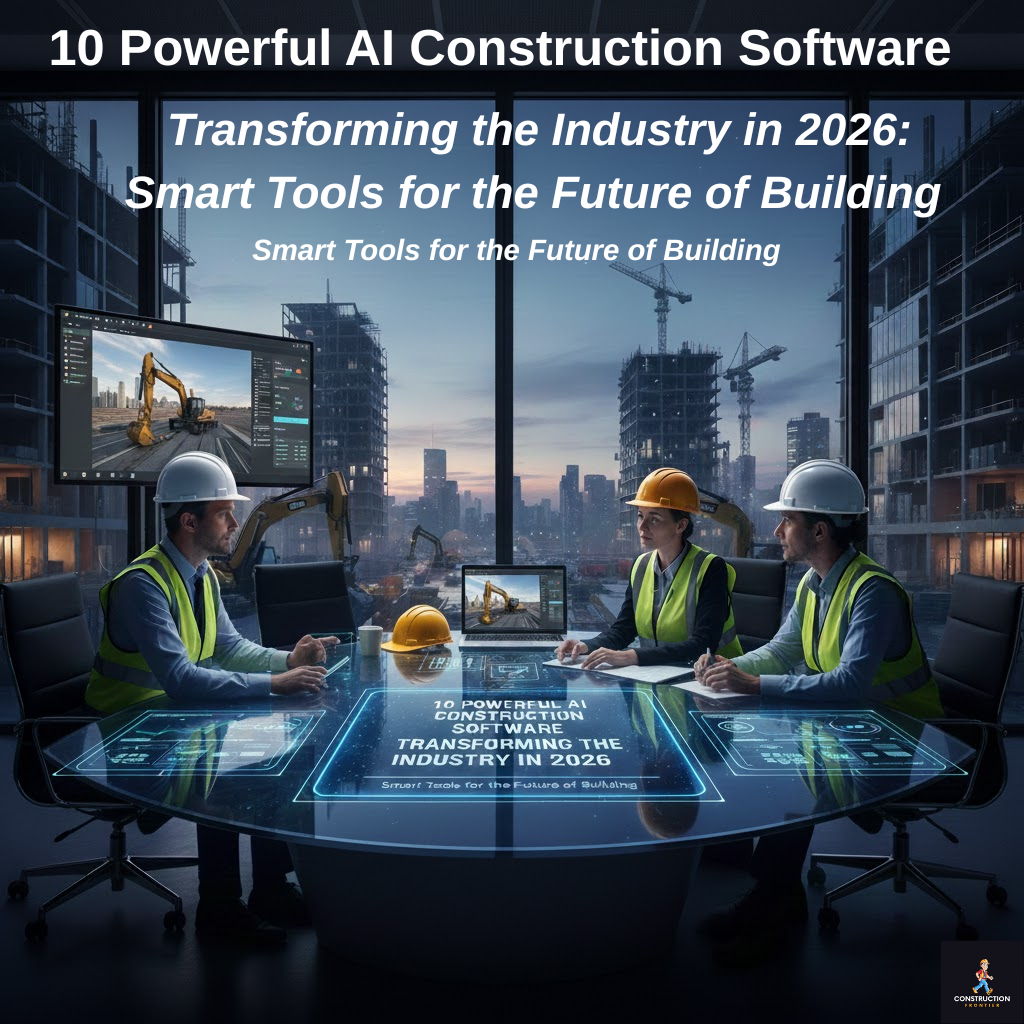
10 Powerful AI Construction Software Transforming the Industry in 2026: Smart Tools for the Future of Building
Artificial intelligence in construction is transforming the way projects are designed, managed, and executed. From predictive analytics and automated scheduling to safety monitoring and cost estimation, AI in construction software is helping contractors, engineers, and developers achieve faster, smarter, and more efficient outcomes. This article explores 10 powerful AI construction tools revolutionising the industry in 2026 and how they’re transforming the way we build the future.
The Rise of AI in Construction Software
The adoption of AI in construction software has surged dramatically in recent years, with global spending on construction technology expected to exceed $30 billion and grow by 3.3% by 2026. Artificial intelligence is no longer a futuristic concept; it is now an integral part of modern construction workflows, providing intelligent automation, predictive analytics, and data-driven insights that were once unimaginable.
AI-driven construction software helps teams analyse data in real-time, detect errors before they become costly, and optimise decision-making. From drone-based progress tracking to AI-powered scheduling algorithms, the new generation of smart construction software is improving every stage of the construction lifecycle.

Key benefits of AI in construction software include:
- Enhanced project accuracy: through predictive modelling and real-time data analysis.
- Reduced project delays and costs: via intelligent scheduling and automation.
- Improved safety monitoring: through AI-powered risk detection and alert systems.
- Optimised resource management: to reduce waste and increase sustainability.
Now, let’s explore the top 10 AI construction tools leading this transformation in 2026.
1. Autodesk Construction Cloud

Autodesk Construction Cloud remains one of the most potent examples of AI in construction software, combining design, collaboration, and field execution within a single ecosystem. Its built-in AI engine, “Construction IQ,” automatically detects potential risks, monitors quality issues, and provides predictive insights.
Key Features:
- AI-driven project risk prediction based on safety, design, and financial data.
- Automated clash detection and document control.
- Cloud-based collaboration across BIM (Building Information Modelling) environments.
Why It Stands Out:
Autodesk’s artificial intelligence in construction enables teams to predict project bottlenecks before they occur, saving thousands in potential rework costs. With integrations into Revit and AutoCAD, it serves as a full-stack solution for construction technology 2026.
2. Procore Construction Intelligence

Procore has evolved beyond traditional project management into a leader in AI construction tools. Its analytics engine, Procore Analytics, uses machine learning to predict cost overruns, schedule risks, and productivity trends across multiple projects.
Key Features:
- Predictive analytics dashboards for schedule and cost control.
- AI-assisted document management and compliance tracking.
- Integration with leading ERP and design systems.
Why It Stands Out:
Procore’s smart construction software enables firms to visualise project health in real-time. The AI assistant helps teams make data-driven decisions that improve efficiency and reduce administrative workload.
3. Buildots

Buildots has quickly become a pioneer in AI construction software thanks to its revolutionary use of computer vision. By combining AI with 360° cameras mounted on helmets, Buildots automatically monitors construction progress and compares it to BIM models.
Key Features:
- AI-based comparison of actual vs. planned progress.
- Automated site documentation using visual data.
- Integration with BIM and scheduling software.
Why It Stands Out:
Buildots eliminates guesswork by turning site footage into actionable insights. This AI construction tool helps contractors identify delays early, streamline workflow coordination, and keep clients informed with real-time progress updates.
4. OpenSpace AI

OpenSpace AI uses artificial intelligence in construction to automate photo documentation, progress tracking, and project analytics. Its AI engine, Vision Engine, maps 3D visual data to floor plans, creating a transparent digital twin of your construction site.
Key Features:
- Automated 360° photo capture and site mapping.
- AI-driven progress analytics for visual verification.
- Real-time collaboration dashboard for remote stakeholders.
Why It Stands Out:
OpenSpace brings transparency and accountability to the jobsite. With its smart construction software, project managers can verify work completion remotely and make faster, data-driven decisions.
5. ALICE Technologies

ALICE Technologies is an advanced AI-powered construction simulation platform that focuses on optimising scheduling and resource allocation. It uses algorithms to test millions of possible project outcomes, identifying the most efficient paths to completion.
Key Features:
- AI-driven construction sequencing optimisation.
- Scenario simulation for project planning.
- Integration with Primavera and Microsoft Project.
Why It Stands Out:
This software revolutionises construction planning by turning complex schedules into flexible, optimised workflows. With ALICE, companies can model changes instantly; a game-changer for large-scale infrastructure projects.
6. Doxel AI

Doxel utilises autonomous robots and AI construction tools, including camera-mounted helmets, to track site progress and measure productivity with remarkable precision. Its computer vision algorithms compare real-time site scans with 3D models to identify deviations, inefficiencies, and risks.
Key Features:
- AI-powered project monitoring using drones, robots, and camera-mounted helmets.
- Automatic detection of schedule slippage.
- Predictive analytics for cost and timeline management.
Why It Stands Out:
Doxel ensures accountability on every project. By leveraging AI in construction software, it delivers measurable productivity gains of up to 50% through automated performance tracking and data accuracy.
7. Togal.AI

Togal.AI automates quantity takeoffs using deep learning and pattern recognition. It processes 2D blueprints in seconds, extracting areas, measurements, and counts; tasks that traditionally take estimators hours to complete.
Key Features:
- Automated takeoff calculations from digital drawings.
- Integration with cost estimation and project bidding tools.
- Continuous learning algorithm that improves accuracy over time.
Why It Stands Out:
Togal.AI has redefined AI construction tools for estimators and quantity surveyors. Its ability to deliver instant takeoffs not only saves time but also improves accuracy across tendering and procurement.
8. Smartvid.io

Smartvid.io features an AI engine, dubbed “Vinnie,” that utilises photo and video analytics to enhance safety and compliance on construction sites. It automatically scans images to detect safety risks such as missing PPE, fall hazards, or blocked exits.
Key Features:
- AI-driven image recognition for site safety monitoring.
- Integration with Autodesk BIM 360 and Procore.
- Automated safety scoring and compliance reporting.
Why It Stands Out:
By using AI in construction software to proactively identify hazards, Smartvid.io helps reduce accidents and improve site safety culture. Its data-driven insights allow construction firms to meet strict safety standards efficiently.
9. PlanRadar

PlanRadar combines construction communication platforms with AI-powered issue tracking. It streamlines collaboration between field teams and office staff through mobile-first project documentation.
Key Features:
- AI-enhanced defect tracking and digital documentation.
- Real-time communication tools for field coordination.
- Automated reporting and quality control.
Why It Stands Out:
PlanRadar’s user-friendly platform improves transparency, reduces paperwork, and enhances communication efficiency. It is a must-have construction collaboration software for developers managing complex, multi-stakeholder projects.
10. Oracle Aconex with AI Integration

Oracle Aconex remains one of the most trusted construction management software solutions globally, now supercharged with artificial intelligence. It uses AI to automate workflow approvals, optimise document sharing, and detect risk patterns.
Key Features:
- Predictive insights for project scheduling and financial health.
- AI-enhanced contract and document management.
- Seamless integration with Oracle’s enterprise solutions.
Why It Stands Out:
Oracle Aconex demonstrates how the future of AI applications in the construction industry lies in integration. Its ability to connect project data across multiple platforms makes it an essential tool for large-scale contractors.
How AI Is Transforming the Construction Industry
The integration of AI in construction software goes beyond automating repetitive tasks; it’s redefining how the industry operates. Here’s how artificial intelligence in construction is reshaping the future:

- Predictive Analytics: AI algorithms analyse patterns from thousands of past projects to forecast risks, cost overruns, and schedule slippage.
- Autonomous Equipment: Drones, robots, and autonomous vehicles powered by AI improve safety, speed, and precision in site operations.
- Design Optimisation: Smart algorithms help architects and engineers design more efficient, sustainable, and cost-effective structures.
- Sustainability and Resource Management: AI identifies material waste and carbon footprint, guiding firms toward more sustainable and environmentally friendly construction practices.
- Improved Collaboration: Through construction communication platforms, AI ensures data flows seamlessly between stakeholders, preventing miscommunication.
In short, the impact of AI on construction technology and project efficiency is transforming the entire value chain from concept to completion.
Read further: Automation and Autonomy: A Replacement for Humans with Machinery?
The Future of AI Construction Tools and Software
As we move further into construction technology 2026, AI will become even more embedded in every project phase. The next generation of smart construction software will feature:

1. AI-Driven Sustainability Modelling for Net-Zero Projects
Sustainability has evolved beyond being just a buzzword; it’s now a core performance metric for modern projects. AI construction tools are increasingly being used to model and predict the environmental impact of buildings throughout their lifecycle.
- Energy efficiency simulations.
- Carbon footprint prediction.
- Real-time sustainability dashboards.
2. Integration with Digital Twins to Simulate and Manage Real-World Performance
Digital twin technology is revolutionising how buildings and infrastructure are monitored and maintained. When combined with AI in construction software, it creates a live, intelligent replica of the project that continuously learning from sensor data and user interaction.
- Predictive maintenance.
- Performance optimisation.
- Lifecycle management.
3. Augmented Reality Collaboration Tools for Remote Project Visualisation
Augmented reality (AR) and AI construction tools are bridging the gap between physical and digital collaboration. Using AR headsets or mobile apps, project teams can now visualise 3D models of structures directly on-site or in virtual meetings, a significant leap forward in communication and coordination.
- Remote inspections and walkthroughs.
- Error detection in real time.
- Enhanced team training.
4. Blockchain Integration for Secure Contract Management
In an industry often plagued by contract disputes and delayed payments, blockchain is emerging as a key ally. When combined with artificial intelligence in construction, blockchain creates transparent and tamper-proof records for every project transaction.
- Smart contracts.
- Fraud prevention.
- Data integrity and traceability.
Together, these innovations mark a shift toward smart construction software ecosystems that operate in real-time, anticipate problems before they occur, and ensure sustainability and transparency throughout the project lifecycle. The fusion of AI in construction software, digital twins, AR, and blockchain is not just upgrading construction; it’s redefining how we design and build for a smarter, greener, and more connected future.
Conclusion: Building the Future with Intelligent Construction Software
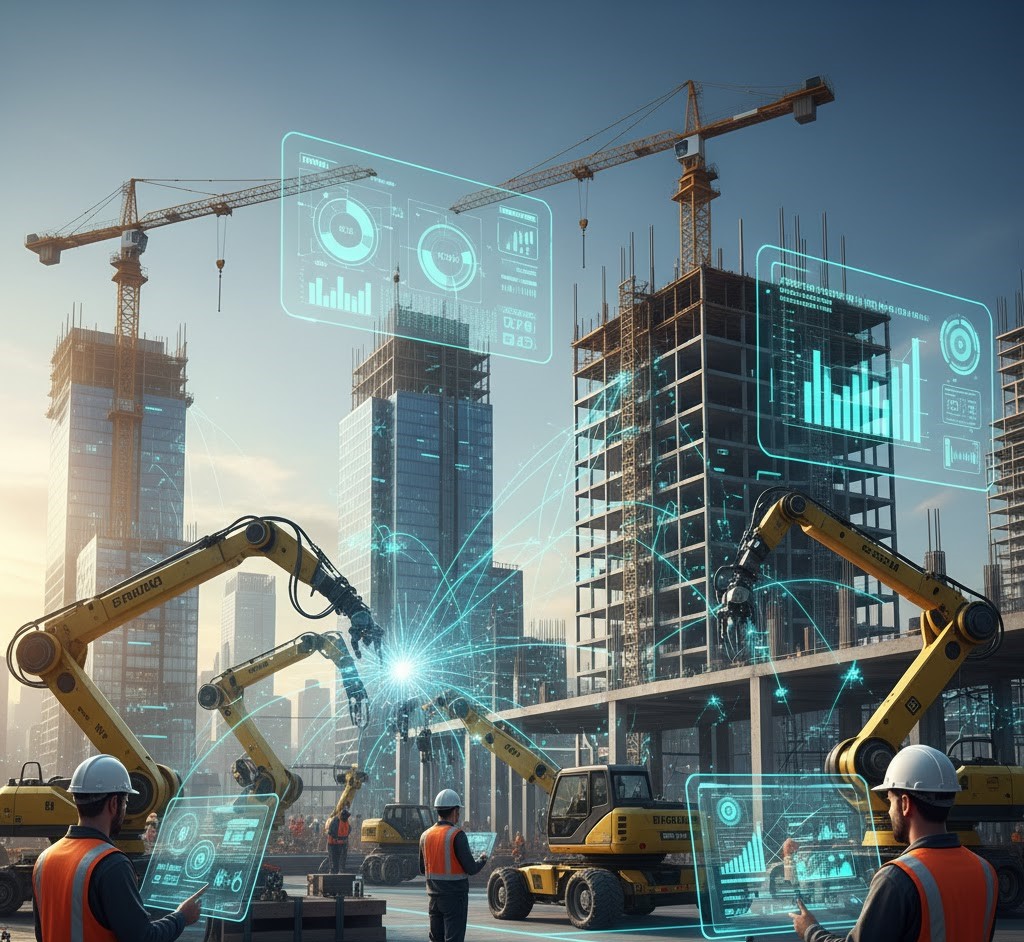
The rise of AI in construction software marks the beginning of a smarter, more efficient, and sustainable era in the construction industry. From Autodesk’s predictive analytics to Buildots’ AI-powered visual tracking, each tool highlighted here is redefining how the construction industry plans, executes, and manages projects.
The top AI-powered tools revolutionising construction management are not just improving performance; they’re creating an ecosystem where innovation meets sustainability. Contractors, engineers, and project owners who adopt these technologies today are securing a competitive edge for the digital future.
For further reading, check out “20 Best Construction Collaboration Software Reviewed for 2025: Top Tools for Seamless Project Management” to understand how AI, construction collaboration software, and innovation are shaping the broader construction industry landscape and project management.
Call to Action: Embrace the Future of Smart Building
At ConstructionFrontier.com, knowledge is the foundation of innovation. As AI construction software continues to evolve, staying informed is your key to thriving in a data-driven construction world.
Subscribe to our website for the latest updates on construction software innovation, smart technologies, and project management tools shaping the future of the built environment. Together, let’s create the intelligent cities of tomorrow powered by AI.