Bole International Airport: 7 Remarkable Engineering Facts Behind Africa’s Thriving Aviation Hub
Bole International Airport sits at 2,334 metres above sea level in Addis Ababa, Ethiopia, and now handles up to 22 million passengers a year after a decade-long Addis Ababa airport expansion programme that rebuilt its terminals, apron, cargo complex, and taxiway network from the ground up. As the sole Ethiopian Airlines hub and the exclusive base of the continent’s largest carrier by fleet and network, Bole International Airport has grown into one of the busiest and most engineering-intensive pieces of Ethiopian aviation infrastructure.
Technical Snapshot: Bole International Airport Core Project Specifications
| Specification | Detail |
| Location | Bole district, Addis Ababa, Ethiopia, 6 km southeast of the city centre |
| Elevation | 2,334 metres above sea level |
| Total passenger capacity | 22 million per year |
| Total cargo capacity | 1.2 million tonnes per year, the largest in Africa |
| Primary contractor | China Communications Construction Company (CCCC) |
| Hub carrier | Ethiopian Airlines operates roughly 1,376 scheduled flights weekly |
Every one of these figures represents a deliberate engineering decision made to keep pace with Ethiopian Airlines’ growth, and together they explain why Bole International Airport remains central to any conversation about Africa’s busiest airport and Ethiopia’s aviation hub investment plan.
Introduction: Bole International Airport
Addis Ababa did not inherit its aviation dominance. Ethiopian Airlines built it, terminal by terminal, apron stand by apron stand, through a decades-long Bole International Airport construction programme that never paused traffic to rebuild the runway, terminals, and cargo sheds beneath it. What began as a single-runway facility handling regional turboprops now processes wide-body traffic from five continents and serves as the primary gateway connecting Africa to Asia, Europe, and the Americas, a role evident in the airport’s construction history dating back to 1962.
This article sits within Construction Frontier’s broader coverage of the continent’s aviation boom, detailed in our complete guide to Africa’s airport mega projects. Bole’s story differs from a green-field build like Rwanda’s Bugesera Airport: it is a retrofit story, one of squeezing capacity out of a constrained urban site through phased, high-precision construction, and it stands as the largest single Addis Ababa airport expansion project on record. The seven facts below break down the engineering decisions that made this Bole International Airport expansion project possible.
High-Altitude Design Constraints Shaped Every Runway and Terminal Decision
Few major hubs operate at the altitude Bole International Airport does, and that variable drives a cascade of engineering consequences across the facility. Air density at 2,334 metres runs roughly 78% of sea-level density, a threshold set out in the airport’s published altitude and elevation profile, which affects runway length requirements and how engineers size taxiway pavement and apron drainage for the Ethiopian Airlines hub below. The two H3 sections below unpack how altitude shaped runway and aircraft-handling infrastructure across the wider Ethiopian aviation infrastructure network.
Runway Length and Thrust Compensation
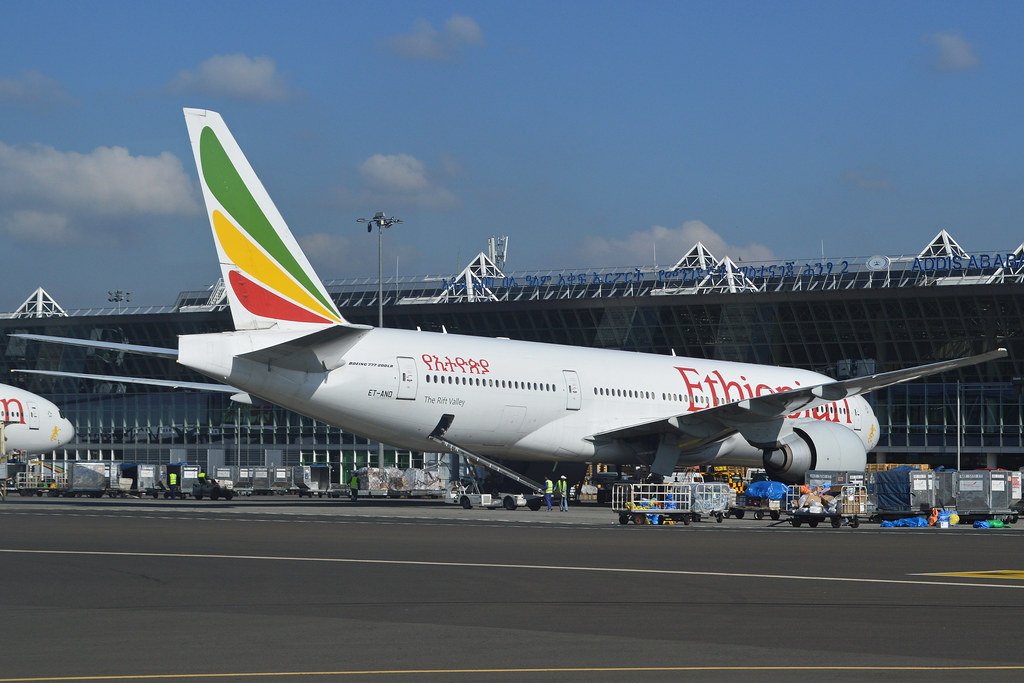
Thinner air reduces lift and engine thrust output, so aircraft need longer takeoff rolls to reach safe climb speeds. Bole International Airport’s runway configuration, upgraded during the 1997 three-phase expansion programme to handle Boeing 747 and Airbus A340 aircraft, addresses this by extending the primary runway and pairing it with a full-length parallel runway connected via five taxiway entrances. This dual-runway configuration, one of the earliest pieces of the wider Bole Airport construction record, allows ground controllers to separate arrivals and departures without forcing wide-bodies to share a single strip, a critical factor for throughput once daily movements exceeded 190 flights.
Air Density and Aircraft Performance Limits
Reduced air density also caps the maximum takeoff weight for some aircraft types on hot days, which is why the Ethiopian Airlines hub schedules certain long-haul routes with payload restrictions during peak-temperature windows. Engineers addressed part of this constraint by widening and reinforcing pavement sections to support heavier gear loads at lower speeds, thereby reducing the structural risk associated with longer ground roll distances at Bole International Airport.
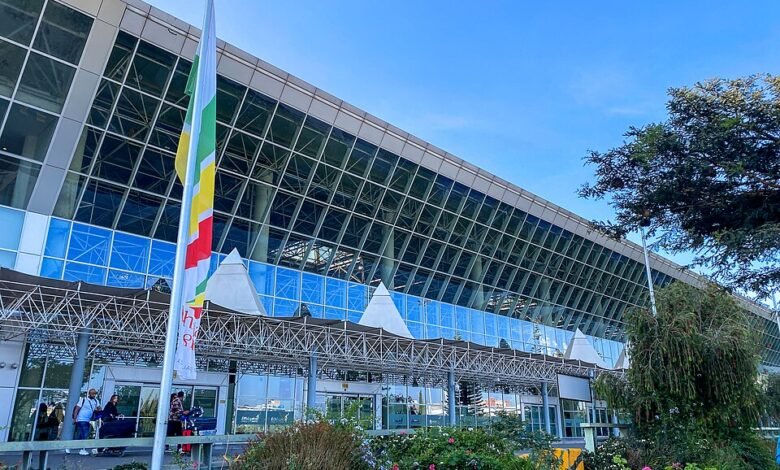
Terminal 2 Nearly Tripled in Size Through a Two-Phase Chinese-Financed Build
Terminal 2 is the physical core of the Bole International Airport expansion project, and its build-out reads like a masterclass in phased Bole Airport construction under live-airport conditions. The section below covers the financing structure that made Addis Ababa’s new airport terminal possible and the capacity outcomes it delivered.
The Financing and Construction Programme
China Communications Construction Company (CCCC) served as the EPC contractor for both phases, financed by China Eximbank through concessional loans, with the French firm ADP Ingénierie supervising construction and Singapore’s CPG Corporation handling design, in accordance with the terms set out in the EPC contract. Phase 1 broke ground in 2014, three years behind its original African Union summit deadline, but was delivered to full specifications.
| Element | Detail |
| Phase 1 scope | Terminal 2 construction |
| Phase 1 value | $225 million EPC contract |
| Phase 1 timeline | 2014 groundbreaking, January 2019 inauguration |
| Phase 2 scope | VIP terminal and Terminal 1 expansion |
| Phase 2 value | $138 million EPC contract |
| Phase 2 start | September 2017 |
| Financier | China Eximbank, concessional and preferential buyer’s credit loans |
Capacity Multiplication and Passenger Flow
The construction expanded Terminal 2’s original footprint, confirming Addis Ababa’s new airport terminal as one of the largest single structures built at any African hub. That physical expansion translated directly into throughput, a figure that positioned Bole alongside Cairo’s own terminal expansion programme as one of the two defining Addis Ababa airport expansion builds on the continent this decade.
| Metric | Before Expansion | After Expansion |
| Terminal 2 floor area | 48,000 square metres | 122,000 square metres |
| Passenger handling capacity | 6 million per year | 22 million per year |
Further Reading: Cairo International Airport Expansion: 5 Remarkable Engineering Insights Driving Egypt’s $3.5bn Aviation Transformation
A Purpose-Built VIP Terminal Serves Africa’s Diplomatic Capital
Addis Ababa hosts the African Union headquarters and the United Nations Economic Commission for Africa, a diplomatic concentration no other African capital matches. This section explains why that status required Bole International Airport to carry its own dedicated terminal rather than an upgraded lounge within the main building.
Design Brief for Heads of State
The VIP terminal, built under the same $138 million Phase 2 contract as the Terminal 1 expansion, includes private salons, secure lounges, conference rooms, duty-free retail, an information technology centre, and an exclusive parking compound, all of which are itemised in the project’s financing and construction record. Former Ethiopian Airports CEO Eskinder Alemu described the facility as essential precisely because Addis Ababa serves as the political capital of Africa, hosting a continuous stream of heads of state and ministerial delegations.
Integration With the Wider Terminal Complex
Engineers positioned the VIP terminal to connect directly to the main apron without requiring dignitary convoys to cross public terminal areas, a security and logistics decision that reduced ground transfer times for state visits while keeping commercial passenger flow through Terminal 2 uninterrupted.
Bole’s Cargo Complex Grew Into Africa’s Largest Airfreight Facility
Passenger numbers get most of the attention, but construction at Bole Airport on the cargo side has been just as consequential for Ethiopia’s export economy and its aviation hub investment plan. This section traces how the sequential construction of terminal buildings and a dedicated e-commerce facility created the continent’s largest airfreight complex at Bole International Airport.
Terminal I and Terminal II Capacity Build-Out
Ethiopian Airlines opened its first dedicated cargo terminal in 2006, then followed with a larger facility in 2017, financed by France’s AFD and Germany’s KfW, with civil works by Varnero and cold-chain systems from Germany’s UNITECH, marking the carrier’s formal inauguration of Cargo Terminal II. The combined terminals now hold the largest cargo capacity on the continent, as shown in a logistics capacity assessment of the facility.
| Facility | Year Opened | Annual Capacity | Construction Cost |
| Cargo Terminal I | 2006 | 350,000 tonnes | 340 million birr |
| Cargo Terminal II | 2017 | 600,000 tonnes | $150 million |
| Combined complex | 2017 | 1.2 million tonnes | N/A |
The E-Commerce Logistics Hub
In 2024, Ethiopian Cargo added a dedicated e-commerce logistics hub within the Cargo Terminal II footprint, equipped with automated sortation systems and electric transport vehicles, and itemised in the engineering firm’s project scope for the facility. The facility feeds Ethiopia’s freighter network, serving more than 35 dedicated cargo destinations across the continent.
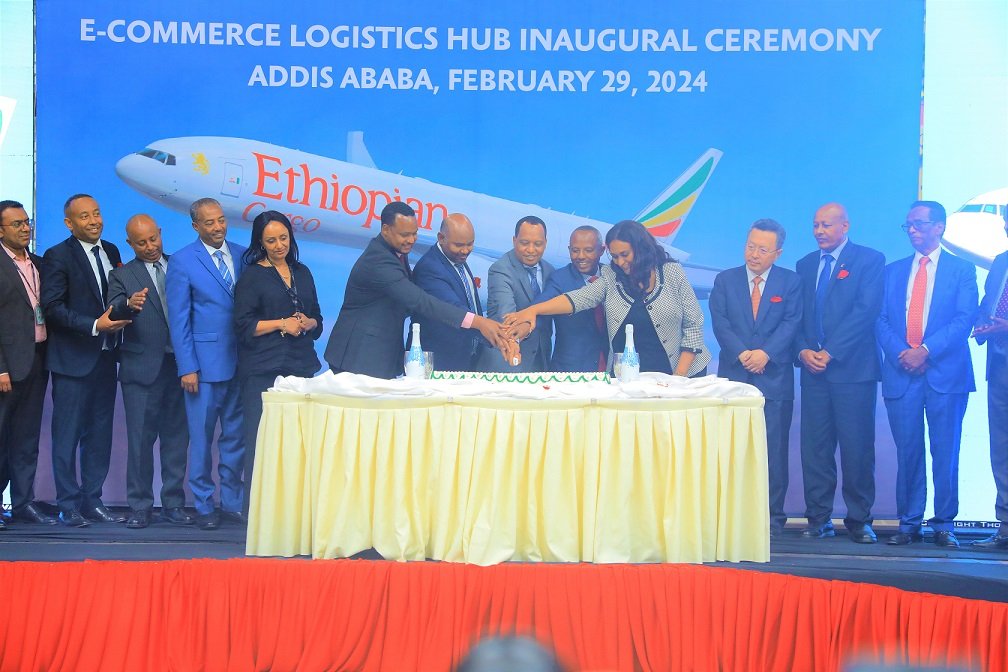
| Metric | E-Commerce Logistics Hub |
| Investment | $55 million |
| Footprint | 15,000 square metres |
| Annual capacity | 150,000 tonnes, roughly 23 million parcels |
| Core technology | Automated sortation and electric transport vehicles |
Apron and Taxiway Reconstruction Doubled Aircraft-Handling Density
An airport’s terminal capacity means nothing if the apron cannot park the aircraft generating that traffic. Bole International Airport’s ground-movement infrastructure underwent a quiet but essential engineering overhaul as part of the broader Addis Ababa airport expansion, as covered in the two subsections below.
Doubling Parking Stands
Bole International Airport’s apron previously accommodated far fewer aircraft than it does today, part of the same expansion programme’s ground infrastructure scope. Engineers also added a dedicated stand for general aviation and light aircraft, separating that traffic from the main commercial apron and reducing points of conflict during peak arrival banks.
| Ground Infrastructure | Before Expansion | After Expansion |
| Apron parking stands | 53 aircraft | 75 aircraft |
| Active taxiways | Single circulation route | Three additional taxiways |
| Control tower height | 19 metres | 38 metres |
Taxiway Redundancy and Runway Throughput
Three new taxiways were built to double the previous circulation capacity, giving ground control multiple routing options between the apron and the runway. The rebuilt control tower, positioned centrally between Terminal 1 and Terminal 2, gave air traffic controllers clearer sightlines across a much larger movement area.
The 2024 Domestic Terminal Renovation Doubled Capacity in One Construction Cycle
While Terminal 2 draws the international spotlight, Ethiopia’s domestic network operates from a separate facility at Bole International Airport, which requires an overhaul of its own to meet rising domestic travel demand. This section covers that renovation, another consequential chapter in Bole Airport construction.
Passenger Flow Redesign
The renovation doubled the floor area and baggage-handling capacity in a single construction cycle, culminating in the inauguration of the domestic terminal in 2024. The rebuilt terminal added modern passenger-processing infrastructure alongside a dedicated lounge.
| Domestic Terminal Metric | Before Renovation | After Renovation |
| Floor area | 12,875 square metres | 25,750 square metres |
| Contact gates | N/A | 4 |
| Remote departure gates | N/A | 10 |
| Check-in counters | N/A | 22, with automated hold-baggage screening |
| Project cost | N/A | $50 million |
Connecting Ethiopia’s Domestic Network
The terminal now supports more than 200 daily domestic flights across 22 destinations, including new routes to Gode, Jinka, Dembi Dollo, and Nekemte. That domestic expansion mirrors a pattern seen elsewhere on the continent, including Kenya’s ongoing debate over how to structure its own next-generation airport capacity plan after its Adani concession collapsed.
Further Reading: Bishoftu International Airport: Inside Ethiopia’s New Promising $12.5bn Mega Aviation Hub
Technical Block: Bole’s Position in Africa’s Aviation Hierarchy
Understanding why Bole Airport is Africa’s busiest hub, at least by one measure, requires distinguishing between two metrics: total passenger volume and single-carrier hub concentration. The numbered sections below break down both, before closing with a look at what Bole International Airport’s next decade looks like.
1. Single-Carrier Hub Concentration
Ethiopian Airlines’ weekly flight volume out of Bole dwarfs that of every other operator at the airport, a gap evident in weekly flight-frequency data for Africa’s leading hubs. No other major African airport has this degree of single-carrier dominance; Cairo and Johannesburg both split traffic across dozens of airlines with no operator approaching Ethiopian’s share.
| Carrier | Weekly Scheduled Flights at Bole |
| Ethiopian Airlines | Approximately 1,376 |
| flydubai (second-largest operator) | Roughly 14 |
2. Passenger and Seat Capacity Benchmarks
Cairo International Airport currently leads the continent in passenger volume, with OR Tambo in Johannesburg in second place, while Bole trails close behind in third place. The gap has narrowed since the Ethiopian Airlines hub capacity expansion at Bole Airport was completed, and Bole’s 22-million-passenger design ceiling still exceeds current throughput, leaving structural headroom that Cairo and Johannesburg lack.
| Airport | Annual Passengers | Outbound Seats (Late 2025) |
| Cairo International | 18.7 million | 1.7 million |
| OR Tambo, Johannesburg | 12.3 million | 1.16 million |
| Bole International Airport | 12.1 million | 1.17 million |
Conclusion: Bole’s Engineering Legacy and What Comes Next
Bole International Airport’s expansion demonstrates what disciplined, phased construction can achieve on a constrained urban site. Every engineering decision, from runway length compensation for altitude to doubling the number of apron stands, responds to a specific operational bottleneck rather than to a speculative capacity bet. That discipline is why the airport absorbed a fourfold increase in passenger volume without a full site relocation, something few capital-city airports manage, and why Bole Airport construction remains a reference case for retrofit-led aviation infrastructure across the continent.
The next chapter is already under construction elsewhere. Ethiopian Airlines has committed to a new mega-hub at Bishoftu, a $12.5 billion project slated to open in 2030 and detailed in Construction Frontier’s coverage of the Bishoftu International Airport project, designed to absorb traffic once Bole’s footprint reaches its ceiling. Until that facility opens, every improvement at Bole International Airport, from the cargo complex to the domestic terminal, buys the Ethiopian Airlines hub the runway it needs to keep growing without a capacity crisis and keeps Bole in contention for Africa’s busiest airport by any measure that counts single-carrier connectivity.
Explore More of Africa’s Airport Megaprojects
Bole International Airport is one of many transformative aviation projects reshaping the continent. Explore more technical deep dives, engineering analyses, and infrastructure insights across Construction Frontier: Africa Mega Projects.