

JCB Construction Equipment in Africa: 7 Essential Reasons Buyers Trust
JCB construction equipment in Africa earns buyer trust through seven verifiable strengths: authorised dealer depth, genuine parts backing, a range running from backhoe loaders to a 34.5-tonne excavator, an in-house DIESELMAX engine, LiveLink telematics, deposit-light finance and a debt-free manufacturer. Kenya’s construction sector grew 6.8 per cent in 2025 after a 0.7 per cent contraction in 2024, and JCB sold 113,498 machines worldwide in the same year. Chinese construction machinery exports to Africa rose 63 per cent in the first seven months of 2025, so JCB’s case rests on uptime and support rather than price.
Technical Snapshot: Core JCB Equipment Details
| Parameter | Detail |
| Subject | JCB construction equipment in Africa |
| Authorised dealers documented | Ganatra Plant & Equipment (Kenya and Uganda, since 1982); Bell Equipment Sales South Africa (from 1 May 2021); KAIROS (Morocco) |
| Range scope | Over 300 JCB products globally; backhoe loaders, excavators, wheel loaders, telehandlers, skid steers and compactors in African dealer ranges |
| Heaviest excavator in East Africa | JCB 345 LC: 34,462 kg, 221 hp, launched 9 May 2026 |
| Engine | JCB DIESELMAX 7.2-litre six-cylinder, 960 Nm, built in Derbyshire |
| Telematics | LiveLink: location, operating hours, fuel burn and fault codes |
| Kenya construction growth | -0.7 per cent (2024) to +6.8 per cent (2025) |
| Finance benchmark | 10 per cent deposit, 90 per cent financing, 60 months (Bank of Africa Kenya with Ganatra) |
| Manufacturer scale (2025) | GBP 5.7 billion turnover; 113,498 machines; 23 factories; no net borrowings |
| Competitive pressure | Chinese construction machinery exports to Africa up 63 per cent, January to July 2025 |
| Binding constraint | Counterfeit parts exposure and dealer continuity, not machine capability |
| Fastest levers | Duty-cycle matching, written parts lead times, finance stress test, telematics reporting |
| Benchmark metric | Cost per productive hour, including finance, fuel, service and idle time |
| Ownership and structure shift | Bell replaced Kemach as JCB distributor in South Africa, Namibia, Lesotho and Eswatini in 2021 |
Buyers weighing JCB construction equipment in Africa against rising Chinese competition should judge each machine on dealer reach, parts integrity and finance terms, because those three variables decide uptime long after the price negotiation ends.
Introduction: JCB Construction Equipment in Africa
JCB construction equipment in Africa earns its reputation one breakdown at a time, because a backhoe loader or excavator that stops on a remote site costs a contractor more than the monthly instalment on the machine. Kenya’s construction sector rebounded to 6.8 per cent growth in 2025 after a 0.7 per cent contraction in 2024, so demand for dependable earthmoving fleets is rising again. Buyers now face a crowded field of brands, yet the decision still turns on three questions: who services the machine, who guarantees the parts, and who finances the purchase.
JCB belongs among the leading construction equipment manufacturers, and its family ownership, debt-free balance sheet and sales in 150 countries give it staying power that African fleet managers value. The information problem sits elsewhere. Most pages describing JCB in Africa list product ranges and stop, while independent figures on parts integrity, dealer continuity and finance terms lie scattered across regulators, trade journals and news reports. Risk concentrates in those gaps, not in the iron.
This article tests seven reasons buyers trust JCB against documented evidence from Kenya, South Africa and Morocco, using government statistics, regulator findings, dealer announcements and manufacturer results. It also names where JCB faces pressure, particularly from Chinese manufacturers, so that engineers, investors and procurement teams can weigh the brand on uptime, total cost and support rather than slogans. Each reason survives only if a number, a named project or a dealer mechanism backs it.
Why Africa’s Construction Cycle Rewards Machines With Local Support
Demand data, financing conditions and market forecasts explain why support often outweighs purchase price in African equipment buying. The first part below reads Kenya’s construction indicators, the second reads the continental financing outlook, and the third compares two market forecasts that measure different scopes.
Kenya’s Construction Rebound Is Driving Equipment Demand
Kenya’s construction activity rebounded from a 0.7 per cent contraction in 2024 to 6.8 per cent growth in 2025, and the national economic survey for 2026 by KNBS pairs that swing with a 14.9 per cent jump in mining and quarrying, which feeds aggregate demand for wheel loaders and excavators. Credit followed activity: lending to the sector rose 12.18 per cent in 2025, a pattern the Kenya market update for 2026 tracks alongside property indicators.
Kenya Construction Indicators Behind Equipment Demand
| Indicator | Earlier reading | Latest reading |
| Construction growth (annual) | -0.7% (2024) | +6.8% (2025) |
| Mining and quarrying growth | -7.8% (2024) | +14.9% (2025) |
| Commercial bank lending to construction | KES 576.3 billion | KES 646.5 billion |
| Construction growth (first quarter) | 4.5% (Q1 2025) | 6.6% (Q1 2026) |
| East Africa regional growth outlook | 6.0% (2025) | 5.9% (2026), 6.4% (2027) |
The first-quarter picture strengthens the case. Kenya’s first-quarter 2026 construction growth accelerated compared with the same quarter a year earlier, suggesting contractors are ordering machines in response to a rising workload rather than a recovering one. For JCB Kenya buyers, that workload shifts the question from whether to buy to which supplier will keep a machine productive through sustained shift work.
Financing Conditions Reward Contractors Who Can Finance Fleets
Continental conditions tighten the squeeze. Forecasts put growth across the continent at 4.2 per cent in 2026, down from 4.4 per cent in 2025, while Africa’s 2026 growth outlook also sets the annual development financing gap above USD 1.3 trillion. East Africa remains the fastest-growing region, yet stretched public budgets limit how much clients can prepay or mobilise. That pressure pushes contractors toward asset finance with long tenors and low deposits, so brands that arrive with a finance partner start with an advantage no specification sheet captures.
Market Forecasts Agree on Growth but Differ on Scope
African and Regional Equipment Market Forecasts
| Scope | Base value | Forecast value | Growth rate |
| Middle East and Africa construction equipment | USD 8.35 billion (2025) | USD 13.13 billion (2031) | 7.83% (2026 to 2031) |
| Africa’s heavy construction equipment | USD 4.30 billion (2024) | USD 6.00 billion (2031) | 4.90% (2025 to 2031) |
Two forecasts frame the opportunity, and they differ because one covers all equipment across the Middle East and Africa, while the other covers only African heavy equipment. Treat the regional construction equipment market forecast as the ceiling for the addressable pool and the African heavy equipment market outlook (2025-2035) as the floor for earthmoving classes. A second edition of the African report lists USD 4.21 billion rising to USD 6.12 billion at 4.8 per cent, so read the figures as a range.
Chinese suppliers target the same pool aggressively, and buyers who want to benchmark a rival range can review XCMG models and buying tips before they tender. Both forecasts point upward, and both reward suppliers whose service networks are located within Africa.
Further Reading: XCMG Equipment in Africa: 7 Proven Models and Smart Buying Tips
Reasons One to Three: Dealer Depth, Genuine Parts and Range Breadth
Three reasons concern the ecosystem around the machine rather than the machine itself: who sells and services it, who guarantees its parts, and how broad a range a fleet owner can standardise on. The first part covers authorised dealers across Kenya, Uganda, South Africa and Morocco. The second covers genuine parts and the counterfeit risk facing JCB spare parts in Kenya. The third covers the range, from compact machines to a 34-tonne excavator.
Reason 1: Authorised Dealers Who Stay on Site
JCB construction equipment in Africa starts at the dealer’s counter. Ganatra Plant & Equipment has served as the sole authorised JCB dealer in Kenya and Uganda since 1982, and its Nairobi showroom on Baba Dogo Road in Ruaraka stocks new and second-hand machines and spare parts. The dealer’s website lists product support, LiveLink, an annual service contract, JCB Finance, and a used equipment channel, so a buyer deals with one accountable counterparty from the quotation through the first major service. Four decades of continuity matter because a JCB dealer in Kenya that has outlasted several commodity cycles can still honour warranty and stock wear parts when demand spikes.
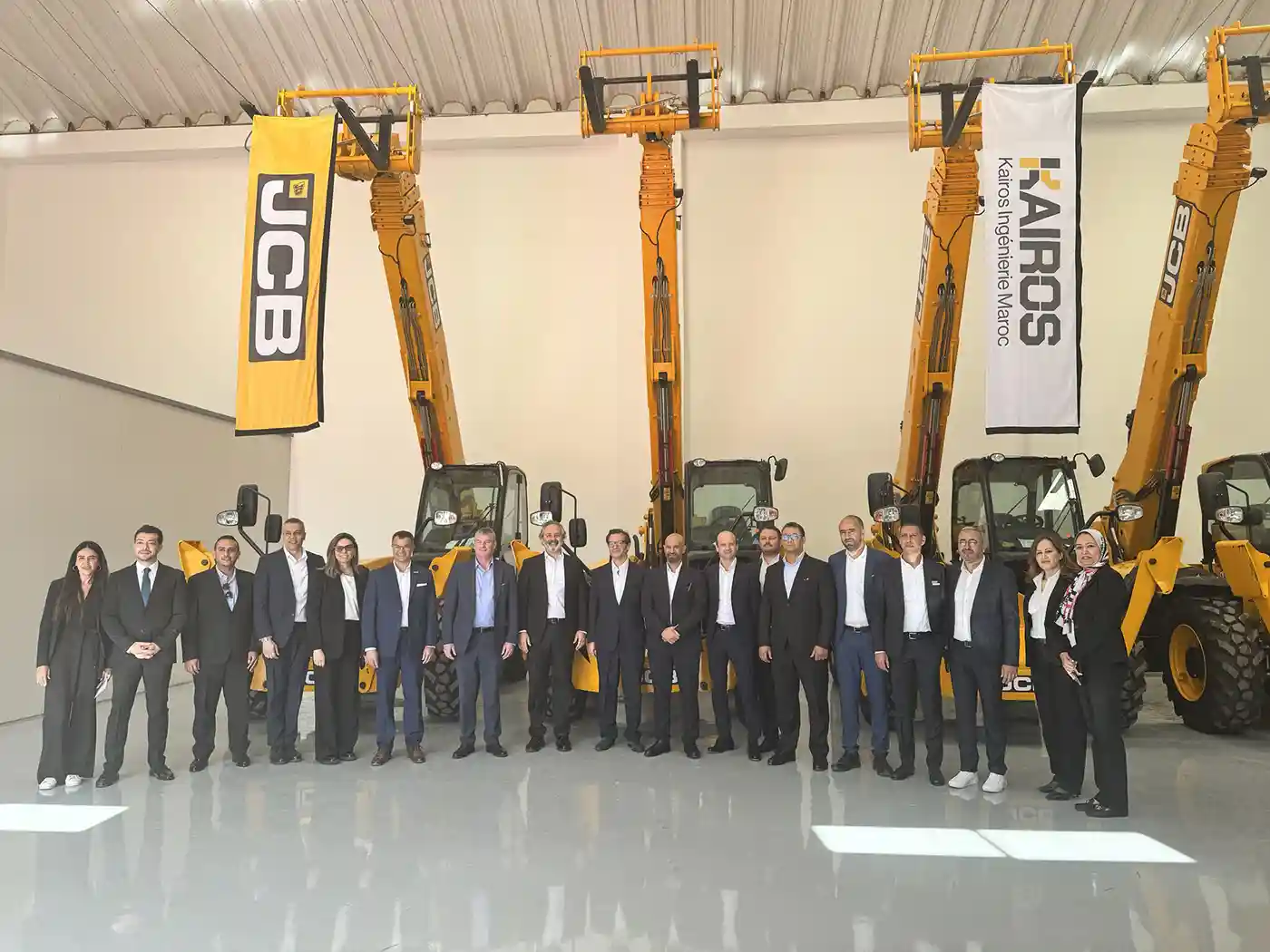
Bell Equipment Sales South Africa became the distributor for the full JCB construction range on 1 May 2021. Bell’s appointment as dealer brought a company that began in 1954, operates in over 80 countries, runs more than 150 offshore distribution outlets, and whose own factory builds articulated dumper trucks into the JCB network. In May 2026, JCB named KAIROS as its exclusive dealer in Morocco, aiming to improve access to JCB equipment and services across Morocco and other African countries and to strengthen customer support.
Authorised JCB Distribution Across Documented African Markets
| Market | Authorised distributor | Basis |
| Kenya and Uganda | Ganatra Plant & Equipment | Sole authorised dealer since 1982 |
| South Africa, Namibia, Lesotho and Eswatini | Bell Equipment Sales South Africa | Full construction range from 1 May 2021 |
| Morocco | KAIROS | Exclusive dealer |
| Other African markets outside the four southern countries | Kemach Group companies | Distribution unaffected by the 2021 change (position in March 2021) |
No single dealer covers the continent, so a JCB dealer in Kenya differs from one in Johannesburg in stock policy, finance partners and training. Treat each authorised dealer as a separate service contract and ask for its list of stocked wear parts, field service vehicle count, and technician certifications before signing. The table above documents only public announcements; confirm current coverage in any other country through JCB’s dealer locator.
Reason 2: Genuine Parts Protect Uptime and Resale Value
JCB promotes its genuine parts catalogue as the route to longer, stronger machine life, and Ganatra sells JCB spare parts in Kenya alongside its machines. The pitch carries weight because fake parts circulate freely in the Kenyan market, with counterfeit trade at record levels in a 2025 consumer-level report, and a counterfeit goods destruction exercise covered machinery and spare parts among its categories. The indicators below show how exposed a parts buyer is.
Kenya Counterfeit Indicators for Spare Parts Buyers
| Indicator | Reading |
| Share of products counterfeit (consumer-level report, 2025) | 20% |
| Estimated annual loss to the economy | KES 800 billion |
| Average counterfeit share across surveyed sectors (firm-level survey, 2025) | 18% |
| Counterfeit share in automotive spare parts | 21% |
| Counterfeit purchases made through street vendors | 60% |
| Counterfeit purchases made online | 31.27% |
| Consumers who struggle to tell genuine from fake | 30% |
Automotive spare parts sit above the cross-sector average, and the automotive category is the closest published proxy for machinery parts. The online share means a social media listing now carries the same risk as a street stall, a pattern examined in minimising counterfeit spare parts sales. A counterfeit goods seizure in Kenya that logged the 21 per cent automotive figure shows enforcement is active, yet a fake hydraulic seal or filter rarely fails on day one. It fails under load weeks later on a site where the next genuine part is two days away. That asymmetry makes the dealer’s genuine parts chain a financial control rather than a convenience.
Buyers asking where to buy genuine JCB spare parts in East Africa should start at the authorised dealer’s parts counter and insist on a part number and invoice. For JCB spare parts in Kenya, the invoice also protects resale value, because a documented service history with genuine components lets the next buyer price the machine with confidence.
Reason 3: JCB Construction Equipment in Africa Spans Compact Machines to 34-Tonne Excavators
JCB manufactures over 300 products, and its Africa construction pages list JCB’s construction machinery range, including backhoe loaders, articulated booms, vibratory tandem rollers, mini excavators, skid-steer loaders, telehandlers, excavators, wheel loaders, and single-drum soil compactors. For fleet owners, one range means one operator training programme, one parts catalogue and one telematics platform. The examples below, drawn from southern and East African coverage, show how deep the catalogue runs.
JCB Range Examples Documented in African Markets
| Machine family | Examples documented in African coverage | Typical duty |
| Backhoe loaders | 3CX, 3DX Plus, 3DX Super (4.77 m dig depth, 1.1 m³ shovel) | Trenching, loading, site works |
| Excavators | 205 (21 tonnes), 345 LC (34.5 tonnes, East Africa) | Roads, drainage, quarry feed |
| Wheel loaders | 467ZX (about 23.8 tonnes, 4 m3 loader capacity) | Stockpile and aggregate loading |
| Compaction | Vibromax 116D (12 tonnes), CT260-120, VM166, VM200 | Soil and road base compaction |
| Telehandlers (Loadall) | 540-17 (4,000 kg lift, 16.7 m height) | Material handling |
| Skid steer loaders | 155HD (2,844 kg rated operating capacity) | Compact site and yard work |
At the heavy end, Ganatra introduced the 34-tonne JCB excavator launch on 9 May 2026, bringing the 345 LC to Kenya and Uganda as the heaviest JCB excavator the dealer has offered there. The machine is designed for foundation excavation, drainage trenching, expressway and county road earthworks, and quarry loading. Launch coverage frames the 345 LC as an answer for sites that outgrew mid-range excavators, where parts, service, and operator training for larger machines had been scarce. JCB excavators in Kenya now range from compact units to this class under a single dealer relationship.
Buyers cross-shopping wheel loaders will meet Chinese rivals in the same quotation round, and the comparison of SDLG wheel loaders in Africa shows how that price pressure plays out. JCB’s answer lies in support and parts, not bucket size. Buyers searching for the JCB 3CX price in Kenya, or asking how much a JCB backhoe loader costs in Kenya, should request written quotations for identical specifications, as prices vary with attachments, new or used status, and financing structure.
Reasons Four to Seven: Engine, Telematics, Finance and Manufacturer Strength
The remaining four reasons sit inside the machine and the company behind it: the engine and hydraulics, the telematics layer, the finance route and the manufacturer’s balance sheet. The first part covers the DIESELMAX engine and the 345 LC specification. The second covers LiveLink data. The third covers JCB financing in Kenya and the marketplace route. The fourth covers JCB’s 2025 results and long African record.
Reason 4: An In-House Engine Gives a Single Warranty Chain
In JCB construction equipment in Africa, the engine determines who is responsible for a failure: JCB designs and builds its DIESELMAX engine at its Derbyshire plant, so one manufacturer stands behind the engine, the hydraulics, and the structure of a machine such as the 345 LC excavator. On a remote site in Turkana or Karamoja, that unified accountability removes the dispute over which supplier is responsible for a failure. The table lists the launch specifications as reported for the East African market.
JCB 345 LC Excavator Specifications for East African Duty
| Parameter | Value (as reported at launch) |
| Operating weight | 34,462 kg |
| Engine | JCB DIESELMAX 7.2-litre, six-cylinder |
| Power | 165 kW (221 hp) |
| Peak torque | 960 Nm |
| Hydraulic system | Twin variable-flow piston pumps, negative control |
| Maximum reach | 6,570 mm |
| Bucket capacity | 1,800 litres |
| Fuel tank | 590 litres |
| Hydraulic service interval | 5,000 hours |
| Bucket tear-out force | 22,586 kg |
The 5,000-hour hydraulic interval gives 2.5 years between hydraulic services for a machine working 2,000 hours a year. The 590-litre tank cuts refuelling runs where fuel arrives by truck, and the fly-mesh cooling guard targets East Africa’s dust and heat, where weak cooling quietly shortens machine life. Reinforced boom and arm structures are designed for hard rock and aggregate work, which is important for quarry operators supplying the construction boom described earlier.
Reason 5: LiveLink Telematics Makes Remote Fleets Visible
JCB LiveLink Africa deployments provide fleet owners with location, operating hours, fuel burn, and fault codes from a phone or laptop, and Ganatra lists LiveLink among its customer services. Development finance institutions increasingly ask contractors to report costs on major infrastructure programmes, so machine data now supports bids, audits, and maintenance. A contractor running four units across two counties can replace many phone calls and site visits with one dashboard.
JCB’s own materials add alerts before problems arise and after-hours use notifications that flag unauthorised machine movement. Utilisation data also exposes the idle machine problem. As an illustration, a financed 20-tonne excavator that logs 900 hours against 2,000 planned hours leaves 55 per cent of its capacity idle, and the instalment still falls due every month. Telematics turns that hidden cost into a number a finance director can act on.
Reason 6: JCB Financing in Kenya Lowers the Entry Barrier
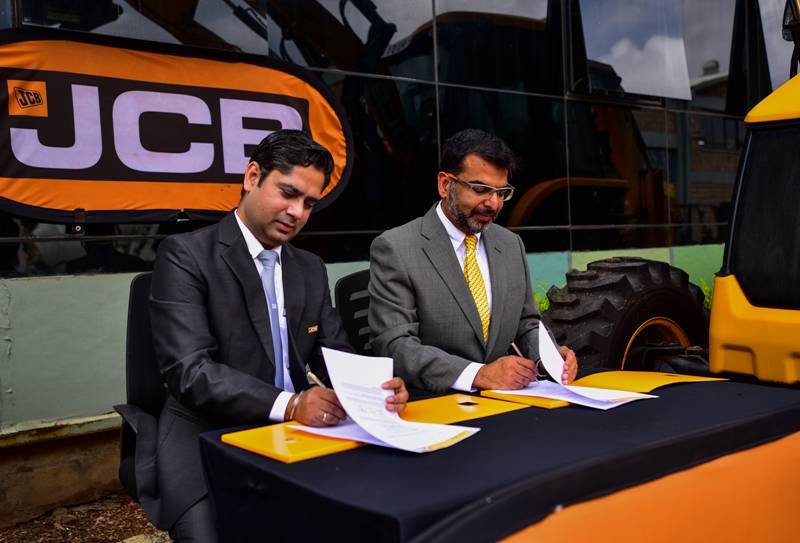
Small contractors can now buy JCB machines with a 10 per cent deposit after Bank of Africa Kenya and Ganatra agreed to 90 per cent financing over five years, a structure that JCB financing for local contractors describes in detail. A small contractor seeking a JCB backhoe loader can access up to 90 per cent of equipment cost over 60 months, and the bank said it was ready to process qualifying applications immediately after the signing ceremony in Nairobi.
Finance changes who can compete. Large firms have historically bought machinery outright or leaned on expensive informal credit, so a deposit-light route opens ownership to mid-sized and small contractors. Construction contributes about 5.6 per cent of Kenya’s GDP, and forecasts point to growth above 5 per cent per year through 2032, giving lenders a growing pool of work to underwrite. The route also pushes Ganatra to place machines during the current infrastructure period with longer repayment terms.
Buyers who prefer to compare new and used options can also browse JCB equipment from verified dealers through PlantBridge Africa’s JCB listings, which allow them to request quotes and view local-currency pricing. The page describes JCB as the region’s leading backhoe brand, so treat that as marketing and test it against dealer support. Marketplace listings sit outside JCB’s authorised channel, and the number of JCB listings grows as dealers add stock.
Reason 7: A Debt-Free Manufacturer With a Long African Record
JCB reported a turnover of GBP 5.7 billion in 2025, and JCB’s 2025 machine sales fell by 6,350 units, about 5 per cent, to 113,498. Turnover held broadly stable on a better product mix, and JCB increased its global market share despite no market growth in North America and a 12 per cent contraction in India. For African buyers, a manufacturer with no net borrowings can keep funding parts supply and product development through a downturn.
JCB 2025 Results Behind the Supply Chain
| Metric | 2025 | 2024 |
| Turnover | GBP 5.7 billion | GBP 5.8 billion |
| Profit before tax | GBP 642 million | GBP 687.3 million |
| Machines sold | 113,498 | 119,848 |
| Factories | 23 | Not stated |
| Employees | Over 20,000 | Not stated |
| Net borrowings | None | Not stated |
The record runs deep. Joseph Cyril Bamford began building construction equipment in 1945, and the JCB backhoe loader of 1953 reshaped the industry. Africa has driven growth before: JCB’s business on the continent doubled in 2012, an African sales boost that helped lift profits to a record. JCB also spent GBP 100 million on hydrogen combustion technology, and JCB’s Hydromax hydrogen land-speed record of 406.32 mph in August 2026 demonstrates engineering depth in engine design, though diesel remains the working fuel on African sites.
Where JCB Faces Pressure: Honest Limits and Competitor Contrasts
Trust does not mean immunity from pressure, and JCB construction equipment in Africa faces real competition. This part tests where Chinese manufacturers press JCB hardest, how JCB compares with Caterpillar on African support, and what South Africa’s 2021 distributor change teaches buyers about dealer continuity.
Is JCB a Good Brand for Construction in Kenya? The Chinese Pressure Test
JCB is a strong brand in Kenyan construction, where support, resale, and mixed fleets matter, yet Chinese suppliers press hardest on volume, availability, and heavy-class presence. Chinese exports flowing into Africa grew faster than to any other region in 2025, with construction machinery up 63 per cent in the first seven months. Heavy machinery demand across Kenya now sits in a segment dominated by Chinese players, with Korean and Scandinavian brands also holding strong positions.
Competitive Pressure Indicators for JCB in Africa
| Indicator | Reading |
| Chinese construction machinery exports to Africa, January to July 2025 | +63% |
| Hunan construction machinery exports to Africa, January to May 2026 | +85.2% (CNY 2.55 billion) |
| Share of Africa’s excavator demand from mining | About 75% |
| JCB global machine sales, 2025 | -5% |
| JCB global market share, 2025 | Increased |
Hunan’s machinery exports to Africa rose 85.2 per cent in the first five months of 2026, and about 75 per cent of African excavator demand comes from mining. That is the honest limit: in large mining-class excavators, JCB’s documented African presence is thinner than its backhoe, wheel loader and telehandler lines, and the 345 LC is the heaviest model Ganatra has introduced. Readers who want a rival’s record can study SANY equipment in Africa for wins and limits.
Price is the second front. Chinese manufacturers often quote lower upfront figures, but acquisition cost is only one line of ownership. The hidden costs of Chinese equipment include parts lead times, resale value and downtime, which is exactly where a JCB dealer’s stocked parts and telematics earn their place. No public dataset compares JCB and Chinese excavator reliability in African conditions, so buyers should test uptime through reference customers rather than brochure claims.
JCB vs Caterpillar Africa: Support Reach Decides the Contest
Caterpillar once defined heavy machinery in Kenya, and Chinese brands such as SANY have since built wide recognition. JCB does not need to win every tonnage class to win a fleet. Its strongest ground sits in backhoe loaders, telehandlers, compact machines and mixed fleets, with the 345 LC reaching 34.5 tonnes. The key Caterpillar and Komatsu differences show how the two largest heavy-equipment rivals compete on dealer coverage and parts, the same variables that decide JCB’s fate against them.
The practical contest runs through service reach, not brochure specifications. A buyer comparing JCB and Caterpillar for a mixed fleet should score each dealer on parts lead times, technician availability, and financing terms before comparing machine prices. If JCB’s dealer wins on two of three, the fleet owner gains more from consolidating on JCB than from chasing a lower headline price.
Further Reading: Caterpillar vs Komatsu: 7 Critical Differences for Smarter Choices
Dealer Transitions Expose the Real Risk
The sharpest dealer lesson came in South Africa. Kemach Equipment stopped distributing JCB construction equipment in South Africa, Namibia, Lesotho and Eswatini from 1 May 2021 after Bell secured a deal, and the distribution change in South Africa left the Kemach Group’s distribution elsewhere unaffected. JCB’s general manager for Africa called Bell a dealer of the right calibre when the announcement of the new JCB dealer in South Africa set the handover date.
A handover still carries friction. Bell took over support for all existing JCB machines from 1 May, including existing warranty agreements, and backed this with 22 customer service centres that hold workshops and parts inventories, as explained in the JCB distributor changeover in South Africa coverage. Bell’s Level 1 B-BBEE status also helps buyers who need ownership scoring. Even so, Bell’s first year focused on established loading equipment, and live compaction demonstrations reached its salesforce only in March 2022.
Buyers facing a dealer change should demand written transfer terms for warranties, parts stock, service history and operator training before the old dealer exits. The lesson is that dealer continuity deserves the same diligence as machine specification.
Field Evidence: What JCB Buyers Report From Real Projects
Documented deployments matter more than brand claims. The first part follows a five-machine JCB fleet on a South African roads contract and a roller demonstration on a provincial road. The second part states plainly what public records do not yet show.
A Five-Machine Fleet on a Free State Roads Contract
Dwellers Trading and Projects bought two 21-tonne JCB 205 excavators, two 3DX Plus backhoe loaders, and one 12-tonne JCB 116D roller, and the equipment arrived in December 2021. The owner arranged his own financing, paying the equipment off over 18 months under contracts that run for 36 months, and he bought extended warranties to 6,000 hours on the wet drivetrains. Buying five machines from one supplier simplified spares, as Dwellers Trading’s new JCB fleet records.
The excavators and roller work on a roads project in Moakeng township near Kroonstad, where the contract requires at least 30 per cent local labour. One excavator digs fill in a nearby quarry, the second excavates the road footprint, and the roller compacts the layers. The owner reported reasonable parts and service kit costs by industry standards and fuel burn inside budget, though he had not yet settled consumption figures. Treat these as owner statements published by the dealer, not as independent test data.
A second field example tested compaction rather than excavation. Kwa Mhlanga Construction used a JCB Vibromax 116D roller on the K91 road project near Alberton during live demonstrations at the end of March 2022, where a soil testing technician from Roadlab checked the compaction alongside Bell sales staff, as the JCB roller demonstrations in South Africa coverage records. A demonstration backed by independent soil testing carries more weight than a claim in a brochure.
What Public Records Do Not Show
No documented JCB failure post-mortem by an African contractor was found in the public sources reviewed for this article. The nearest evidence of risk lies in the 2021 dealer transition and in Kenya’s counterfeit parts market, which this article treats as the real failure modes. Buyers should ask the dealer for named reference customers with similar duty cycles and call them before signing.
Technical Block: Duty-Cycle, Parts, and Finance Checks for JCB Fleet Buyers
Six checks convert the seven reasons for choosing JCB Kenya and wider African supply into a purchase decision.
- Check 1 matches the machine to its duty cycle.
- Check 2 tests the dealer’s parts and service chain.
- Check 3 structures for finance.
- Check 4 uses LiveLink data to prove utilisation.
- Check 5 controls for counterfeit parts.
- Check 6 audits of marketplace listings before any quotation.
1. Match the Machine to the Duty Cycle
Start from tonnage, bucket volume, and annual hours, then test the manufacturer’s service intervals against the plan. The 345 LC’s 5,000-hour hydraulic interval yields 2.5 years between hydraulic services at 2,000 hours per year and 3.3 years at 1,500 hours per year. A quarry planning double-shift work at 3,000 hours a year reaches the interval in 20 months. Longer intervals cut scheduled stops only if the dealer stocks the filters and fluids when the interval arrives.
2. Test the Dealer’s Parts and Service Chain
Ask the dealer for a written parts lead time on the five most common wear items for the model, the number of certified technicians, and the terms of the annual service contract. If the dealer cannot commit to lead times in writing, treat the uptime promise as marketing. Verify authorised status directly with JCB, because a dealer’s claim alone proves nothing.
3. Structure the Finance With a Stress Test
Illustrative BOA-Ganatra Structure Before Interest and Fees
| Item | Value (assumed USD 100,000 machine) |
| Deposit at 10% | USD 10,000 |
| Amount financed at 90% | USD 90,000 |
| Term | 60 months |
| Principal-only instalment | USD 1,500 per month |
| Annual principal repayment | USD 18,000 |
The USD 100,000 price is an assumption, not a quotation. Add interest, insurance and fees from the bank’s written offer, because the principal-only instalment sets the floor. A machine that earns less than USD 1,500 a month above operating costs cannot service this facility, so test earnings at 60 per cent of planned hours before signing.
4. Prove Utilisation With LiveLink Data
Cost per productive hour equals the monthly instalment plus fuel, service, and operator costs, divided by productive hours. With the USD 1,500 principal-only instalment above, finance alone adds USD 10 per hour at 150 productive hours a month and USD 20 per hour at 75 hours. Require monthly LiveLink hour reports from day one, so the finance director sees idle time as a cost rather than a surprise.
5. Control Counterfeit Parts at Purchase
Buy parts only through the authorised dealer’s channel, record part numbers on delivery, and keep failed components for inspection. With 21 per cent of automotive spare parts being counterfeit, the cheapest filter on a social media listing can cost a hydraulic pump. Make the parts invoice a condition of paying any maintenance contractor.
6. Audit Marketplace Listings Before Requesting Quotes
Marketplaces such as PlantBridge Africa allow buyers to request quotes from verified dealers across multiple categories and currencies, but the authorised JCB dealer remains the benchmark. Compare marketplace quotes against the authorised dealer on identical specifications, check serial numbers and service history, confirm warranty transfer, and inspect the machine before payment.
Conclusion: Support, Parts and Finance Decide JCB’s African Value
JCB construction equipment in Africa earns trust where buyers measure total cost, not sticker price. The seven reasons hold under scrutiny: Ganatra’s presence since 1982, Bell’s southern African network and KAIROS in Morocco give dealer depth; a 21 per cent counterfeit rate in automotive parts makes the genuine parts chain a financial control; the range reaches 34.5 tonnes; the DIESELMAX engine gives a single warranty chain; LiveLink supplies the reporting lenders now demand; a 10 per cent deposit widens access; and a debt-free manufacturer that sold 113,498 machines in 2025 can fund support through a downturn.
The decision rule is simple. Choose JCB when three tests pass: the dealer commits to parts lead times in writing, the finance instalment remains covered at 60 per cent of planned hours, and telematics reports actual hours every month. If any test fails, a cheaper Chinese machine will not fix the problem, and neither will a bigger JCB. Chinese brands will keep winning where upfront cost and heavy-class availability dominate, particularly in mining-class excavators, while JCB will keep winning in backhoe loaders, telehandlers and mixed fleets that value uptime.
Follow-through decides the outcome. Visit the dealer’s workshop, call two reference customers with similar duty cycles, and demand the finance stress test in writing. The buyers who do this will find that JCB’s African advantage lives in the support chain around the machine, and that advantage will widen as lenders and development finance institutions demand more cost data from contractors.
Follow the Fleet Decisions Shaping African Construction
Construction Frontier: Equipment Brands & Manufacturers tracks OEM strategies, dealer shifts, financing structures, and fleet economics that shape contractors’ choices across Africa. Follow our coverage of brand performance, uptime data, and procurement decisions.

One Comment