

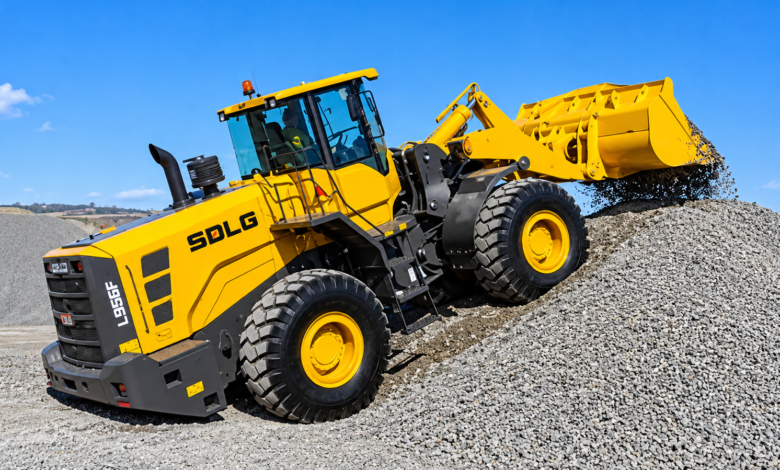
SDLG Wheel Loaders in Africa: 6 Powerful Reasons Buyers Love Them
SDLG wheel loaders in Africa win buyers on six counts: a financeable entry price, proven duty in ports and quarries, a 1.8 to 5.8 tonne range, easy field adaptation, improving parts support, and an Africa-first export push. Shandong Lingong Construction Machinery now operates as an independent Chinese maker after Volvo CE sold its 70% stake for SEK 8 billion in 2025. Buyers should confirm who is responsible for the machine’s warranty in their country before signing.
Technical Snapshot: SDLG Wheel Loaders in Africa at a Glance
| Parameter | Detail |
| Manufacturer | Shandong Lingong Construction Machinery Co., Ltd. (SDLG), Linyi, China |
| Ownership | Fund predominantly owned by Lingong Group since 2025; Volvo CE held a majority stake from 2006 (70% at the sale) |
| Sale value | SEK 8 billion (6 billion RMB) |
| Loader range | 1.8 to 5.8 tonne rated load in the compact-to-mid line-up reported in Southern Africa |
| Reference model | L935H: 3,500 kg rated load, 105 kW, 10,940 kg operating weight, 2.1 m³ bucket |
| Africa export push | 300 machines shipped in July 2025; East Africa Regional Centre in Dar es Salaam |
| Electric option | L956HEV: 5,800 kg rated load, 3.6 m³ bucket, 125 kW; African adoption of electric loaders remains gradual |
| Best-fit duty | Ports, quarries and aggregates, utilities, heavy infrastructure, farms |
| Live pricing | Quote-based; request a current written quote, because price moves with specification, duty and exchange rates |
| Benchmark metric | Durban LG958L: approximately 5,000 hours; 4.9 m³ bucket matches two 9.5 tonne loaders |
| Binding constraint | Dealer coverage and parts lead time after the ownership change |
| Fastest levers | OEM parts stock, written warranty terms, a service contract, operator training |
SDLG wheel loaders in Africa deliver the most value where buyers match the loader class to the material and lock down dealer support first. The six reasons below show where the brand earns its reputation and where the evidence runs thin.
Introduction: SDLG Wheel Loaders in Africa
SDLG wheel loaders in Africa occupy the value end of a market where Caterpillar, Komatsu and Volvo set the reference, as the ranking of top construction equipment manufacturers shows. The yellow machines still turn up at ports, quarries and farms from Durban to Dar es Salaam, because buyers want a loader that moves material at a price a mid-sized contractor can finance. The Middle East and Africa loader market reached approximately USD 3.39 billion in 2025, and the research house projects 4.10% annual growth through 2035, so the brand competes for an expanding pool.
The brand’s ownership changed in 2025, and that change matters more than any spec sheet. Volvo CE bought a majority stake in SDLG in 2006 and, in 2025, divested its SDLG shares to a fund predominantly owned by Lingong Group for SEK 8 billion (6 billion RMB). SDLG contributed approximately 2% of Volvo Group turnover in 2024. At least one distributor web page still describes SDLG as a Volvo partner. That gap between brochure and reality is where risk concentrates, because warranty, parts supply, and resale value all depend on who stands behind the machine in your country.
This guide serves engineers, fleet managers and investors who must decide whether SDLG belongs on a shortlist. It gives six evidence-backed reasons buyers choose the brand, separates independent data from supplier press releases, and ends with a buying checklist that includes bucket-payload arithmetic and a dealer-verification routine. Where a claim rests on a manufacturer or dealer source, the text says so.
From Volvo Subsidiary to Independent Maker: What Changed for African Buyers
Two facts frame every purchase: who owns SDLG today and who services it near your site. The first part below traces the change in ownership; the second maps the dealers and export hubs that now carry the brand across the continent.
Ownership After the Volvo CE Exit
Who owns SDLG today? A fund predominantly owned by Lingong Group, the former minority shareholder. Volvo CE entered SDLG in 2006 to gain access to China’s domestic market, and in 2025 both partners agreed that independent strategies suited them better. Volvo CE keeps its premium Volvo-branded range and its Shanghai excavator production. The change alters the hidden costs of Chinese versus Western equipment: parts lead times, residual values, and warranty enforcement depend on the dealer’s contract with the manufacturer, not on a logo from a former owner.
SDLG Dealers in Africa: Hubs and Shipments
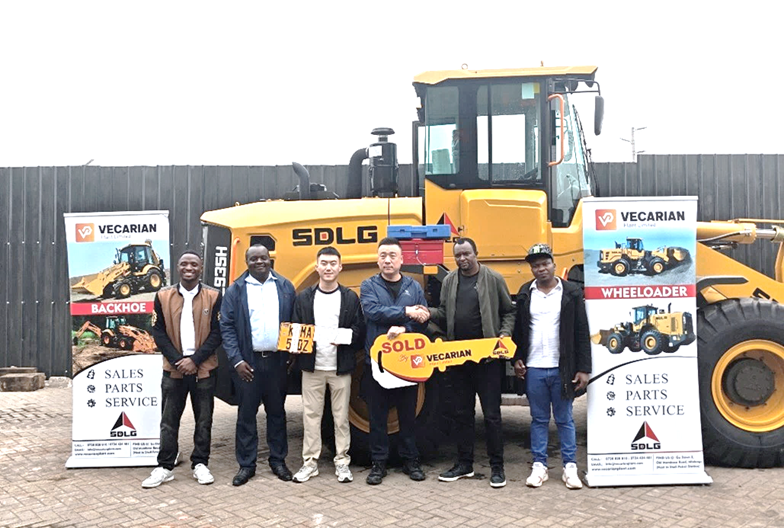
Babcock International has distributed SDLG in Southern Africa since 2012, as a September 2025 profile of Babcock’s one-stop model explains, while SDLG’s own LGQH subsidiary runs the East African regional hub in Dar es Salaam. In Kenya, Vecarian Plant Limited acts as a local dealer, which gives Kenyan buyers a named seller for quotes and warranty paperwork. The sequence below shows how quickly the two pieces came together.
SDLG Africa Footprint Milestones
| Date | Milestone |
| February 2012 | Babcock starts distributing SDLG wheel loaders and motor graders in Southern Africa |
| 2024 | Babcock adds SDLG excavators |
| 24 June 2025 | Volvo CE signs the contract to sell its 70% SDLG stake |
| 13 July 2025 | East Africa Regional Centre (LGQH) opens in Dar es Salaam |
| 24 July 2025 | First export batch of 300 machines leaves China for Africa |
| September 2025 | Volvo CE completes the divestment |
The timeline shows SDLG building African capacity in the same months that its ownership changed.
Reason 1: A Lower Entry Price Buyers Can Finance
Price opens most conversations about SDLG wheel loaders in Africa, and the brand’s pitch rests on a lower sticker figure than premium rivals. The first part below presents Kenyan listings for price and resale signals; the second explains why the sticker price alone is misleading.
SDLG Wheel Loader Price in Kenya: Get a Live Quote
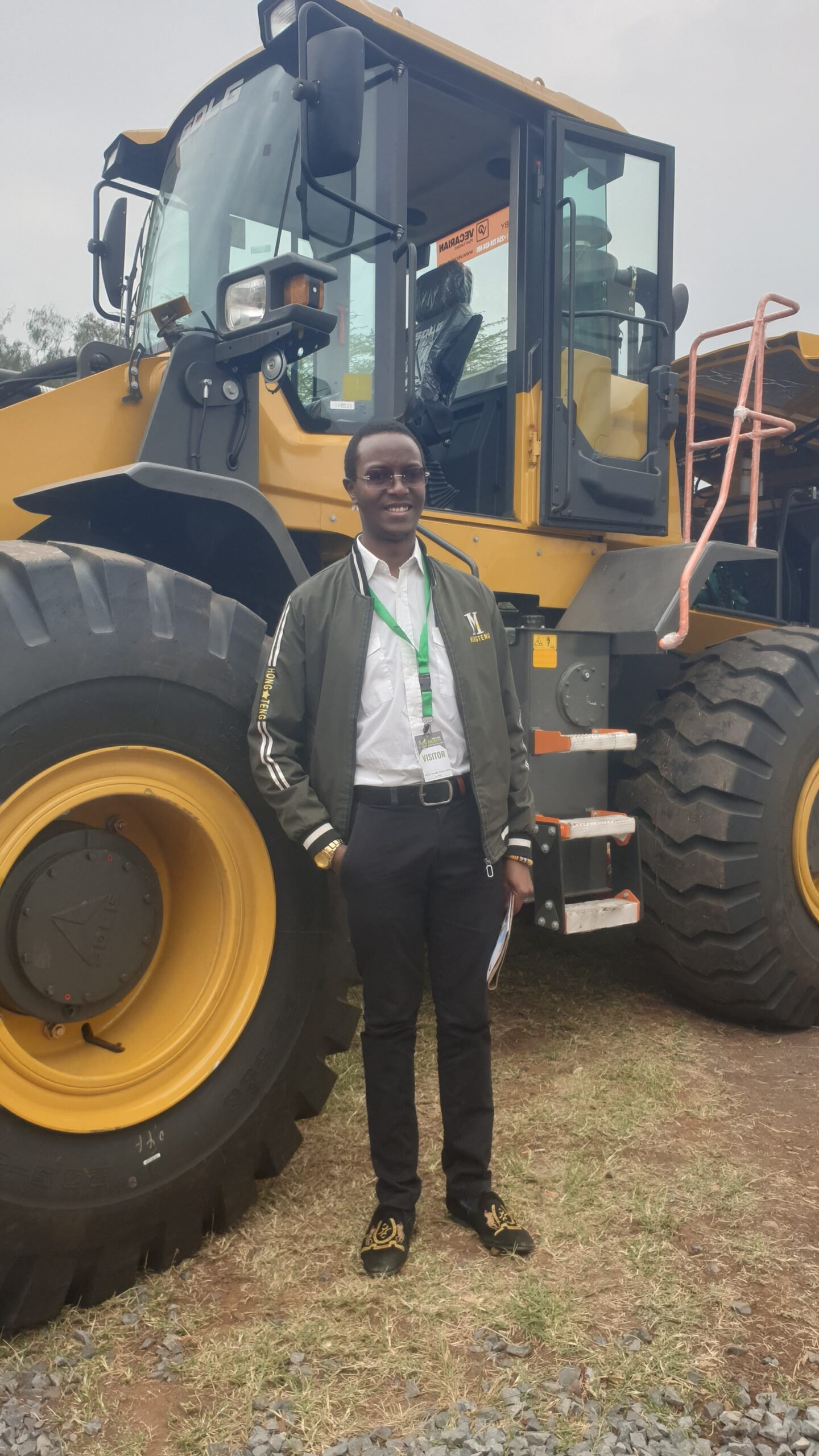
Printed prices go stale within months because the final figure moves with specifications, import duty, freight, and the exchange rate. Buyers get a reliable number only from a current written quote. Vecarian Plant Limited, a local Kenyan dealer, offers SDLG wheel loaders for sale through PlantBridge Africa, and buyers can request a quote directly from the seller.
What a Complete SDLG Quote Must Itemise
| Quote line | Why it moves the price | What to confirm |
| Base machine price | Model, bucket size and cab specification | Exact model code and rated load |
| Duty, VAT and clearing | Import route and tax treatment | Whether the figure is landed or ex-works |
| Bucket and attachments | Extra buckets or forks add cost | What ships with the machine |
| Warranty | Period and covered components | Which legal entity honours claims |
| Parts and service kit | First-service and wear parts | Stocked quantities and lead time |
| Delivery and commissioning | Distance to site | Date, operator handover and training |
Comparing quotes line by line exposes where a low headline price hides extra cost.
Why the Sticker Price Misleads
A low entry price only wins if downtime stays low. Premium rivals charge more because their dealers sell parts availability along with the steel, a trade-off that the differences between Caterpillar and Komatsu make visible at the top of the market.
Buyers should run the quote through a lifecycle cost-of-ownership model that accounts for fuel, scheduled service, parts, and idle days in addition to the purchase price. Use the 62% retention ratio above as one input to the residual value line, then stress it with a lower figure if the dealer network near your site is thin.
Reason 2: Proven Duty in Africa’s Harshest Material Handling
Ports, quarries and mines punish loaders with abrasive, dense or corrosive product. The reputation of SDLG wheel loaders in Africa rests on a small number of documented duty cycles, and the first part below examines the best-documented one. The second part broadens the view to quarries, cement plants, and mines, and flags where the evidence comes from the supplier.
South African Bulk Terminals in Durban: The Benchmark Case
Southern Africa’s first SDLG wheel loader, an LG958L, reached approximately 5,000 operating hours at South African Bulk Terminals in Durban. Terminal engineers extended its bucket to 4.9 m³, and in that configuration, the single machine matches the productivity of two 9.5-tonne loaders. The workshop foreman reported no leaks from hoses or cylinders during the machine’s service life.
The three-loader team loads 18,000 tonnes of fluorspar onto a vessel in three days. If loading ran continuously for 72 hours, that equals 250 tonnes per hour. The article ran as supplied copy and dates from 2017, so it illustrates a duty cycle rather than a fleet statistic.
SABT Duty Cycle at a Glance
| Parameter | Value |
| LG958L operating weight | 16 tonnes |
| Facility throughput | Approximately 2.4 million tonnes of dry bulk per year |
| Fluorspar density (moist) | Approximately 1.4 t/m³ |
| Road loading rate | 55 to 60 trucks per 12-hour shift (three machines) |
| Second SDLG unit | LG918, 6 tonne class, shunting wagons in the rail yard |
Quarries, Cement Plants and Mines
SDLG’s own page for the L935H wheel loader lists utilities, heavy infrastructure and quarries and aggregates as its fields of application. Those duties cover much of everyday loader work, because loaders feed crushers, stockpiles and haul trucks on quarry and plant sites.
Quarry-to-plant loading also anchors Africa’s cement industry, where loaders keep limestone and clinker stockpiles moving. A loader that survives abrasive limestone therefore addresses a large market.
In the mining sector, SDLG’s Congolese dealer delivered more than 40 SDLG units to a Chinese enterprise operating locally, according to SDLG’s news page. SDLG also lists chrome ore in Zimbabwe, gold mining in Sudan, and gold mining in Sierra Leone and Liberia among its construction cases. Those entries come from the manufacturer, and independent hour counts remain scarce.
Reason 3: A Model Range That Fits Farms, Municipalities and Quarries
Buyers rarely need one loader size. Farms want compact machines, municipalities want mid-size versatility, and quarries want the heaviest class a fleet can afford. The line-up behind SDLG wheel loaders in Africa spans those needs, and the first part below lists the models, the second covers the electric option, and the third compares the range with a rival’s.
Compact to Mid-Size Line-Up
Babcock added the 1.8-tonne L918H and 3.5-tonne L938H to its 2025 offering, positioning them as SDLG wheel loaders for agriculture alongside the 4-tonne L946H and 5.8-tonne L958H. The dealer sees the L946H as suited to municipal work and the L958H to quarrying and mining.
SDLG Wheel Loader Line-Up Reported in Southern Africa
| Model | Rated load | Positioning reported |
| L918H | 1.8 tonnes | Agriculture |
| L938H | 3.5 tonnes | Agriculture |
| L935H | 3.5 tonnes | Utilities, heavy infrastructure, quarries and aggregates (105 kW, 10,940 kg, 2.1 m³ bucket) |
| L946H | 4 tonnes | Municipal work |
| L958H | 5.8 tonnes | Quarrying and mining |
Electric SDLG Wheel Loaders in Africa: Offered, Not Yet Mainstream
SDLG now sells battery-electric loaders, and its South African product site lists the L956HEV electric wheel loader with a 5,800 kg rated load, a 3.6 m³ bucket and 125 kW of rated power. SDLG reports that the loader suits utilities, heavy infrastructure, and quarries and aggregates.
The delivery record sits mostly outside Africa. SDLG reported a batch of L956HEV loaders delivered to India, and in early 2026 it dispatched 26 customised electric wheel loaders to a major port client. SDLG claims the lithium iron phosphate packs give 5 to 8 hours of work per 1.2 hours of charging; no independent test confirms that figure.
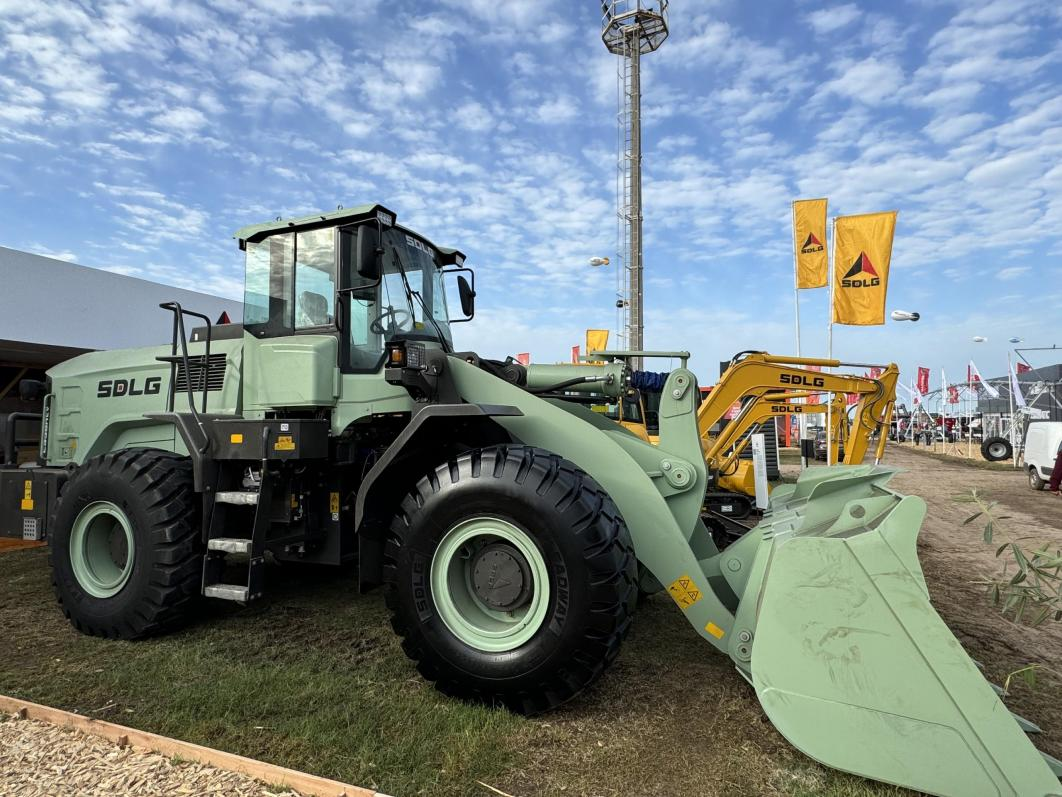
Interest in electric machines is real, but adoption is slow. A June 2026 report on automation and efficiency driving equipment demand says battery-electric and hybrid uptake remains gradual across South Africa and the wider continent. It finds traction in compact equipment, underground mining and low-emission zones, while diesel still dominates large surface mining. We found no published African fleet data for SDLG electric loaders, so treat their popularity as growing interest rather than documented volume.
Fit Test: Electric or Diesel SDLG Loader
| Test | Electric fits when | Diesel stays safer when |
| Power supply | The site has a stable grid connection or solar with storage | Outages are frequent, and no backup capacity exists |
| Shift pattern | Shifts leave a charging window of about 1.2 hours | Loaders must run continuously across long shifts |
| Duty cycle | Short, repeated loading in ports, yards and plants | Remote, high-hour quarry or mine work |
| Service support | The dealer can service battery and drive systems locally | The nearest battery technician sits in another country |
Pilot one electric unit beside a diesel loader on the same duty, and compare energy cost per tonne handled before you commit a fleet.
How the Range Compares With Rivals
Chinese wheel loaders in Africa compete on class coverage as much as price. A buyer weighing SDLG against XCMG should review XCMG models across Africa, as the two brands overlap in the three- to five-tonne loader classes.
The practical test is simple: choose the class based on material density and cycle length, not on headline tonnage. The checklist near the end of this guide shows the arithmetic.
Reason 4: Easy Field Adaptation to the Job
A loader that fits the job on day one is rare; a loader that workshop teams can adapt is valuable. SDLG wheel loaders in Africa have earned credit on that second count. The Durban case shows both bucket and cooling changes, and the sections below cover them in turn.
Bucket and Lighting Changes
Durban’s bucket extension is the headline change, sized for fluorspar at approximately 1.4 tonnes per cubic metre. The engineers also fitted LED working lights on a machine that runs around the clock. A larger bucket alters breakout geometry and tipping load, so any extension requires the dealer’s sign-off; the case only shows that the platform tolerates sensible change.
Cooling and Cleaning Modifications
Fluorspar turns rock-hard if it dries on a radiator, so the terminal mounted the oil cooler on swivels and cleans radiators and filters with compressed air every day. Every 250 hours, the team pressure washes them and blows them out again. Such routines illustrate what equipment maintenance strategies deliver in dusty bunkers: a modest design tweak plus a disciplined cleaning interval protects the machine more than any warranty clause.
Reason 5: Parts, Service and Operator Support That Keep Improving
Parts and service decide whether SDLG wheel loaders in Africa stay cheap to own. The record shows weak spots and steady improvement, and the sections below review what operators report, how the dealer network supports the machines, and what downtime costs.
What Operators Report
The Durban foreman admitted that SDLG spares were initially an issue, then said the situation had improved significantly over the two years leading up to the 2017 report. The terminal runs its own spares store and insists on original SDLG parts, a policy it credits with avoiding snowball failures.
Dealer Network and Service Contracts
Babcock sells agricultural loaders with tailored service contracts, and the manufacturer operates a dedicated SDLG spare parts service channel for the EMEA region. Buyers should test that channel with a live part request before purchase. Dealer depth also separates brands: JCB’s standing in Africa rests on dense dealer coverage, and SDLG is still building towards that benchmark.
Downtime and Parts Sourcing
Every idle day on a loader feeding a crusher stalls the crusher as well, which is why the cost of equipment downtime often exceeds the repair bill itself. Contractors should price that idle time into every quote.
Methods for sourcing heavy equipment spare parts vary by country, so ask the dealer for a list of stocked parts and a stated lead time before you commit.
Compare the dealer’s offer with the trade-offs between OEM and third-party servicing before you rely on grey-market parts, as the Durban terminal’s own experience favours original parts.
Reason 6: An Africa-First Export Push Backed by Its Own Manufacturer
SDLG wheel loaders in Africa now come from a maker that answers to its own parent, and the Africa strategy has moved from distributor-led sales to a manufacturer-partner model. The first part below covers the 300-unit shipment and the new hub; the second part assesses what independence means for buyers.
The 300-Unit Shipment and the Dar es Salaam Hub
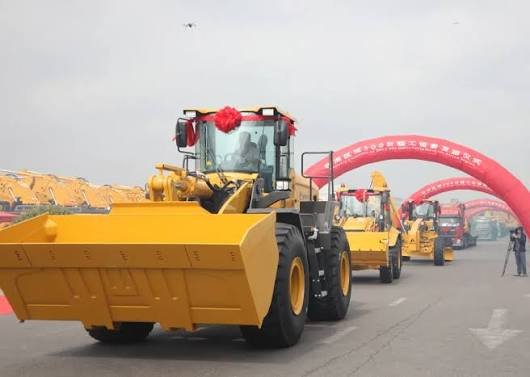
In July 2025, SDLG dispatched 300 machines to Africa, bound for Tanzania, Kenya, Nigeria and Zimbabwe. The batch included excavators, wheel loaders, road rollers, and motor graders, intended for cross-border highways, rail networks, ports, and mining. The LGQH centre in Dar es Salaam gives East African buyers a local service base that did not exist a year earlier.
What Independence Means for Buyers
SANY’s position in Africa shows how another Chinese maker builds local support, and SDLG now follows a similar path with its own capital rather than a Western parent’s. The Volvo name, once reassuring cautious buyers, no longer backs the brand. Warranty and parts obligations now rest with SDLG and its dealers, so buyers should confirm in writing which entity will honour claims in their country.
Buying Checklist and Cost Arithmetic for SDLG Wheel Loaders
Evidence on SDLG wheel loaders in Africa only helps if a buyer converts it into a purchase routine. The five checks below cover payload arithmetic, warranty verification, parts and service pricing, sourcing channels and operator readiness, and the conclusion states the decision rule.
1. Match Bucket Volume to Material Density
Bucket payload equals the bucket volume multiplied by the material density and the fill factor. The L935H carries a 2.1 m³ bucket and a 3,500 kg rated load, so it is overloaded by dense material at full fill.
L935H Payload Arithmetic at 100% Fill
| Material | Typical density (t/m³) | Payload in 2.1 m³ bucket (t) | Against a 3.5 t rated load |
| Moist fluorspar | 1.4 | 2.94 | Within limit |
| Dry loose sand | 1.5 | 3.15 | Within limit |
| Crushed limestone | 1.6 | 3.36 | Within limit |
| Damp gravel | 1.8 | 3.78 | Exceeds by 0.28 t (8%) |
For gravel, specify a smaller bucket or cap the fill factor near 92%. Densities are typical engineering values; weigh your own material.
2. Confirm the Warranty Entity and Dealer in Writing
Ask the dealer which legal entity warrants the machine, who supplies parts, and how warranty claims are routed from the site to the manufacturer. A dealer who cannot respond in writing within a week has responded anyway. Add the dealer’s service coverage radius from your site.
3. Price Parts and Service Before the Machine
Request a stock of the parts list for the first 2,000 hours, a quoted lead time for hydraulic and transmission components, and a service contract rate per hour. Pair these with preventive rather than reactive maintenance planning so that scheduled service intervals replace emergency repairs.
4. Source Through Verified Channels
Use dealers that publish a physical address and a spare parts contact. Buyers can browse SDLG equipment on PlantBridge Africa, where verified dealers list machines and buyers can request a quote directly from the seller.
5. Train Operators Before Commissioning
A trained operator protects the bucket, tyres, and drivetrains. Schedule heavy equipment operator training before commissioning and record each operator’s sign-off.
Conclusion: SDLG Earns a Shortlist Place on Verified Dealer Support
SDLG wheel loaders in Africa win on price, adaptability, and a documented record in demanding bulk handling, but they carry a risk that no spec sheet reveals: the 2025 ownership change shifted responsibility for warranty and parts to SDLG and its dealers. Is SDLG a good wheel loader brand? For three- to six-tonne work at quarries, ports, municipalities and farms, the evidence says yes, provided a named dealer has parts in stock within days of your site. The Kenyan asking prices, with a used unit at approximately 62% of the new price, support the value case.
Apply a simple decision rule: buy only when the dealer confirms the warranty entity in writing, stocks the first 2,000 hours of parts, and quotes a service contract rate you can budget per hour. Set the lead-time ceiling at the number of idle days your plant can absorb before a downstream machine stalls. If any of these is missing, shortlist a rival with a deeper network. Treat the electric L956HEV the same way: pilot it on a site with dependable power, not as a fleet default. Start with one pilot machine, log hours, downtime, and parts lead times for six months, and expand the fleet only when those numbers beat your premium-brand benchmark.
Keep Your Fleet Decisions Evidence-Led
Explore more articles on Construction Frontier: Equipment Brands & Manufacturers for brand comparisons, ownership cost analysis, and sourcing guidance to help African contractors choose loaders, excavators, and trucks with confidence.

One Comment