15 Largest Construction Companies in Nigeria: Powerful Firms Fuelling Growth
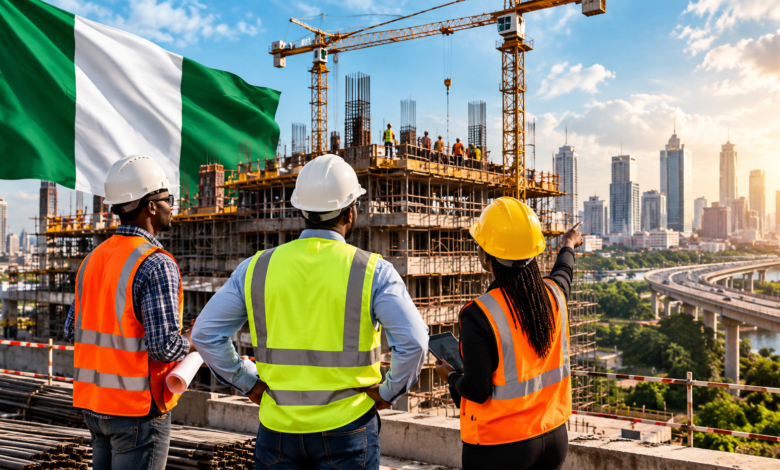
Nigeria’s construction economy runs on a small cluster of firms capable of executing multi-billion-naira infrastructure at a national scale, and the largest construction companies in Nigeria span a German-Nigerian civil engineering group, decades-old indigenous family contractors, and Chinese state-backed rail and port specialists. Julius Berger Nigeria leads this ranking on revenue, workforce, and project reach, trailed by CCECC Nigeria’s grip on the country’s railway programme and a tier of established Nigerian building contractors still shaping the Lagos and Abuja skylines. Together, the 15 firms profiled here carry combined annual project commitments running into the trillions of naira, concentrated in roads, rail, housing, and oil and gas infrastructure.
Technical Snapshot: Construction Companies in Nigeria
| Number of Companies Ranked | 15 |
| Top-Ranked Company | Julius Berger Nigeria Plc |
| Combined Est. Annual Project Value | Well above ₦2 trillion across active federal, state, and private contracts |
| Dominant Sector | Transport infrastructure (roads, rail, bridges), with rising oil and gas and housing shares |
For engineers, investors, and policymakers tracking Nigeria’s infrastructure economy, this ranking of the largest construction companies in Nigeria maps out who actually builds the roads, railways, ports, and buildings reshaping Africa’s most populous nation.
Introduction: Nigeria’s Construction Industry Leaders
The largest construction companies in Nigeria sit at the centre of a market defined by scale and contradiction: a country of over 220 million people with a chronic housing deficit, ambitious federal rail and road programmes, and a construction sector that still leans heavily on fewer than twenty firms for its most complex work. Nigeria’s construction industry leaders range from Julius Berger, the German-Nigerian group whose name is shorthand for civil engineering credibility in West Africa, to Chinese state contractors executing railway lines under Belt and Road financing arrangements.
This piece sits alongside Construction Frontier’s wider look at the 20 largest construction companies in the world, which tracks how firms like Julius Berger’s parent group and China’s state contractors rank on the global stage. Understanding Nigeria’s biggest contractors in context matters because the country’s infrastructure spend and the Nigerian engineering and construction firms delivering it increasingly shape investment decisions across West African infrastructure companies more broadly, from Lagos ports to landlocked road corridors serving Niger and Chad.
Investors researching the largest construction companies in Nigeria by revenue quickly discover that most of the country’s biggest infrastructure contractors are either NGX-listed, foreign-owned, or privately held family businesses, which is precisely why this ranking blends financial disclosure with verified project scale.
How These Nigerian Construction Companies Were Ranked
Ranking the largest construction companies in Nigeria is harder than it looks. Most of the country’s top contractors are either privately held or subsidiaries of foreign parent groups that do not break out Nigeria-specific revenue, so a single, audited industry-wide league table does not exist. This ranking draws on Nigerian Exchange (NGX) filings where available, most notably for Julius Berger Nigeria’s financial reporting, alongside company disclosures, verified project records, and workforce data reported by the firms themselves or credible business press.
Where financial disclosures are unavailable, the ranking weighs four consistent factors: the scale and number of completed national infrastructure projects, years of continuous operation in Nigeria, workforce size, and geographic reach across states. This mirrors the approach used for Construction Frontier’s rankings of the largest construction companies in Egypt and the largest construction companies in South Africa, where private ownership structures create similar disclosure gaps among leading construction firms in West Africa and across the wider continent.
Readers comparing Nigerian construction companies’ government projects against private-sector work will notice that public infrastructure, roads, rail, and public buildings dominate the portfolios of nearly every firm in this ranking, a pattern distinct from the more commercially driven pipelines run by top construction companies in Lagos, Nigeria, working primarily on private developments.
The 15 Largest Construction Companies in Nigeria
Nigeria’s top construction firms split naturally into three groups: long-established Nigerian and Nigerian-listed contractors, foreign and Chinese-backed majors executing government-financed megaprojects, and a younger generation of rising Nigerian firms expanding fast on the back of Lagos and Abuja’s building boom.
Table: The 15 Largest Construction Companies in Nigeria, Ranked
| Rank | Company | Founded | Segment |
| 1 | Julius Berger Nigeria Plc | 1965/1970 | Civil engineering, buildings, oil and gas |
| 2 | Costain West Africa Plc | 1948 | Civil engineering, highways |
| 3 | Cappa & D’Alberto Plc | 1932 | Building construction |
| 4 | Dantata & Sawoe Construction Co. | 1977 | Roads, bridges, buildings |
| 5 | Setraco Nigeria Limited | 1977 | Roads, bridges, waterworks |
| 6 | CCECC Nigeria Limited | 1979 (Nigeria: 1970s) | Rail, roads |
| 7 | CGC Nigeria Limited | 1983 | Roads, bridges, water |
| 8 | China Harbour Engineering Co. (CHEC) Nigeria | 1980 (parent) | Ports, marine works |
| 9 | Arab Contractors Nigeria Limited | 1990 (Nigeria) | Civil engineering, buildings |
| 10 | CSCEC Nigeria | 1957 (parent) | Buildings, EPC |
| 11 | Reynolds Construction Company (RCC) | 1969 | Roads, water resources |
| 12 | Elalan Construction Company | 1982 | Design-and-build, buildings |
| 13 | Craneburg Construction | 2010s | Highways, airports, marine |
| 14 | Hitech Construction Company | 1988 | Roads, bridges, marine works |
| 15 | ITB Nigeria Limited | 1995 | High-rise buildings |
Established Nigerian Contractors
Nigeria’s oldest construction firms built the country’s post-independence infrastructure and remain its most bankable names for complex, high-value work. As a group, they anchor the largest construction companies in Nigeria by revenue and reputation alike, and several sit among the biggest contractors in Nigeria by workforce size, too.
1. Julius Berger Nigeria Plc

- Founded: 1965 (first Nigerian contract); incorporated: 1970
- Website: julius-berger.com
- Founders: Julius Berger AG, Germany
- Ownership today: Listed on the Nigerian Exchange (NGX: JBERGER); Bilfinger of Germany holds a minority stake alongside Nigerian institutional and government shareholders
- 2025 revenue: N759.9 billion, up 34.09% year on year
- Workforce: 8,859 employees as of 31 December 2025
- Major projects: Eko Bridge, Third Mainland Bridge, National Assembly Complex, Lagos-Ibadan Expressway
Julius Berger Nigeria remains the largest construction company in Nigeria by almost every measure that matters: revenue, listed market value, and the sheer breadth of federal infrastructure carrying its name. The company’s pioneer project, the Eko Bridge in Lagos, broke ground in August 1965, and its German civil engineering heritage still underwrites the technical trust that wins it Nigeria’s largest, most complex contracts. According to its 2025 audited financial statements, profit before taxation grew by 38.47% even as the workforce contracted slightly from 9,419 in 2024, a sign of automation and project-cycle timing rather than retreat.
2. Costain West Africa Plc
- Founded: 1948
- Website: Not publicly maintained
- Founders: Richard Costain Group, United Kingdom, with John Holt Plc shareholding
- Ownership today: Previously listed on the NGX; ownership has shifted through decades of financial restructuring
- 2025 revenue: Not publicly disclosed
- Workforce: Not publicly disclosed
- Major projects: NECOM House, University College Hospital Ibadan, Ijora Power Station civil works
Costain West Africa was the first building and civil engineering firm to list on what is now the Nigerian Exchange, a milestone that still anchors its reputation among Nigerian engineering and construction firms even though recent decades have brought financial strain. Founded in 1948 as a subsidiary of the UK’s Richard Costain Group, the firm executed highway, building, and civil works projects across every region of Nigeria through the second half of the twentieth century, including the 140-metre NECOM House built on a shallow raft foundation over loose Lagos sands.
3. Cappa & D’Alberto Plc
- Founded: 1932
- Website: Not publicly maintained
- Founders: Pietro Cappa and Viginio D’Alberto, Italian immigrants to Nigeria
- Ownership today: Nigerian-owned; delisted from the NGX in 2009, shares traded over the counter
- 2025 revenue: Not publicly disclosed
- Workforce: Not publicly disclosed
- Major projects: Cocoa House, Ibadan, National Stadium, Surulere
As the oldest construction company in Nigeria and among the largest construction companies in Nigeria still active today, Cappa & D’Alberto traces its roots to 1932, when two Italian immigrants met in Kaduna and founded a building firm with a single office on Oil Mill Street, Lagos. The company’s early work for the Catholic mission in Lagos and Abeokuta gave way to government housing projects in Yola, Sokoto, and Jos, and it remains one of the most recognised names among top construction firms in Nigeria; nearly a century later, it is still counted among the biggest contractors in Nigeria by longevity, if not by current revenue.
4. Dantata & Sawoe Construction Company

- Founded: 1977
- Website: Not publicly maintained
- Founders: Nigerian ownership group
- Ownership today: Privately held, Nigerian
- 2025 revenue: Not publicly disclosed
- Workforce: Not publicly disclosed
- Major projects: Hundreds of kilometres of federal highways, multiple airport runways, and housing estate infrastructure
Nearly five decades of continuous operation have made Dantata & Sawoe one of the more trusted names among the biggest contractors in Nigeria for road and building work delivered on schedule. The firm’s portfolio includes bridges, flyovers, and infrastructure for multiple housing estates across the country, alongside three airport runways, a track record that keeps it in contention for federal contracts even as newer entrants compete for market share.
5. Setraco Nigeria Limited
- Founded: 1977, in what was then Bendel State
- Website: setraco.net
- Founders: Nigerian ownership group
- Ownership today: Privately held, Nigerian
- 2025 revenue: Not publicly disclosed
- Workforce: Not publicly disclosed
- Major projects: Roads, bridges, and waterworks across more than 15 Nigerian states
Setraco Nigeria built its reputation on a self-sufficient operating model, owning its own fleet, equipment, and materials production capacity rather than relying on subcontractors for critical inputs. That approach lets the company guarantee delivery timelines even in remote or logistically difficult project locations, a capability that has kept it active in road and bridge construction across more than fifteen states for close to five decades and firmly inside the tier of the biggest infrastructure contractors in Nigeria that federal agencies call on first.
Foreign and Chinese-Backed Majors
A second tier of Nigeria’s largest construction companies operates as Nigerian subsidiaries of foreign, mostly Chinese, state-linked parent groups, concentrated in rail, ports, and large-scale civil works financed through Chinese development lending. Several of these firms also rank among the leading construction firms in West Africa more broadly, holding parallel operations in Ghana, Sierra Leone, and beyond, which gives them scale advantages that purely Nigerian construction industry leaders cannot easily match on financing terms alone.
6. CCECC Nigeria Limited
- Founded: Parent founded June 1979; active in Nigeria since the 1970s
- Website: ccecc.com.cn
- Founders: China Civil Engineering Construction Corporation, a subsidiary of China Railway Construction Corporation
- Ownership today: Wholly owned by China Railway Construction Corporation (CRCC), a Chinese state-owned enterprise
- 2025 revenue: Not disclosed separately from CRCC
- Workforce: Several thousand across active Nigerian rail projects
- Major projects: Abuja-Kaduna Railway, Lagos-Ibadan Railway, Abuja Metro, Nigerian Eastern Railway rehabilitation
CCECC has completed more than 110 projects in Nigeria across four decades, according to company statements, and its four major completed railway lines cover roughly 712 kilometres of track. The Lagos-Ibadan Railway, delivered in 2021, stands as West Africa’s longest modern standard-gauge line, and the company’s 2019 contract for the Nigerian Eastern Railway, valued at around USD 3.02 billion, shows the scale Chinese state financing now brings to Nigeria’s rail ambitions.
7. CGC Nigeria Limited
- Founded: 1983
- Website: Not independently maintained; parent at CGCOC Group
- Founders: China’s then Ministry of Geology and Mineral Resources
- Ownership today: Subsidiary of CGCOC Group, majority owned by Sinopec Star Petroleum and China Geo-Engineering Corporation
- 2025 revenue: Not disclosed separately
- Workforce: 501 to 1,000 employees in Nigeria
- Major projects: Roads, bridges, water supply, and irrigation schemes across multiple Nigerian states
CGCOC Group’s Nigerian operation began in 1983 as CGC Nigeria Ltd., originally drilling water wells as part of a Chinese aid programme before growing into a full civil engineering contractor. The company now works across roads, bridges, irrigation, and water supply, and it remains one of the more diversified Chinese-backed construction companies in Nigeria’s built environment and among the more consistently active West African infrastructure companies operating under Belt and Road financing.
Further Reading: 12 Largest Construction Companies in Egypt: Leading Firms Driving Success
8. China Harbour Engineering Company (CHEC) Nigeria
- Founded: Parent founded in 1980
- Website: Not independently maintained for Nigeria
- Founders: China Communications Construction Company
- Ownership today: Wholly owned subsidiary of China Communications Construction Company (CCCC)
- 2025 revenue: Not disclosed separately
- Workforce: Not publicly disclosed for Nigeria
- Major projects: Lekki Deep Sea Port, Calabar Channel dredging
CHEC delivered Nigeria’s first deep-sea port at Lekki, a project with an investment exceeding USD 1 billion, built under a 45-year build-own-operate-transfer concession jointly developed with the Nigerian Ports Authority. The port, designed to handle 1.2 million containers annually, opened for cargo operations in 2023 and stands among West Africa’s most significant single infrastructure investments of the past decade.
9. Arab Contractors Nigeria Limited
- Founded: Parent founded 1955; Nigerian entity incorporated 1990
- Website: arabcont.com
- Founders: Osman Ahmed Osman, Egypt
- Ownership today: Government-owned Egyptian parent corporation, Al Mokawloon Al Arab
- 2025 revenue: Not disclosed separately
- Workforce: Not publicly disclosed for Nigeria
- Major projects: Roads, civil engineering, and consultancy work across Nigeria since 1990
Arab Contractors, operating locally since 1990, brings a construction pedigree that stretches back to Osman Ahmed Osman’s 1955 founding of what became one of the largest contracting firms in the Middle East and Africa. The company’s Nigerian arm focuses on civil engineering, road works, and consultancy, drawing on decades of large-scale project experience from Egypt’s own infrastructure programme, giving it standing among leading construction firms in West Africa despite its comparatively small Nigerian footprint.
10. CSCEC Nigeria
- Founded: Parent founded in 1957
- Website: english.cscec.com
- Founders: Chinese state
- Ownership today: Wholly state-owned, listed as China State Construction Engineering Corporation Limited
- 2025 revenue: Not disclosed separately for Nigeria
- Workforce: Not publicly disclosed for Nigeria
- Major projects: Buildings, EPC contracts, and livelihood infrastructure, including the Nigerian Agricultural Technology Demonstration Center, Abuja
CSCEC is the world’s largest construction contractor by revenue, and its Nigerian operations reflect the company’s broader African strategy of pairing commercial building contracts with government-to-government development projects. The Abuja agricultural technology centre, handed over in 2022, illustrates how CSCEC blends aid-adjacent infrastructure with its commercial construction pipeline in West Africa’s largest economy, a strategy shared by other Nigerian engineering and construction firms operating under state-to-state financing arrangements.
11. Reynolds Construction Company (RCC)
- Founded: Incorporated 25 September 1969
- Website: rccnigeria.com
- Founders: SBI International Holdings AG, Switzerland
- Ownership today: Subsidiary of SBI International Holdings AG
- 2025 revenue: Not publicly disclosed
- Workforce: Not publicly disclosed
- Major projects: Ibadan-Ife road dualisation, Jos-Buruku water project, Obafemi Awolowo University design and construction
Reynolds Construction Company, known widely as RCC, traces back to SBI’s 1956 entry into Nigeria through Nigersol Construction Company, and it has since built one of the country’s more diversified portfolios spanning roads, hydrotechnical works, and building construction. The firm’s design and construction of Obafemi Awolowo University remains one of its most cited legacy achievements, alongside decades of Nigerian construction companies’ government projects in road dualisation and water resource development across southern Nigeria.
Rising Nigerian Firms
A newer generation of Nigerian contractors has expanded fast on the back of Lagos and Abuja’s building and infrastructure boom, several of them backed by prominent Nigerian business groups. These firms represent the fastest-growing tier of construction companies in Lagos, and their growth trajectory increasingly overlaps with the older, established names higher up this ranking of the largest construction companies in Nigeria.
12. Elalan Construction Company

- Founded: April 1982
- Website: elalan.com
- Founders: Nigerian ownership group
- Ownership today: Privately held, Nigerian
- 2025 revenue: Not publicly disclosed
- Workforce: Over 2,500 professionals across Nigeria and Senegal
- Major projects: Nicon Luxury Hotel Abuja, Flour Mills of Nigeria facilities, Meristem, design-and-build residential and commercial developments across Lagos and Abuja
Elalan Construction has built a reputation on end-to-end delivery, handling architectural design, planning permission, and construction under one roof for clients across Lagos and Abuja. That integrated model has helped the firm win a growing share of private commercial and residential work, positioning it among the more dynamic construction companies in Lagos over the past decade and among the more consistently cited top construction companies in Lagos, Nigeria, in independent industry rankings.
13. Craneburg Construction
- Founded: Recent decade, under Nigerian private ownership
- Website: Not publicly maintained
- Founders: Herbert and Chizoba Wigwe’s family interests
- Ownership today: Privately held, Nigerian
- 2025 revenue: Not publicly disclosed
- Workforce: Approximately 7,000 employees
- Major projects: Lekki-Epe highways, bridges, and toll plaza; Ogun State Agro-Cargo Airport
Craneburg Construction became publicly known as one of Nigeria’s largest diversified construction groups only after the firm’s ownership connection to the Wigwe family came to light, despite having already built highways, bridges, and airport infrastructure across Ondo, Imo, Adamawa, Ogun, Bauchi, and Gombe states. Its roughly 7,000-strong workforce spans building, civil works, oil and gas, and marine construction, and its Ogun State Agro-Cargo Airport project drew praise from Nigeria’s Ministry of Housing as among the country’s best airport facilities.
14. Hitech Construction Company

- Founded: 1988
- Website: hitech-company.com
- Founders: Chagoury Group
- Ownership today: Subsidiary of the Chagoury Group
- 2025 revenue: Not publicly disclosed
- Workforce: Over 10,000 employed staff across Nigeria, Togo, and Benin
- Major projects: Epe Expressway reconstruction, Eko Atlantic City bridges, Lagos Shoreline Protection, Lagos-Calabar Coastal Highway
Hitech Construction built its niche in shoreline protection and marine works long before Lagos’s coastal erosion challenges became a mainstream infrastructure concern, delivering the Bar Beach Shoreline Protection project in two phases along Victoria Island. Today, the firm’s civil engineering arm handles all bridges within Eko Atlantic City and continues work on the Lagos-Calabar Coastal Highway, keeping it firmly among the largest construction companies in Nigeria’s civil works segment and a fixture on any list of top construction companies in Lagos, Nigeria.
15. ITB Nigeria Limited
- Founded: 1995
- Website: itbng.com
- Founders: Chagoury Group
- Ownership today: Subsidiary of the Chagoury Group
- 2025 revenue: Not publicly disclosed
- Workforce: Not publicly disclosed
- Major projects: National Assembly Complex Phase 2 (the White House), International Conference Centre Abuja
ITB Nigeria built its reputation on speed and high-rise capability, completing the National Assembly Complex’s Phase 2 in just 30 months between 1996 and 1999 at a cost of roughly ₦7 billion. The firm’s USD 500 million International Conference Centre Abuja contract, financed by the Central Bank of Nigeria, cemented its standing as one of the capital’s go-to firms for turnkey design-and-build government projects.
What’s Driving Nigeria’s Construction Boom
Federal infrastructure spending anchors much of the current growth among the largest construction companies in Nigeria. Nigeria’s National Assembly approved a ₦68.3 trillion federal budget for 2026, allocating roughly ₦26 to ₦32 trillion to capital projects, including a specific ₦1.7 trillion set aside to settle contractor liabilities carried over from 2024. PwC Nigeria’s analysis of the budget notes a deliberate shift toward private-sector participation in infrastructure delivery through PPPs, concessions, and blended finance, a policy direction that keeps demand flowing to firms like Julius Berger and Setraco that can mobilise quickly on federal road and bridge contracts.
Population growth compounds the pressure. Nigeria’s population continues to expand toward and past 220 million, driving urban demand in Lagos, Abuja, and secondary cities that outstrips the current housing stock by a wide margin. The Ministry of Housing and Urban Development has cited a national housing deficit of roughly 28 million units against an estimated ₦5 trillion in annual funding required to close it, a gap that private developers and contractors such as Elalan and Craneburg are increasingly stepping in to address through design-and-build residential projects.
Rail and port investment adds a third growth engine. CCECC’s rail programme and CHEC’s Lekki Deep Sea Port both reflect a decade-long pattern of Chinese development financing underwriting Nigerian megaprojects that domestic capital markets could not fund alone, a dynamic that mirrors what Construction Frontier has documented across the 25 largest construction companies in Africa.
Further Reading: 25 Largest Construction Companies in Africa Driving Continental Growth
Challenges Facing Nigeria’s Largest Contractors
Even the largest construction companies in Nigeria by revenue face structural headwinds that smaller regional players in Ghana or Kenya rarely encounter at the same scale. Currency volatility sits at the top of every major contractor’s risk list. The naira’s repeated devaluations since 2023 have inflated the cost of imported cement additives, steel, plant, and spare parts, squeezing margins on fixed-price contracts signed before exchange rates moved and forcing firms to renegotiate or delay project phases.
Financing access remains a persistent constraint for firms outside the handful with NGX listings or foreign parent-group balance sheets to draw on. Nigerian banks price construction lending at rates that make working-capital borrowing expensive, which is part of why the government’s ₦1.7 trillion contractor liability settlement matters so directly to firms like Dantata & Sawoe and Cappa & D’Alberto that rely on timely federal payment to keep projects moving.
Security in project regions adds a further layer of operational risk, particularly for road and rail contractors working across Nigeria’s north-east and parts of the Niger Delta. Firms, including CCECC and CGC Nigeria, have had to factor security costs and, at times, project delays into contracts that pass through less stable states, a challenge that shapes how top construction firms in Nigeria price and staff their more remote projects.
Sector Breakdown: Where Nigeria’s Top Contractors Operate
The largest construction companies in Nigeria cluster around three dominant sectors, each drawing a different mix of the firms profiled above and reflecting where national investment priorities currently sit. Together, these sectors show how construction companies building Nigeria’s infrastructure divide their capacity between resilient private-sector work and higher-risk, higher-reward public contracts.
1. Oil and Gas Infrastructure
Julius Berger’s oil and gas division, alongside specialist civil works from firms like RCC, continues to serve both domestic and international operators, including Chevron Nigeria, building everything from onshore facility infrastructure to residential compounds for oil-sector clients. This segment remains one of the more resilient revenue streams for Nigeria’s largest contractors, less exposed to the payment delays that affect purely government-funded work.
2. Transport Infrastructure
Roads, bridges, and railways dominate the current project pipeline, led by CCECC’s rail programme, Julius Berger’s expressway and bridge work, and Craneburg’s highway and toll infrastructure around Lekki and Epe. This is the segment where Nigerian construction industry leaders most directly compete with Chinese state-backed contractors for federal contracts and where financing terms increasingly determine who wins.
3. Housing and Urban Development
Elalan, Hitech, and ITB Nigeria anchor the housing and commercial building segment, delivering design-and-build residential estates, shoreline-protected coastal developments, and high-rise commercial towers across Lagos and Abuja. With the national housing deficit still expanding, this sector offers the clearest long-term growth runway for mid-sized Nigerian contractors without the balance sheets to compete for billion-dollar rail or port contracts.
Conclusion: Nigeria’s Construction Sector Enters a New Growth Phase
Scale in Nigeria’s construction market still concentrates around transparency and state backing, not indigenous ownership. Julius Berger’s ₦759.9 billion 2025 revenue confirms that NGX-listed disclosure and five decades of federal trust remain the surest route to Nigeria’s largest contracts. CCECC’s 712 completed kilometres of rail and CHEC’s billion-dollar Lekki Deep Sea Port make the same point from the Chinese side: state financing, not Nigerian capital markets, still underwrites the country’s biggest single infrastructure bets. Indigenous capacity is narrowing that gap, not closing it: Craneburg’s roughly 7,000-strong workforce and Elalan’s expansion into Senegal show Nigerian-owned firms building comparable balance sheets, but neither yet matches Julius Berger or the Chinese-backed majors above them.
Three variables will decide who climbs this ranking of the largest construction companies in Nigeria next: whether the federal government disburses the ₦1.7 trillion earmarked for contractor liabilities, a payment that matters far more to family-owned firms like Dantata & Sawoe and Cappa & D’Alberto than to NGX-listed or foreign-backed peers; whether the naira stabilises enough to stop fixed-price contracts bleeding margin on imported steel and plant; and whether private capital follows the government’s stated PPP and blended-finance push into housing, given a 28-million-unit deficit no single contractor can close alone.
Explore Africa’s Leading Construction Companies
Discover more rankings of Africa’s largest construction companies, contractor profiles, and infrastructure leaders on Construction Frontier: Construction Markets & Industry, covering the firms delivering the continent’s roads, railways, bridges, buildings, ports, energy projects, and megaprojects.