Rwanda’s Construction Industry: 7 Key Drivers Behind Its USD 1.4bn Growth
Rwanda’s construction industry grew from $1.3 billion in 2024 to $1.4 billion in 2025, according to Afreximbank’s Africa Construction Industry Outlook. Growth is anchored by the $2 billion Bugesera International Airport, the 43.5-megawatt Nyabarongo II hydropower project, and the multi-billion-dollar Green City Kigali housing programme. Rwanda’s construction sector has expanded at an average of over 10% annually for the past decade, outpacing most of its East African peers. The country’s B+ sovereign credit rating and 9.3% GDP growth in 2025 underline the investor confidence driving this expansion.
Technical Snapshot: Rwanda’s Construction Industry Core Indicators
| Indicator | Value |
| 2025 market value | $1.4 billion (up from $1.3 billion in 2024) |
| Average annual growth rate | Over 10% (past decade) |
| East Africa construction market, 2024 | $48.1 billion |
| East Africa construction market, 2028 (forecast) | $73 billion |
| Bugesera International Airport investment | $2 billion |
| Bugesera terminal capacity | 8 million passengers/year (phase one), up to 14 million+ at full expansion |
| Nyabarongo II hydropower capacity | 43.5 MW (largest in Rwanda on completion) |
| Nyabarongo II project cost | Over $340 million |
| Green City Kigali full programme | Up to 30,000 housing units across 600 hectares, estimated at $4 to $5 billion |
| Rwanda’s sovereign credit rating | B+/B (S&P Global, stable outlook, May 2026) |
| Rwanda GDP growth, 2025 | 9.3% |
These figures confirm that Rwanda’s construction industry has moved from a peripheral growth story to a structural pillar of Vision 2050 and a benchmark for disciplined infrastructure delivery across East Africa.
Introduction: Rwanda’s Construction Industry
Rwanda’s construction industry is on a sustained growth trajectory, reaching $1.4 billion in 2025, up from an estimated $1.3 billion in 2024, according to Afreximbank’s latest industry outlook. Sustained infrastructure investment, rapid urbanisation, and a deliberate government push to position Rwanda as an East African economic hub are driving this expansion. The construction boom is reshaping Kigali’s skyline and the country’s economic prospects, with projects ranging from modern housing estates to landmark transport projects such as the Bugesera International Airport.
Rwanda’s economy grew 9.3% in 2025, and S&P Global has maintained the country’s sovereign credit rating at B+ with a stable outlook, citing continued investment in strategic infrastructure and a debt structure weighted towards low-cost concessional financing. This combination of macroeconomic stability and construction-led growth is what distinguishes Rwanda from several regional peers. This article examines the data behind the $1.4 billion milestone, the flagship projects driving it, and the risks investors and contractors should weigh before committing capital.
A Decade of Uninterrupted Growth
Over the past decade, Rwanda’s construction industry has been among the most dynamic in East Africa. Afreximbank estimates the sector has grown at an average rate of over 10% annually, driven by consistent public and private investment. The government’s Vision 2050 plan, which aims to transform Rwanda into a high-income nation, places infrastructure at the centre of its development strategy, backed by a National Strategy for Transformation that has directed billions of dollars towards roads, energy and housing since 2017.
East Africa’s broader construction market illustrates the scale of the opportunity. Afreximbank projects the region’s construction industry will grow from $48.1 billion in 2024 to approximately $73 billion by 2028, with Rwanda’s construction industry capturing a growing share through aviation, energy and urban housing projects. This regional expansion is running in parallel with Tanzania’s standard-gauge railway programme and Ethiopia’s industrial park build-out, positioning Rwanda’s phased, government-anchored delivery model as a genuine comparative advantage rather than a coincidence of timing.
East Africa Construction Market Growth, 2024 to 2028
| Market | 2024 Value / 2028 Forecast |
| Rwanda | $1.3 billion (2024), rising to $1.4 billion (2025) |
| East Africa (regional total) | $48.1 billion (2024), rising to $73 billion (2028) |
| Rwanda’s approximate share of the regional market | Under 3%, with room to grow as flagship projects complete |
Drivers Behind the $1.4 Billion Milestone
The anticipated rise in the value of Rwanda’s construction industry is not accidental. It rests on four measurable drivers: large infrastructure commitments, urban population growth, deeper regional trade integration, and rising confidence among private investors and construction firms.
1. Massive Infrastructure Investments
Rwanda has committed to large-scale infrastructure across transport and energy, led by the $2 billion Bugesera International Airport and the 43.5 MW Nyabarongo II hydropower project, which alone exceeds $340 million in construction cost. Afreximbank attributes part of this growth to Rwanda’s new industrial strategy, which specifically targets the pharmaceuticals and ICT sectors, creating demand for specialised industrial and logistics facilities alongside conventional housing and road work.
2. Urbanisation and Population Growth
Kigali’s population is projected to exceed 2 million by 2035, accelerating housing demand well beyond current supply. The government aims to deliver 150,000 new dwellings annually nationwide to close a projected shortfall of 5.5 million housing units by 2050. Public-private housing partnerships, including the Green City Kigali programme and smaller estates such as Rugarama Park, are the primary delivery mechanism for this target within Rwanda’s construction industry, blending affordable and high-end typologies within the same masterplans.
3. Regional Integration
Rwanda’s location within the East African Community gives it access to regional markets covering 353.8 million consumers, alongside COMESA’s 583 million and the African Continental Free Trade Area’s 1.4 billion. Improved road networks, logistics hubs and border infrastructure are converting this market access into real demand across Rwanda’s construction industry, particularly for warehousing, dry ports and cross-border transport corridors linking Kigali to Mombasa and Dar es Salaam.
4. Private Sector Confidence
Reforms that simplify business registration, streamline construction permits, and protect investor interests have positioned Rwanda as one of Africa’s most attractive destinations for real estate and infrastructure investment, drawing renewed attention from the largest construction companies in Africa seeking to expand their regional footprint. Rwanda’s B+ sovereign credit rating, affirmed by S&P Global in May 2026, reinforces this confidence by signalling manageable debt-servicing costs and continued access to concessional financing for large public works.
Further Reading: 25 Largest Construction Companies in Africa Driving Continental Growth
Notable Projects Reshaping the Sector
Rwanda’s construction industry is not only growing in aggregate value; four flagship projects account for a disproportionate share of that growth and illustrate where the money and the risk are concentrated.
1. Bugesera International Airport
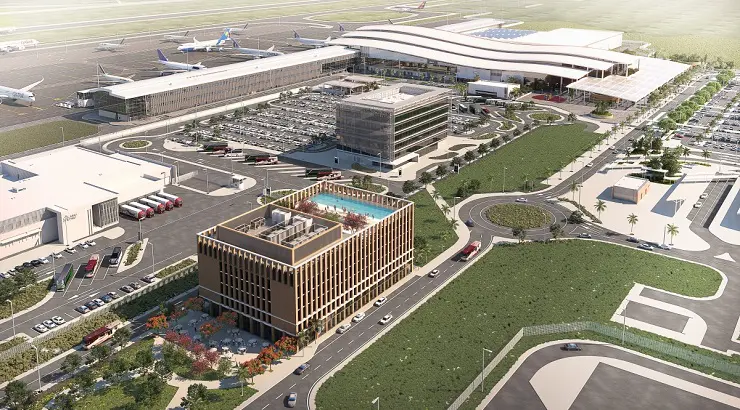
The Bugesera International Airport, located 25 kilometres southeast of Kigali, represents the single largest infrastructure commitment within Rwanda’s construction industry, at $2 billion. The 130,000-square-metre terminal, plus a dedicated cargo terminal, is designed to handle 8 million passengers annually at opening, with capacity to expand beyond 14 million as demand grows. Once operational, it will rank alongside Cairo International and OR Tambo as one of Africa’s highest-capacity airports by design and will connect directly to the Rusumo hydroelectric grid to support renewable-powered operations.
Technical Snapshot: Bugesera International Airport
| Specification | Detail |
| Investment | $2 billion |
| Terminal size | 130,000 m² plus a separate cargo terminal |
| Initial passenger capacity | 8 million per year |
| Expansion capacity | 14 million+ per year |
| Location | 25 km southeast of Kigali |
| Power integration | Connected to the Rusumo hydroelectric supply |
2. Green City Kigali
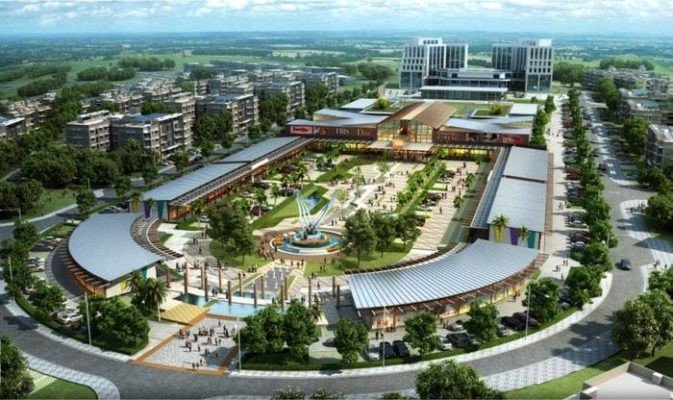
Green City Kigali is a government-led master plan covering 600 hectares in the Kinyinya sector of Gasabo District, estimated at $4 to $5 billion once fully built out across roughly 30,000 housing units for up to 200,000 residents. Phase one, a 16- to 18-hectare pilot covering 1,749 to 2,000 units, carries an estimated cost of $103.8 million and is backed by German development financing through KfW, alongside a $28 million Green Climate Fund grant. Units are built to the EDGE green building standard, cutting energy demand by approximately 40% through passive design, natural ventilation and optimised window placement rather than costly retrofits.
3. Nyabarongo II Hydropower Plant
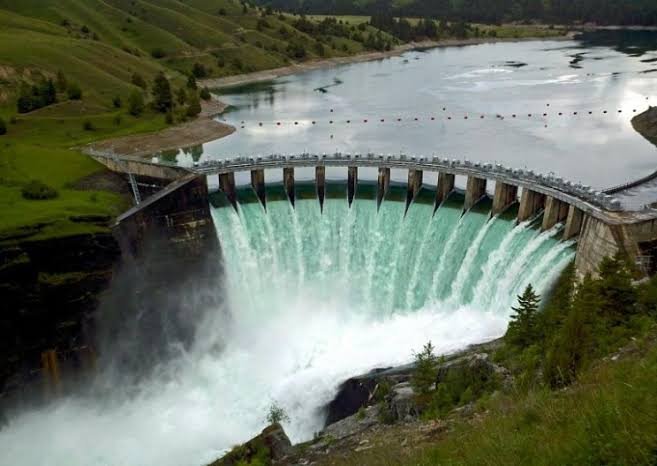
Nyabarongo II, developed by the Rwanda Energy Group and built by Chinese contractor Sinohydro, will add 43.5 MW to the national grid, overtaking the 28 MW Nyabarongo I as Rwanda’s largest hydropower plant. The project, costing over $340 million, was 75% complete as of September 2026, with commissioning expected by December 2027. Unlike the run-of-river Nyabarongo I, the new plant incorporates a 48-metre gravity dam and an 846-million-cubic-metre reservoir capable of irrigating 20,000 hectares and hosting up to 105 MW of future floating solar capacity.
The plant sits within a wider $3.2 billion national programme to more than double Rwanda’s electricity generation capacity, from the current 467.14 MW to 1,066 MW by 2034, as the government targets universal electricity access by 2030. Renewable sources already account for 52% of Rwanda’s generation mix, and Nyabarongo II’s storage capability is specifically designed to stabilise supply during periods of reduced rainfall, a recurring constraint on the country’s predominantly run-of-river hydropower fleet and a clear example of how central energy infrastructure has become to Rwanda’s construction industry.
4. Kigali’s MICE and Convention Infrastructure
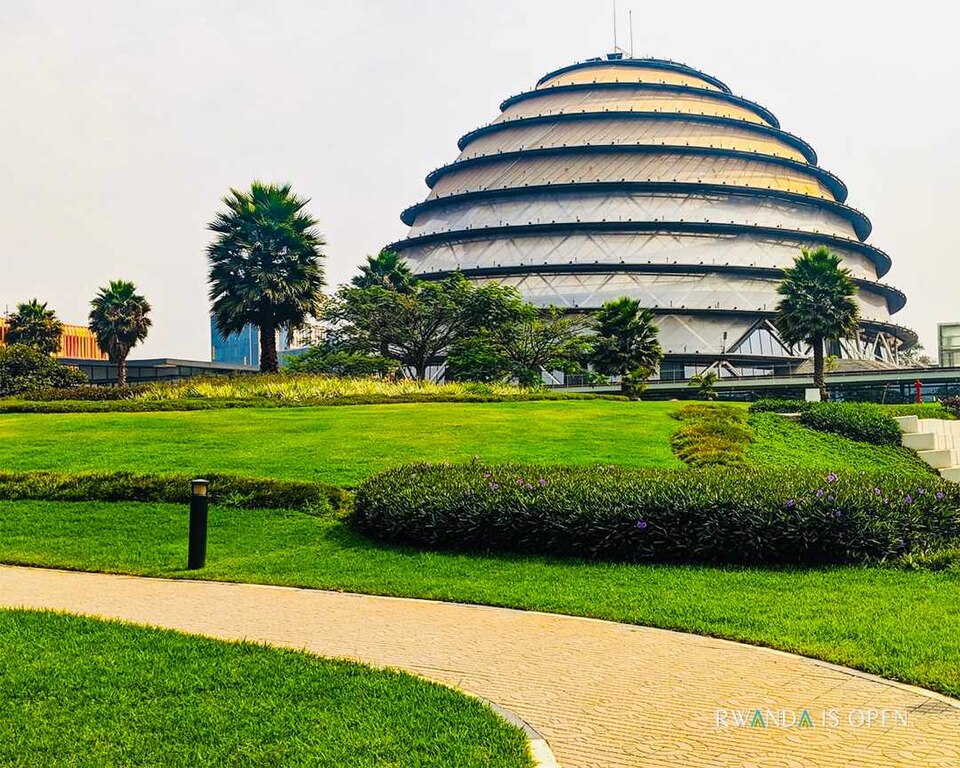
Rather than a single new building, Kigali’s growth as a conference and events hub is being driven by the utilisation of existing world-class venues. The Kigali Convention Centre holds a 5,000-delegate capacity across 20 venues, and the adjacent BK Arena can host over 10,000 attendees. In 2026, Kigali became the 14th member of the BestCities Global Alliance after hosting over 25 major events in 2025, including the 13th International AIDS Society Conference, and has already secured the ICCA Congress 2027 and World Nephrology Congress 2029.
ICCA has ranked Kigali as Africa’s second-best city for association meetings for six consecutive years, supported by more than 10,000 hotel rooms and an airport 15 minutes from the city centre. This positions the convention sector as a demand driver for hospitality construction, hotel expansion, and mixed-use development around the Kimihurura area, even without a discrete headline expansion project attached to the Convention Centre itself.
Together, these four projects are not simply construction line items; they are catalysts for broader transformation. They create thousands of direct and indirect jobs, build local technical skills through contractor training programmes, and elevate the profile of Rwanda’s construction industry as a forward-thinking sector competing for regional infrastructure capital.
Opportunities and Challenges Ahead
Despite the promising trajectory, Rwanda’s construction industry faces cost and capacity pressures that could slow delivery if left unaddressed. Producer price data show non-metallic mineral costs, including cement and lime, rose by approximately 21% in the first quarter of 2025 alone, with average building material costs up 5 to 10% over the year, driven largely by import dependence for steel, cement, and machinery.
Opportunities
Local manufacturing of materials remains the clearest opening: with most construction inputs currently imported, domestic production plants for cement, steel and glass could ease the cost pressure documented above while creating new manufacturing jobs. Green construction is gaining ground through the EDGE-certified Green City Kigali model, and Rwanda’s construction industry has real export potential, as Rwandan cement importers have already begun supplying the Kenyan market to plug supply gaps linked to Tanzanian import bottlenecks.
Challenges
High import costs for steel, cement and machinery continue to inflate project budgets, compounded by the 21% first-quarter rise in non-metallic mineral prices. A skills gap in trained engineers, architects and skilled labourers persists as project volume grows faster than technical training capacity. Financing remains difficult for small and medium-sized contractors, and land acquisition delays, cited as a factor slowing Nyabarongo II, illustrate how administrative friction can extend even to well-funded flagship projects.
The Government’s Role in Sustaining Growth
The Rwandan government has proactively positioned Rwanda’s construction industry as a driver of economic development through policy reform, public-private partnerships, and targeted investment. The National Urbanisation Policy sets a framework for sustainable city development, while the public investment programme outlines priority infrastructure projects for the next decade.
The government has also digitised the construction permit process, cutting approval times from months to days, and continues to attract concessional financing from partners such as Germany’s KfW Development Bank and the Export-Import Bank of China, which provided a $214 million loan towards Nyabarongo II. This blend of domestic reform and external concessional capital is what keeps Rwanda’s debt-servicing costs low relative to similarly rated economies.
Why Rwanda’s Construction Industry Matters to Investors
For investors evaluating construction markets in Africa, Rwanda’s construction industry offers a combination of macroeconomic stability and project pipeline visibility that is rare in the region. S&P Global’s May 2026 reaffirmation of Rwanda’s B+/B rating specifically cited continued investment in the Bugesera airport programme and prudent fiscal management as supporting factors, alongside 9.3% GDP growth in 2025, up from 7.2% in 2024.
Approximately 89% of Rwanda’s external debt is concessional, contracted at long maturities and low interest rates, which keeps debt-servicing costs well within sustainable bounds even as infrastructure spending accelerates. Combined with a rising middle class, preferential access to the EAC, COMESA, and AfCFTA markets, and consistently ranked ease-of-doing-business reforms, Rwanda’s construction industry presents a market in which near-term project risk is offset by unusually strong sovereign fundamentals.
Technical Outlook: Rwanda’s Construction Market Trajectory and Investment Risk
The data reviewed above point to a construction market growing on the back of identifiable, financed projects rather than on speculative momentum. This section synthesises what that trajectory means for market timing and where the genuine downside risks sit.
1. Market Trajectory Beyond 2025
Hitting $1.4 billion in 2025 is a milestone for Rwanda’s construction industry, not an endpoint. Sustained growth through the next decade is underwritten by Vision 2050 and by the pipeline already under construction, including Nyabarongo II’s December 2027 commissioning and Bugesera’s phased capacity expansion beyond its initial 8 million passenger threshold. Future projects are increasingly required to meet climate-resilient design and EDGE energy-efficiency standards, aligning Rwanda’s construction sector with global sustainability expectations rather than treating them as an add-on.
2. Risk Factors for Investors
The clearest near-term risk is inflation in imported material costs, with non-metallic minerals up 21% in a single quarter of 2025. Land acquisition delays, documented for Nyabarongo II, and Rwanda’s persistent engineering and skilled labour shortfall are the two most likely sources of schedule slippage on future projects. Investors should weigh these operational risks against Rwanda’s favourable debt structure and stable B+ rating, which materially reduces macro-level financing risk relative to peer markets.
Conclusion: Rwanda’s Path to a $1.4 Billion Construction Market
Rwanda’s construction industry was set to reach $1.4 billion in 2025 because of specific, financed projects, not general optimism, that are delivering measurable capacity: a $2 billion airport designed to handle 14 million passengers, a 43.5 MW hydropower plant nearing completion, and a housing programme scaled to 30,000 units. This is a market defined by government-anchored delivery and concessional financing, which is precisely why S&P Global continues to rate Rwanda’s sovereign risk at B+ even as spending accelerates.
For developers, contractors and suppliers across Rwanda’s construction industry, the opportunity through 2025 and beyond sits less in speculative land plays and more in execution: local materials manufacturing to offset import cost inflation, specialised technical skills to close the engineering gap, and financing structures suited to small and medium-sized contractors currently priced out of the boom. Rwanda’s cranes are building more than skylines; they are building the operational case for treating the country as East Africa’s most investable construction market of the decade.
Stay Ahead of East Africa’s Construction Growth Story
For deeper coverage of Rwanda’s construction industry, East Africa’s construction market data, and the companies building the region’s next generation of airports, energy and housing projects, check Construction Frontier: Construction Markets and Industry for ongoing analysis built for engineers, investors and project professionals.