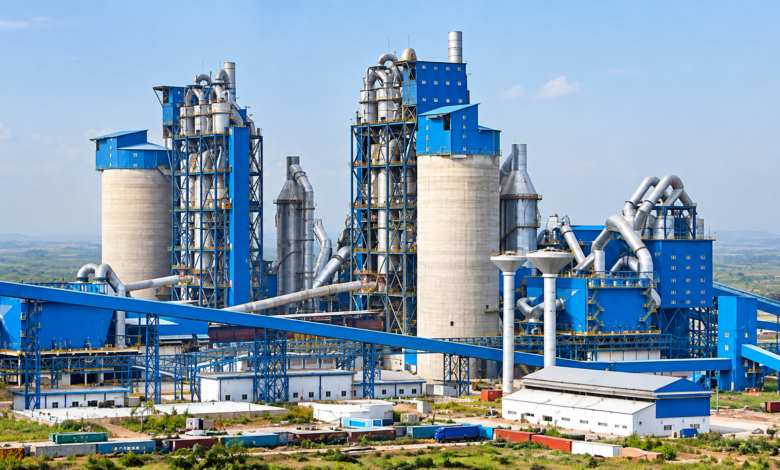
Top 10 Cement Brands in Africa: Elite Industry Leaders
Africa’s top cement brands are led by Dangote Cement at approximately 55 Mtpa of Pan-African capacity, followed by BUA Cement at roughly 17 Mtpa and HBM Nigeria, formerly Lafarge Africa, at around 10.5 Mtpa. Africa’s cement consumption surpassed 250 million tonnes in 2023, according to the African Development Bank, and was projected to exceed 290 million tonnes by 2025. The sector has seen its biggest ownership shake-up in decades since 2024, as Holcim exited Nigeria and Kenya and Huaxin Building Materials and Amsons Group took control of two of the continent’s best-known names. This ranking weighs capacity, reach, innovation, and market value to identify Africa’s leading cement manufacturers heading into 2027.
Technical Snapshot: Africa Cement Brand Landscape
| Metric | Value |
| Leading producer by capacity | Dangote Cement, approximately 55 Mtpa of Pan-African capacity |
| Most valuable listed producer | Dangote Cement Plc, with a market capitalisation of approximately USD 12.80 billion on the NGX |
| Second-largest listed producer | BUA Cement Plc, approximately 17 Mtpa capacity and USD 6.76 billion market capitalisation |
| Combined capacity of the ranked top 10 | approximately 90 million tonnes per annum |
| Africa cement consumption (2023) | over 250 million tonnes, projected to exceed 290 million tonnes by 2025 |
| Countries covered in this ranking | 13 or more, spanning West, East, Southern, and North Africa |
| Largest 2024-2026 ownership shift | Huaxin Building Materials’ USD 1 billion acquisition of Lafarge Africa, renamed HBM Nigeria |
| Fastest-growing East African entrant | Bamburi Cement under Amsons Group, doubling clinker capacity via its USD 250 million Matuga plant |
From Lagos to Nairobi, these cement brands in Africa determine whether the next highway, hospital, or high-rise will stand the test of time, and the ownership changes sweeping the sector since 2024 are redrawing the competitive map across the continent.
Introduction: Africa’s Cement Brand Landscape
Africa’s cement brands are consolidating at a pace unmatched in the industry’s history, as population growth, urbanisation, regional trade integration, and ambitious government development programmes drive demand for reliable, high-quality cement. Megaprojects ranging from highways and railways to energy plants and commercial centres now depend on producers that can scale output without compromising quality, and the past two years have reshuffled which brands can deliver that reliability. For the wider trends behind this demand, our complete guide to Africa’s cement markets and manufacturing base breaks down consumption, capacity, and regulation country by country.
This article ranks the ten cement brands in Africa carrying the most weight in production capacity, geographic reach, technical innovation and project delivery, then goes further than most rankings by covering the listed producers, market capitalisation and 2024-2026 ownership changes, including Huaxin’s acquisition of Lafarge Africa and Amsons Group’s takeover of Bamburi Cement, that now shape how these brands are financed and supplied across the cement industry in Africa.
Why Cement Brand Selection Matters in Construction
Cement quality determines the durability, safety, and lifespan of a structure. Setting time governs how quickly cement hardens after water is added, which matters most in projects needing a fast turnaround, such as road repairs or precast installations, where a rapid-hardening formulation cuts downtime and labour costs. Compressive strength, tested at 28 days, indicates how well hardened concrete resists axial loads and must align with national and international civil engineering codes for buildings, bridges, and industrial plants.
Durability reflects a cement’s resistance to sulphates, chlorides, and moisture, a property that matters most in coastal or chemically active soils where corrosion and material degradation are common. Shrinkage and thermal cracking affect the dimensional stability of a pour as it loses moisture or experiences temperature swings, factors that engineers closely control on large pours such as dams, highways, and retaining walls. Workability, meanwhile, governs how easily a mix can be placed and finished on site, supporting uniform compaction and design strength.
Leading brands separate themselves through low-carbon cement formulations, tighter logistics, and sustainable raw material sourcing, all of which now shape how cement brands in Africa compete for green construction mandates.
Methodology: How We Ranked the Top 10 Cement Brands
Ranking cement brands in Africa on installed capacity alone would favour scale over relevance, so this list weighs six factors that reflect how engineers, investors, and project owners actually judge a manufacturer’s reliability. Each criterion draws on the most recent company disclosures, exchange filings, and industry reporting available at the time of writing, rather than a single output figure, to capture how a brand performs across production, distribution, innovation, and governance:
- Installed production capacity (Mtpa): a brand’s total annual cement output, which determines its ability to meet large-scale project demand.
- Market share and geographic footprint: reach and influence across African regions, which strengthens distribution efficiency and market resilience.
- R&D and product innovation: investment in new cement types and improved performance characteristics suited to local construction conditions.
- Sustainability and ESG compliance: efforts to cut carbon emissions, adopt alternative fuels, and align with environmental and social governance standards.
- Involvement in major infrastructure projects: practical validation through flagship national and regional developments.
- Reputation among industry professionals: feedback from civil engineers, contractors, and project managers on quality consistency, availability, and technical support.
The Top 10 Cement Brands in Africa
Africa’s cement industry is as dynamic as the continent’s construction needs, and these ten cement brands were selected for their scale and influence on the continent’s infrastructure story. Several entries have changed hands since 2024 as European multinationals restructure their African portfolios and new investors, particularly from China and East Africa, step in. For a strategic view of how manufacturers are responding, our breakdown of eight strategies driving growth in cement manufacturing in Africa sets out the capital, technology, and consolidation moves behind these rankings.
Further Reading: Cement Manufacturing in Africa: 8 Powerful Strategies Driving Market Growth
1. Dangote Cement (Nigeria)
- Founded: 1981
- Founder: Aliko Dangote
- Listed: Nigerian Exchange (NGX)
- Market cap: approximately USD 12.80 billion
- Capacity: approximately 55 Mtpa across 11 countries
- FY2025: group EBITDA NGN 1,981.1 billion (+43.4%); profit after tax over NGN 1 trillion for the first time
- Workforce: approximately 20,600 employees (31 December 2025)
- Segments: Nigeria; Pan-Africa
Dangote Cement is Africa’s largest cement producer, with plants across Nigeria, Ethiopia, Ghana, Senegal, Cameroon, Zambia, Tanzania and South Africa. Nigerian capacity alone stands at 35.25 Mtpa, anchored by the Obajana plant in Kogi State, Africa’s largest single cement complex with five production lines and 16.25 Mtpa of capacity. Majority shareholder Dangote Industries Limited retains control after the group’s Nigerian Exchange listing, and vertical integration from limestone quarries through to transportation gives the company pricing stability and supply chain control that few African rivals can match.
Group sales volumes eased 0.9 percent to 27.5 million tonnes in 2025 amid pre- and post-election uncertainty in Cameroon, Senegal and South Africa, even as Nigerian cement and clinker exports rose 18.6 percent to 1.4 million tonnes.
Key Projects
- Lagos-Ibadan Expressway reconstruction
- Nigerian rail modernisation programme
- Abuja mass housing scheme
Technical Strengths
- Low-heat cement suited to mass pours
- CEM I and CEM II varieties compliant with EN 197-1
- Automated kilns for consistent quality control
2. HBM Nigeria, formerly Lafarge Africa (Nigeria)
- Founded: 1959, as the West African Portland Cement Company
- Parent: Huaxin Building Materials (China), acquired in 2025
- Listed: Nigerian Exchange (NGX)
- Capacity: approximately 10.5 Mtpa, rising toward 16 Mtpa by 2027
- FY2025: revenue over NGN 1 trillion for the first time; net profit NGN 273 billion, nearly tripled
- Workforce: 1,478 employees (31 December 2025)
- Segments: Cement, Concrete, Aggregates
Lafarge Africa traced its roots to a joint venture between Blue Circle Industries, the United Africa Company and Nigeria’s Western Regional Government and later became part of the global Lafarge and then Holcim groups. That chapter closed in 2025: the Swiss group Holcim sold its entire 83.81 percent stake in Lafarge Africa to China’s Huaxin Cement in a deal valued at approximately USD 1 billion, completing its exit from Nigeria after roughly 65 years. Shareholders approved the name change to HBM Nigeria Plc in April 2026, and the Corporate Affairs Commission issued a new certificate of incorporation the following June.
The company operates four integrated plants at Sagamu and Ewekoro in Ogun State, Ashaka in Gombe State and Mfamosing in Cross River State. Under Huaxin, one of the ten largest cement groups in the world, the company has committed to 5.5 Mtpa of new capacity, including a 3.5 Mtpa expansion at Sagamu targeted for commissioning by January 2027 and an expansion of Ashaka to 2 Mtpa by December 2026.
Highlight Projects
- Lagos Lekki Free Trade Zone
- Sagamu and Ashaka capacity expansion programme (targeted 2026-2027)
The company’s blended cements, marketed under the Elephant Cement, Supaset, Powermax and SRC brand names, use pozzolanic material to improve sulphate resistance and long-term durability, a legacy of its Lafarge-era product development that Huaxin has retained.
3. Bamburi Cement (Kenya)
- Founded: 1951
- Founder: Felix Mandl
- Owner: Amsons Group (Tanzania), since December 2024
- Listed: delisted from the Nairobi Securities Exchange in 2025, after trading there from 1970
- Capacity: approximately 3.2 Mtpa, rising toward 4.0 Mtpa
- Workforce: 366 permanent employees (31 December 2024)
- Segments: Cement; Bamburi Special Products; Lafarge Eco-Systems (waste co-processing)
Bamburi Cement is East Africa’s largest cement manufacturer, with plants in Mombasa and Athi River, Nairobi. Holcim, the long-standing majority owner, sold its entire 58.6 percent stake to Amsons Group for roughly USD 183 million; a compulsory buyout of the remaining minority shareholders followed. Under Amsons, the company signed a USD 250 million EPC contract in December 2025 with China’s Sinoma CBMI to build a 1.6 Mtpa clinkerisation plant at Matuga in Kwale County, part of a wider USD 400 million investment programme that will more than double Bamburi’s clinker output from around 1 million to 2.6 million tonnes a year and lift cement production capacity toward 4 million tonnes.
Notable Projects
- Nairobi Expressway
- Two Rivers Commercial Complex
- Matuga Integrated Clinker Plant, Kwale County (under construction)
KEBS- and ISO 9001-certified, Bamburi’s PowerMax and Nguvu brands remain trusted for structural, precast and marine applications, while its Geocycle waste co-processing operation continues to run alongside the core cement business.
4. CIMAF, Ciments de l’Afrique (Morocco)
- Founded: 2011
- Founder: Anas Sefrioui
- Parent: Omnium des Industries et de la Promotion (OIP Group)
- Listed: privately held
- Capacity: approximately 9 Mtpa (parent OIP group approximately 12 Mtpa combined)
- Footprint: 13 countries across West and Central Africa
CIMAF has scaled rapidly across Francophone West and Central Africa, with 13 grinding plants operating in Burkina Faso, Cameroon, Chad, Côte d’Ivoire, Gabon, Ghana, Guinea, Guinea-Bissau, Mali, Mauritania, the Republic of Congo and Togo, plus a crushing and bagging operation in Le Havre, France. An IFC-arranged financing package of EUR 161.25 million, supported by Proparco and the Emerging Africa Infrastructure Fund, is funding CIMAF’s first integrated cement plant outside Morocco at Pout, Senegal, which will produce its own clinker and reduce the region’s reliance on imports, alongside expanded grinding capacity in Tema, Ghana, and Dio Gare, Mali.
Infrastructure Contributions
- Côte d’Ivoire Abidjan Port expansion
- Regional supply into Mali and landlocked West African markets via the Pout integrated plant
CIMAF’s research and development work has focused on sulphate-resistant cement and rapid-hardening formulations engineered for tropical climates, backed by a certified Integrated Management System covering quality, environmental and safety standards.
5. Mugher Cement Enterprise (Ethiopia)

- Founded: 1984, during the Derg era
- Owner: Government of Ethiopia (Ethiopian Industrial Inputs Development Enterprise)
- Listed: state-owned
- Capacity: approximately 0.9 Mtpa
Mugher Cement Enterprise remains one of Ethiopia’s oldest and largest cement producers, operating from its plant on the Mugher River, roughly 90 kilometres west of Addis Ababa. Government officials have flagged the plant’s output as disproportionately low relative to the area’s limestone reserves and have set a target of lifting Mugher’s market share above 25 percent.
Ethiopia’s cement sector overall has drawn heavy investment interest: Dangote Cement announced in February 2025 a USD 400 million plan to add a second production line at its own separately branded Mugher-area plant, aiming to double that facility’s capacity to 5 million tonnes within 30 months and add a new 3 Mtpa greenfield grinding unit near Addis Ababa, underscoring Ethiopia’s position as one of the continent’s fastest-growing cement markets.
Infrastructural Projects
- Federal and regional public works programmes
- Low-cost housing developments
Mugher produces Ordinary Portland Cement and Pozzolana Portland Cement for both government and private construction and continues to upgrade its kilns as part of Ethiopia’s national push toward lower-emission cement manufacturing.
6. Sinoma International (China/Africa)
- Founded: 2001
- Parent: China National Building Materials Group (CNBM)
- Listed: not applicable, EPC contractor and equipment supplier rather than a producer
- Africa footprint: more than 15 cement plants delivered or upgraded
Sinoma International is embedded across Africa’s cement landscape as an EPC contractor and equipment supplier rather than a brand-name producer, having delivered or upgraded more than 15 cement plants on the continent, including the clinker line under construction for Bamburi Cement in Kenya and expansion works for BUA Cement in Nigeria. Sinoma’s plants typically use pre-calciner kilns and waste-heat recovery systems capable of supporting production lines of up to 6 Mtpa.
Sinoma’s role illustrates a wider pattern: much of Africa’s current cement capacity growth, from Kenya’s Matuga clinker plant to Senegal’s Kirène expansion, has been engineered and built by Chinese contractors even where ownership sits with African or European groups.
7. Twiga Cement, Tanzania Portland Cement Company (Tanzania)
- Founded: 1966
- Parent: Heidelberg Materials, via Scancem International, 69.25% stake
- Listed: Dar es Salaam Stock Exchange
- Capacity: approximately 2.0 Mtpa
- FY2025: revenue TZS 447.8 billion (-0.2%)
- Workforce: 269 employees (31 December 2025)
- Segments: Twiga Ordinary, Twiga Mega, Twiga Plus and related cement brands
Now trading as Tanzania Portland Cement Public Limited Company, Twiga Cement is Tanzania’s oldest and largest cement manufacturer, with the remaining shares publicly traded on the Dar es Salaam Stock Exchange. Successive expansions lifted capacity to around 2 million tonnes a year, and the company markets six brands, including Twiga Ordinary, Twiga Mega and Twiga Plus.
Flagship Projects
- Dar es Salaam Bus Rapid Transit
- Tanzania Standard Gauge Railway
Twiga’s marine cement is formulated to resist chloride-induced corrosion in coastal structures, and its proximity to the Dar es Salaam market underpins a competitive position that Heidelberg Materials has periodically sought to strengthen through a long-pursued and long-contested merger with Tanga Cement.
8. Ciments du Sahel (Senegal)
- Founded: 2002
- Founder: Dr Latfallah Layousse
- Owner: the Layousse family, privately held with no foreign majority stake
- Listed: privately held
- Capacity: approximately 6.0 Mtpa
Ciments du Sahel operates the Kirène plant near Dakar, one of the largest cement facilities in West Africa. A phased expansion doubled capacity from 3 Mtpa in 2022 to roughly 6 Mtpa in 2023, following the commissioning of a new production line built in China by Sinoma CBMI. The company exports to Mali, The Gambia and Guinea-Bissau. Its portside grinding and dispatch infrastructure near Dakar provides an efficient route for bulk delivery across West Africa, positioning it alongside Sococim, part of the Vicat group, and Dangote Cement Senegal as one of the three dominant players in Senegal’s cement market.
9. Sephaku Cement (South Africa)
- Founded: 2006
- Parent: Sephaku Holdings Limited (JSE-listed); 64% held by Dangote Cement
- Listed: Johannesburg Stock Exchange (via Sephaku Holdings)
- Capacity: approximately 2.2 Mtpa
- FY2025: sales revenue ZAR 2,663 million (-4.4%)
- Workforce: approximately 860 employees (2025)
- Segments: Cement (Aganang integrated plant; Delmas grinding plant)
Sephaku Cement is a subsidiary of JSE-listed Sephaku Holdings Limited. In 2010, Dangote Cement took its 64 percent stake to fund the development of the Aganang integrated plant near Lichtenburg and the Delmas grinding plant in Mpumalanga. Combined capacity across the two sites is ISO/IEC 17025-certified and geared toward the inland Gauteng market.
Project Focus
- Precast concrete factories
- Transport infrastructure across Gauteng, Mpumalanga and Limpopo
Sephaku’s high early-strength CEM I product is favoured on fast-track projects such as industrial parks and toll roads, and its Dangote-backed ownership gives it access to continental technical expertise that smaller South African independents lack.
10. Savannah Cement (Kenya)

- Founded: 2012
- Founders: Benson Ndeta, with Wanho International and ACME Wanji Investment
- Owner: Savannah Cement 2025 Limited, since 2025
- Listed: privately held
- Capacity: approximately 1.5 Mtpa
Savannah Cement operates a grinding plant at Athi River. The company was placed under receivership by KCB Bank Kenya and Absa Bank in 2023 over debts exceeding KES 14 billion and was subsequently acquired in a KES 3.8 billion deal by a group of flour-milling investors linked to Kitui Flour Millers, Mombasa Maize Millers and Eldoret Grains.
Differentiators
- Fast dispatch and short lead times
- Strong positioning in private housing and ready-mix applications
Under its new ownership, Savannah is expected to keep investing in low-carbon and supplementary cementitious material options as it works to rebuild market share against Kenya’s better-capitalised producers.
Other Major African Cement Producers Closing the Competitive Gap
A ranking of ten cement brands in Africa cannot capture every brand shaping Africa’s cement industry, and three producers in particular carry enough capacity, market share or listed value to belong in any serious comparison: BUA Cement in Nigeria, PPC Ltd in Southern Africa and Mombasa Cement in Kenya. Their financing structures differ from those of many of the cement brands profiled above, which is exactly why they round out the picture; readers researching cement manufacturing investment opportunities across Africa will recognise all three as active players in the continent’s current wave of capacity expansion.
Further Reading: Cement Manufacturing Investment in Africa: 8 Promising Opportunities
BUA Cement (Nigeria)
- Formed: 2020, merger of Cement Company of Northern Nigeria and Obu Cement Company
- Parent: BUA Group (Abdul Samad Rabiu)
- Listed: Nigerian Exchange (NGX)
- Market cap: approximately USD 6.76 billion
- Capacity: approximately 17 Mtpa
- Workforce: 1,559 permanent employees (31 December 2025)
- Segments: Cement (Obu complex, Edo State; Kalambaina complex, Sokoto State)
BUA Cement is Nigeria’s second-largest producer after Dangote. Its Obu complex in Edo State runs at 9 Mtpa, and its Kalambaina complex in Sokoto State at 8 Mtpa, with a further expansion under construction that would take Sokoto’s output to 20 million tonnes once complete, making BUA, after Dangote Cement, the second most valuable listed cement company on the continent.
PPC Ltd (South Africa)
- Founded: 1892
- Listed: Johannesburg Stock Exchange (JSE)
- Capacity: approximately 9 Mtpa
- FY2026 (year to March): revenue ZAR 10,255 million (+3.9%); EBITDA ZAR 2,079 million (+31%)
- Workforce: approximately 2,579 employees
- Segments: South Africa and Botswana Cement; International Cement (Zimbabwe, Rwanda, DRC); Lime; Aggregates and Readymix
PPC Ltd traces its history to South Africa’s first cement plant and today operates factories across South Africa, Botswana, Zimbabwe and the Democratic Republic of Congo. Growth on the back of its Awaken the Giant turnaround strategy includes a new integrated cement plant under construction in South Africa’s Western Cape, due for completion in the final quarter of the company’s 2027 financial year.
Mombasa Cement (Kenya)
- Founded: 2007
- Owner: privately held, family-owned
- Listed: privately held
- Kenya market share: approximately 16%
Mombasa Cement grew into Kenya’s second-largest cement producer by market share, behind only Bamburi. Competition Authority of Kenya data compiled from the Kenya National Bureau of Statistics puts Mombasa Cement ahead of East African Portland Cement and Savannah Cement, a position that makes it a fixture in any accurate comparison of Kenya’s cement brands, even though it remains privately held and discloses little of its financial details publicly.
Statistical Overview: Capacity and Market Value
The table below sets out installed capacity for the leading cement brands in Africa, drawing on 2025-2026 company disclosures, alongside listed market capitalisation where available.
Installed Cement Capacity by Brand
| Cement Brand | Installed Capacity (Mtpa) | Country of Origin | Key Countries of Operation |
| Dangote Cement | 55.0 | Nigeria | Nigeria, Ethiopia, Ghana, Senegal, South Africa + 6 more |
| HBM Nigeria (ex-Lafarge Africa) | 10.5, rising toward 16 | China / Nigeria | Nigeria |
| BUA Cement | 17.0 | Nigeria | Nigeria |
| CIMAF | 9.0 | Morocco | 13 countries across West and Central Africa |
| PPC Ltd | 9.0 | South Africa | South Africa, Botswana, Zimbabwe, DRC |
| Ciments du Sahel | 6.0 | Senegal | Senegal, Mali, Gambia, Guinea-Bissau |
| Bamburi Cement | 3.2, rising toward 4.0 | Kenya | Kenya |
| Mombasa Cement | 3.3 | Kenya | Kenya |
| Mugher Cement Enterprise | 0.9 | Ethiopia | Ethiopia |
| Sephaku Cement | 2.2 | South Africa | South Africa |
| Twiga Cement | 2.0 | Tanzania | Tanzania |
| Savannah Cement | 1.5 | Kenya | Kenya |
Market Capitalisation of Listed African Cement Companies
USD-normalised market capitalisation figures below reflect exchange data as of mid-2026 and are drawn from listed securities tracking rather than company disclosures.
| Company | Exchange | Market Capitalisation (USD) |
| Dangote Cement Plc | Nigerian Exchange (NGX) | 12.80 billion |
| BUA Cement Plc | Nigerian Exchange (NGX) | 6.76 billion |
| Arabian Cement Company | Egyptian Exchange (EGX) | 411.70 million |
| Sinai Cement Co. | Egyptian Exchange (EGX) | 347.40 million |
| Misr Cement (Qena) | Egyptian Exchange (EGX) | 337.51 million |
| East African Portland Cement | Nairobi Securities Exchange (NSE) | 57.07 million |
Kenya’s Cement Market Share Landscape
Kenya offers the clearest single-country view of how ownership shake-ups are reshaping cement brands in Africa. The sector has been undergoing rapid change since 2024, and market share data compiled by the Competition Authority of Kenya from Kenya National Bureau of Statistics figures show a market still led by Bamburi despite its change of foreign owner. For a country-level breakdown of demand, capacity additions, and pricing trends, see our dedicated coverage of Kenya’s cement market growth outlook.
Kenya Cement Market Share by Producer
| Producer | Approximate Market Share |
| Bamburi Cement | 33% |
| Mombasa Cement | 16% |
| East African Portland Cement | 15% |
| Savannah Cement | 15% |
| Athi River Mining Africa (National Cement / Simba Cement) | 13% |
| National Cement (Simba Cement, Devki Group) | 8% |
Kenyan producers have collectively invested more than USD 700 million in new clinker capacity over the past three years, a build-out that includes Devki Group’s Cemtech plant in West Pokot and its planned Kitui County facility, as well as Bamburi’s Matuga project, which aims to end Kenya’s historic reliance on imported clinker. That capacity race is also reshaping retail pricing, a dynamic covered in our analysis of the drivers of cement prices in Kenya.
Importance to Industry Professionals
Different construction professionals interact with cement brands in Africa in specialised ways, depending on their roles, project objectives, and performance expectations. Understanding how each stakeholder evaluates cement helps align product capabilities with real-world demands.
Civil Engineers
Civil engineers prioritise performance metrics that ensure structural reliability and long-term durability. They typically favour CEM I and CEM II types with high 28-day compressive strength for columns, beams, and slabs, as well as resistance to sulphate attack, carbonation, and alkali-silica reaction in aggressive environments.
Architects
Architects often specify cement types for aesthetic and sustainability considerations. Smooth-finish cements suit exposed concrete surfaces in modern designs, while eco-friendly options that support green building certifications are increasingly in demand.
Quantity Surveyors and Contractors
Quantity surveyors favour brands offering predictable yield, a consistent water-cement ratio, and minimal batch variability, alongside reliable bagged or bulk supply for cost forecasting. Contractors, meanwhile, focus on workability, heat resistance, and fast setting to protect labour productivity and formwork turnaround.
Clients and Developers
Real estate developers prioritise cement brands with a strong track record and low lifecycle maintenance requirements, since a well-established brand supports confidence in structural safety and helps optimise long-term return on investment.
Emerging Trends in Africa’s Cement Sector
As construction across the continent embraces the future, cement brands in Africa are investing in technology and sustainable practices to stay competitive and compliant with global standards.
Consolidation Through Chinese Investment
Chinese producers have overtaken European multinationals as the most active acquirers of African cement assets. Huaxin Cement, since renamed Huaxin Building Materials, has spent roughly USD 2.7 billion on acquisitions since 2021, including Lafarge Zambia, Lafarge Cement Malawi, Natal Portland Cement, Oman Cement, and Lafarge Africa, placing it among the world’s five largest cement producers by capacity once its deals in the Philippines and Brazil close.
Clinker Substitution and Localisation
Manufacturers are replacing a growing share of energy-intensive clinker with supplementary cementitious materials such as calcined clay, rice husk ash, and pozzolana, lowering both emissions and production costs while leveraging locally available resources. Formulations increasingly reflect each country’s geotechnical and climatic conditions.
Digital Plant Monitoring and Green Logistics
Artificial intelligence and IoT integration are improving process control, predictive maintenance, and real-time quality assurance, while cement companies adopt electric trucks, rail-supported bulk transport, and optimised routing to cut fuel consumption and support ESG goals.
Carbon Pricing Compliance
As Africa aligns with global sustainability frameworks, manufacturers are adjusting operations in anticipation of upcoming carbon taxation and emissions trading regulations, including investments in carbon capture and accounting systems.
Technical Block: Cement Strength Classes and Specification Standards Across Africa
Most African markets, including Kenya, Tanzania, Uganda, and Rwanda, specify cement under the East African Standard KS EAS 18-1, itself adapted from the European Norm EN 197-1, while Nigeria regulates cement under NIS 444-1, enforced by the Standards Organisation of Nigeria, and South Africa applies SANS 50197-1 under the South African Bureau of Standards. Understanding this classification helps buyers match cement brands in Africa to a project’s structural demands.
1. Strength Classes
Standard strength is measured at 28 days and falls into three classes: 32.5, 42.5, and 52.5 MPa. Each standard class carries an early-strength designation, either N for normal early strength or R for rapid early strength, tested at 2 or 7 days, depending on the class. A brand marketed as 42.5R, for example, delivers a standard strength of 42.5 MPa with accelerated early-strength gain, suited to fast-track formwork removal.
2. Cement Types by Composition
CEM I denotes ordinary Portland cement with minimal blending. CEM II covers Portland-composite cements blended with limestone, fly ash, or slag in smaller proportions. CEM III and CEM IV are blast-furnace and pozzolanic cements, respectively, with higher replacement levels that improve sulphate resistance and reduce heat of hydration, making them the preferred choice for marine works, dams, and mass concrete pours.
3. Certification and Conformity
Conformity to KS EAS 18-1 and equivalent national standards is evaluated continuously through spot-sample testing under each manufacturer’s Factory Production Control system, with minimum testing frequencies set out in the accompanying EAS 18-2 standard. Buyers on major infrastructure projects should verify current certification directly with the supplier, whether that is a KEBS S-Mark in Kenya, SON’s MANCAP mark in Nigeria, or the equivalent regulatory mark elsewhere, rather than relying on packaging alone, since certification lapses do occur.
Conclusion: Africa’s Cement Brands Are Consolidating Around Capital and Capacity
Africa’s cement brands are being redrawn by capital as much as by capacity, and the past two years have shown that ownership now determines the ranking of the continent’s leading cement brands as much as output does. Dangote Cement’s Pan-African scale remains unmatched, but the sale of Lafarge Africa to Huaxin Building Materials and of Bamburi Cement to Amsons Group mark a genuine shift away from the European multinationals that built much of the continent’s cement industry over the past century, replaced by Chinese capital in West and Southern Africa and by regional East African conglomerates closer to home.
Civil engineers, contractors, architects, and developers alike must judge these cement brands in Africa beyond headline capacity figures, weighing strength class, sulphate resistance, workability, and regional fit alongside the financial stability of whichever group now stands behind the brand on the bag. From Dangote’s Pan-African reach to Bamburi’s rebuilt Kenyan supply chain and BUA’s expanding Sokoto complex, these manufacturers are building the highways, skyscrapers, and cities of tomorrow, and partnering with the right cement brand ensures that every mix poured today stands strong for generations.
Explore Africa’s Leading Cement Companies
Discover more cement company rankings, market analysis, capacity trends, and manufacturing insights on Construction Frontier: Cement & Concrete, covering the producers shaping cement supply, investment, and construction growth across Africa. Explore the companies, markets, and production strategies driving the continent’s evolving cement industry.