Seikan Tunnel: 5 Extraordinary Engineering Achievements Beneath the World’s Deepest Sea Crossing
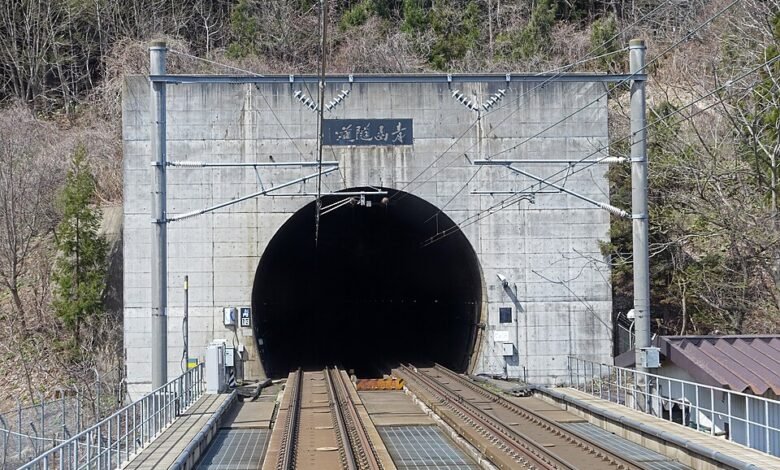
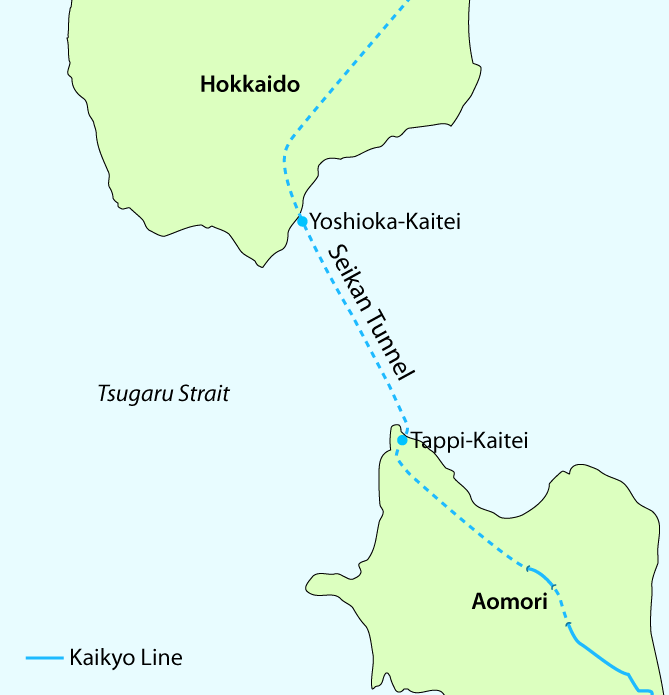
The Seikan Tunnel, also known as the Tsugaru Straight Tunnel, is a 53.85-kilometre dual-gauge railway tunnel beneath Japan’s Tsugaru Strait, connecting Honshu to Hokkaido. Its 23.3-kilometre undersea section runs 100 metres below the seabed and 240 metres below sea level, the deepest operational rail crossing on earth. By submarine section length, it holds the record as the world’s longest undersea tunnel, making the Seikan Tunnel in Japan the defining reference project for submarine rail engineering worldwide.
Technical Snapshot: The Seikan Tunnel Core Project Specifications
| Specification | Detail |
| Total tunnel length | 53.85 km (33.46 mi) |
| Undersea section length | 23.3 km (14.5 mi) |
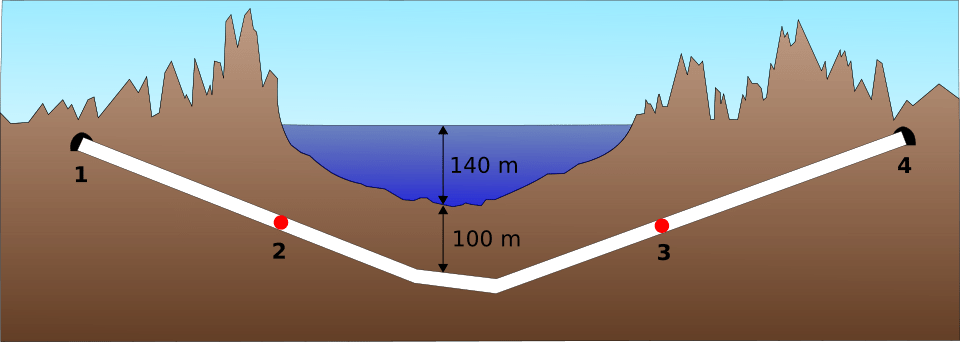
| Maximum sea depth above | 140 m |
| Track depth below sea level | 240 m (790 ft) |
| Minimum overburden below the seabed | 100 m (330 ft) |
| Track gauge | Dual gauge: 1,435 mm (Shinkansen) + 1,067 mm (freight) |
| Operating speed | 160 km/h (Shinkansen); 110 km/h (freight) |
| Opened | 13 March 1988 |
| Construction period | 1964 to 1988 (24 years) |
| Total project cost | Approx. USD 7 billion (approximately 12 times the original budget) |
| Operator | JR Hokkaido / JRTT |
No other structure on the Tsugaru Strait tunnel route or any other combines this depth, undersea length, seismic exposure, and live operational complexity. The world’s longest undersea tunnel engineering challenge was not only geological; it was sustained across 24 years of undersea tunnel engineering beneath the ocean floor that no prior project had mapped.
Introduction: The Seikan Tunnel and Japan’s Most Consequential Sea Crossing
The Seikan Tunnel is the product of a national emergency turned engineering ambition. On 26 September 1954, Typhoon Marie sank five ferry vessels in the Tsugaru Strait, killing 1,430 people. Japan’s dependence on ferries to connect Honshu with northern Hokkaido had become a structural liability, and the government resolved to end it. What followed was one of the most sustained and technically demanding construction campaigns of the twentieth century.
Survey work on an undersea rail tunnel in Japan began as early as 1946. Full excavation did not start until 1964, and the Seikan Tunnel in Japan did not open until 13 March 1988. By the time the first train passed through, engineers had consumed approximately 3,000 tonnes of explosives, lost 34 workers to cave-ins and floods, and developed grouting methods that are now standard practice across global submarine tunnel projects. The Seikan Tunnel construction challenges and cost (approximately USD 7 billion, roughly 12 times the original budget) reflect 24 years of solving problems no prior project had encountered.
This article examines five achievements that define Seikan Tunnel engineering in Japan and explains why the question ‘How was the Seikan Tunnel built?’ remains the most-studied case study in the world’s longest undersea tunnel engineering practice. For the full technical framework governing how undersea crossings are designed and constructed, read the undersea tunnel engineering article.
1. A Three-Bore System Built for Geological Uncertainty Beneath the Ocean Floor
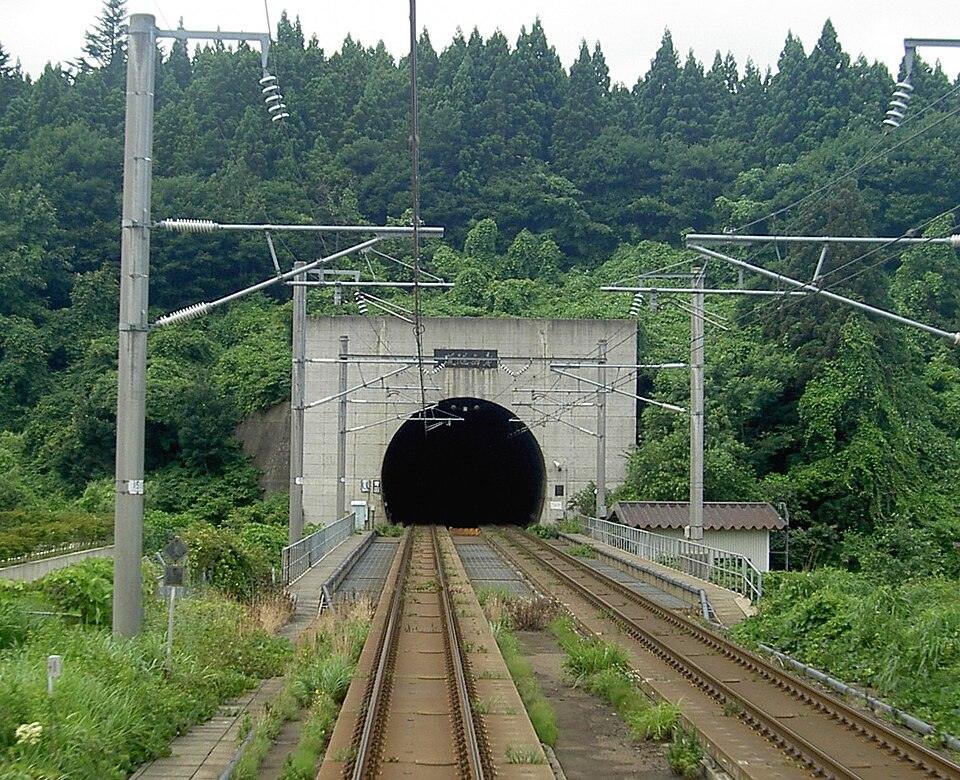
The first question any engineer asks when reviewing this project is, ‘How was the Seikan Tunnel built through 23.3 kilometres of active seabed without catastrophic failure? The answer begins with a design decision that shaped everything else: three separate bores for the Tsugaru Strait tunnel undersea section rather than one. Engineers at the Japan Railway Construction Public Corporation (JRTT) built a pilot tunnel, a service tunnel, and a main tunnel in sequence, an approach driven entirely by the unpredictability of the strait’s geology and the zero-margin consequences of a miscalculation in undersea tunnel engineering beneath the ocean floor at 240 metres below sea level.
The Pilot Tunnel: Reading the Ground 19 Years Ahead
Excavation of the pilot tunnel began from the Hokkaido side in January 1964, with a diameter of approximately five metres. Its function was geological intelligence: it threaded through the most complex zone of the Tsugaru Strait tunnel route at a lower elevation, mapping fault zones and water-bearing formations before the service and main bores were committed. The pilot tunnel took 19 years to complete, reaching a breakthrough on 27 January 1983. This sequence answers the core question of how the Seikan Tunnel was built: not with a single large bore, but with three sequenced excavations, each informing and protecting the next.
The pilot tunnel served a second purpose during construction: for the central five kilometres of the route, it acted as the primary service bore, carrying drainage equipment, surveying teams, and emergency access. After opening, it transitioned into a permanent maintenance and inspection asset alongside the service tunnel.
The Service Tunnel: Construction Artery and Safety Corridor
Running parallel to the main tunnel, approximately 30 metres lateral offset, the service tunnel served as the primary construction artery throughout the build. Cross-galleries connecting it to the main bore created multiple working faces simultaneously, compressing the schedule. The world’s largest maintenance base inside a tunnel (16 metres wide, 91 metres long) was constructed within the undersea section for ongoing inspection and repair work.
After opening, the service tunnel became a permanent safety corridor and the access route for all structural maintenance teams operating in the undersea tunnel engineering beneath the ocean floor environment, unique to an undersea rail tunnel in Japan operating at 240 metres below sea level, specifically the Seikan Tunnel section. It remains the primary evacuation route for passengers in an emergency today.
The Main Tunnel: Built to Shinkansen Specification Decades Before It Was Needed
The main tunnel carries an internal width of 9.6 metres and a clear centreline height of 7.85 metres. In 1971, engineers modified the Tsugaru Strait tunnel design to full Shinkansen specification, lowering the longitudinal gradient from 20 per mille to 12 per mille to eliminate future speed restrictions. The Hokkaido Shinkansen did not use the bore until 2016, 28 years after opening. No structural retrofit was required. That foresight defines Seikan Tunnel engineering in Japan at its most consequential: decisions made for conditions decades away, under a construction budget already under severe pressure.
2. Forward Grouting: The Core Answer to How the Seikan Tunnel Was Built Under the Ocean
The central challenge and cost question in the Seikan Tunnel construction is water. The Tsugaru Strait imposes a hydrostatic head of up to 250 metres above the tunnel invert. Volcanic fault zones, fractured sedimentary strata, and unconsolidated geological pockets made permeability unpredictable at every face. Answering precisely how the Seikan Tunnel was built through those conditions without catastrophic flooding required developing a systematic forward-grouting protocol, a technique that did not exist in its current form before the longest submarine tunnel in the world project demanded it.
This technique directly addresses the central hazard of undersea tunnel engineering beneath the ocean floor: sealing permeable rock against full hydrostatic pressure before the excavation face reaches it. The world’s longest undersea tunnel was built and the methodology validated under live conditions at depth, and the approach has since been adopted across every comparable submarine tunnel project worldwide.
Advance Boring and Chemical Grout Injection
Before each excavation advance, drill teams drove feeler holes of 70 to 90 millimetres in diameter up to 100 metres ahead of the active face. These holes were drilled to probe for fault zones and serve as injection points for chemical grout. Specialist formulations incorporating cement, potassium hydroxide, and silica compounds were injected under pressure to consolidate fractured rock and seal water pathways before the excavation machine reached them. Horizontal advance boring extended 500 to 1,000 metres ahead at the macro-scale for longer-range geological intelligence across the full Tsugaru Strait tunnel route. Among the Seikan Tunnel length, depth, and construction facts most relevant to tunnel engineers, this pre-treatment system is the most widely replicated.
The 1976 Inundation and the F-10 Fault
The forward-grouting programme did not prevent every incident. In May 1976, a major water inflow struck the service tunnel on the Hokkaido side at a peak rate of 70 cubic metres per minute, flooding three kilometres of the service tunnel and 1.5 kilometres of the main tunnel. The response took 5.4 months of continuous remedial work, including staged drainage, emergency grouting, and hydraulic pressure management. No lives were lost.
Engineers also encountered squeezing ground in the F-10 fault zone, where earth pressures reached 2 MPa. The solution combined spring-line drifts excavated laterally to redistribute stress, a short bench excavation sequence, steel pipe supports filled with hoop-reinforcement, and high-strength mortar grouting. No single technique resolved the fault. The F-10 fault alone accounts for a significant portion of the Seikan Tunnel construction challenges and cost overrun, and it answers, with specificity, how the Seikan Tunnel was built through conditions that make most submarine tunnel specifications look straightforward.
Further Reading: Fehmarnbelt Tunnel: 7 Proven Reasons This $11BN Mega-Link Will Transform Scandinavia
3. Seikan Tunnel Length, Depth, and Construction Facts: Managing 240 Metres of Extreme Overburden
The Seikan Tunnel length, depth, and construction facts are cited frequently, but the engineering consequence of those numbers is less often explained. At 240 metres below sea level, with a minimum 100-metre rock overburden between the tunnel crown and seabed, the Seikan Tunnel operates under a load regime no comparable undersea rail tunnel in Japan or elsewhere has replicated. Its status as the longest submarine tunnel in the world by depth means every structural calculation had to be performed without precedent at this overburden level.
Structural Lining Under Full Hydrostatic Load
The final reinforced concrete lining is 700 millimetres thick, designed to resist combined loads of rock pressure, seismic forces, and the full hydrostatic head of the water column above. The alignment was deliberately routed through the densest available volcanic rock in the strait’s geology, providing a natural barrier to seawater migration. Where volcanic rock gave way to Miocene-era mudstone, covering approximately two-thirds of the offshore section, the grouting and support systems described above carried the additional load.
The gradient design also reflects depth management. The 12 per mille maximum longitudinal slope maintains the 100-metre minimum overburden across the full Tsugaru Strait tunnel’s undersea section. These decisions are central to the world’s longest undersea tunnel engineering design and are documented in every peer-reviewed analysis of Seikan Tunnel length, depth, and construction facts published since the tunnel opened.
Two Undersea Emergency Stations at Depth
At 135 metres below sea level on the Honshu side and 149.5 metres below sea level on the Hokkaido side, Tappi Kaitei and Yoshioka Kaitei are the only railway stations in the world constructed fully beneath the ocean. Both were built as permanent emergency refuge facilities, equipped with infrared fire detection, motorised smoke exhaust fans, and water spray suppression systems.
They represent the logical conclusion of undersea tunnel engineering at extreme ocean depths: when a structure operates at 240 metres below sea level, the assumption of zero incidents is an engineering failure, not a target. The Seikan Tunnel in Japan resolved this by installing escape infrastructure at the same depth as the operating railway.
Seikan Tunnel vs. Comparable Undersea Rail Tunnels
| Tunnel | Country | Undersea Length | Track Depth Below Sea Level |
| Seikan Tunnel | Japan | 23.3 km | 240 m (world record depth) |
| Channel Tunnel | UK/France | 37.9 km (longest undersea) | 75 m below the seabed |
| Fehmarnbelt Tunnel* | Denmark/Germany | 18 km (under construction) | ~40 m below the seabed |
| Eysturoy Tunnel | Faroe Islands | 11.2 km | ~187 m below sea level |
* The Fehmarnbelt Tunnel is under construction; see the full project analysis at Fehmarnbelt Tunnel: How It Transforms Scandinavia. The table above compares the Seikan Tunnel in Japan with all comparable submarine rail structures currently in service or under construction.
4. Dual-Gauge Track: Operational Complexity Inside the World’s Longest Undersea Tunnel
The world’s longest undersea tunnel does not simply carry trains. It carries two incompatible rail systems simultaneously: 1,435 mm standard-gauge Shinkansen services and 1,067 mm narrow-gauge freight trains. Managing that coexistence through 53.85 kilometres in a single bore is a systems engineering problem that the tunnel’s designers anticipated and that operators have refined continuously since 1988. No other undersea rail tunnel in Japan or internationally operates under this level of simultaneous gauge, speed, and voltage heterogeneity. The longest submarine tunnel in the world by operational depth is also, by that measure, the most operationally complex.
The Triple-Rail Slab Track Configuration
Dual-gauge operation uses a triple-rail slab track: three rails laid in the bore, with two outer rails for the standard gauge and one shared inner rail, allowing both gauge configurations to use the same corridor. This was installed as part of the Hokkaido Shinkansen integration in 2005 and became operational in March 2016. The original tunnel cross-section, designed to full Shinkansen specification in 1971 as a direct output of Seikan Tunnel engineering in Japan, accommodated the modification without structural alteration.
This configuration represents one of the most technically demanding achievements in Seikan Tunnel engineering in Japan: a live conversion of an operating railway tunnel to a dual-gauge system without service interruption. For the world’s longest undersea tunnel, it stands as the definitive precedent for planning flexible gauge specifications at the design stage.
Speed Management and Pressure Wave Control
The coexistence of Shinkansen trains at 160 km/h and freight services at up to 110 km/h generates aerodynamic pressure waves in the enclosed bore. If those waves exceed safe limits, they risk dislodging freight containers on flat-bed wagons. Shinkansen services are therefore capped at 160 km/h under normal operations, against a structure rated for 260 km/h. During low-freight Golden Week periods, JR Hokkaido has demonstrated transit speeds of 260 km/h through the tunnel, confirming that the structural ceiling is not the operational limit.
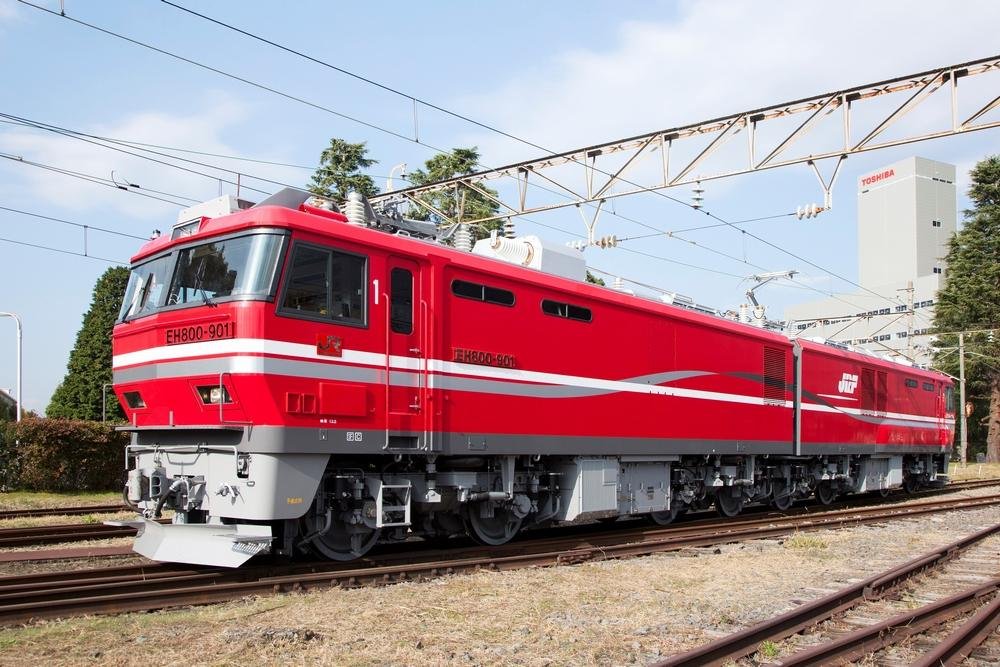
These speed management constraints are among the Seikan Tunnel length, depth, and construction facts most frequently misunderstood outside the industry. The world’s longest undersea tunnel is not slow because of its depth or geology; it is slow because of the aerodynamic interaction between two gauge systems sharing the same enclosed bore. Toshiba-built EH800-series multi-system locomotives, rated at 4 MW, were introduced from 2014 to resolve the parallel-voltage conflict between the 25 kV Shinkansen supply and legacy 20 kV freight traction.
5. A 24-Year Construction Timeline and the Techniques It Produced for Undersea Tunnel Engineering
The Seikan Tunnel construction challenges and costs are inseparable from the timeline. Survey work began in 1946. Full excavation commenced in 1964. The submarine section of the main tunnel reached completion on 10 March 1985, when Minister of Transport Tokuo Yamashita drove the final breakthrough bore. Total cost reached approximately USD 7 billion, driven by four major seawater inundation events, the 1973 oil crisis, and the sustained complexity of 3,000 workers operating simultaneously in a seismically active zone. The Seikan Tunnel was, and remains, the longest submarine tunnel in the world by operational depth, a record that reflects those 24 years of Seikan Tunnel engineering in Japan at its most demanding.
Technologies Produced Across the 24-Year Build
Every major advance in Seikan Tunnel construction emerged from problems existing methods could not solve. The project produced three technical innovations that answer, at the operational level, how the Seikan Tunnel was built and why those methods now define the world’s longest undersea tunnel engineering standards:
- Horizontal advance boring: Long-range exploratory drilling 500 to 1,000 metres ahead of the active face, providing geological intelligence for route adjustments and support sequencing before the excavation reaches each zone.
- Chemical grouting under hydrostatic pressure: Injection of cement and silica-based compounds through pre-drilled feeler holes to consolidate fractured rock and seal water pathways, forming the core technical answer to seawater exclusion in submarine tunnelling.
- Adaptive support sequencing: Spring-line drifts and short bench excavation for squeezing ground, where lateral stress redistribution preceded the main advance rather than reacting to structural distress after the fact.
Workforce, Human Cost, and the Memorial Record
At peak construction, approximately 3,000 workers operated across both ends of the route, and multiple working faces branched from the service tunnel. Thirty-four workers died over the 24-year project, the majority in the four major inundation events. That rate, while significant in human terms, is lower than comparable projects of equivalent scale, a consequence of the staged three-bore approach that provided geological intelligence and emergency access before the main bore progressed through the most dangerous sections.
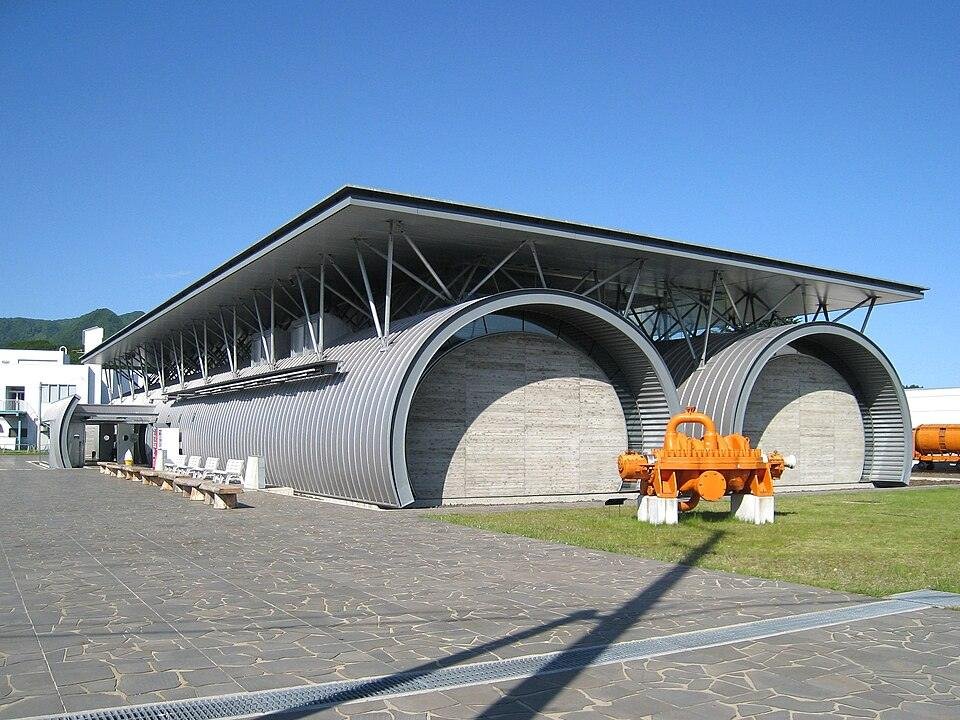
The Seikan Tunnel Memorial Hall near Cape Tappi records the full construction history, accessible via a narrow-gauge funicular originally installed to transport workers into the Tappi Kaitei undersea station. The full Seikan Tunnel construction challenges and cost record is documented there in detail alongside the Seikan Tunnel technical archive in Japan. The project established the Seikan Tunnel as the world’s longest submarine tunnel by depth and demonstrated what Seikan Tunnel engineering in Japan could achieve under conditions most practitioners would have considered prohibitive at the project’s outset.
Engineering Legacy: What the Seikan Tunnel Proves About Undersea Tunnel Engineering
The Seikan Tunnel does not hold its records by margin. At 240 metres below sea level, with a minimum 100-metre rock overburden and 23.3 kilometres of active seabed above, it operates in a pressure and seismic regime no comparable undersea rail tunnel in Japan or internationally has matched. Built with drill-and-blast in 1964 through geology that offered no guarantees, it opened in 1988 and has operated continuously for 38 years without the structural envelope ever becoming the constraint. That is not a record; it is a verdict on the engineering.
The contrast with later projects is instructive. The Eysturoy Tunnel, which introduced the world’s first undersea roundabout, was excavated with modern tunnelling equipment and established numerical ground models. The Seikan Tunnel in Japan was built without either. Every grouting method, every adaptive support sequence, and every forward-boring protocol that subsequent world’s longest undersea tunnel engineering projects have drawn on were developed here, under live conditions, at full depth, with no precedent to reference. The Seikan Tunnel produced the methodology the industry now takes for granted.
The Seikan Tunnel length, depth, and construction facts define the structure’s physical envelope. The five engineering achievements described in this article define why that envelope still stands as the outer limit of achievement in undersea tunnel engineering beneath the ocean floor. Projects now under construction, including the Fehmarnbelt Tunnel, which will become the world’s longest immersed-tube road and rail tunnel, operate at a fraction of the depth facing any undersea rail tunnel in Japan, and benefit directly from the Seikan Tunnel construction challenges and cost record as their primary engineering baseline. The longest submarine tunnel in the world by depth was built first, under the hardest conditions, and it has not been surpassed.
Further Reading: Eysturoy Tunnel: The Bold Engineering Breakthrough Behind the World’s First Undersea Roundabout
Conclusion: Why the Seikan Tunnel Remains the Benchmark for Undersea Rail Engineering
The Seikan Tunnel proved that undersea rail infrastructure could operate safely and continuously under geological, hydrostatic, and seismic conditions previously considered commercially and technically prohibitive. Its 53.85-kilometre alignment beneath the Tsugaru Strait forced engineers to develop entirely new methodologies for forward grouting, geological probing, adaptive excavation sequencing, and dual-gauge operational management. More importantly, the project demonstrated that long-term engineering resilience depends less on speed of delivery and more on design foresight, maintenance accessibility, and structural redundancy. Nearly four decades after opening, the Seikan Tunnel in Japan continues to function as a live operational asset rather than a historical engineering experiment, validating the strategic decisions embedded into its original design philosophy.
For infrastructure investors, contractors, tunnelling specialists, and public-sector planners, the Seikan Tunnel remains one of the clearest examples of how high-risk infrastructure can evolve into a generational economic asset when engineering discipline overrides short-term cost pressures. Modern projects such as the Fehmarnbelt Tunnel and other next-generation submarine crossings still rely on methodologies refined during Seikan Tunnel construction, particularly in groundwater control, fault-zone stabilisation, and deep undersea emergency systems. The tunnel’s legacy therefore extends beyond Japan. It established the operational and technical baseline for modern undersea tunnel engineering worldwide and continues to shape how nations approach resilient transport infrastructure beneath the ocean floor.
Explore More Undersea Tunnel Mega Projects
The Seikan Tunnel remains one of the greatest achievements in undersea tunnel engineering, proving what is possible beneath some of the world’s most challenging marine environments. Explore more tunnel megaprojects, rail infrastructure breakthroughs, and engineering marvels reshaping global connectivity at Construction Frontier’s Global Mega Projects.