How Iconic Structures Are Engineered to Last: Advanced Materials, Structural Systems, and Design Philosophy
Iconic structures endure not through heritage or spectacle, but through structural engineering design that resolves every force, failure mode, and environmental condition the site will impose across centuries. The engineering systems in megastructures combine durable building materials, load-distributing geometries, and redundant load paths that spread stress rather than concentrate it. From the Burj Khalifa’s buttressed core to the Sydney Opera House’s spherical geometry, long-lasting infrastructure design rests on one principle: engineer out the vulnerability before the first concrete is poured.
Technical Snapshot: Core Engineering Principles for Long-Lasting Iconic Structures
| Primary structural systems | Buttressed cores, tube systems, suspension, arch-gravity, diagrid frames |
| Key durable building materials | UHPC (120+ MPa compressive), high-tensile steel, CFRP, galvanised wire, low-heat cement |
| Seismic and wind mitigation | Base isolators, tuned mass dampers, aerodynamic tapering, thermal expansion joints |
| Design service life targets | 100 to 10,000+ years, depending on structure type and operational context |
| Defining engineering philosophy | Redundancy, geometry-driven load distribution, material-climate compatibility |
| Benchmark structures | Burj Khalifa, Golden Gate Bridge, Sydney Opera House, Hoover Dam, Harbin Opera House, InterContinental Shanghai Wonderland Hotel, Maraya Concert Hall, Dubai Opera House |
The engineering systems in megastructures that survive for generations share one trait: structural system and material are resolved as a single decision, not two separate ones. That integration, more than any individual innovation, defines resilient structural design at a landmark scale.
Introduction: Structural Engineering and the Architecture of Permanence
Every generation builds structures it considers permanent. Most are not. The ones that outlast a century do so because the engineers behind them resolved a set of non-negotiable problems: how to transfer gravity loads without accumulating stress concentrations, how to resist lateral forces from wind and seismic events without triggering collapse, and how to specify durable building materials that will not corrode, spall, or fatigue before the structure has served its purpose.
The world’s most iconic structures, from suspension bridges to opera houses to gravity dams, are case studies in this discipline. A detailed survey of the engineering landmarks that define global construction ambition is available in the full index of the world’s most iconic structures by Construction Frontier. This article goes further: into the structural engineering design decisions, material choices, and design philosophies that determine whether an iconic structure lasts a century or a millennium.
These are not famous facades. They are documented decisions, made under engineering constraints, whose consequences played out over decades. That is where the lessons are.
1. The Foundation of Longevity: Structural Systems in Landmark Buildings
No material, however advanced, compensates for a deficient structural system. The load-bearing skeleton determines where forces travel, where they concentrate, and whether the design has sufficient redundancy to survive the failure of a single element. Structural systems in landmark buildings have evolved through distinct generations, each responding to the failure patterns observed in the previous one. Tracing structural systems in landmark buildings from the earliest tube frames to the buttressed cores now defining supertall construction reveals a consistent logic: geometry before material, always.
1.1 Tube and Buttressed Core Systems
The modern supertall owes its structural logic to Fazlur Rahman Khan’s tube concept, introduced at SOM’s Chicago office in the early 1960s. Khan’s insight was that a building could behave as a hollow cylinder cantilevered from its foundation, with the entire perimeter frame carrying both gravity and lateral wind loads. The Council on Tall Buildings and Urban Habitat later named a lifetime achievement award in his honour, recognising how completely his tube systems refounded supertall structural engineering design.
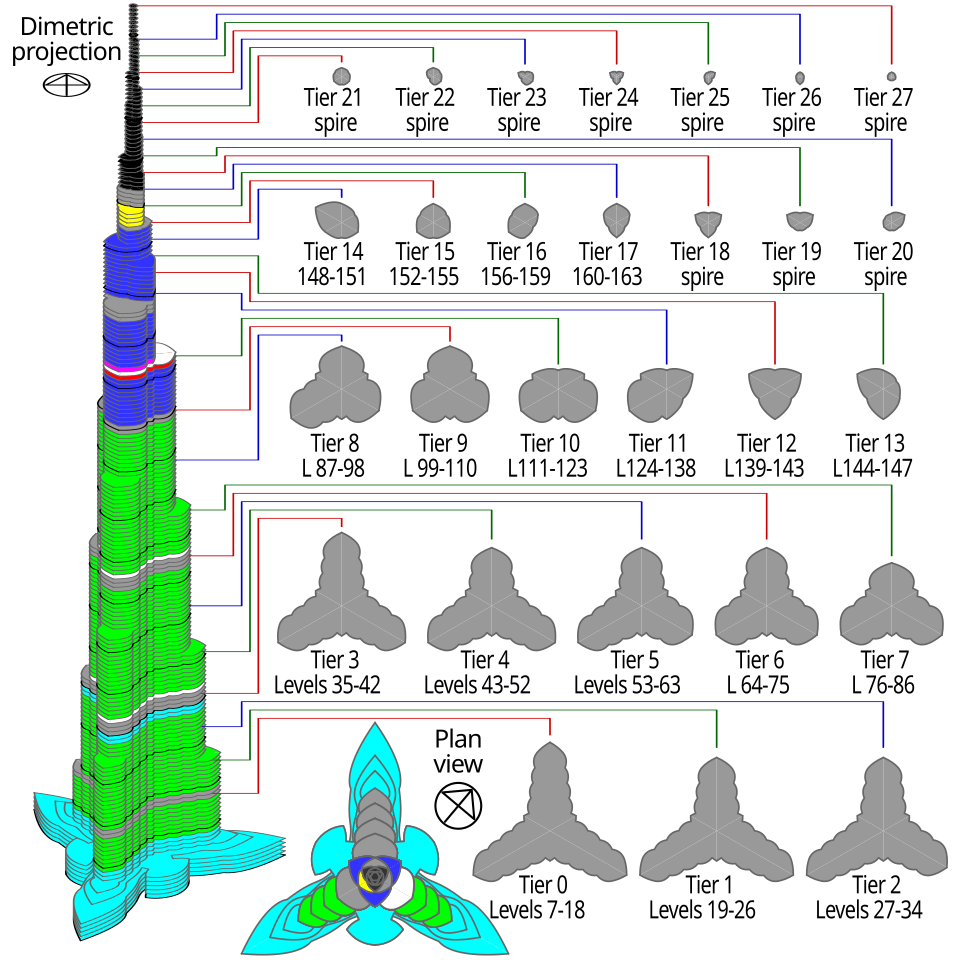
The buttressed core further refines the tube concept. At the Burj Khalifa, Skidmore, Owings & Merrill (SOM) structural engineering partner William Baker developed a Y-shaped floor plan, built around a central hexagonal reinforced concrete core, with three wings symmetrically buttressing it. Each wing stiffens the others through wall and slab connections, creating a cross-braced spatial structure that resists torsion as effectively as bending. Wind-tunnel testing demonstrated that the tower’s tapering, setback form disrupts organised vortex shedding: each setback breaks the coherence of wind pressure at a different height, preventing resonance from reaching the full 828 metres. Strip away that taper, and the lateral load problem becomes structurally unsolvable.
1.2 Suspension and Cable Systems
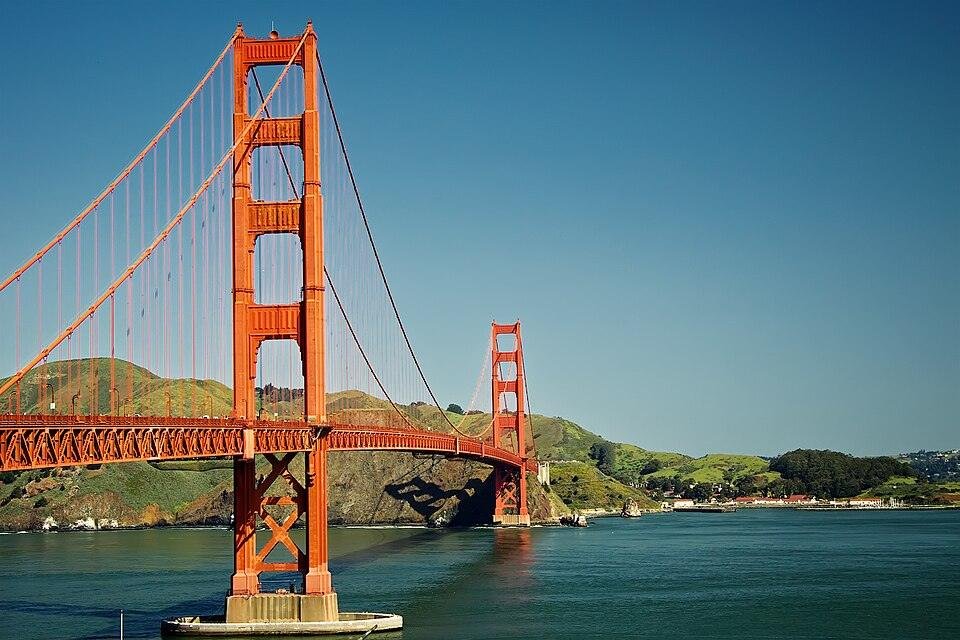
Suspension structures solve the long-span problem through tension rather than compression. The Golden Gate Bridge, completed in 1937, remains the definitive example of long-lasting infrastructure design through tension-dominant logic. Each main cable contains 27,572 individual galvanised carbon-steel wires, compacted into a cable 92 centimetres in diameter. The deck is supported by 250 pairs of hanger cables, and thermal expansion joints accommodate nearly 1.2 metres of seasonal elongation and contraction.
The design philosophy that made the bridge durable was deflection theory, which recognised that a flexible suspension structure self-stiffens under load. As traffic or wind deflects the deck, the changed geometry partially counteracts the deflection, eliminating the heavy stiffening trusses that burdened earlier bridge designs. Less dead mass means less fatigue cycling per load event. The cables sit in persistent Pacific salt fog; their galvanised zinc coating, outer wrapping wire, and multi-layer paint system create a corrosion barrier that biennial X-ray and ultrasonic inspections now supplement with real-time internal wire-break mapping.
1.3 Shell and Spherical Geometry Structures
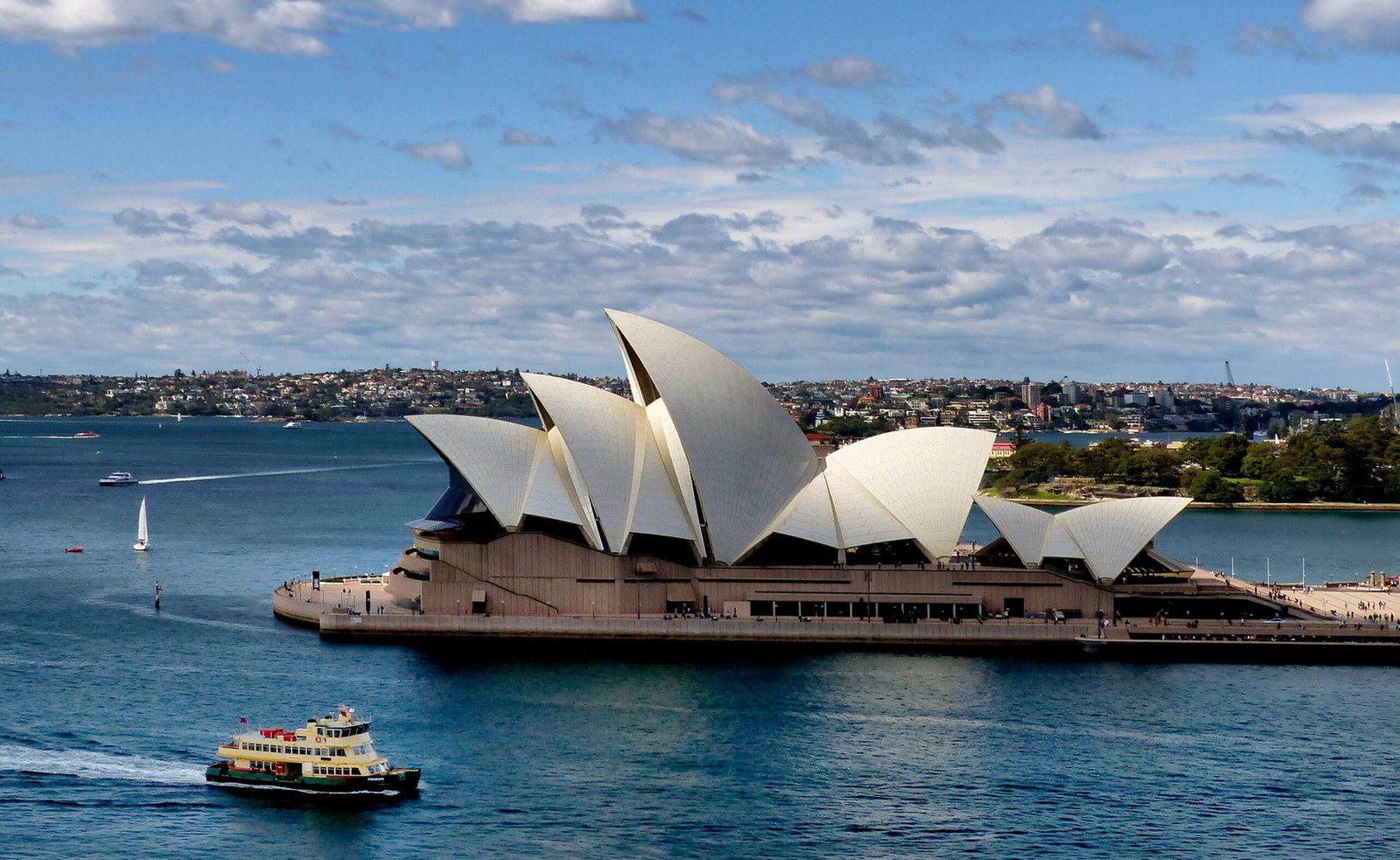
Thin concrete shells transmit loads through surface stresses rather than bending, making them structurally efficient and geometrically unforgiving. The Sydney Opera House brought this tension to a crisis. Ove Arup’s team spent six years iterating over twelve geometric schemes, from parabolas to ellipsoids, before arriving at the spherical solution in 1961. If every shell surface derived from the same sphere, every precast rib segment shared identical geometry and could be cast from a single reusable mould, a breakthrough that simultaneously solved the cost problem and the structural definition problem.
The roof consists of over 2,400 precast post-tensioned concrete arch units, each bearing on cast-in-situ pedestals. Post-tensioning keeps concrete permanently in compression, eliminating the tensile stress that would otherwise cause cracking under temperature cycling and wind load reversal. Compressed concrete is chemically more stable and less permeable than concrete under net tension. The geometry did not just look spectacular; it delivered a durability advantage that passive reinforcement alone could never have matched.
That is the central insight of structural systems in landmark buildings: geometry determines the stress regime, and the stress regime determines service life. Structural systems in landmark buildings that have endured confirm this across every typology, from shells to bridges to dams.
2. Materials Used in Iconic Structures: Selection as a Design Act
Materials used in iconic structures are not chosen for visual effect. They are chosen because they match the mechanical demands of the structural system and the chemical demands of the site. Selecting the wrong durable building materials for a given environment is the most common cause of premature structural failure; matching durable building materials to structural context is the single greatest contributor to longevity. Misreading the environment and even excellent structural geometry fail on schedule.
2.1 High-Strength Concrete and UHPC
Conventional concrete carries compression efficiently but cracks under tension and remains permeable to chloride ingress, carbonation, and sulphate attack. These failure modes account for the majority of concrete infrastructure deterioration globally. Ultra-high-performance concrete (UHPC) addresses all three. With a minimum 28-day compressive strength of 120 MPa and tensile strength exceeding 5 MPa, UHPC achieves these properties through a dense microstructure.
Further Reading: Cement Selection Guide for Construction Projects: Strength, Performance, and Cost Considerations
A low water-to-binder ratio, silica fume, steel fibres, and quartz powder combine to produce a material with low permeability and high post-cracking toughness. The structural consequence is cross-sections up to 50 per cent smaller than those of conventional concrete, reducing dead load, material volume, and the surface area exposed to environmental attack. UHPC represents the materials used in iconic structures at their most technically precise: a single matrix engineered to carry compression, resist tension, and repel chemical attack simultaneously.
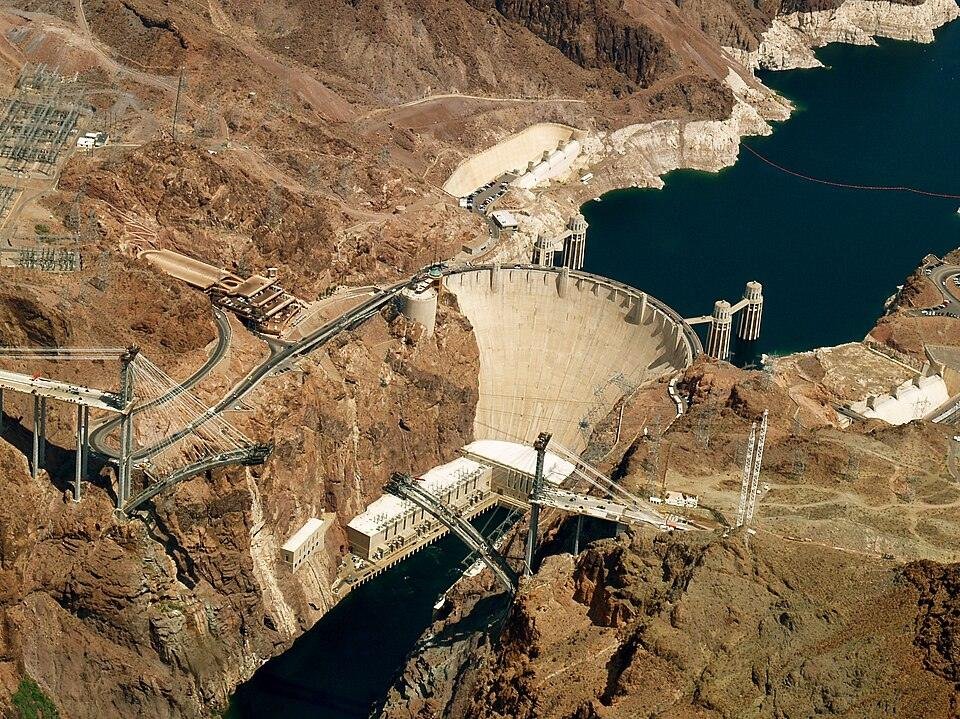
The Hoover Dam operated on a different scale and in a different era, but with the same material logic. It’s 4.4 million cubic yards of mass concrete, which uses low-heat Portland cement to manage the thermal gradient during curing. Engineers embedded a network of 25-millimetre-diameter steel pipes through each concrete block, circulating chilled water to dissipate hydration heat and prevent the thermal cracking that would have split the dam’s watertightness.
Compressive strength tests conducted in 1995 found that the concrete had reached an average of 7,230 psi, more than double its original 28-day strength of 3,500 psi. The material was still gaining strength 60 years after placement. Engineers now project a structural life extending beyond 10,000 years with continued maintenance, a figure achieved by selecting appropriate materials at the outset, not by over-engineering.
2.2 Structural Steel and Corrosion Management
Steel’s tensile strength makes it irreplaceable in suspension systems, diagrid frames, and long-span trusses. Its vulnerability is oxidation. Every durable, iconic steel structure employs a different corrosion strategy, each calibrated to site conditions. The Golden Gate Bridge addresses persistent Pacific salt fog through a layered galvanised zinc coating on cable wires, a continuous multi-layer paint programme running without pause since 1937, and a sensor network monitoring internal cable degradation in real time.
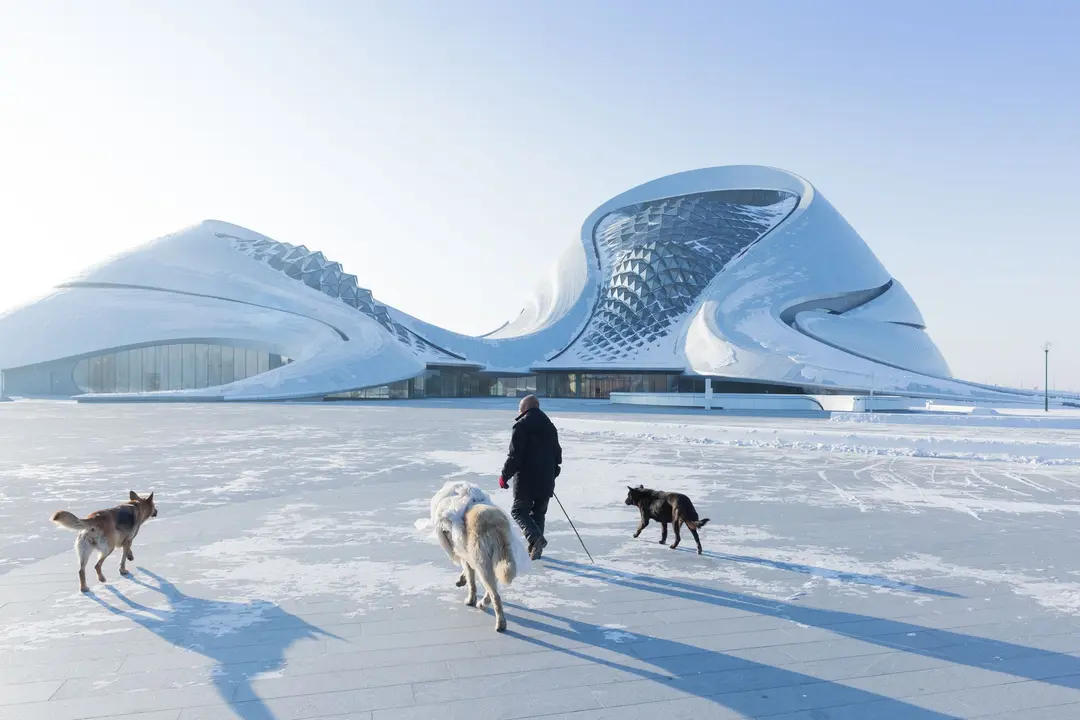
The Harbin Opera House chose steel for exactly different reasons. Harbin experiences temperatures ranging from minus 30°C in winter to plus 35°C in summer. A steel core structure, clad in curved white aluminium panels, accommodates that 65-degree annual thermal swing through designed flexibility rather than rigid restraint. The roof carries the weight of extreme snow accumulation, and electrical heating systems at drainage entry points prevent ice blockages from converting snow loads into ponded water. These are materials-in-context decisions built into the structural engineering design from day one, not corrections added during construction.
2.3 Advanced Composites and Membrane Materials
Carbon fibre-reinforced polymers (CFRP) offer tensile strengths exceeding 3,500 MPa at roughly one-fifth the weight of structural steel. In post-tensioning applications, CFRP eliminates the corrosion risk inherent in conventional steel tendons, thereby significantly extending the maintenance-free service life. Research on CFRP-reinforced UHPC structures confirms that combining the two materials reduces structural self-weight by up to 65 per cent compared to conventional reinforced concrete, with commensurate reductions in foundation demand.
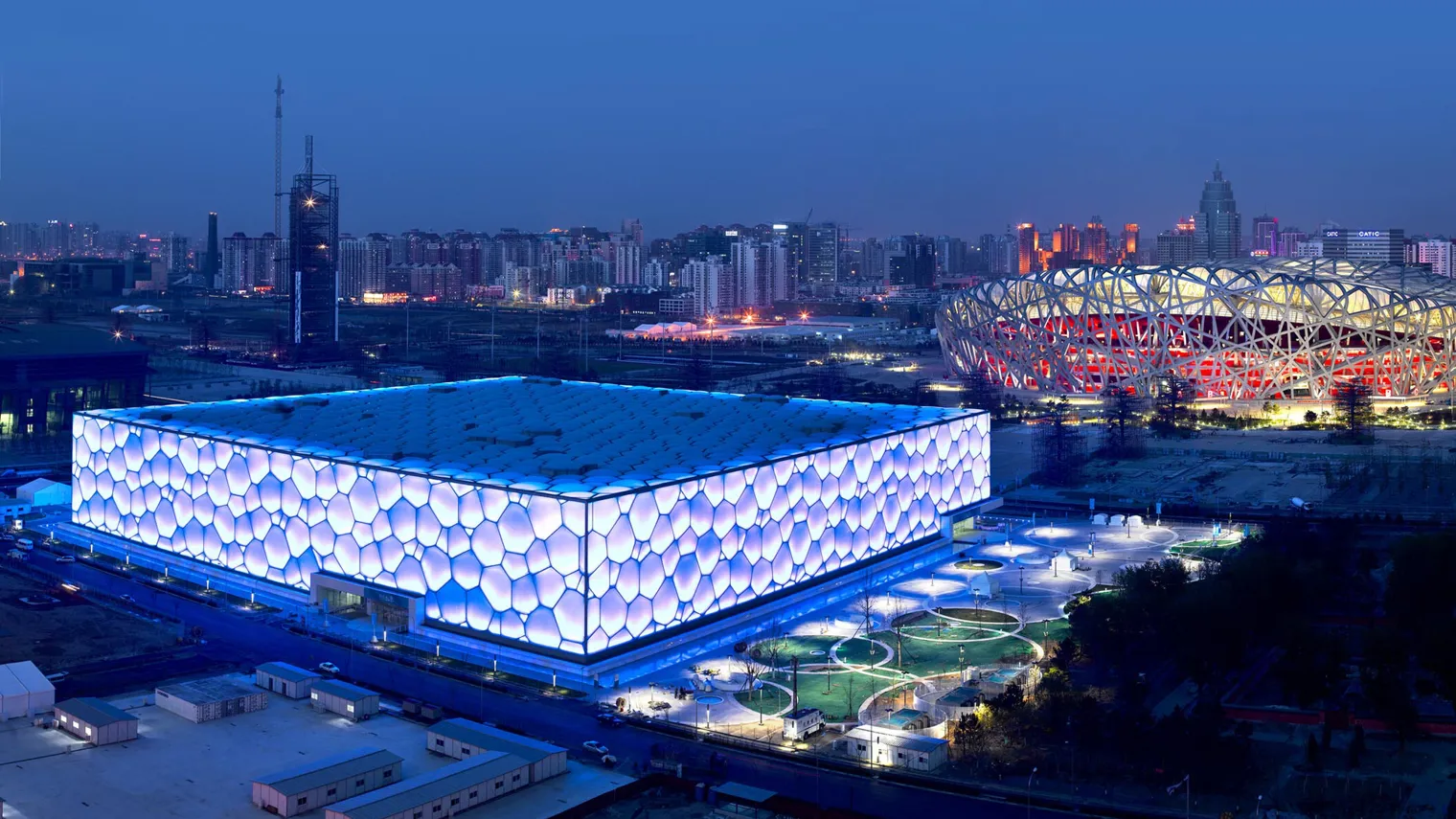
ETFE (ethylene tetrafluoroethylene) foil systems extend this logic to building envelopes: transparent, UV-stable, self-cleaning through rain action, and capable of spanning large areas at a fraction of the weight of glass. The Beijing National Aquatics Centre demonstrated what ETFE can achieve structurally: a pneumatic cushion system that bears wind and snow loads through air pressure rather than structural depth. For iconic structures where thermal performance and natural light both matter, the materials used increasingly incorporate these systems as structural elements rather than decorative layers. The materials used in iconic structures at this scale carry design intent as directly as any column or cable.
3. Engineering Design Philosophy for Long-Lasting Structures
Every material selection and every structural system reflects a philosophy: a set of framing decisions made before any calculation begins. Engineering design philosophy for long-lasting structures has several recurring themes across buildings and infrastructure that have proven most durable. How iconic structures are engineered to last is ultimately a philosophical question as much as a technical one, because the choices that govern longevity precede the first structural analysis by months.
3.1 Redundancy as a Non-Negotiable
Redundancy means more load paths than the minimum required. If any element fails, the load redistributes to adjacent members without triggering progressive collapse. The Burj Khalifa’s three mutually stabilising wings provide this: damaging one redistributes lateral load to the other two. The Golden Gate Bridge’s 250 hanger pairs mean the failure of any individual hanger, a documented failure mode in long-service suspension bridges, does not precipitate deck collapse.
At the material level, post-tensioned concrete carries passive reinforcement as a secondary load path if post-tensioning fails. Mass concrete gravity dams like the Hoover redirect hydrostatic pressure into the canyon rock abutments through arch-gravity geometry, so the dam and the geology share the load together. That layered, geometry-first approach to long-lasting infrastructure design is why mass concrete dams are among the most durable large structures humans have built.
3.2 Climate Compatibility and Site-Specific Design
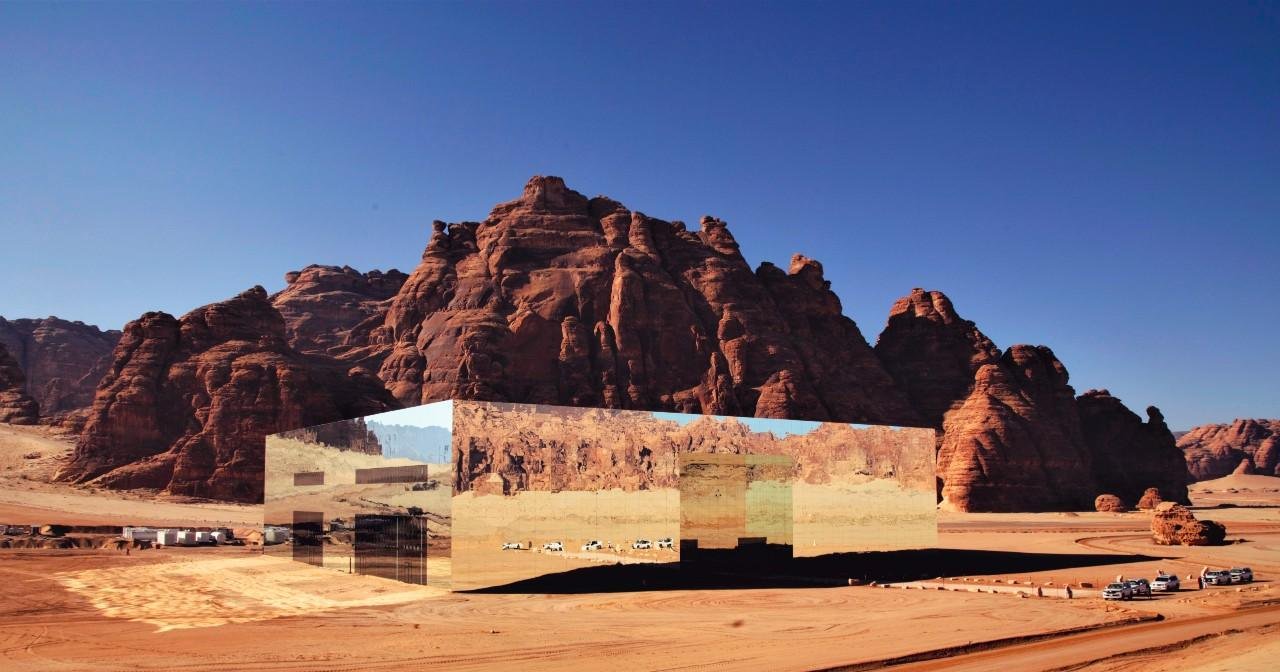
The way iconic structures are engineered to last depends on matching the structural system to the site’s specific thermal, seismic, and wind environments. Understanding how iconic structures are engineered to last in extreme climates requires treating the structural system and the envelope as a coupled design problem from the start, rather than resolving them independently and then reconciling them at the detailed design stage. The Maraya Concert Hall in AlUla, Saudi Arabia, sits in ambient temperatures exceeding 45°C with significant diurnal swings. Its mirror-clad steel facade serves as a reflective thermal shield, reducing heat absorption and minimising differential-movement-driven fatigue in connections across the structural steel frame.
Seismic design philosophy has shifted fundamentally over the past half-century. Prescriptive codes mandated that buildings absorb earthquake energy through controlled ductile yielding at designated zones. Modern performance-based design under ASCE 7 targets specific damage states instead: operational continuity after moderate events and no collapse under the maximum considered earthquake. Base isolation systems, decoupling the superstructure from ground motion through low-friction or rubber bearings at the foundation level, represent the most complete implementation of this shift. Structures on base isolators experience ground accelerations reduced by 60 to 80 per cent, significantly extending structural service life in seismic zones.
3.3 Geometry as the First Line of Defence
The most consistent insight in engineering design philosophy for long-lasting structures is that geometry is a structural tool, not a visual one. Aerodynamic tapering in supertall buildings cuts wind loads before any damping system engages. Spherical shell geometry in the Sydney Opera House converts bending into compression. The arch-gravity form of the Hoover Dam converts hydrostatic pressure into axial compression in a material with effectively unlimited compressive capacity. The catenary curve of the Golden Gate main cables ensures every cross-section stays in pure tension regardless of load position.
Structural systems in landmark buildings that have survived for generations share this geometric intelligence. Form and force are aligned. The structure does not resist its loads; it channels them into the material’s zone of maximum competence. That is what structural engineering design means at its highest level: not calculating member sizes, but configuring a system that makes those calculations as favourable as possible.
4. How Iconic Structures Are Engineered to Last: Systems Under Extreme Loads
Engineering systems in megastructures face loading categories that routine structures never encounter at the same intensity: vortex-induced resonance at supertall heights, temperature-driven fatigue over century-long service lives, seismic base excitation in active zones, and hydrostatic pressures that no other civil structure must resist simultaneously. How iconic structures are engineered to last requires an honest account of each load type and the engineering response to it. The iconic structures that pass this test do so because their durable building materials and structural geometry were selected as a single decision, not two.
4.1 Wind Engineering in Supertall Structures
Wind loads on a supertall building are dynamic, not static. Vortex shedding, the periodic separation of airflow at the building face, generates oscillating lateral forces that drive the building into resonance at the wrong frequency. Resonance in a tall building is not a theoretical concern; it is a fatigue mechanism that degrades connections, fatigues cladding fixings, and accumulates joint damage over time.
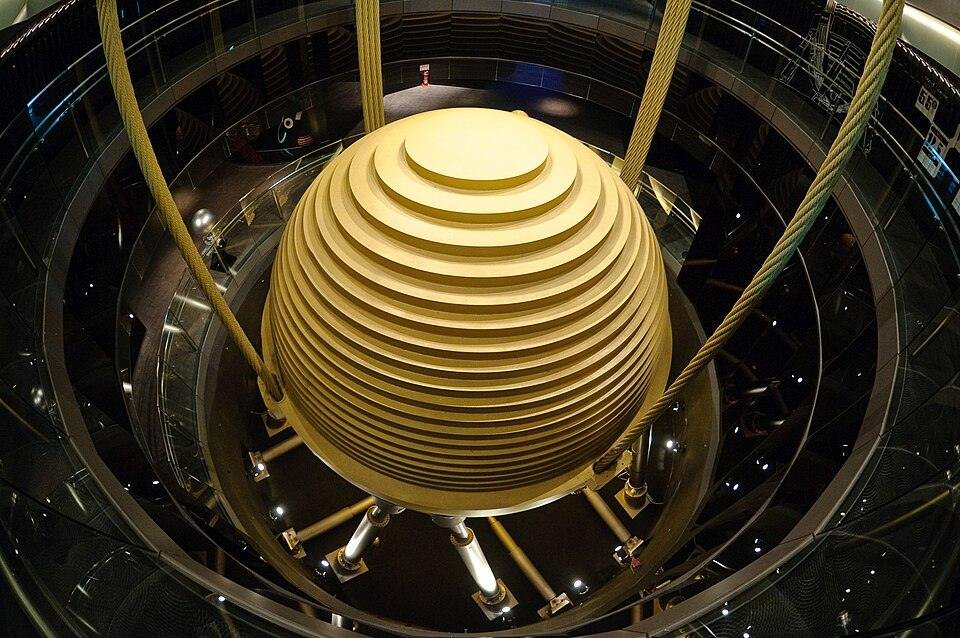
The engineering response pairs aerodynamic form with mechanical damping. The Burj Khalifa’s setbacks interrupt vortex shedding coherence at every level, preventing organised pressure fluctuations from running the full tower height. Where geometry alone is insufficient, tuned mass dampers (TMDs) provide active cancellation: a pendulum mass tuned to the building’s natural frequency swings in opposition to the building’s motion, dissipating kinetic energy as heat through viscous dampers, such as in Taipei 101. TMDs are now standard in supertall structures, long-span stadium roofs and major bridges.
4.2 Fatigue and Long-Cycle Durability
Fatigue accumulates when a structural element undergoes millions of stress cycles below its static failure load. Suspension bridge cables are particularly exposed: every vehicle crossing, every wind gust, and every temperature change cycle stresses the cable cross-section. The Golden Gate Bridge is monitored not for gross corrosion but for micro-fatigue: biennial inspections using X-ray and ultrasonic testing map internal wire breaks invisible from the surface, which collectively reduce reserve capacity over decades.
Long-lasting infrastructure design addresses fatigue through three strategies: reducing stress range through redundancy and stiffness; protecting against corrosion, which accelerates fatigue crack initiation; and monitoring accumulated damage so intervention occurs before the reserve is exhausted. All three operate simultaneously in the Golden Gate maintenance programme. Any structure intended to serve beyond one generation requires all three.
4.3 Thermal Movement and Expansion Systems
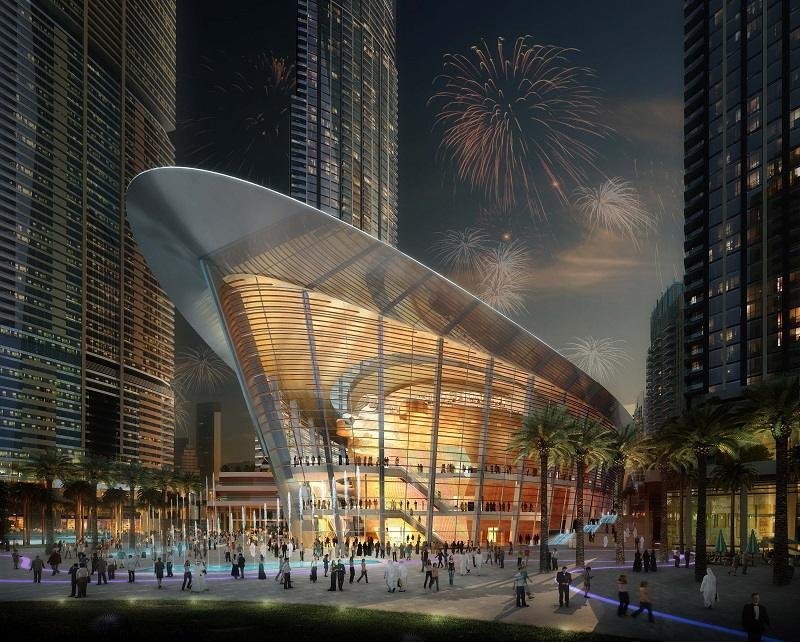
The Dubai Opera House operates in a climate where cladding surface temperatures exceed 50°C in summer. Its structural and cladding systems must accommodate daily thermal expansion and contraction without accumulating residual stress at connections. Expansion joints, sliding bearings, and flexible sealant systems convert potentially destructive thermal movements into controlled displacements. Without them, cladding fixings would fatigue to failure within a few years of operation.
The Harbin Opera House manages the same challenge in reverse: extreme cold contraction rather than expansion. Its aluminium cladding system uses joints sized for the full annual 65-degree thermal range. Triple-glazed facade panels minimise condensation at connection points, preventing freezing and splitting of fixing assemblies during winter. The engineering systems in megastructures that operate in climate extremes treat thermal movement as a primary structural input, giving it the same weight in analysis as seismic or wind loads.
5. Resilient Structural Design: From Engineering Principles to Built Reality
Resilient structural design integrates redundancy, material-environment compatibility, and geometry-driven load management into a system that degrades gracefully rather than failing suddenly. Every iconic structure that has lasted demonstrates this integration, and none of them arrived at it simply.
5.1 Structural Health Monitoring as a Design Element
Modern iconic structures embed instrumentation during construction. The engineering systems in megastructures that endure the longest are not simply those built to the highest initial specification; they are those whose operators know the structure’s actual state at any given moment. The Golden Gate Bridge carries over 200 sensors monitoring vibrations, wind loads, temperature gradients, and seismic accelerations in real time. That data feeds two functions: it calibrates the structural model against actual behaviour, and it provides early warning of degradation before it becomes critical. Resilient structural design now includes the monitoring infrastructure as a designed component, not an optional system bolted on after commissioning.
Further Reading: Revolutionary Predictive Maintenance Using AI for Public Infrastructure: 7 Key Benefits and Real‑World Impact
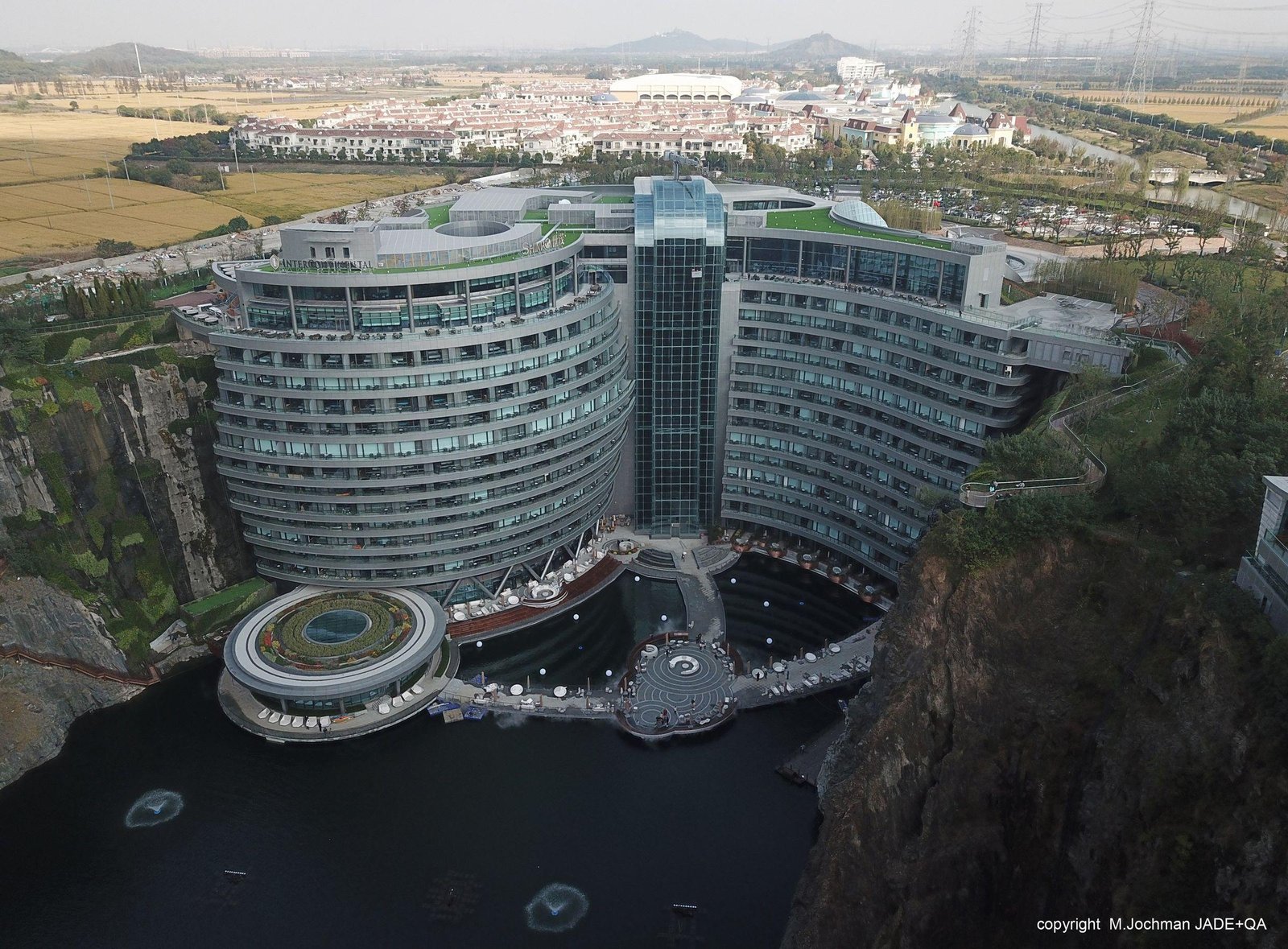
The InterContinental Shanghai Wonderland Hotel, set into a disused quarry with lower floors below the water table, required continuous monitoring of ground movement and water table fluctuations to confirm founding conditions stayed within the design envelope. The structural engineering design treated the quarry walls as a structural boundary condition, not a backdrop. That monitoring system is what makes this long-lasting infrastructure design viable in a setting that has no engineering precedent.
5.2 Conservation as Structural Strategy
How iconic structures are engineered to last is not a question that ends at practical completion. The Sydney Opera House requires continuous structural engineering because each refurbishment generation modifies loads, introduces new connections, and forces reanalysis of elements designed under different assumptions. Arup’s ongoing structural engineering involvement five decades after completion reflects a founding principle of resilient structural design: the structure is a living system, and the engineering obligation extends across its full service life.
The same logic applies to dams. The Hoover Dam’s operational protocols update continuously as monitoring data accumulates and seismic hazard models are refined. Its turbines, converting the Colorado River’s hydraulic head into 2,080 megawatts of electricity, cycle through rolling inspection programmes. The concrete is permanent in the engineering sense; the mechanical infrastructure within it requires continuous management.
5.3 Lessons for Future Iconic Structures
The engineering systems in megastructures now under design carry a century of hard-won lessons. Performance-based seismic codes now target defined damage states at defined return periods rather than prescriptive force levels disconnected from real structural behaviour. UHPC and CFRP reduce cross-sections while extending service lives. Digital twin technology, where a continuously updated computational model mirrors actual structural behaviour, closes the gap between design assumption and operational reality.
The oldest lesson, though, is the most reliable: structural engineering design must resolve geometry, material, and load path as a single integrated decision. The iconic structures that have lasted longest did not survive because they were overbuilt. They survived because they were correctly conceived. This is an engineering design philosophy for long-lasting structures applied as a discipline, not a slogan, governing every decision from the first sketch to the maintenance schedule.
6. Structural Engineering Design as a Philosophical Position
Engineers who design iconic structures that last are not just calculating member sizes. Every decision about form, material, and load path encodes a position on what a structure owes the people who will use it, maintain it, and eventually inherit it. This is engineering design philosophy for long-lasting structures in its fullest expression: a commitment to consequence that extends well past the construction programme.
Ove Arup put it plainly in his 1970 Key Speech to his firm’s partners, calling for “a sound, lasting and economical structure” combined with work that “enriches the human environment”. The Sydney Opera House, which he described as the most difficult engineering problem he had ever faced, embodies this exactly. The structural engineering design served an architectural vision and simultaneously produced a structure that is, six decades later, still being refined, maintained, and used for the purpose for which it was built.
The Harbin Opera House extends this philosophy to an extreme climate. Its structural engineering design did not fight the Manchurian winter; it incorporated it. The form references ice and snow. The engineering systems respond to that climate rather than treating it as an obstacle. Climate compatibility is a design philosophy, not just a durability strategy.
Resilient structural design at this level treats time as a design variable. A structure designed for a 50-year service life optimises differently from one designed for 200 years. Mass concrete gravity dams optimise differently still. The Hoover Dam was not over-engineered; it was engineered for a timeframe that makes continued concrete strength gain structurally significant rather than incidental. The engineering design philosophy for long-lasting structures at the dam scale treats the structure itself as part of the geological record.
Technical Block: Engineering Data for Iconic Structures
The four tables below consolidate key engineering data from the structures examined in this article. They are intended as a working reference: specifications verified against primary engineering sources, design life projections, and material performance benchmarks that underpin the structural engineering design principles discussed throughout.
1. Structural System Comparison Across Benchmark Iconic Structures
| Structure | Structural System | Primary Material | Key Lateral Strategy | Design Life (Years) |
| Burj Khalifa | Buttressed core + tube | High-strength RC (C80) | Aerodynamic setbacks + Y-plan geometry | 200+ |
| Golden Gate Bridge | Suspension (catenary cable) | Galvanised high-carbon steel | Deflection theory; flexible deck | 150+ (with maintenance) |
| Sydney Opera House | Post-tensioned precast shell | Concrete (post-tensioned) | Spherical geometry; compression-only shells | 200+ |
| Hoover Dam | Arch-gravity mass concrete | Low-heat mass concrete | Arch transfers hydrostatic load to canyon walls | 10,000+ |
| Harbin Opera House | Steel core + aluminium cladding | Structural steel/aluminium | Designed thermal flexibility; TMD roof | 100+ |
| Maraya Concert Hall | Steel frame | Structural steel | Reflective facade; thermal gradient management | 50+ (designed) |
2. Durable Building Materials: Key Engineering Performance Benchmarks
| Material | Compressive Strength | Tensile Strength | Primary Durability Risk | Typical Service Life |
| Conventional RC (C30) | 30 MPa | 3–5 MPa (reinforced) | Chloride ingress; carbonation | 50–100 years |
| High-strength RC (C80) | 80 MPa | 6–8 MPa (reinforced) | Thermal cracking if improperly cured | 100–150 years |
| UHPC | 120–200 MPa | 5–15 MPa (fibre-reinforced) | Shrinkage cracking at connections | 200+ years |
| Mass concrete (low-heat) | 25–35 MPa (rising with age) | Low; geometry carries load | Thermal cracking during curing | 500–10,000+ years |
| Galvanised structural steel | Yield: 250–690 MPa | Up to 690 MPa | Zinc layer depletion; marine corrosion | 50–100 years (bare); 150+ with maintenance |
| CFRP tendons | N/A (tension element) | 1,500–3,500 MPa | UV degradation; impact damage | 100+ years (corrosion-free) |
| ETFE foil cushions | N/A (membrane) | 40–50 MPa (tensile film) | UV ageing; puncture; thermal fatigue | 25–35 years (panel replacement cycle) |
3. Lateral Load Mitigation Systems in Long-Lasting Iconic Structures
| System | Mechanism | Load Type Addressed | Acceleration Reduction | Example Application |
| Aerodynamic tapering | Disrupts vortex shedding coherence at each setback level | Wind-induced resonance | Up to 30–40% load reduction vs. prismatic form | Burj Khalifa, Shanghai Tower |
| Tuned mass damper (TMD) | A pendulum or sloshing mass tuned to the building’s natural frequency; it dissipates KE as heat | Wind + seismic | 25–40% occupied acceleration reduction | Taipei 101 (660-tonne pendulum) |
| Base isolation | Low-friction/rubber bearings decouple the superstructure from ground motion | Seismic | 60–80% reduction in floor accelerations | Multiple hospital and heritage buildings |
| Buttressed core geometry | Three mutually stabilising wings redistribute torsion and lateral load | Wind + seismic | Eliminates the need for supplemental damping at 828 m | Burj Khalifa |
| Expansion joints + sliding bearings | Convert thermal movement into controlled displacement, eliminating residual stress | Thermal fatigue | Prevents connection fatigue failure over service life | Golden Gate Bridge, Dubai Opera House |
| Post-tensioning | Keeps concrete in permanent compression; eliminates tensile cracking | Temperature cycling + wind load reversal | Eliminates crack-induced permeability degradation | Sydney Opera House shells |
4. Design Life Targets by Structural Typology and Consequence Class
| Structural Typology | Consequence Class | Typical Design Life | Key Degradation Mode | Primary Design Response |
| Supertall tower (>300 m) | CC3 (high) | 200 years | Wind-induced fatigue; connection degradation | TMD + aerodynamic form + SHM |
| Suspension bridge | CC3 (high) | 150–200 years | Cable wire fatigue; corrosion | Galvanisation + biennial inspection + redundant hangers |
| Thin concrete shell | CC2–CC3 | 100–200 years | Post-tensioning tendon corrosion; spalling | Post-tensioning + waterproof coating + SHM |
| Mass concrete gravity dam | CC3 (critical) | 1,000–10,000+ years | Seepage; alkali-silica reaction | Low-heat cement + drainage galleries + seismic monitoring |
| Long-span steel roof | CC2–CC3 | 100–150 years | Fatigue at welded connections; corrosion | Painted/galvanised + expansion joints + periodic NDT |
| Cultural landmark facade | CC2 | 50–100 years (cladding) | Thermal movement; sealant failure | Movement joints + breathable sealants + replacement cycles |
| Desert/arid-climate structure | CC2–CC3 | 50–150 years | Thermal fatigue; UV degradation of seals | Reflective cladding + PTFE bearings + sealed envelope |
Conclusion: What Separates Enduring Iconic Structures from Those That Do Not Last
Most structures that fail before their time do not fail because of bad materials or poor construction. They fail because of a conceptual error made at the briefing stage, when the structural system, the material specification, and the site environment were treated as separate decisions rather than a single integrated one. The iconic structures examined here, from the Hoover Dam’s arch-gravity mass concrete to the Sydney Opera House’s post-tensioned spherical shells, are structurally correct at the concept level. The detailed engineering that followed was always in service of a load path that was already right.
Mass concrete gravity dam projects have service lives beyond 10,000 years because their geometry converts hydrostatic pressure into axial compression in a material that gains strength over time. Post-tensioned shells survive a century of thermal cycling because compression-dominant stress regimes are chemically stable. The materials used in iconic structures that have endured are not simply the strongest available; they are the ones whose failure modes were incompatible with the structural geometry they served. Every outcome in this article traces back to a decision made before any reinforcement was scheduled or any tender issued.
For engineers and project owners commissioning iconic structures today, the obligation is direct: design life is a structural input, not a contractual footnote. The consequence class, the dominant degradation mode, and the maintenance commitment must be resolved at the concept design stage, because no amount of material specification or construction quality control can recover a structural geometry that was wrong from the start. Long-lasting infrastructure design does not cost more. Correctly conceived, it costs less over the full service life because redundancy, geometry, and material-environment compatibility eliminate the remediation cycles that consume budgets in structures designed to a programme rather than a lifespan.
The iconic structures that have lasted centuries were not built by engineers with larger budgets; they were built by engineers who asked the right question first.
Explore the Engineering Behind the World’s Most Enduring Structures
Discover how iconic megastructures are designed to survive extreme forces, harsh environments, and the test of time with Construction Frontier: Global Mega Projects. Explore expert insights into advanced materials, structural systems, and the engineering philosophies shaping the future of resilient global infrastructure.